Winter in the Office: the 10 Duties That Change When the Clocks Go Back
Winter health and safety gets discussed almost entirely as a temperature question, and temperature is the part most employers already know something about. The duties that actually change between October and February are elsewhere: in lighting, in the condition of floors and outdoor routes, and in how the heating itself is allowed to work.
Three of them are specific requirements people are surprised to find in the Regulations at all. You must provide thermometers. Outdoor pedestrian routes must be adequately lit after dark. And there is a separate, free standing duty about what may escape into a workplace from a heating system.
Here are the 10 duties, each with its provision, so the list works as a seasonal check rather than a reminder to turn the heating up.
1. The temperature must be reasonable, and the figures sit in the ACOP
Regulation 7(1) of the Workplace (Health, Safety and Welfare) Regulations 1992 requires that during working hours the temperature in all workplaces inside buildings shall be reasonable. The numbers are in the Approved Code of Practice, which says the temperature should normally be at least 16 degrees Celsius, or at least 13 degrees where work involves rigorous physical effort. Our note on workplace temperature law covers the minimum and the missing maximum in full.
2. Reasonable means comfortable without special clothing
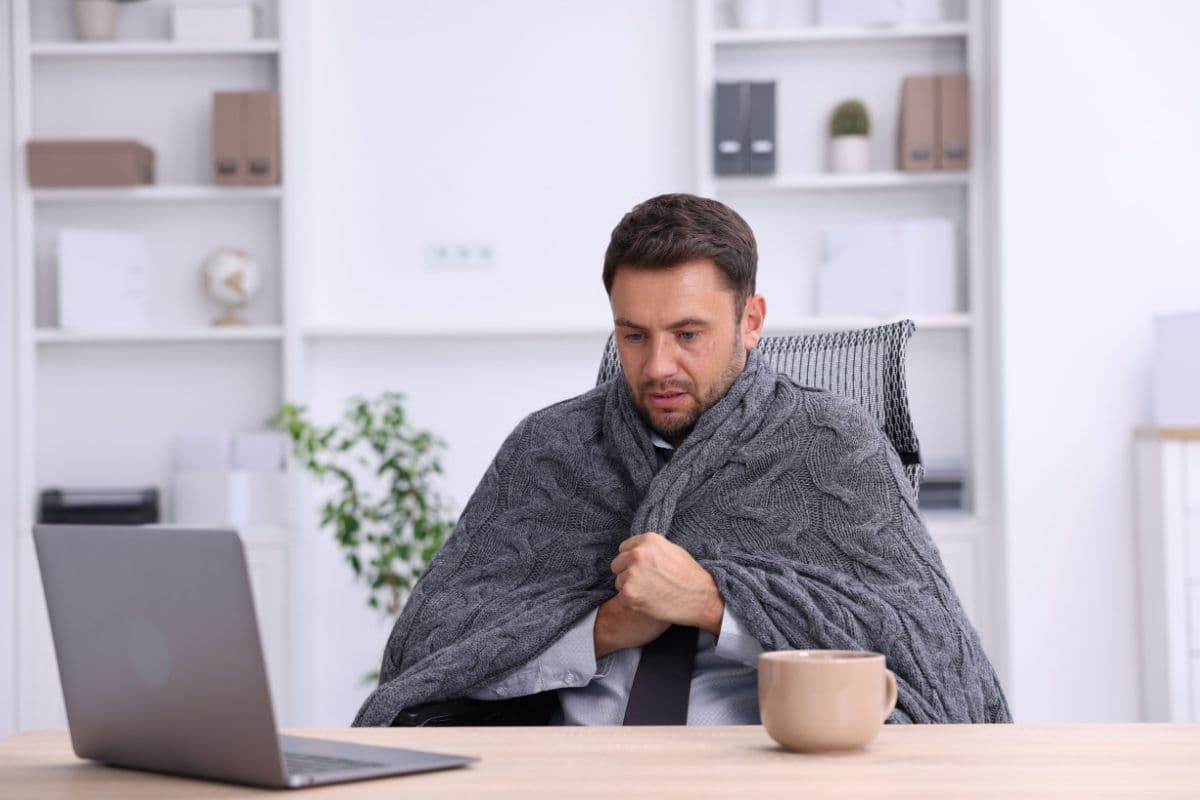
ACOP paragraph 60 sets the standard the figures are meant to serve: the temperature should provide reasonable comfort without the need for special clothing. Issuing fleeces instead of fixing the heating moves you away from the standard rather than towards it.
3. You must provide thermometers
Need Expert H&S Guidance?
Our qualified consultants can help you implement the right health & safety measures for your business.
Regulation 7(3) requires that a sufficient number of thermometers shall be provided to enable persons at work to determine the temperature in any workplace inside a building. This is an unqualified duty and one of the least implemented sentences in the Regulations. Without them, nobody can evidence the temperature was reasonable, including you.
4. And take the reading in the right place
ACOP paragraph 61 says readings should be taken close to workstations, at working height and away from windows. A reading from a corridor thermostat is not a reading of the workplace, which matters when a complaint turns into a dispute.
5. Thermal insulation is a named requirement
Regulation 7(1A)(a), added in 2002, requires that a workplace shall be adequately thermally insulated where it is necessary, having regard to the type of work carried out and the physical activity of the people carrying it out. The duty attaches to the building fabric, not only to the heating output, which is the point landlords and tenants most often leave unresolved.
6. The heating method itself is regulated
Regulation 7(2) provides that a method of heating or cooling shall not be used which results in the escape into a workplace of fumes, gas or vapour of such character and to such extent that they are likely to be injurious or offensive to any person. Temporary heaters brought in during a boiler failure are exactly the scenario this addresses, and it runs alongside the air supply duties we set out in the signs office ventilation is not keeping up.
7. Lighting must be suitable and sufficient, and natural where practicable
Regulation 8(1) requires every workplace to have suitable and sufficient lighting, and regulation 8(2) requires that it be by natural light so far as is reasonably practicable. In November that second limb starts doing real work, because the natural light available changes while the workstation layout usually does not.
8. Outdoor routes must be lit after dark, and stairs must not cast shadows
ACOP paragraph 82 is the winter sentence. Outdoor traffic routes used by pedestrians should be adequately lit after dark. The same paragraph requires stairs to be kept well lit with lighting that does not cast shadows over the main part of the treads, and artificial lighting at places of particular risk such as pedestrian crossing points. Paragraph 84 adds that lights and windows should be cleaned, repaired or replaced before the level of lighting becomes insufficient.
9. Emergency lighting where failure would expose people to danger
Regulation 8(3) requires suitable and sufficient emergency lighting in any room where persons at work are specially exposed to danger in the event of failure of artificial lighting. The test is exposure to danger on failure, not room type, and the testing regime that keeps it working is covered in our note on emergency lighting and fire alarm testing.
10. Floors and traffic routes have their own rule
Regulation 12(2)(a) requires that a floor or traffic route surface shall have no hole or slope, or be uneven or slippery so as to expose any person to a risk. Regulation 12(3) then requires that, so far as is reasonably practicable, every floor and traffic route is kept free from obstructions and from any article or substance which may cause a person to slip, trip or fall. Regulation 12(2)(b) requires effective drainage where necessary, and regulation 12(5) requires suitable and sufficient handrails on staircases. Water tracked in from outside, and ice on an approach, sit squarely in regulation 12(3).
The 10 duties at a glance
| Duty | Provision | What winter changes |
|---|---|---|
| Reasonable temperature | Reg. 7(1), ACOP 61 | 16 degrees becomes the question |
| Comfort without special clothing | ACOP 60 | Fleeces issued instead of heat |
| Thermometers provided | Reg. 7(3) | Nothing to evidence the reading |
| Reading taken correctly | ACOP 61 | Corridor thermostat relied on |
| Adequate thermal insulation | Reg. 7(1A)(a) | Fabric left to the landlord |
| Heating must not emit | Reg. 7(2) | Temporary heaters after a failure |
| Natural light where practicable | Reg. 8(1) and 8(2) | Daylight hours collapse |
| Outdoor routes lit after dark | ACOP 82 | Car park and approach unlit |
| Emergency lighting on failure | Reg. 8(3) | Dark means a different risk |
| Floors kept free of slip hazards | Reg. 12(2) and 12(3) | Ice, water and tracked in wet |
Rows three and eight are the two we most often find missing entirely. The thermometer duty is unqualified, so there is no reasonably practicable argument available, and it is cheap to fix. The outdoor lighting requirement is the one that quietly changes in late October, because an approach, car park or bin store that was perfectly adequate at five o'clock in September is a different place at five o'clock in November, with the same risk assessment on file.
Row ten is where the claims come from. Regulation 12(3) is qualified by reasonable practicability, which is precisely why the evidence matters: a gritting arrangement, a matting plan at entrances, an inspection frequency and a record of who checked what. Without those the qualifier has nothing to attach to. Our note on the five most common office accidents sets out where slips sit in the real pattern.
Row six deserves a line of its own because it recurs every winter. When a boiler fails, portable heating appears, and regulation 7(2) is an absolute prohibition on a heating method that lets fumes, gas or vapour escape into the workplace. That is a decision to take before the cold snap, not during it.
Holding the thermometer locations and readings, the lighting levels and the external route survey, the gritting and matting arrangements with their inspection records, and the seasonal review date in one place is the practical reason health and safety consultants and software work better as one system than as a winter email. Periodic health and safety audits then test it with one question: when was the external approach last assessed after dark, rather than during the working day? For people working alone in the dark hours the lone working policy is the companion document, and the office risk assessment is where the seasonal version should sit.
The same winter in your other countries
The pattern we see across multi country clients holds here too: the hazard is seasonal, the standard is national.
Britain regulates by outcome. The temperature must be reasonable, the lighting suitable and sufficient, the floor not slippery, with figures appearing in an Approved Code of Practice rather than in the Regulations themselves. That gives flexibility and puts the evidential burden on the employer, because there is no number in the law to point at.
Several of the systems we work in do the opposite and put values into the instrument, which changes what a group standard has to contain. It also changes who decides. A British employer judges whether 17 degrees is reasonable for the work being done, while an employer elsewhere may be measured against a figure that leaves no judgement to exercise. Finland is a useful comparison because its assessment duty expressly reaches working hours and conditions rather than just the physical workplace, which in a dark northern winter is the more relevant framing.
For a group, the workable split is a standard that fixes the seasonal survey and its evidence, with a local column for any numeric values and for who must be consulted. The broader comparison sits in the key differences in international legislation and the complete global guide. In a shared or managed building most of these duties turn on who controls the fabric and the approaches, as in coworking and serviced offices.
Where Arinite fits
What our health and safety consultants do here is run the seasonal version of the assessment rather than the annual one. We survey the external approaches after dark rather than at midday, which is the single change that finds the most, check that thermometers exist and that readings are taken where the ACOP says, resolve the thermal insulation question between landlord and tenant in writing, and put a gritting and matting arrangement on record with an inspection frequency so that regulation 12(3) has something to attach to. We also settle in advance what heating may be used if plant fails, because regulation 7(2) does not bend in an emergency. We support more than 1,500 businesses in over 50 countries, protecting more than 100,000 employees, with client retention above 95% over more than 15 years, concentrated in offices, legal, insurance, IT and software and education, where the estate is usually leased and the approaches usually are not yours. For groups across several countries our global health and safety consultants and international health and safety consultants add the local values to the same survey.
One question for this week: has anyone walked your main approach and car park after dark this autumn, and are there thermometers in the building? If either answer is no, ask us for a free gap analysis and we will work through the ten duties for one site in a single conversation.
Related Articles
Written by
Arinite Health & Safety Consultants
Health & Safety Expert at Arinite