Skip to content

HSE inspections up 47% - HSE carried out over 13,200 workplace inspections in 2024/25.

RIDDOR Experts

RIDDOR 2013:
Reporting Deadlines, Categories, and Investigation

RIDDOR 2013 · F2508 · Specified Injuries · Dangerous Occurrences

A guide to RIDDOR (the Reporting of Injuries, Diseases and Dangerous Occurrences Regulations 2013) for UK businesses. This page covers what must be reported, who is responsible, the reporting deadlines, how to submit a report to the HSE, and how Arinite supports clients through reporting, investigation, and post-incident compliance.

1,500+ Businesses Protected
50+ Countries
95%+ Retention
IOSH Chartered
RIDDOR 2013
HSE Investigation Support
Get in Touch

Contact Arinite Today

Fill out the form below and our team will get back to you within 24 hours.

By submitting, you agree to our Privacy Policy and consent to Arinite contacting you.

RIDDOR

What Is RIDDOR?

RIDDOR stands for the Reporting of Injuries, Diseases and Dangerous Occurrences Regulations 2013. It is the UK regulation that requires employers, the self-employed, and certain others in control of premises to report specific workplace incidents to the Health and Safety Executive (HSE).

RIDDOR replaced the 1995 regulations and took effect on 1 October 2013. It applies across Great Britain. Northern Ireland operates a parallel system under the Reporting of Injuries, Diseases and Dangerous Occurrences Regulations (Northern Ireland) 1997.

RIDDOR is not about reporting every workplace accident. It specifically covers the categories of incident that Parliament has determined warrant notification to the regulator: deaths, specified injuries, over-seven-day absences, reportable diseases, and dangerous occurrences (near-misses that could have caused serious harm).

For broader context on UK employer duties, see our health and safety audit guide.

RESPONSIBLE PERSON

Who Is Responsible
for RIDDOR Reporting?

The duty to report under RIDDOR falls on the 'responsible person,' which in most cases is:

1

The employer of the injured or affected worker, for incidents involving their own employees.

2

The self-employed person, where they are working alone or are the person in control.

3

The person in control of the premises, for incidents affecting members of the public, contractors, or visitors where no employer relationship applies.

4

The gas supplier or gas installer, for specific gas-related incidents under separate RIDDOR provisions.

The responsible person cannot delegate the legal duty. They can appoint a competent person (often a health and safety consultant or internal safety officer) to handle the day-to-day reporting and investigation, but the legal responsibility for ensuring reports are made correctly and on time stays with the responsible person.

For multi-employer workplaces, the responsible person is usually the immediate employer of the affected worker, not the site principal. For contractor incidents, the contractor's employer reports, not the client. Getting this wrong is a common source of RIDDOR compliance failure.

REPORTABLE INCIDENTS

What Must Be
Reported Under RIDDOR

RIDDOR covers five categories of reportable incident. Each has specific criteria and specific reporting timescales.

1

Work-Related Deaths

Every death resulting from a work-related accident must be reported, whether the person is a worker, a contractor, a visitor, or a member of the public. Includes deaths caused immediately and deaths occurring within one year where the injury arose from the incident.

2

Specified Injuries to Workers

Specified injuries include fractures (other than to fingers, thumbs, and toes), amputations, permanent loss of sight or reduction in sight, crush injuries leading to internal organ damage, serious burns covering more than 10% of the body or damaging the eyes or respiratory system, any scalping requiring hospital treatment, any loss of consciousness caused by head injury or asphyxia, and any other injury requiring resuscitation or hospital admission for more than 24 hours. A RIDDOR fracture to a worker's wrist, arm, or leg is reportable; a fracture to a finger is not.

3

Over-Seven-Day Incapacitation

Where a worker is incapacitated and unable to perform their normal work for more than seven consecutive days (not counting the day of the accident but including weekends and non-working days), the incident must be reported. This is one of the most commonly under-reported categories because it requires follow-up after the initial incident to determine the duration of incapacitation.

4

Reportable Occupational Diseases

Eight categories of occupational disease are reportable where a doctor has diagnosed the condition and it is linked to specific occupational exposure: carpal tunnel syndrome, cramp of the hand or forearm, occupational dermatitis, hand-arm vibration syndrome (HAVS), occupational asthma, tendonitis, occupational cancer, and any disease attributed to occupational exposure to a biological agent.

5

Dangerous Occurrences (Near Misses)

Specific near-miss events listed in Schedule 2 of RIDDOR are reportable regardless of whether anyone was injured. Categories include collapse or overturning of lifting equipment, failure of pressure systems, electrical incidents causing fire or explosion, accidental release of biological agents, unintended collapse of a structure, and others. The full Schedule 2 list runs to approximately 27 categories.

6

Gas Incidents

Specific provisions apply to gas suppliers and registered gas installers covering reportable gas incidents and dangerous gas fittings. These duties are separate from the standard employer duties and have their own reporting framework.

HOW TO REPORT

How to Report Under RIDDOR:
Deadlines and Submission

RIDDOR reports are submitted to the HSE through an online reporting system. The reporting forms are collectively known as F2508 (formerly paper forms, now online equivalents).

Reporting deadlines vary by incident type:

1

Immediate Reporting (Without Delay)

Deaths and specified injuries must be reported to the HSE without delay. The initial notification is usually by telephone (0345 300 9923 for major incidents outside normal working hours) or through the online system as soon as is practicable. A follow-up written report must be submitted within 10 days.

2

10-Day Reporting

Following the initial without-delay notification for deaths and specified injuries, the formal written report must be submitted within 10 days of the incident. Dangerous occurrences must be reported within 10 days.

3

15-Day Reporting (Over-7-Day Injuries)

Over-seven-day incapacitation injuries must be reported within 15 days of the accident. This window gives time to confirm the duration of incapacitation before reporting.

4

Reportable Diseases

Reportable occupational diseases must be reported as soon as the employer receives written diagnosis from a doctor confirming the condition and its link to occupational exposure. There is no 10-day deadline for diseases; the duty arises with the diagnosis.

RECORDS

RIDDOR Records and
the Accident Book

Beyond the notification to the HSE, the responsible person must keep records of all reportable incidents for at least three years. The record must include the date and time of the incident, personal details of those involved, a brief description of what happened, and confirmation of how and when the incident was reported.

Many employers maintain RIDDOR records within a wider accident reporting system. The accident book (often referred to by reference to HSE publication BI 510) is the standard record of all workplace accidents, regardless of whether they meet the RIDDOR threshold. Not every accident book entry is reportable; every RIDDOR-reportable incident must have a corresponding accident book entry.

Effective incident reporting and record-keeping serves several purposes: legal compliance with RIDDOR, evidence base for accident investigation and prevention, input to insurance claims, and demonstration of active health and safety management during HSE inspections or client audits.

INVESTIGATION

Accident Investigation After
a RIDDOR Report

RIDDOR reporting is a notification duty. Accident investigation is a separate but equally important obligation under the Management of Health and Safety at Work Regulations 1999. Every reportable incident should trigger an investigation proportionate to the severity and complexity of the event.

A proper accident investigation establishes what happened, how it happened, and why it happened, then identifies the immediate and underlying causes and the actions required to prevent recurrence. For serious incidents, root cause analysis techniques such as the Five Whys, fishbone diagrams, or formal event trees are used.

The output of an investigation is a written report setting out the findings, the root causes identified, and the corrective and preventive actions planned. Actions must be assigned to named owners with deadlines, tracked to completion, and reviewed for effectiveness.

For serious or complex incidents (particularly fatalities and serious specified injuries), the HSE may open its own investigation. In those circumstances employers should expect formal interviews, document requests, and potentially prosecution if evidence of breach emerges. Legal advice should be sought early.

PENALTIES

Penalties for
RIDDOR Non-Compliance

Failure to comply with RIDDOR is a criminal offence. Penalties include:

Magistrates' Court

Fines of up to £20,000 per offence.

Crown Court

Unlimited fines.

👤

Personal prosecution Section 37

Directors, managers, and similar officers can be prosecuted personally under Section 37 of the Health and Safety at Work Act 1974 where the offence was committed with their consent, connivance, or neglect.

Indirect consequences

A missed or late RIDDOR report is frequently the trigger for HSE interest in wider compliance. A regulator attending in response to a reportable incident typically examines risk assessments, policy, training records, and management arrangements at the same time. A single compliance failure becomes a systemic review.

In 2024, the HSE reported hundreds of RIDDOR-related prosecutions resulting in fines ranging from thousands to hundreds of thousands of pounds. Serious under-reporting combined with fatalities or multiple injuries has resulted in custodial sentences for individuals.

HOW WE HELP

How Arinite Supports RIDDOR
Reporting and Investigation

Arinite's Chartered health and safety consultants support clients across the full post-incident compliance cycle:

1

Immediate response

When a reportable incident occurs, clients can call Arinite's Chartered consultants for immediate guidance on notification deadlines, HSE engagement, evidence preservation, and internal communication.

2

RIDDOR report preparation and submission

We prepare the F2508 report on your behalf, ensuring accurate categorisation, complete information, and compliant timing. For complex cases, we draft the factual account carefully to protect the legal position without misrepresenting events.

3

Accident investigation

Our consultants conduct full investigations using established root cause analysis techniques, produce written investigation reports, and develop corrective and preventive action plans.

4

Witness interviews and evidence preservation

Structured interviews with those involved, documented witness statements, and preservation of physical evidence, photographs, and documentation.

5

HSE engagement

Representation and support during HSE investigations, inspections, and enforcement interviews, working alongside legal advisors where prosecution risk exists.

6

RIDDOR training

Training for your internal teams on identifying reportable incidents, completing reports, and maintaining compliance records.

7

Ongoing RIDDOR compliance

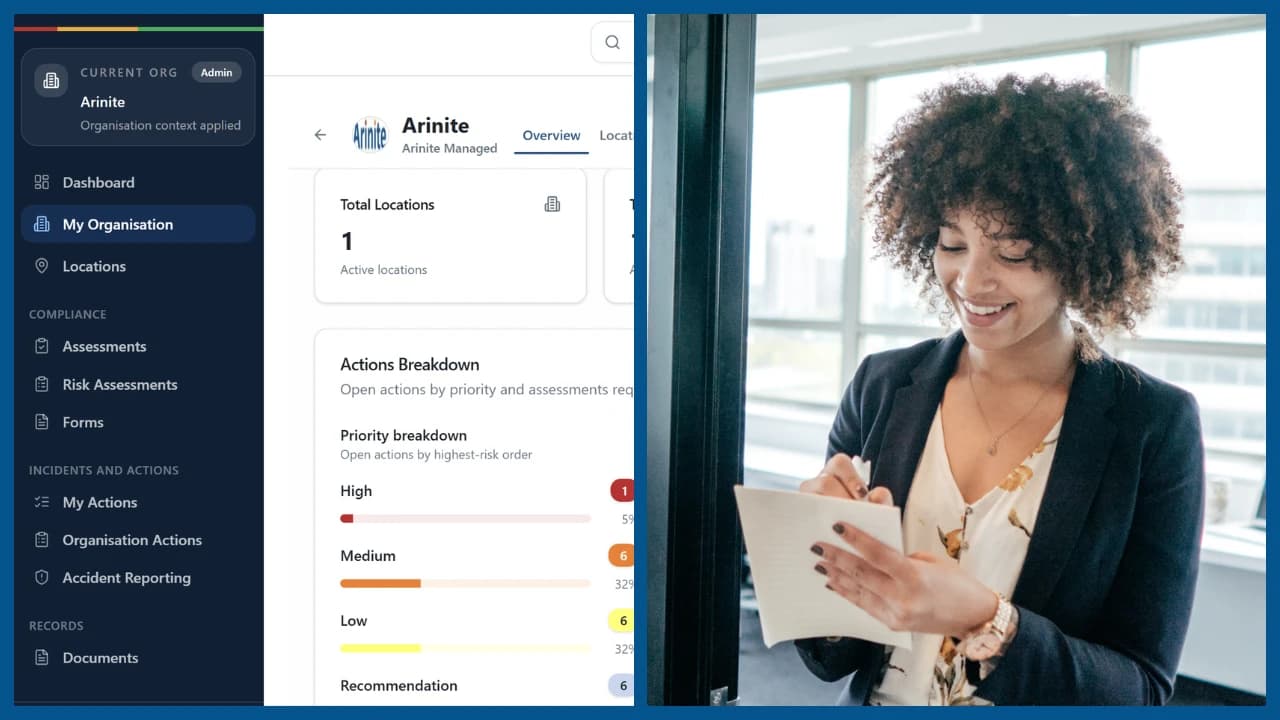
For businesses on Done For You or Done With You packages, incident reporting systems and investigation arrangements are maintained as part of the ongoing outsourced service. All RIDDOR records are held in Arinite's health and safety software platform with automated deadline tracking.

Get Your RIDDOR Compliance Right

A missed or late RIDDOR report rarely stays isolated. The HSE interest it triggers typically expands to a wider review of your risk assessments, policy, training, and management arrangements.

Book a free gap analysis call. In 30 minutes, one of our Chartered consultants will review your current RIDDOR arrangements and broader incident management system, identify the gaps that matter, and recommend the right approach.

For businesses dealing with a recent reportable incident, we can respond immediately.