Warehousing Health and Safety Consultants: 15 Checks Across 5 Zones
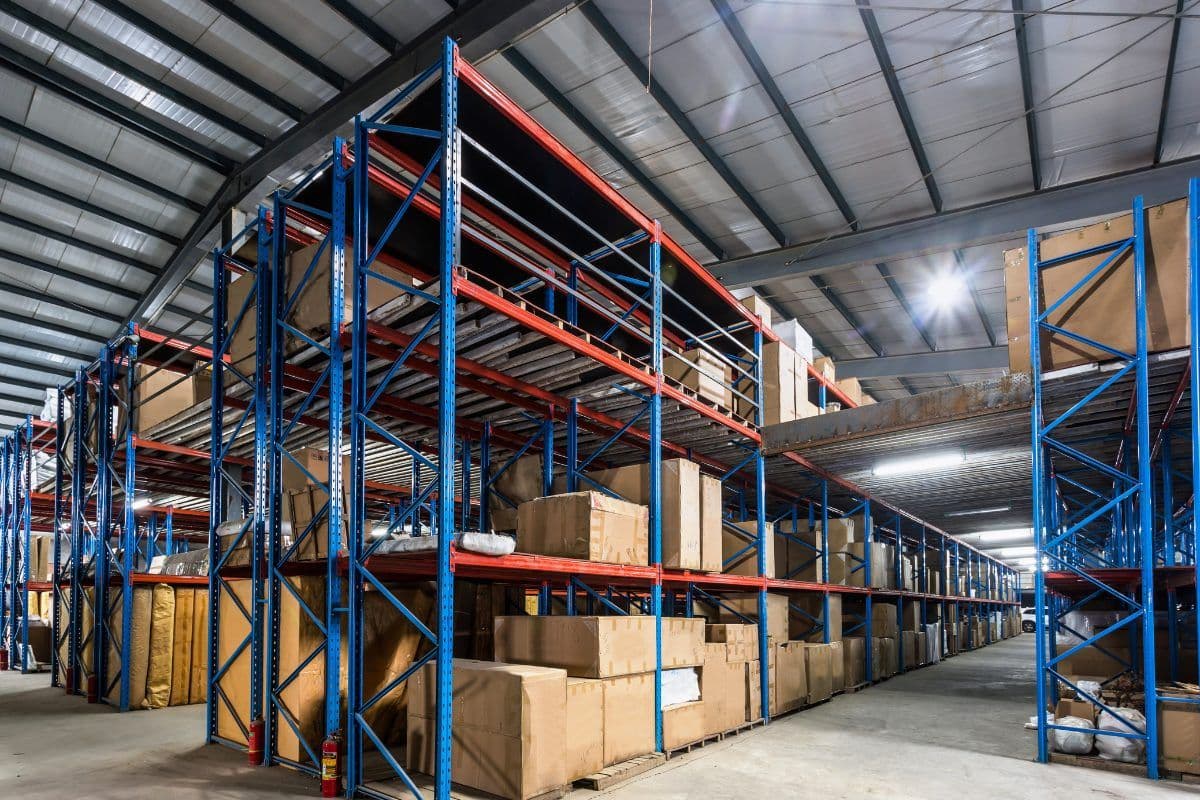
A warehouse can look perfectly safe from the office window. Pallets are stacked, trucks are moving, orders are going out. The problems are in the details nobody upstairs sees: the bent upright at the end of aisle six, the driver who pulls away while the forklift is still in the trailer, the shortcut across the yard that everyone takes at shift change.
This is why choosing warehousing health and safety consultants is different from choosing an adviser for an office. The paperwork matters less than what the consultant notices on the floor. A good one will learn more in a two hour walk than in a day with your documents, and you can judge them by where they look.
The Health and Safety Executive's guide to warehousing, written with the industry's own safety forum, names the priorities for the sector: manual handling and musculoskeletal disorders, slips and trips, vehicles in and around the warehouse, and work at height. Add storage systems and lift trucks, and you have the map.
Below are fifteen checks a competent consultant should make on a first visit, arranged as a walk through five zones, three checks in each. Use them to brief a new adviser, to test your current one, or to walk your own site this week.
Zone 1: the yard and gatehouse
1. Are people and vehicles kept apart?
This is the law, not good practice. Regulation 17 of the Workplace (Health, Safety and Welfare) Regulations 1992 requires every workplace to be organised so that pedestrians and vehicles can circulate in a safe manner, with sufficient separation between vehicle routes and pedestrian routes, and sufficient separation where they share a route. The HSE's warehousing guide says people and vehicles should be segregated as far as is reasonably practicable. Look for marked walkways, barriers at crossing points, and where people actually walk when nobody is watching.
2. How much reversing is there?
The same guide says the need for vehicles to reverse should be minimised as far as possible, for example by one-way systems and drive-through loading areas, and that sharp bends and blind corners should be avoided. It also warns that vehicles remain dangerous even when moving slowly. A consultant should stand in the yard through a busy period and count the reversing movements, then ask which of them the layout forces.
3. What happens to visiting drivers?
Visiting drivers do not know your site and did not attend your induction. Check what they are told at the gate, where they wait during loading, and whether they have access to toilets and welfare facilities, which the HSE guide recommends are provided for visiting drivers. The HSE's workplace transport pages cover site rules for visitors in more detail.
Zone 2: the loading bays
4. Can a vehicle leave before loading has finished?
The guide calls this a driveaway: movement of a vehicle before loading or unloading is complete. It can cause serious accidents resulting in major injuries and fatalities, and the guide is clear that you must have a safe system of work so that drivers never move their vehicles until it is safe. Ask how the system works in practice. Key control, traffic lights, wheel chocks or vehicle restraints are all used. A verbal "you're good to go" is not a system.
5. Are the dock edges and levellers safe?
A loading dock is an unprotected edge for much of the day, and a dock leveller is a machine with trapping points. Check edge protection when bays are not in use, the condition of levellers, and that they can be mechanically locked in the raised position for maintenance, as the guide describes. This is also the first place to look for work at height being done casually, such as people climbing onto trailers.
6. Is the bay itself in good order?
Lighting, floor condition, housekeeping and weather protection decide how safe a bay is on a wet night in February. The guide gives recommended lighting levels for loading bays and requires floors and traffic routes to be free from holes, slopes and uneven or slippery surfaces. A consultant who only visits at eleven on a dry morning has not seen the bay at its worst.
Zone 3: racking and storage
Need Expert H&S Guidance?
Our qualified consultants can help you implement the right health & safety measures for your business.
7. Who is the person responsible for racking safety?
The guide expects a nominated person responsible for racking safety, usually shortened to PRRS, who determines how often the racking is inspected to suit the operating conditions of the warehouse. If nobody on site can name that person, the rest of the racking regime is unlikely to exist. This is the first racking question a consultant should ask.
8. Is there a three level inspection regime?
The guide describes a hierarchy. Any employee who sees damage reports it immediately to the PRRS. Visual inspections are made at weekly or other regular intervals based on risk assessment, with a formal written record. And a technically competent person carries out an expert inspection at intervals of not more than 12 months, with a written report. That person may be a trained specialist in the organisation, a specialist from the rack supplier or an independent qualified rack inspector. Ask to see all three sets of records.
9. What happens to damaged racking, and to damaged pallets?
The guide uses a traffic light classification. Green damage is recorded and monitored. Amber is hazardous damage that needs remedial work: once the load is removed, the component should not be reloaded until repaired, and amber damage should be redesignated red if remedial work has not been carried out within four weeks. Red is very serious damage, where the area is immediately offloaded and isolated. Pallets matter too: the guide says all pallets should be inspected each time before use, with damaged ones withdrawn. Walk the aisles and compare the tags on the racking with the log.
Zone 4: lift trucks and charging
10. Has every truck had its thorough examination?
Lift trucks are lifting equipment. Regulation 9 of the Lifting Operations and Lifting Equipment Regulations 1998 requires lifting equipment exposed to conditions causing deterioration to be thoroughly examined at least every 12 months, at least every 6 months where it is used for lifting persons or is an accessory for lifting, or in accordance with an examination scheme. This is separate from routine servicing. Check the report for each truck, including hired ones, and that defects were closed.
11. Are operators trained and authorised?
Only trained and authorised operators should drive, and the list should match reality. Check the training records for every operator on every shift, including agency staff, and for each type of truck they use. Then watch: seat belts, speed, loads carried at height, and whether pedestrians walk through the operating area. Observation tells you whether the training took.
12. Is battery charging controlled?
The guide states that charging batteries, including those described as maintenance free, gives off explosive hydrogen gas, and that charging should take place in a well ventilated, designated area where smoking, naked flames and other ignition sources are prohibited. Check where charging really happens, what is stored next to it, and whether there is eye wash and spill provision. Newer battery types bring different risks, so ask what the fleet uses.
Zone 5: the people doing the work
13. Has manual handling been avoided, assessed and reduced?
Regulation 4 of the Manual Handling Operations Regulations 1992 sets the order: avoid hazardous manual handling so far as is reasonably practicable, assess what cannot be avoided, and reduce the risk. In picking operations the questions are pick heights, weights, repetition, pace and targets. Our guide to the manual handling risk assessment covers the method.
14. Are floors, stairs and mezzanines under control?
Slips and trips are one of the sector's four priorities. Look at floor condition, spill response, shrink wrap and strapping on the floor, and the edges and gates of mezzanine floors where goods are passed up and down. Our article on slips and trips at work sets out the controls.
15. Who looks after agency and shift workers?
The guide is direct: employment agencies and warehouse operators who hire from agencies have a shared duty to protect agency workers and should co-operate and co-ordinate. Check who inducts them, who trains them, who supplies their protective equipment and whether night shift supervision matches days. Peak season is when this fails, and our guide to night and shift work covers the shift side.
The fifteen at a glance
| Zone | Checks | Main source |
|---|---|---|
| Yard and gatehouse | Segregation, reversing, visiting drivers | Workplace Regulations reg 17; HSE warehousing guide |
| Loading bays | Driveaways, dock edges and levellers, bay condition | HSE warehousing guide |
| Racking and storage | PRRS, three level inspection, damage and pallets | HSE warehousing guide |
| Lift trucks and charging | Thorough examination, operators, battery charging | LOLER reg 9; HSE warehousing guide |
| People | Manual handling, slips and edges, agency and shift workers | Manual Handling Regulations reg 4 |
What to expect from the consultant afterwards
A walk is only useful if it leads somewhere. After a first visit you should receive a short report that ranks findings by risk, separates the urgent from the routine, and gives each action an owner. You should also be told plainly where specialist input is needed, such as an independent rack inspector for the annual expert inspection or an examiner for lift trucks. A general consultant should not be signing those off.
The HSE publication behind most of these checks is Warehousing and storage: a guide to health and safety, known as HSG76 and free to download. It dates from 2007, so it predates much warehouse automation, but it remains the HSE's reference for the sector and a consultant in this field should know it well.
Keeping the racking log, truck examinations, training records and actions in one system is where health and safety consultants and software work together, and regular health and safety audits test whether the weekly checks are really being done.
The international picture
The hazards are the same in any country: vehicles, height, loads and people. The rules differ in form.
In the United States, OSHA's powered industrial truck standard requires the employer to ensure each operator is competent, as demonstrated by completing specified training and evaluation, and requires an evaluation of each operator's performance at least once every three years. Trucks must be examined before being placed in service, at least daily. British law sets the outcome and leaves the interval for refresher training to the employer, so a UK training matrix will not automatically meet the American rule.
Across Europe, the same split between a general duty and detailed national or standards based rules applies to racking and lifting equipment, with inspection bodies and intervals set country by country. A group running distribution centres in several countries needs one internal standard for the fifteen checks and a local check on the legal minimum at each site. Our international health and safety consultants work on that basis.
Where Arinite fits
Arinite is a firm of health and safety consultants with a dedicated warehousing sector service. Our consultants walk the site in the way described here, act as the appointed competent person where a business has none, and are clear about where a specialist inspector or examiner is required. Our earlier guides to warehouse and logistics risks cover the hazards in more depth.
We have worked this way for more than 15 years, with over 1,500 businesses, across more than 50 countries and over 100,000 employees, and we retain more than 95% of the clients who start with us. Our global health and safety consultants support single sites and multi country networks, including retail distribution.
If you walked your own five zones tomorrow, which of the fifteen would you be least sure about?
Related Articles
Written by
Arinite Health & Safety Consultants
Health & Safety Expert at Arinite