Night and Shift Work: 11 Duties Office Employers Overlook
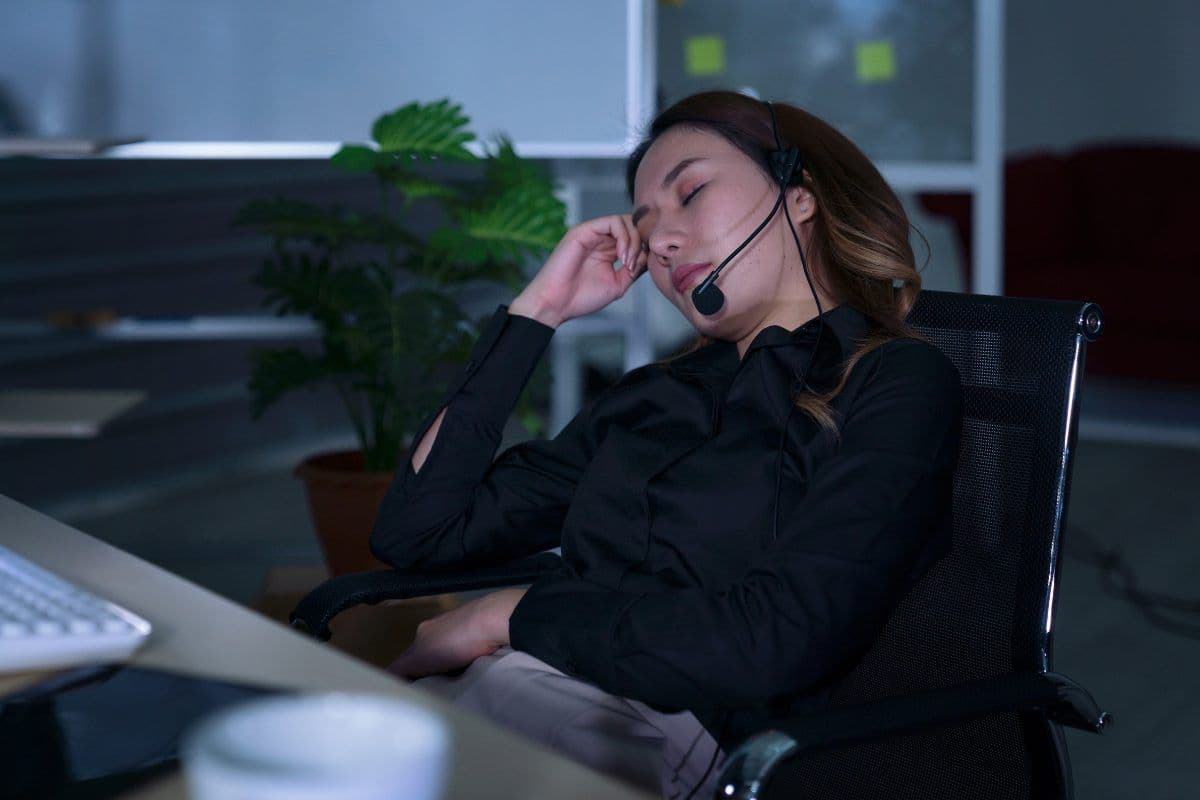
Professional and financial firms run around the clock without ever describing themselves as shift operations.
Someone covers Asian markets from six in the morning. A support desk runs to midnight. Engineers deploy releases at three because that is when nobody is using the system. A deal team works through. A shared services centre in Manila or Kraków runs London hours, which are its nights.
None of that is called shift work, so none of the framework that governs shift work gets applied. Eleven duties that follow anyway, and the first is where most firms go wrong.
1. The definition catches more people than you think
A night worker is not simply somebody who works occasional late hours.
The Working Time Regulations 1998 define night time as a period of at least seven hours including midnight to five in the morning, subject to agreement, and regulation 2 defines a night worker as a person who, as a normal course, works at least three hours of daily working time during night time.
"As a normal course" is doing the work. It does not require every night, and case law and guidance have treated regular recurring patterns as sufficient. A support analyst rostered onto nights one week in four is very likely a night worker. So is someone whose standing pattern starts at five to cover another market.
Establish who in your organisation meets that definition, because everything below follows from it and most firms have never asked.
2. There is an average hours limit
Regulation 6 provides that a night worker's normal hours of work shall not exceed an average of eight hours in each twenty-four hour period, calculated over a reference period.
The averaging matters. A single long night does not breach it; a sustained pattern can. And unlike the weekly working time limit, this one is not subject to individual opt-out in the same way, which surprises organisations that assume the opt-out they hold covers everything.
3. Some work has an absolute limit, not an average
Need Expert H&S Guidance?
Our qualified consultants can help you implement the right health & safety measures for your business.
The provision most likely to be missed entirely.
Where night work involves special hazards or heavy physical or mental strain, the limit applies to actual hours in any twenty-four hour period rather than to an average. Work is treated as involving special hazards or heavy strain where it is identified as such by a collective or workforce agreement, or where the risk assessment identifies a significant risk.
Read that second limb carefully. It is your own risk assessment that can bring work into this category. An organisation whose assessment identifies significant mental strain in a night role has, by that assessment, engaged a stricter limit on itself.
4. Every night worker is entitled to a free health assessment
The duty most consistently unmet in professional firms, and it is not discretionary.
Regulation 7 requires the employer to ensure that a night worker has the opportunity of a free health assessment before being assigned to night work, and thereafter at regular intervals.
Two features. It is an opportunity to be offered rather than a test to be imposed, so an employee may decline, and the offer itself is the obligation. And it is not a one-off: regular intervals means a recurring cycle, which most organisations have never established.
The reason this is missed is that night working in professional firms happens to salaried staff who arrange their own hours, and nobody thinks of them as being "assigned to night work". The regulation does not distinguish by seniority.
5. If it makes someone ill, they may need moving
The consequence of the assessment, and the part employers rarely plan for.
Where a registered medical practitioner advises that a worker is suffering from health problems connected to night work, the employer must, where possible, transfer the worker to suitable day work.
That is a positive obligation rather than a discretion, and it needs a route to exist. In a small specialist team where one person covers a market, having no plan for this is a foreseeable problem.
6. Records have to exist
Regulation 9 requires employers to keep adequate records showing whether the limits on night work and the health assessment requirements are being complied with, retained for a defined period.
Adequate records means something that would demonstrate compliance to somebody asking. A rota in a scheduling tool that overwrites itself, or hours captured only in a billing system, is unlikely to serve that purpose.
7. Shift design is a control measure
Where health and safety adds something employment law does not.
How shifts are arranged has a substantial effect on fatigue and health, and the variables are well understood: the direction of rotation, the speed of rotation, the number of consecutive nights, the length of the shift, the timing of changeovers and the recovery period afterwards. HSE publishes guidance on fatigue covering these.
Most professional firms design rotas around coverage and fairness, which are reasonable objectives and do not address fatigue at all. Adding fatigue as an explicit design criterion costs nothing at the point of design and is close to impossible to retrofit.
8. Fatigue is a foreseeable risk, not a personal failing
The framing that determines whether anything gets done.
Fatigue is treated in many organisations as something individuals manage through sleep hygiene and resilience. Where an employer sets the hours, fatigue arising from those hours is a consequence of a work arrangement, and it is assessable in the same way as any other.
The practical controls are organisational: limits on consecutive nights, a stated position on maximum hours in a period, planned handovers so the last hour of a shift is not the busiest, and permission to escalate when coverage fails rather than absorbing it.
9. Night work is usually lone work
Two duties that combine and are almost always assessed separately, if at all.
The person working at three in the morning is frequently alone in a building, or alone in a team, with reduced facilities, no reception, thinner security and slower access to help. HSE publishes guidance on lone working, and the controls are the familiar ones: knowing who is in the building, a check-in arrangement, and a means of raising an alarm that works in that location.
Add the comms room, the plant area or the basement to that scenario and it becomes a genuinely serious combination.
10. Getting home is part of the shift
The risk with the highest consequence and the least attention.
Someone finishing at three in the morning has to travel. Public transport may not run, the walk to a car park is different at that hour, and driving after a night shift carries a well-documented risk of falling asleep at the wheel.
Practical arrangements are unremarkable: transport provision or an account with a taxi service, a stated position on driving after nights, and somewhere to rest before travelling if needed. Where employees drive their own vehicles for work, this connects directly to the wider grey fleet question.
11. The rules do not travel, and neither does the exemption
The complication for groups, and the reason this cannot be handled centrally.
Working time and night work rules are national and diverge substantially. Several jurisdictions in this series impose specific obligations on night working that go beyond the British position: Japan requires an annual stress check with obligations attached to long hours; Taiwan names illness induced by shift work, night work and long hours in its safety statute; India's labour codes address women working at night with consent and safety measures; Sweden and Denmark regulate the organisational working environment including hours.
A shared services operation running London hours from another continent is a night operation under that country's law, not under Britain's. A group standard that reflects the British framework will be insufficient in several entities and irrelevant in others.
The eleven, in short
| Duty | Common position |
|---|---|
| Identify night workers | Never established |
| Average hours limit | Assumed covered by an opt-out |
| Absolute limit for strain | Not considered |
| Free health assessment | Never offered |
| Transfer to day work | No route exists |
| Records | Rota only, overwritten |
| Shift design | Built for coverage, not fatigue |
| Fatigue framing | Treated as personal resilience |
| Lone working | Assessed separately, if at all |
| Travel home | Individual responsibility |
| Other countries | Group standard assumed to apply |
Rows one and four are where to start. The first is a list you can produce this week, and the second is an offer you can make immediately, which together close the most conspicuous gap.
Where Arinite fits
Arinite works with organisations whose people work hours the organisation has never characterised as shift work, which describes most firms covering more than one time zone. We support 1,500+ businesses across 50+ countries and protect 100,000+ employees, with 95%+ client retention over 15+ years. Our health and safety consultants work extensively with finance and banking, IT and software and professional services organisations.
Where teams span several countries, our global health and safety consultants establish what each jurisdiction requires of night and shift working, and our international health and safety consultants keep that current. Holding rotas, assessments and health assessment offers in one register across every entity is where health and safety consultants and software are worth more together than either alone, and periodic health and safety audits establish who actually meets the definition.
If nobody in your organisation could name your night workers, a free gap analysis will produce the list and what follows from it.
Related Articles
Written by
Arinite Health & Safety Consultants
Health & Safety Expert at Arinite