Accidents at Work: The 5 Most Common in Offices and What Prevents Them
Offices are low-risk workplaces, and that is exactly why their accidents are so predictable. There are no presses or forklifts. What there is, every day, is floors, stairs, kitchens, boxes, chairs and people moving quickly between meetings.
HSE records the kinds of accident that cause non-fatal injuries across Great Britain, and its injury statistics show the same handful of causes year after year. Offices follow the national pattern closely, with a slightly different mix.
Most organisations spend their effort on recording accidents after they happen. This article is about the other half: where the five most common kinds occur in an office, and what actually stops them.
1. Slips, trips and falls on the same level
The most common cause of workplace injury, in offices as everywhere else.
In an office, the places are predictable: wet floors near kitchens and entrances on rainy days, trailing cables under desks and across walkways, bags and boxes left in circulation routes, loose floor tiles and worn carpet edges, and poor lighting on stairs and corridors.
Regulation 12 of the Workplace (Health, Safety and Welfare) Regulations 1992 requires floors and traffic routes to be suitable, in good condition, free from obstructions and, so far as is reasonably practicable, free from anything that may cause a person to slip, trip or fall.
What prevents it is mostly housekeeping and design: cable management built into desks rather than left to individuals, entrance matting sized for real footfall, a cleaning schedule that avoids wet floors at busy times, and a quick way to report and fix a damaged floor surface.
2. Handling, lifting or carrying
The second most common cause nationally, and underestimated in offices.
Office handling looks light and adds up: archive boxes, printer paper, water bottles for dispensers, IT equipment during moves, furniture, event materials and deliveries.
Regulation 4 of the Manual Handling Operations Regulations 1992 requires employers to avoid hazardous manual handling so far as reasonably practicable, assess what cannot be avoided, and reduce the risk.
What prevents it is having the right equipment where the task happens: a trolley on every floor, heavy items stored at waist height rather than on the floor or top shelf, deliveries taken to where they are needed rather than carried through the building, and office moves handled by people equipped to do them.
3. Struck by a moving or falling object
Need Expert H&S Guidance?
Our qualified consultants can help you implement the right health & safety measures for your business.
The category that covers most of the minor injuries an office sees.
Items falling from high shelves, cupboard doors and drawers, doors swinging into people in busy corridors, objects knocked off desks, and equipment falling during moves or installations. In kitchens, burns and scalds from kettles, boiling water taps and hot drinks sit alongside this category and are common enough to plan for in their own right.
The controls are simple and physical: nothing heavy stored above head height, vision panels in doors on busy routes, filing cabinets that cannot tip when more than one drawer is open, and boiling water taps with their safety locks left working.
4. Falls from height
Not usually associated with offices, and a genuine cause of serious injury in them.
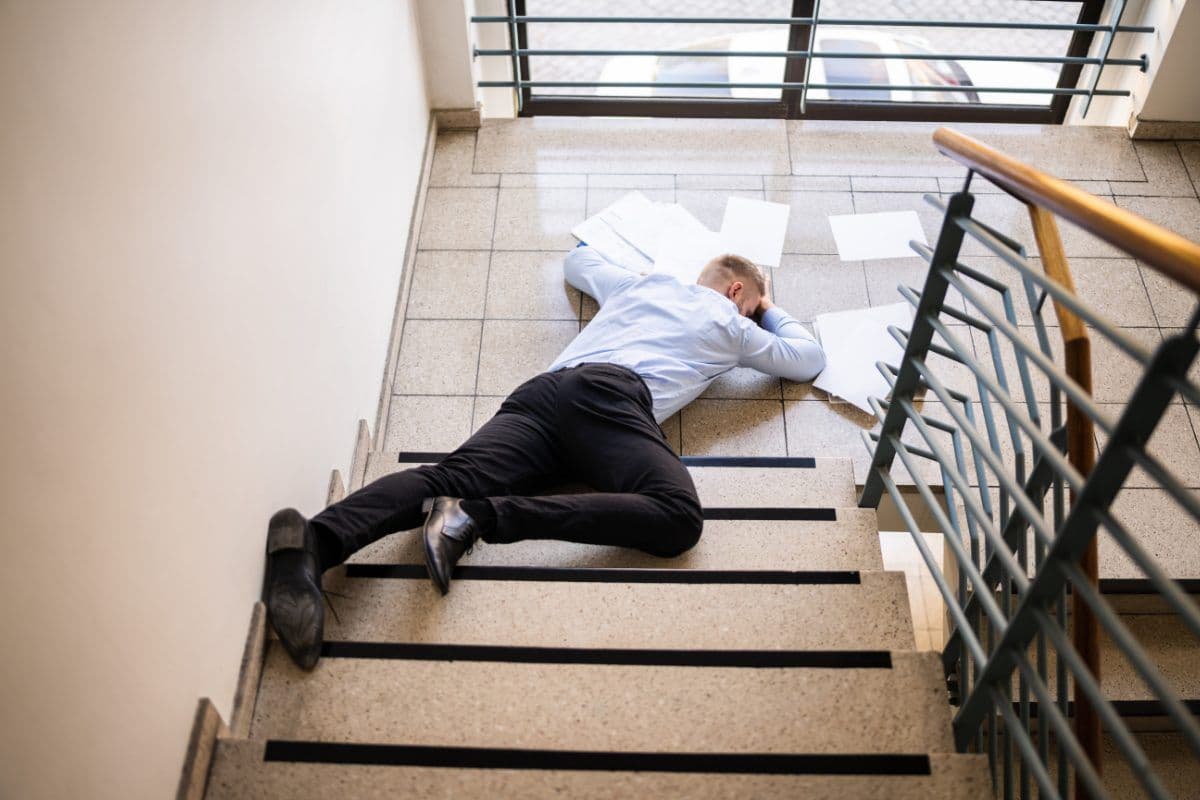
The typical office fall from height is not from a roof. It is from a chair used to reach a high shelf, a desk climbed to adjust a light or a blind, or a stepladder borrowed from somewhere and used without anyone checking it. Stairs are the other major source.
The Work at Height Regulations 2005 apply to any work at a height where a person could be injured by falling, with no minimum height. Regulation 6 requires work at height to be avoided where reasonably practicable and, where it cannot be, the right equipment to be used.
What prevents it is providing a suitable step or kick stool in every room with high storage, so nobody improvises, keeping stairs well lit with handrails and clear, and making it normal to ask facilities to do tasks at height rather than climbing on furniture.
5. Acts of violence
The category offices assume does not apply to them.
For most back-office environments it is rare. For reception teams, customer-facing staff in branches, people delivering difficult decisions, and anyone working with members of the public, it is a real and foreseeable risk.
HSE's guidance on violence at work covers verbal abuse and threats as well as physical assault, and the controls are the ones covered elsewhere in this series: a way to summon help, a clear exit, and a stated position that staff may end a conversation and leave.
The five, in short
| Kind of accident | Where it happens in an office | What prevents it |
|---|---|---|
| Slips, trips and falls | Kitchens, entrances, cables, walkways | Cable management, matting, cleaning timing, quick repairs |
| Handling, lifting, carrying | Archives, deliveries, moves | Trolleys, storage at waist height, the right people for moves |
| Struck by objects | High shelves, doors, cabinets, kitchens | Nothing heavy up high, vision panels, working safety locks |
| Falls from height | Chairs, desks, stairs | A step in every room, lit stairs, asking facilities |
| Violence | Reception, branches, customer contact | Summoning help, exits, the right to withdraw |
Rows one and four together account for most serious office injuries, and both are prevented by spending small amounts of money in the right places.
From recording to preventing
Regulation 3 of the Management of Health and Safety at Work Regulations 1999 requires a risk assessment, and your accident records are the best evidence you have about what that assessment should focus on.
Three practical steps:
Read the accident book as data. A pattern of minor trips in the same corridor is a warning, not a series of unconnected events. Our guides to the accident book and recording accidents at work cover the recording side.
Walk the building with the five categories in mind. It takes about twenty minutes and finds most of what matters.
Fix the cheap things first. A trolley, a kick stool, cable trays and a working safety lock on the boiling water tap prevent more office injuries than any policy.
For international offices
Two considerations.
The causes are universal, the reporting is not. Slips, handling, falling objects, falls from height and violence cause office injuries in every country. What differs is what must be recorded and reported, and when. Kuwait requires immediate reporting including accidents on the way to or from work. Bahrain makes vehicle accidents on the premises reportable. Croatia requires a committee session within two working days of a fatality.
Prevention travels better than paperwork. The physical controls above work in any building. The records, reports and investigation formats must follow local rules.
Holding accident data and prevention actions for every site in one register is where health and safety consultants and software are worth more together than either alone, and periodic health and safety audits find the patterns an accident book shows but nobody reads.
Where Arinite fits
Arinite turns accident records into prevention, which is the half most organisations never get to. We support 1,500+ businesses across 50+ countries and protect 100,000+ employees, with 95%+ client retention over 15+ years. Our health and safety consultants work extensively with legal, finance and banking and IT and software organisations.
Where offices span several countries, our global health and safety consultants establish what each jurisdiction requires of recording and reporting, and our international health and safety consultants keep that current.
If the same kind of accident keeps appearing in your accident book, a free gap analysis will show you what would stop it.
Related Articles
Written by
Arinite Health & Safety Consultants
Health & Safety Expert at Arinite