Warehouse Health and Safety: 8 Risks That Dominate the Figures
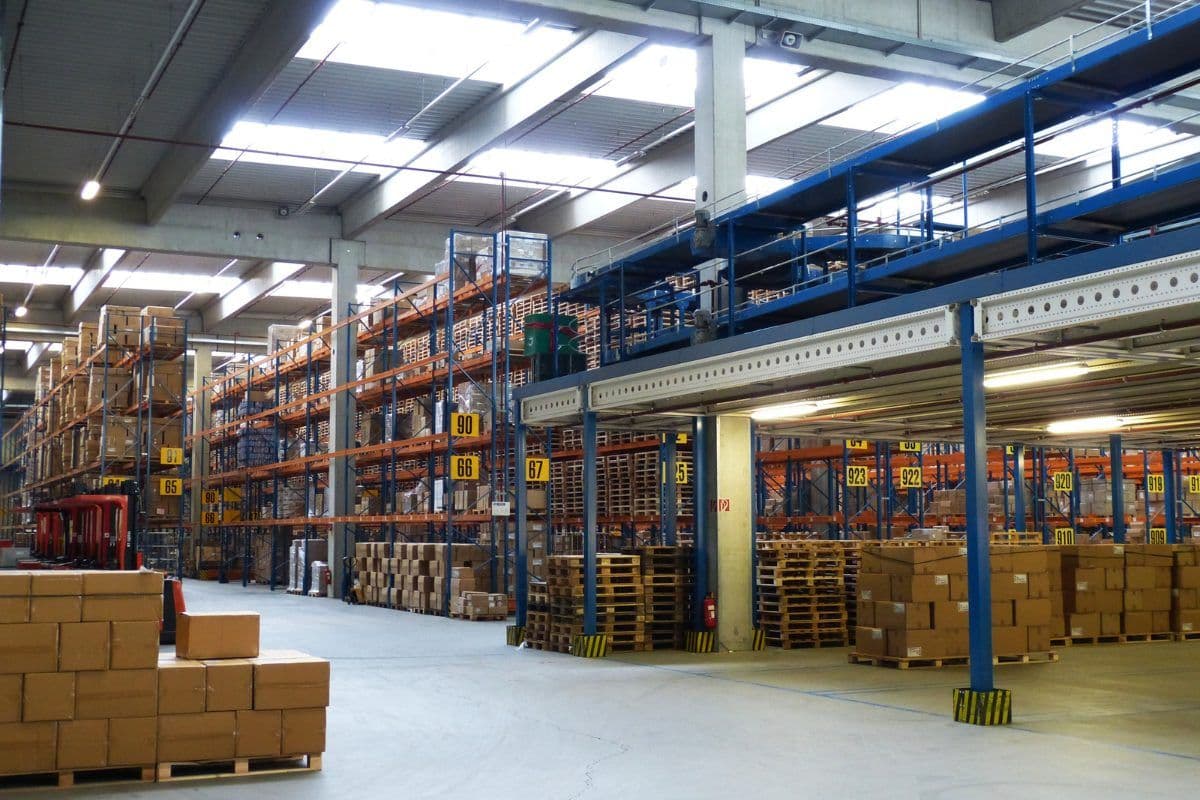
Warehousing is a sector where the serious risks are well understood and the injury figures stay stubbornly high. That combination usually means the problem is not knowledge but pressure: volume, throughput targets, seasonal peaks and a workforce that changes faster than the training records.
The risks below account for most of what actually happens. None of them is obscure, and each has a control that is well established and frequently not applied at peak.
Eight risks.
1. Workplace transport: people and vehicles sharing space
The risk that causes the most serious injuries in the sector, by a distance.
Fork lift trucks, pallet trucks, delivery vehicles and pedestrians occupying the same floor is the defining hazard of a warehouse. HSE publishes extensive guidance on workplace transport.
The controls are structural rather than behavioural, and the order matters: separate people from vehicles where you can, with segregated routes, barriers and separate doors. Where separation is not possible, control the interaction with crossing points, sightlines, mirrors, lighting and speed limits. Only then rely on high-visibility clothing and awareness, which are the weakest controls and the ones most often treated as the answer.
Two specific failures recur. Reversing, which is involved in a disproportionate share of incidents, and the gradual erosion of segregation as racking and stock encroach on marked routes.
2. Equipment: authorised, trained and maintained
Regulation 9 of the Provision and Use of Work Equipment Regulations 1998 requires adequate training in the use of work equipment, including the methods to be adopted, the risks and the precautions.
For lift trucks that means basic training, specific job training and familiarisation with the actual site, plus refresher training. It also means authorisation: a named list of who may operate what, kept current as people join and leave.
Maintenance and thorough examination sit alongside training, and lifting equipment carries its own examination regime.
3. Racking: the risk that builds up invisibly
Need Expert H&S Guidance?
Our qualified consultants can help you implement the right health & safety measures for your business.
Racking failure is rare and catastrophic, and the cause is almost always accumulated damage.
The practical requirements are a regular visual check by someone on site, a periodic expert inspection, a route for reporting damage that does not depend on the person who caused it volunteering, and load notices that reflect what is actually stored.
The failure pattern is consistent: a knock from a truck, no report, no repair, and further loading on a weakened upright.
4. Manual handling, at volume
Regulation 4 of the Manual Handling Operations Regulations 1992 requires hazardous manual handling to be avoided so far as reasonably practicable, then assessed and reduced.
In a warehouse the distinguishing factor is repetition. A single lift is rarely the problem; several hundred a shift is. The relevant variables are the weight, the frequency, the height of the pick, the twist involved and the pace set by the system.
Avoidance is often genuinely available: change the pick height, change the packaging, bring the load to the person, or automate the worst tasks.
5. Working at height
Regulation 6 of the Work at Height Regulations 2005 requires work at height to be avoided where reasonably practicable, and where it cannot be, the right equipment to be used.
In a warehouse that covers order picking at height, access to mezzanines, work on racking, and the improvised version, which is somebody climbing racking because the equipment is in use elsewhere. Mezzanine edges and unprotected openings are the other recurring feature.
6. Loading bays and visiting drivers
The area where responsibility is shared and therefore frequently unowned.
Loading bays combine vehicle movement, height differences, weather and people who do not work for you and have never been inducted.
Three controls matter: vehicle safety measures so a vehicle cannot move while being loaded, a clear rule about where drivers wait and whether they leave their cab, and a short site induction for visiting drivers covering routes, rules and what to do if something goes wrong.
7. Fire, in a building full of stock
Warehouses present a fire risk profile very different from an office.
High-bay storage, large fire loads, long travel distances to exits, racking that obstructs sightlines, battery charging areas, and increasingly lithium battery storage and charging all feature. Sprinkler and detection design depends on what is stored and how high, which means a change in stock profile can invalidate the original design assumptions.
Escape routes are the everyday issue: in a building where space equals revenue, gangways and exits accumulate stock.
8. Agency and seasonal workers
The factor that sits behind several of the risks above.
Warehousing uses agency and seasonal labour heavily, particularly at peak, when volume is highest and time for induction is shortest.
Regulation 15 of the Management of Health and Safety at Work Regulations 1999 requires the employer to give the employment business comprehensible information on the qualifications and skills required to do the work safely and on the specific features of the job affecting health and safety, and the agency must pass that on.
The practical test at peak: can you show that everybody on the floor last Saturday had been inducted, and that anybody operating equipment was authorised to? For many operations the honest answer is no, and that is where the incidents cluster.
The 8, in short
| Risk | The control that actually works |
|---|---|
| Workplace transport | Separate, then control, then equip |
| Equipment | Trained, authorised, maintained, list kept current |
| Racking | Damage reported and repaired, not absorbed |
| Manual handling | Change the pick height and the pace, not the technique |
| Work at height | Equipment available where it is needed |
| Loading bays | Vehicle safety measures, driver rules, driver induction |
| Fire | Escape routes clear; design matched to current stock |
| Agency workers | Information to the agency, induction on arrival |
Rows one and eight together explain most serious warehouse injuries. The first is the hazard; the last is why controls fail at exactly the moment volume peaks.
Peak is the pattern
Worth stating separately, because it is the through-line.
Almost every control above degrades under throughput pressure. Segregation erodes as stock encroaches. Damage goes unreported because reporting stops the line. Induction shortens because the shift starts in ten minutes. Equipment gets improvised because the right kit is in use.
An operation that manages safety well in February and poorly in November does not have a knowledge problem. It has a resourcing decision that nobody has made explicitly.
The practical response is to plan peak as a distinct operating state: extra induction capacity, extra supervision, a stated position on what does not flex, and a check part way through rather than a review afterwards. HSE's logistics and warehousing pages cover the sector.
For international operators
Two considerations.
The risks are universal and the machinery is not. Equipment examination intervals, operator certification, racking inspection expectations and reporting categories are national. Several jurisdictions covered in this series prescribe who may carry out equipment examinations and on what cycle, and some require appointments that Britain does not.
Agency labour is regulated differently. Lithuania requires the user undertaking to instruct a temporary worker at the specific workplace even where the agency has already done so, and to notify its own safety specialist that the work is starting. Finland requires the user undertaking to attend particularly to orientation and to notify the occupational health service. A group relying on a single agency arrangement will fall short in those jurisdictions.
Holding equipment records, training authorisations and inductions across every site in one register is where health and safety consultants and software are worth more together than either alone, and periodic health and safety audits are most useful when carried out during peak rather than after it.
Where Arinite fits
Arinite assesses operations as they run at their busiest, which for a distribution operation is the only meaningful test. We support 1,500+ businesses across 50+ countries and protect 100,000+ employees, with 95%+ client retention over 15+ years.
Our health and safety consultants work with warehousing and retail operations alongside the property and real estate businesses that own and manage the buildings, and our fire risk assessment work covers high-bay storage where a change in stock profile affects the original design.
Where operations span several countries, our global health and safety consultants establish what each jurisdiction requires of equipment examination and temporary workers, and our international health and safety consultants keep that current.
If your last peak passed without anybody checking whether inductions kept pace with hiring, a free gap analysis is the right place to start.
Related Articles
Written by
Arinite Health & Safety Consultants
Health & Safety Expert at Arinite