Skip to content

HSE inspections up 47% - HSE carried out over 13,200 workplace inspections in 2024/25.

Health and Safety in Retail:Risk Assessments, Fire, Slip and Trip, Violence at Work, and Compliance

Qualified retail health and safety consultants · Retail risk assessments · Fire risk assessments · Slip and trip hazard control · Manual handling · Violence at work · Ongoing multi-site compliance for retailers across the UK and 50+ countries.

Retail is typically Local Authority-regulated rather than HSE-regulated, but the compliance load is no lighter. Slip and trip injuries dominate retail accident statistics. Customer-facing violence and abuse have been rising for a decade and are now a specific regulatory focus under the Worker Protection Act 2023. Fire safety, manual handling, lone working, and young worker protection all carry their own statutory duties. Arinite's Qualified consultants deliver the full retail compliance stack: retail risk assessments, fire risk assessments under the RRO 2005, slip and trip programmes, manual handling training, violence at work prevention, and the documented management system that ties multi-site operations together.

1,500+ businesses
50+ countries
95%+ retention
Qualified Consultants
UK & International
Free Gap Analysis
Get in Touch

Contact Arinite Today

Fill out the form below and our team will get back to you within 24 hours.

By submitting, you agree to our Privacy Policy and consent to Arinite contacting you.

ABOUT

About This Sector

Retail covers a wide range of operations: high street stores, supermarkets, shopping centre concessions, department stores, warehouse-and-store operations, click-and-collect, and pop-up stores. The compliance profile varies by format but several common threads run across the sector: slip and trip is the dominant accident category, manual handling injuries are persistent, customer-facing aggression is rising, and fire safety carries elevated focus because of the combination of public access, electrical loads, and stock fuel loads.

Multi-site retailers face an additional challenge: maintaining consistent compliance across dozens or hundreds of locations, each with its own building, layout, fire risk profile, and local accident pattern.

Arinite provides Qualified health and safety consultants and compliance software to retailers across the UK and 50+ countries, from independent boutiques and SME chains through to major national multi-site operations.

COMPLIANCE GAPS

Common Compliance Failures We
Find in Retail

These are the retail health and safety failures Arinite's Qualified consultants find most frequently. Each one is a real exposure to Local Authority or HSE enforcement, customer injury claims, and director liability under Section 37 HSWA 1974.

Generic risk assessment applied across all stores

A single risk assessment cloned across the estate without site-specific adjustment for layout, footfall, fire risk, or local accident history. Not "suitable and sufficient" under MHSWR Regulation 3.

Fire risk assessments out of date

Fire risk assessment not reviewed after a refit, layout change, change of stock, or change of building use.

Slip and trip programme reactive

Wet floor signs deployed after spills but no proactive programme of inspection, drainage, floor surface assessment, or weather-related entry mat management.

Manual handling treated as induction-only

Manual handling covered in induction but no task-specific assessment for stock replenishment, delivery handling, or display assembly.

Violence at work not documented as a risk assessment category

Customer aggression treated as an HR or security issue, not as a statutory psychosocial risk under MHSWR.

Lone working in opening, closing, and stockroom activities not assessed

Single-staffed opening or closing without lone working risk assessment and check-in arrangements.

Worker Protection Act 2023 reasonable steps not documented

The preventative duty on sexual harassment, including harassment by customers, has not been operationalised through risk assessment, policy, or training.

Young worker protection gaps

16- and 17-year-old workers in the retail workforce without specific risk assessment under MHSWR Regulation 19.

RETAIL RISK ASSESSMENT

Retail Risk Assessment

Regulation 3 of the Management of Health and Safety at Work Regulations 1999 requires every retail employer to conduct a suitable and sufficient risk assessment covering all work activities and all locations. For retail, the scope must address:

1

Customer-facing risks

Slip and trip, falling objects, queue management, fire evacuation of public, customer injury.

2

Stockroom and back-of-house risks

Manual handling, racking, ladder use, working at height, electrical safety.

3

Lone working

Opening, closing, stockroom work, click-and-collect operations.

4

Delivery and goods-in

Vehicle-pedestrian interface, manual handling, working at height during unloading.

5

Display and merchandising

Working at height, manual handling, electrical safety.

6

Cash handling and security

Robbery risk, panic alarm response, post-incident support.

7

Violence at work

Customer aggression, abuse, threats. A statutory psychosocial risk category under MHSWR.

8

Young workers and new and expectant mothers

Specific risk assessment under MHSWR Regulations 16 and 19.

Site-Specific vs Estate-Wide

For multi-site retailers, the practical approach is an estate-wide framework risk assessment plus site-specific addenda capturing layout, fire risk profile, local accident history, and any local hazards (proximity to road, adjacent occupiers, building age and condition).

FIRE RISK ASSESSMENTS

Fire Risk Assessments
for Retail Premises

The Regulatory Reform (Fire Safety) Order 2005 requires a documented fire risk assessment for every non-domestic premises in England and Wales, including every retail store, regardless of size. Equivalent duties apply in Scotland and Northern Ireland. See our fire risk assessment service.

Retail-Specific Fire Risk Considerations

1

Public access and the duty to provide for safe evacuation of customers, including disabled customers and unaccompanied children.

2

Stock fuel loads, including paper, cardboard packaging, textiles, plastics, and aerosols.

3

Electrical loads: tills, lighting displays, refrigeration, fitting room lighting.

4

Cooking and hot work in food retail and concessions.

5

Storage area arrangements including racking, stock heights, and access to firefighting equipment.

6

Multi-occupier building coordination in shopping centres and department stores.

PAS 79 Methodology

Arinite's retail fire risk assessments are delivered to PAS 79:2020 methodology, the British Standard recognised by fire and rescue authorities, insurers, and landlords as the practical benchmark.

Frequency of Review

The Fire Safety Order requires review whenever there is reason to suspect the assessment is no longer valid. For retail, that includes refits, layout changes, stock category changes, occupancy changes, and following any fire incident or near miss.

SLIP AND TRIP

Slip, Trip, and
Fall Prevention

Slip, trip, and fall injuries dominate retail accident statistics for both employees and customers. A defensible slip and trip programme has four components:

1

Floor surface assessment

Pendulum testing or equivalent assessment of slip resistance for every floor surface in customer and back-of-house areas.

2

Inspection regime

Documented routine inspection (typically hourly during opening hours) with logged sign-off.

3

Spillage and contamination response

Documented response protocol with appropriate signage, containment, and clean-down records.

4

Weather and seasonal management

Entry mat programme, drying off zones in wet weather, ice and snow management plan for car parks and entrances.

The single highest-impact intervention is usually the entry mat programme, because the majority of wet-weather customer slips originate at the entrance threshold.

MANUAL HANDLING

Manual Handling
in Retail

The Manual Handling Operations Regulations 1992 require task-specific assessment of significant manual handling activities. In retail, this typically covers:

1

Goods-in unloading and stocking.

2

Stockroom replenishment of the shop floor.

3

Display and merchandising activities.

4

Click-and-collect and online order picking.

5

Heavy or awkward stock categories: white goods, furniture, garden products, packs of bottled drinks.

The TILE framework (Task, Individual, Load, Environment) is the HSE-recognised methodology. See our manual handling page.

VIOLENCE AT WORK

Violence at Work and
Worker Protection Act 2023

Customer-facing aggression, abuse, and violence have risen across UK retail over the last decade. Under MHSWR Regulation 3, violence at work is a statutory psychosocial risk assessment category, not an HR or security issue. Under the Worker Protection Act 2023, employers have an additional specific preventative duty on sexual harassment, including harassment by third parties such as customers, in force from 26 October 2024.

Documented Reasonable Steps

A compliant retail violence at work programme covers:

1

Documented risk assessment of customer-facing roles, age-restricted product enforcement, lone working, cash handling, and night and early-morning operations.

2

Policies on acceptable customer behaviour, refusal of service, and reporting expectations.

3

Training for customer-facing employees on de-escalation, recognition of escalation signs, and safe withdrawal.

4

Panic alarms, CCTV, and physical interventions appropriate to risk.

5

Reporting and follow-up arrangements covering criminal and civil routes, occupational health support, and post-incident review.

6

Specific Worker Protection Act 2023 reasonable steps on prevention of sexual harassment.

See our stress and mental health at work page for the broader psychosocial compliance framework.

EMPLOYER DUTIES

Core Employer Duties Under UK Retail
Health and Safety Law

Every retail employer must:

1

Conduct a documented risk assessment under MHSWR Regulation 3 covering all activities and all locations, including site-specific assessment for each store.

2

Maintain documented fire risk assessment for each premises under the Regulatory Reform (Fire Safety) Order 2005, reviewed on change.

3

Appoint one or more competent persons under MHSWR Regulation 7. See our competent person service.

4

Maintain a written health and safety policy signed by a director, reviewed annually, and communicated to employees.

5

Operate a slip and trip prevention programme: floor surface assessment, inspection regime, spillage response, weather management.

6

Conduct task-specific manual handling assessment for significant manual handling activities.

7

Maintain violence at work risk assessment and Worker Protection Act 2023 reasonable steps documentation.

8

Operate lone working arrangements for opening, closing, and lone stockroom activities.

9

Conduct specific risk assessment for young workers (Regulation 19) and new and expectant mothers (Regulation 16).

10

Report specified injuries, diseases, and dangerous occurrences under RIDDOR. See our RIDDOR page.

11

Provide information, instruction, training, and supervision under MHSWR Regulation 10 and 13.

12

Maintain accident reporting and root cause investigation arrangements.

REGULATIONS

Sector-Specific Regulations for
Retail Employers

See our health and safety legislation guide for the full framework.

HSWA 1974

General duties; Section 37 director liability.

MHSWR 1999

Risk assessment, competent person, training, young workers, new and expectant mothers.

The Regulatory Reform (Fire Safety) Order 2005

Fire risk assessment for non-domestic premises.

The Workplace (Health, Safety and Welfare) Regulations 1992

Temperature, ventilation, lighting, space, sanitation.

The Manual Handling Operations Regulations 1992

Task-specific assessment of significant manual handling activities.

The Health and Safety (Display Screen Equipment) Regulations 1992

For till operators and back-office workers.

The Worker Protection Act 2023

Preventative duty on sexual harassment including by third parties.

The Equality Act 2010

Reasonable adjustments for disabled workers and customers.

RIDDOR 2013

Reporting of injuries, diseases, dangerous occurrences.

The Children and Young Persons Act 1933

And related regulations on the employment of children and young persons.

The Health and Safety (First-Aid) Regulations 1981

First aid provision and trained first aiders.

The Electricity at Work Regulations 1989

Including PAT testing programme.

OUR SERVICES

Our Retail Health
and Safety Services

Arinite delivers the full range of retail health and safety services through Qualified consultants and integrated health and safety software. Delivered as part of our outsourced health and safety service.

Retail risk assessments

Site-specific risk assessments for each store, plus estate-wide framework covering all activities and worker categories.

Fire risk assessments

PAS 79:2020 fire risk assessments for retail premises, single-tenant and multi-tenant, with landlord and shopping centre operator coordination.

Slip and trip programme

Floor surface assessment, inspection regime design, spillage response protocol, and weather management programme.

Manual handling

Task-specific assessments and training for goods-in, replenishment, and merchandising activities.

Violence at work and Worker Protection Act 2023

Risk assessment, policy, training, and documented reasonable steps for customer-facing roles.

Multi-site compliance management

Centralised documentation, scheduled site inspections, action tracking, and consistent compliance posture across the estate.

Health and safety policy

Documented policy reviewed annually and communicated to all stores. See our health and safety policy service.

Health and safety audits

Documented audits of each site against the retail regulatory framework. See our health and safety audit service.

Competent person retainer

External Qualified competent person satisfying MHSWR Regulation 7.

Health and safety software

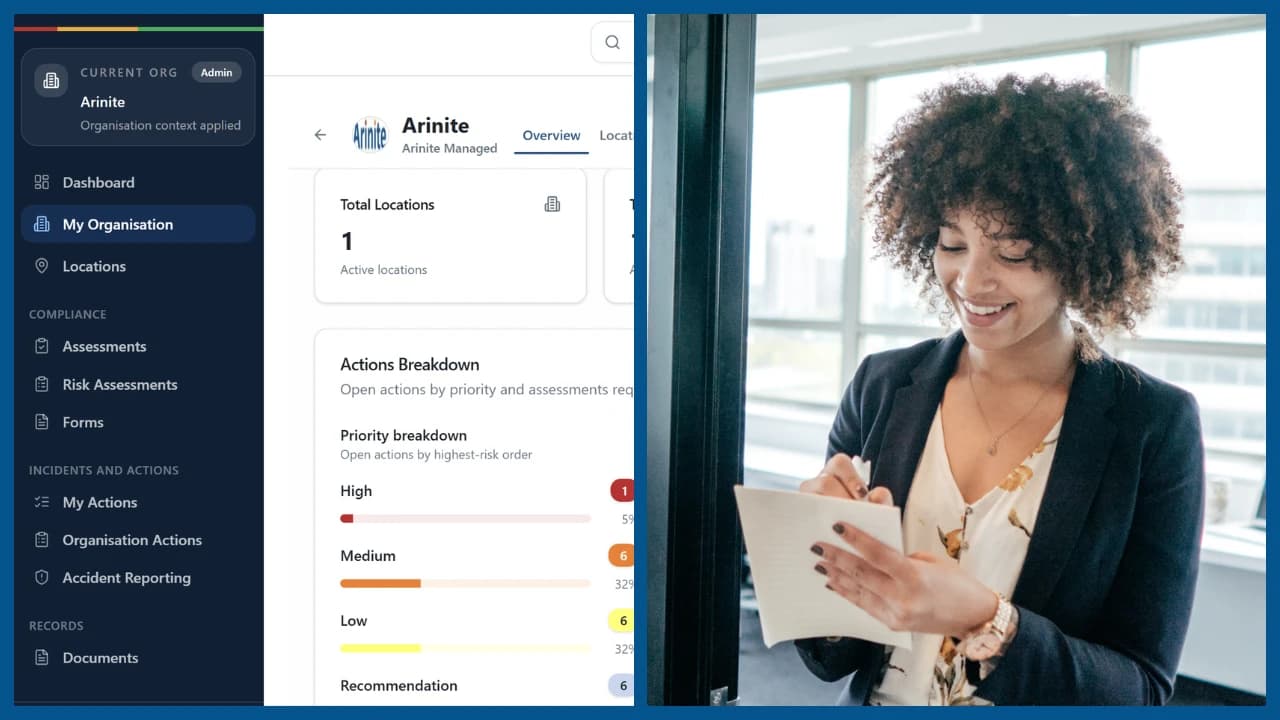
Centralised platform for risk assessments, fire risk assessments, slip and trip inspections, training, incidents, and audits, configured for multi-site operations.

Accident and incident management

RIDDOR reporting support, customer accident response, root cause investigation, and post-incident review.

TRAINING

Retail Health and
Safety Training

Training is a specific legal requirement under MHSWR Regulation 10. The core retail training stack covers:

Health and safety induction

For new starters, covering site-specific risks.

Manual handling

Training, task-specific and supported by task assessments.

Fire safety induction and fire warden training

Appropriate to the premises.

Violence at work and de-escalation

Training for customer-facing employees.

Worker Protection Act 2023 harassment prevention

Training including third-party (customer) scenarios.

Lone working

Awareness and check-in protocols.

First aid at work

For designated first aiders.

Young worker awareness

For managers supervising under-18s.

Cash handling and robbery response

Training where relevant.

See our health and safety training service.

TYPICAL ENGAGEMENT

A Typical Retail
Engagement With Arinite

The following is an illustrative example of how Arinite engagement typically runs for a retail employer.

A specialty retailer with 40 high-street stores across the UK and 600 employees approaches Arinite after a slip and trip incident at one of their stores resulted in a customer civil claim. The retailer holds an outdated H&S policy, a generic risk assessment template cloned across all 40 stores, and inconsistent training records. There is no documented Worker Protection Act 2023 framework and no documented violence-at-work assessment despite increasing reports of customer abuse to staff.

Mo
1

Arinite's free gap analysis call identifies the priority gaps. We agree a 90-day remediation programme. In month one, we deliver: a refreshed health and safety policy signed by the CEO, a current MHSWR Regulation 3 risk assessment covering head office, distribution, and store activities, a competent person appointment, and a centralised compliance programme architecture through Arinite's software platform.

Mo
2

In month two: we deliver site-specific risk assessments and fire risk assessments for the 40 stores through a scheduled inspection programme, a documented violence-at-work assessment with de-escalation training for store staff, and documented Worker Protection Act 2023 reasonable steps with specific provisions for customer-on-staff harassment.

Mo
3

In month three: we deliver a slips and trips action plan including cleaning regime audit and inspection protocols, train store managers on incident reporting and accident investigation, deliver mental health awareness training to area managers, and hand over to ongoing competent person retainer with regional inspection scheduling.

The retailer now operates a centralised compliance programme with site-specific documentation for all 40 stores, scheduled inspections, and consistent training records. The civil claim is defended on the basis of documented arrangements. The competent person retainer continues.

WHY ARINITE

Why Retail Companies
Choose Arinite

Five practical reasons retailers appoint Arinite as their outsourced competent person:

Multi-site programme management

Centralised compliance for multi-store retail networks through Arinite's software platform with site-specific documentation, scheduled inspections, and action tracking.

Violence at work and customer harassment expertise

Documented assessment and training programmes specifically configured for customer-facing retail.

Slips and trips defence ready

Documented cleaning regime audit, inspection protocols, and incident investigation framework that materially strengthen civil claim defence.

Worker Protection Act 2023 capability

Specifically configured for customer-on-staff and third-party harassment risk.

Qualified consultants, not generalists

MHSWR Regulation 7 requires competent advice.

Book a Free Gap Analysis Call

Book a free gap analysis call with one of our Qualified health and safety consultants. In 30 minutes, we will assess your current retail health and safety arrangements, identify the compliance gaps that matter most, and give you a clear recommendation and indicative cost.