LOLER and Your Office Lift: 4 Questions That Decide the Duty
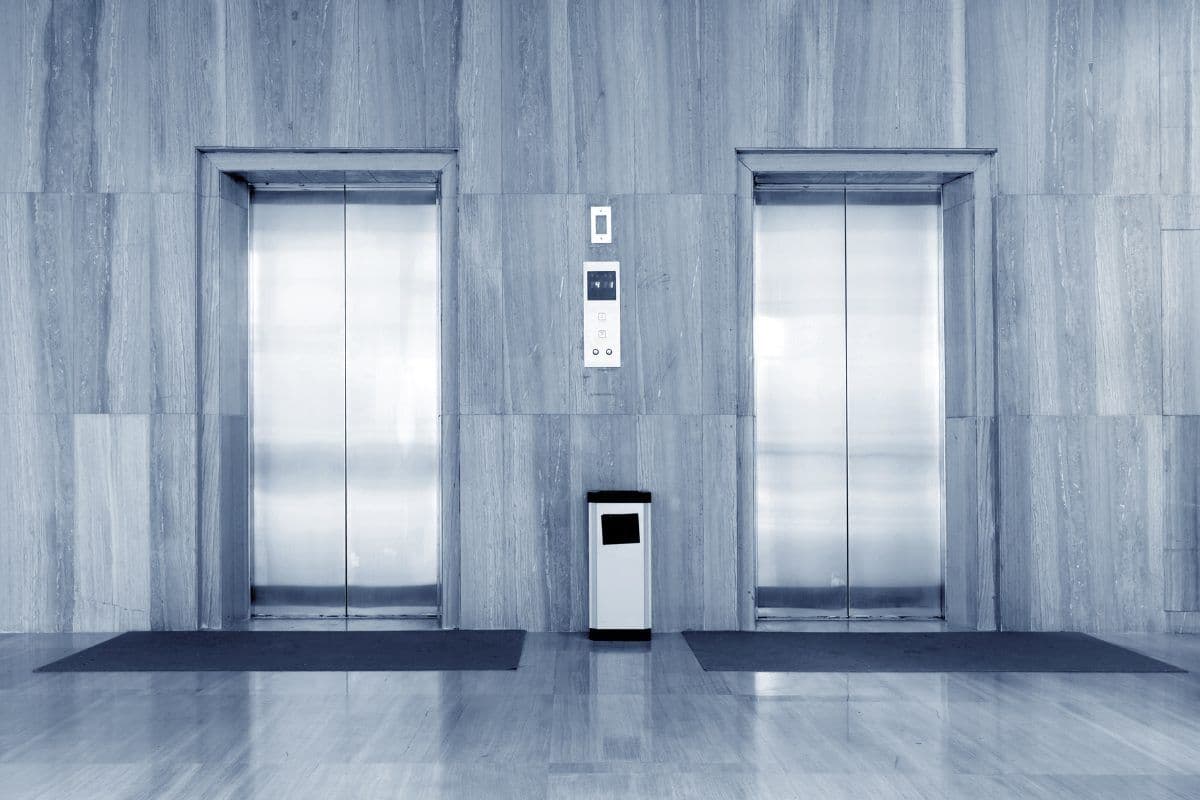
LOLER is understood as an industrial subject. The Lifting Operations and Lifting Equipment Regulations 1998 bring to mind cranes, hoists and slings, and an office-based organisation reasonably assumes the topic belongs to somebody else.
Then you notice that the thing carrying your people between floors, several hundred times a day, is lifting equipment carrying persons.
Whether the duty is yours or your landlord's is a question of fact rather than of assumption, and it is one most tenants have never asked. Four questions that decide it.
1. Does LOLER apply to a passenger lift in an office?
Start with scope.
Regulation 2 of the Regulations defines lifting equipment as work equipment for lifting or lowering loads, including attachments used for anchoring, fixing or supporting it. A passenger lift used at work falls within that, and the Regulations contain specific provisions for equipment used for lifting persons.
So the answer is that LOLER is capable of applying to the lift in your building, and HSE's overview of LOLER sets out the framework.
Two clarifications. LOLER sits alongside PUWER rather than replacing it, so the maintenance, suitability and inspection duties covered in our work on work equipment apply as well. And a lift installed in a building used for work is within scope even though its users are not operating it as a work activity in the way a crane operator would be.
2. Whose duty is it, in a building you do not own?
The question that matters most for a tenant, and the answer is not automatic.
Regulation 3 applies the Regulations to employers in respect of lifting equipment provided for use or used by their employees, and to persons who have control of lifting equipment to any extent.
Control, rather than ownership. In practice the position in a multi-tenant building is usually that the landlord or managing agent has control of the passenger lifts and arranges maintenance and examination, and the tenant relies on that.
Relying on it is reasonable. Relying on it without evidence is not, and the practical test is whether you could produce the current examination report if asked. Most tenants could not, because they have never requested one.
Where a tenant has installed its own equipment, the position is different and the duty is straightforwardly theirs. That includes goods lifts within a demise, platform lifts installed as an access adjustment, and any hoist in a plant area.
3. What is a thorough examination, and how often?
Need Expert H&S Guidance?
Our qualified consultants can help you implement the right health & safety measures for your business.
The provision with a defined frequency, and it is the number to know.
Regulation 9 requires lifting equipment to be thoroughly examined by a competent person at specified intervals. For lifting equipment used for lifting persons, the interval is at least every six months. For other lifting equipment it is at least every twelve months, and in either case at intervals set out in an examination scheme, or following exceptional circumstances liable to jeopardise safety.
Three points follow.
Six months applies to passenger lifts precisely because they carry people. That is more frequent than most other examination regimes in a building and it is easy to check.
Examination is not maintenance. A service contract keeps a lift running. A thorough examination is an independent assessment of its safety, carried out by a competent person, usually arranged through an insurer or an independent inspection body.
Exceptional circumstances trigger it too. Damage, a significant alteration, or a long period out of use each raise the question independently of the calendar.
4. What happens to the report, and what should you do with it?
The part organisations skip, and it carries a specific obligation.
Regulation 10 addresses reports and defects. The competent person makes a report of the thorough examination, and where the examination identifies a defect involving an existing or imminent risk of serious personal injury, the report is notified to the relevant enforcing authority as well as to the employer.
Read that carefully. A serious defect does not stay between you and your lift contractor. It goes to the regulator.
What a tenant should actually do is short:
Ask for the current report for every lift serving your demise, and note the date of the next examination due.
Read the defect section rather than filing the report. Reports frequently identify items requiring attention within a period, and those periods pass.
Establish who acts on a defect where the equipment is the landlord's and the people affected are yours.
Include it in your handover checks when you take or leave premises, and when your facilities arrangements change.
The four, in short
| Question | Common position | Correct position |
|---|---|---|
| Does it apply | "LOLER is about cranes" | A passenger lift is lifting equipment |
| Whose duty | "The landlord's" | Determined by control; evidence it |
| Frequency | Confused with servicing | Six months for equipment lifting persons |
| The report | Filed unread | Defects acted on; serious ones reach the regulator |
Rows two and three together are the whole of what a tenant needs: know who holds the duty, and be able to show the examination is current.
What else in an office might be in scope
Beyond the passenger lift, four things come up.
Platform and stair lifts installed as accessibility measures, which are frequently the tenant's own installation and therefore the tenant's duty.
Goods lifts and dumbwaiters in buildings with catering or post handling.
Cleaning and maintenance equipment such as suspended access equipment used for window cleaning, which is usually a contractor's and raises the coordination question rather than a direct duty.
Anything in a laboratory or workshop that lifts, which for a technology business with hardware facilities may include hoists, gantries and lifting attachments that are unambiguously yours.
For international groups
Two considerations.
The examination concept is widely shared and the intervals are not. Several jurisdictions covered in this series require prescribed periodic examination of work equipment and installations, with their own intervals and their own rules on who may carry them out: Croatia and Slovenia both require prescribed testing, and Latvia, Lithuania and Bulgaria operate their own regimes.
Who may sign the report is frequently prescribed. As with risk assessment in Hungary and Greece, the qualification of the examiner is a national matter. A group standard requiring that every building's lifts are examined and the reports held will transfer; the interval and the examiner will not.
Holding examination dates, reports and defect actions for every building in one register is where health and safety consultants and software are worth more together than either alone, and periodic health and safety audits reliably find buildings where nobody has seen a report in years.
Where Arinite fits
Arinite establishes which duties in a leased building are actually yours, which for lifting equipment is the question that determines everything else. We support 1,500+ businesses across 50+ countries and protect 100,000+ employees, with 95%+ client retention over 15+ years. Our health and safety consultants work extensively with legal, finance and banking and IT and software organisations, most of them occupying premises they do not control.
Where a portfolio spans several countries, our global health and safety consultants establish what each jurisdiction requires of examination and who may perform it, and our international health and safety consultants keep that current.
If you could not produce the current thorough examination report for the lift your people used this morning, a free gap analysis is the right place to start.
Related Articles
Written by
Arinite Health & Safety Consultants
Health & Safety Expert at Arinite