Slips and Trips at Work: 11 Controls That Actually Work
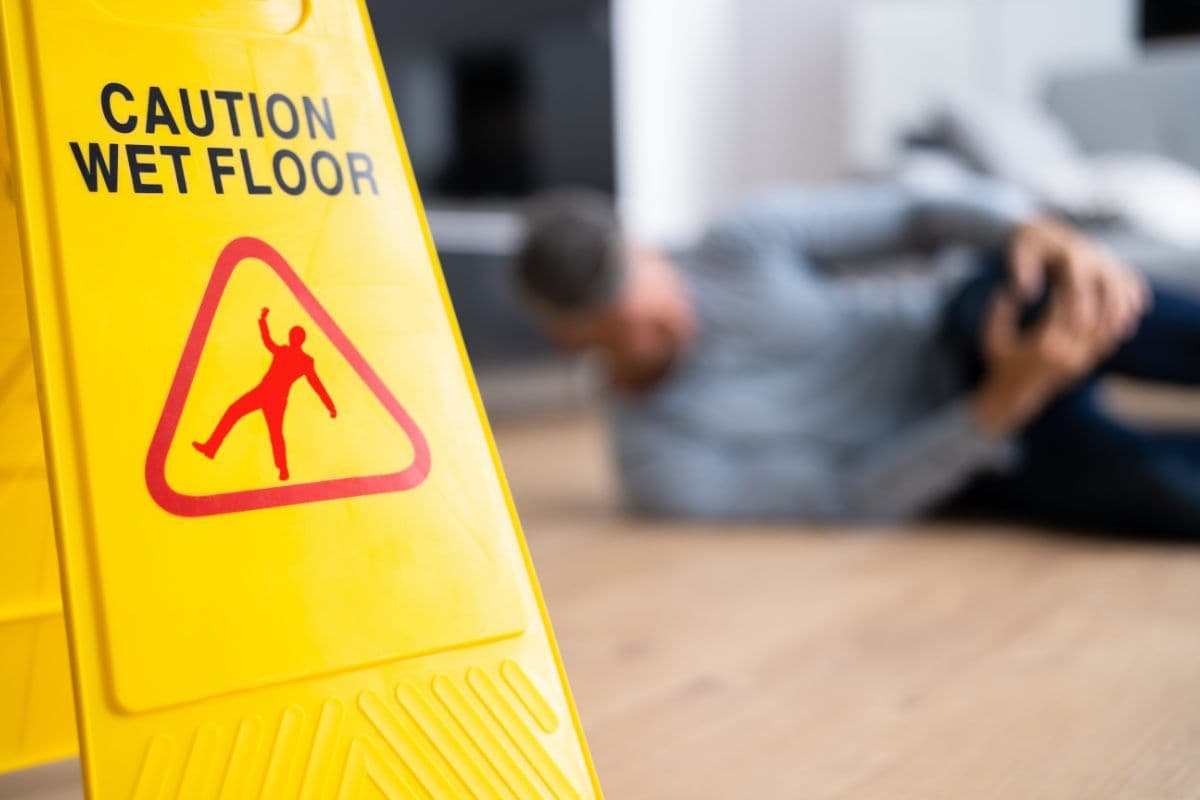
Slips and trips cause more workplace injuries than any other single category, in offices as much as anywhere else. They are also the injuries organisations take least seriously, because each individual incident looks trivial until one of them is not.
The frustrating part is that the controls are well understood, cheap, and almost entirely within an occupier's gift. What defeats most organisations is that prevention is a maintenance and housekeeping discipline rather than a project, so it never gets anybody's sustained attention.
Eleven controls.
1. Understand what the duty actually says
Regulation 12 of the Workplace (Health, Safety and Welfare) Regulations 1992 requires floors and traffic routes to be suitable and in good condition, without holes, slopes or slippery surfaces that expose anybody to risk.
It also requires them to be kept free from obstructions and from any article or substance which may cause a person to slip, trip or fall, so far as is reasonably practicable.
Two things follow. The duty covers the surface and what is on it, which are different problems with different owners. And "kept free" is a continuing obligation, not a condition to be achieved once.
2. Contamination is the main cause, not the floor
The single most useful thing to know, and it reverses most people's instinct.
A dry, clean floor of almost any type is unlikely to cause a slip. The overwhelming majority of slips involve something on the surface: water, cleaning fluid, food, drink, dust, or something tracked in from outside.
HSE's slips and trips material treats contamination as the primary factor, and the practical consequence is that slip prevention is mostly about stopping things reaching the floor and removing them quickly when they do, rather than about the floor itself.
3. Cleaning is a control and a cause at once
Need Expert H&S Guidance?
Our qualified consultants can help you implement the right health & safety measures for your business.
The paradox at the centre of this subject.
Cleaning removes contamination, and the cleaning process itself creates the most reliably slippery floor most offices ever have. A wet floor during cleaning is a hazard the organisation has deliberately introduced.
Three things resolve it. Time it away from peak movement, which for an office means before or after the working day rather than mid-morning. Use methods that leave floors dry or dry quickly, which is a specification question for your provider. And separate the wet area properly, because a single cone in the middle of a corridor is a decoration rather than a barrier.
HSE publishes guidance on cleaning specifically.
4. Match the flooring to the conditions
Where the surface does matter.
Flooring performance is about its slip resistance in the conditions it will actually face. A surface that performs adequately when dry can be dangerous when wet, which is why entrances, kitchens, washrooms and areas near external doors need different specification from the middle of an office floor.
HSE publishes guidance on flooring. The practical point for an occupier is that this is a fit-out decision with a long tail: a cheap surface in an entrance generates incidents for the length of the lease.
5. Entrances are where most office slips happen
The highest-risk square metres in a professional building.
On a wet day, every person entering brings water in on their feet and on umbrellas. The floor near the door gets wetter as the morning goes on, and the people crossing it are moving quickly.
Matting is the control, and it is usually inadequate. It needs to be long enough that somebody takes several steps on it, which in practice is longer than most installed matting. It needs to be maintained and replaced when saturated. And it must lie flat, because curled matting converts a slip control into a trip hazard.
6. Level changes and thresholds
The trip equivalent of entrances.
Single steps, shallow ramps, thresholds between floor finishes and worn carpet edges account for a large share of office trips, and they share a characteristic: people do not expect them.
Two controls. Make them visible, with contrast, lighting and edge marking. And where a level change serves no purpose, remove it at the next refurbishment rather than marking it forever.
7. Cables and temporary obstruction
The office-specific one, and it recurs because the cause recurs.
Laptop chargers across walkways, extension leads from a desk to a wall, cables at hot desks, and AV equipment set up for a meeting and left. Each is temporary, each is somebody's reasonable solution to an immediate problem, and each is a trip hazard.
The durable fix is design rather than instruction: enough power at each desk position, cable management built into furniture, floor boxes where desks sit away from walls. Telling people to be careful does not survive contact with a hot desk and a short cable.
8. Storage and the corridor problem
The cumulative one.
Deliveries, archive boxes, recycling, furniture awaiting disposal and promotional materials accumulate in circulation routes. Nobody places the obstruction that finally blocks the route, which is why it is rarely anybody's decision and never anybody's fault.
This is also a fire issue, since the same corridors are escape routes, and it is the single most common finding in building walk-rounds.
The fix is somewhere else to put things, plus a short regular check with authority to have items removed.
9. Lighting
Both a slip and a trip factor, and routinely overlooked.
People cannot avoid what they cannot see. Stairwells, corridors, storage areas, basements and car parks in winter are where office lighting is most often inadequate, and these are exactly where level changes and obstructions concentrate.
Glare matters too: a bright window at the end of a corridor can obscure a step as effectively as darkness.
10. Footwear, honestly
A control with a narrow but real application.
In an office the employer does not generally specify footwear, and the realistic position is that people wear what they wear. Where footwear genuinely matters, such as cleaning staff, kitchen staff and facilities teams, it should be specified and provided.
For everybody else, the honest answer is that the organisation should control the floor and the contamination rather than expect footwear to compensate for them.
11. Measure it, and act on the pattern
The management control, and the one that turns the other ten into a system.
Read your accident records for location rather than only for severity. Three trips in the same corridor in a quarter is a finding; three trips in three different buildings is background. Our guidance on the most common office accidents covers the wider categories.
Then walk the building in the conditions that matter: on a wet morning, at the end of a cleaning shift, in winter darkness. A walk-round in dry conditions at eleven o'clock finds almost nothing.
The 11, in short
| Control | The point |
|---|---|
| The duty | Surface and what is on it; a continuing obligation |
| Contamination | The primary cause, not the floor type |
| Cleaning | Removes the hazard and creates one |
| Flooring | Specified for wet conditions where they occur |
| Entrances | Matting long enough, maintained, lying flat |
| Level changes | Visible, or removed |
| Cables | Designed out, not instructed away |
| Storage | Somewhere else to put things, plus a check |
| Lighting | Including glare, stairwells and winter |
| Footwear | Specified where it matters, not a general answer |
| Measurement | Location patterns, and walking in the right conditions |
Rows two and three are where most organisations have the wrong model. They look at the floor and the people, and the answer is usually the contamination and the cleaning regime.
Why offices underestimate this
Three reasons worth naming, because they explain the inaction.
The incidents look minor. Most produce a bruise and an entry in the accident book, and the serious outcome is a low-probability version of the same event.
Nobody owns it. Flooring sits with property, cleaning with facilities or a provider, obstruction with whoever left the box, and the accident record with HR or safety.
It is never urgent. There is no inspection date, no certificate and no renewal driving attention, unlike the statutory checks that occupy facilities teams.
That combination is why slips and trips remain the largest category in organisations that are otherwise well run, and why periodic health and safety audits tend to find the same corridors.
For international groups
Two considerations.
Flooring and slip resistance standards are national, with different test methods and classifications, so a group fit-out specification written to one country's standard does not translate directly.
Winter conditions change the analysis. Entrances in cold climates deal with snow, salt and meltwater rather than rain, and several jurisdictions covered in this series place explicit duties on maintaining external access routes in winter conditions.
Holding incident locations and building conditions across sites in one register is where health and safety consultants and software are worth more together than either alone, and it is the only practical way to see that the same corridor appears in three different quarters.
Where Arinite fits
Arinite walks buildings in the conditions where incidents actually happen and identifies the design and regime changes that stop them recurring, rather than issuing another reminder to take care. We support 1,500+ businesses across 50+ countries and protect 100,000+ employees, with 95%+ client retention over 15+ years.
Our health and safety consultants work extensively with legal, insurance, education and IT and software organisations, where this is consistently the largest injury category and the least examined.
Where offices span several countries, our global health and safety consultants establish what each jurisdiction requires of flooring and external routes, and our international health and safety consultants keep that current.
If the same corridor appears twice in your accident book this year, a free gap analysis is the right place to start.
Related Articles
Written by
Arinite Health & Safety Consultants
Health & Safety Expert at Arinite