GPU Racks in the Office: the 10 Duties They Bring With Them
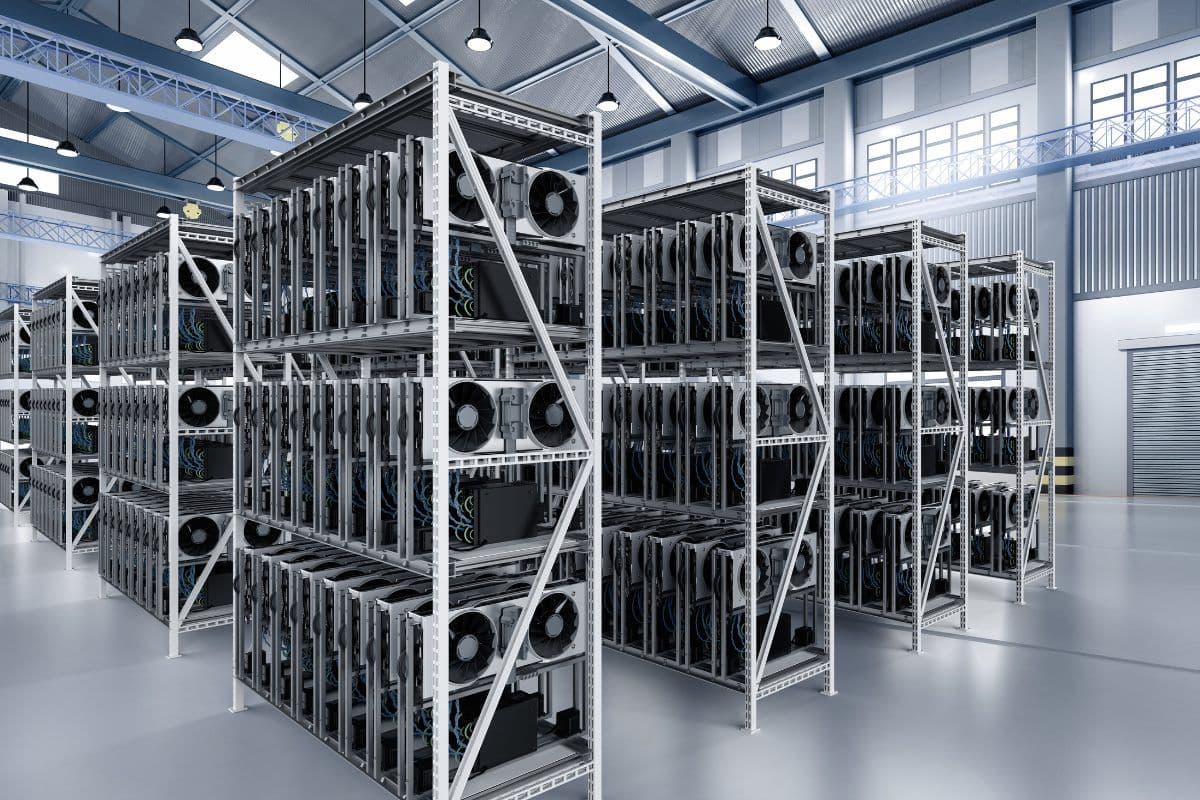
Something has changed in the buildings we survey for AI and software clients. Two years ago the comms room held a switch, a patch panel and a small UPS. Now it holds compute: a few high density racks, supplementary cooling that was not in the original plan, a much larger battery, and a power feed somebody upgraded in a hurry.
The reason is usually sound: latency, data residency, cost per training hour, or a contract that will not allow the workload off premises. The problem is that it gets made as an infrastructure decision, by people who are very good at infrastructure, and the duties it brings in arrive silently.
There are at least ten of them, and three are the kind that produce a prohibition notice rather than a recommendation. The sharpest is this: if your lease gives you a repairing obligation of any extent, you are a dutyholder for asbestos in that building, and you must have assessed for it before anyone drills a cable route or a cooling penetration. Not after. Not as part of the snagging.
Here are the 10 duties, each with its provision.
1. A repairing obligation of any extent makes you the asbestos dutyholder
Regulation 4(1) of the Control of Asbestos Regulations 2012 defines the dutyholder as every person who has, by virtue of a contract or tenancy, an obligation of any extent in relation to the maintenance or repair of non-domestic premises, or, absent such a contract, every person who has to any extent control of that part. Regulation 4(3) then requires the dutyholder to ensure a suitable and sufficient assessment is carried out as to whether asbestos is or is liable to be present.
2. And you cannot start the work without that assessment
Regulation 5 prohibits an employer undertaking work in demolition, maintenance or any other work which exposes or is liable to expose employees to asbestos unless a suitable and sufficient assessment has been carried out, or, where there is doubt, the employer assumes asbestos is present and that it is not chrysotile alone and observes the Regulations accordingly. Running power and cooling through a 1970s ceiling void is "any other work".
3. Electrical systems must be maintained, and work near them controlled
Need Expert H&S Guidance?
Our qualified consultants can help you implement the right health & safety measures for your business.
Regulation 4 of the Electricity at Work Regulations 1989 requires, at paragraph (2), that systems be maintained so as to prevent danger so far as is reasonably practicable, and at paragraph (3) that every work activity, including work near a system, be carried out so as not to give rise to danger. A rack commissioning done live, at pace, beside an energised distribution board sits squarely inside paragraph (3).
4. Competence is a hard requirement, not a preference
Regulation 16 provides that no person shall be engaged in any work activity where technical knowledge or experience is necessary to prevent danger unless he possesses it, or is under such degree of supervision as is appropriate. A capable platform engineer is not for that reason a competent person for electrical work, and the provision does not bend because the deployment window is tight.
5. What is made dead has to stay dead
Regulation 13 requires adequate precautions to prevent electrical equipment which has been made dead, in order to prevent danger, from becoming electrically charged during the work. With remote hands, remote restart and an out of hours rota, this is a lock off and permit question rather than a label question.
6. Noise has three tiers, and the first is 80 dB(A)
Regulation 4 of the Control of Noise at Work Regulations 2005 sets the lower exposure action values at a daily or weekly personal noise exposure of 80 dB(A) and a peak of 135 dB(C), the upper at 85 dB(A) and 137 dB(C), and the exposure limit values at 87 dB(A) and 140 dB(C). High density cooling is loud, and the people exposed are those working inside the room, not at a desk outside it.
7. Hearing protection counts towards one figure and not the others
Regulation 4(5) is the detail that catches people out. In applying the exposure limit values, account shall be taken of the protection given by personal hearing protectors. In applying the lower and upper action values, it shall not. So issuing ear defenders does not move you below an action value, and the duties that attach at 80 and 85 dB(A) stay exactly where they were.
8. Above the upper value, the fix cannot be ear defenders
Regulation 6(2) requires that where an employee is likely to be exposed at or above an upper action value, the employer reduce exposure to as low a level as reasonably practicable by a programme of organisational and technical measures, excluding the provision of personal hearing protectors. The named options include equipment emitting the least possible noise, workplace design and layout, and reduction by technical means.
9. Ventilation, temperature, and the alarm nobody fitted
Regulation 6(1) of the Workplace (Health, Safety and Welfare) Regulations 1992 requires effective and suitable provision to ventilate every enclosed workplace with a sufficient quantity of fresh or purified air, and regulation 6(2) requires any plant used to comply to include an effective device to give visible or audible warning of any failure where necessary for health or safety. Regulation 7(2) separately prohibits a cooling method that lets fumes, gas or vapour escape. Supplementary cooling installed for compute rarely has the alarm, and nobody tests it.
10. Racks are a manual handling operation
Regulation 4(1) of the Manual Handling Operations Regulations 1992 requires the employer to avoid the need for manual handling involving a risk of injury so far as is reasonably practicable, and otherwise to assess against Schedule 1, reduce the risk to the lowest level reasonably practicable, and give precise information on the weight of each load and its heaviest side where the centre of gravity is off centre. A loaded chassis at head height on a two person lift is the case this was written for.
The 10 duties at a glance
| Duty | Provision | What it catches |
|---|---|---|
| Asbestos dutyholder | CAR 2012 reg. 4(1) and (3) | A repairing obligation of any extent |
| No work without the survey | CAR 2012 reg. 5 | Cable and cooling penetrations |
| Systems maintained, work near them | EAWR 1989 reg. 4(2) and (3) | Commissioning beside live boards |
| Competence | EAWR 1989 reg. 16 | Engineers are not electricians |
| Made dead stays dead | EAWR 1989 reg. 13 | Remote restart and out of hours |
| Noise tiers | Noise Regs. reg. 4(1) to (3) | 80, 85 and 87 dB(A) |
| Hearing protection discounted | Noise Regs. reg. 4(5) | Counts for 87, not for 80 or 85 |
| Above the upper value | Noise Regs. reg. 6(2) | Ear defenders are not the answer |
| Ventilation and failure alarm | WHSWR reg. 6(1) and (2), reg. 7(2) | The alarm nobody fitted |
| Manual handling | MHOR 1992 reg. 4(1) | Loaded chassis, two person lifts |
Rows one and two are the ones to settle before anything is ordered. The asbestos dutyholder test turns on the lease, not on ownership, and a repairing obligation of any extent is enough. In practice that catches a very large share of the tech tenancies we see, including many that assume the landlord holds everything. Regulation 5 then makes the survey a precondition of the work rather than a document to obtain alongside it, and the fallback in regulation 5(b) is to assume asbestos is present and work to the Regulations, which is slower and dearer than surveying first. Our note on asbestos in office buildings covers where it tends to be.
Rows six to eight are the cluster most often mishandled, because the instinct is to buy ear defenders. The action values at 80 and 85 dB(A) are assessed without credit for hearing protection, so protection does not reduce your duties, and above the upper value regulation 6(2) expressly excludes hearing protectors from the programme of measures. The real answers are quieter equipment, containment and layout, which are decisions made at procurement and not afterwards.
Two further points sit outside the ten and still need an owner. Floor loading has no single instrument behind it, which is precisely why it gets missed: with no regulation to look up, whether a slab or a raised floor takes a fully populated rack falls to the general duty in section 2 and to your lease, and needs an engineer's answer in writing. Battery storage is the other: a large lithium ion UPS is a different fire and gas proposition from the small unit it replaced, with the profile our note on lithium ion batteries describes, scaled up inside an occupied building. Both belong in the fire strategy, not the infrastructure ticket.
The out of hours dimension runs through all of it. Compute gets worked on when load is low, which means one engineer, a locked building and a room that is loud, hot and live. That is the scenario our note on lone working in tech and AI addresses, and the control most often absent when we first visit.
Holding the asbestos assessment and its date, the electrical maintenance and competence records, the noise measurements with the exposure calculation for the people who actually enter the room, the cooling failure alarm test log, and the floor loading confirmation in one place is the practical reason health and safety consultants and software work better as one system than as a folder in the infrastructure drive. Periodic health and safety audits then test it with one question: before the first rack went in, who signed off the asbestos assessment and the floor loading? The staged version of these duties sits in our note on the 8 stages that trigger new duties, and the room itself in comms rooms and office ventilation.
The same racks in your other countries
For a company that puts compute in three or four of its offices, the pattern is awkward. The hazards are identical, the instruments are not interchangeable.
Electrical work is the clearest case. Britain regulates by outcome, with a competence test expressed in regulation 16 as knowledge, experience or appropriate supervision, and no licence requirement. Many of the systems we work in do the opposite and require work on fixed installations to be carried out by a licensed or registered electrician, with the licence held by an individual and verifiable. A group standard that says "competent person" satisfies the British test and can leave you non compliant elsewhere with exactly the same crew.
Asbestos diverges harder still. The British dutyholder duty keyed to a repairing obligation is unusual, and elsewhere the survey obligation may sit with the owner, be triggered only by a permit application, or apply only to buildings of a certain vintage. Noise is the closest to common ground in Europe, because the 80, 85 and 87 decibel structure comes from the same European standard, so a measurement commissioned in one country usually reads the same way in another.
The workable split is a group standard fixing the pre installation gate, the survey, the loading confirmation, the noise assessment and the alarm test, with a local column for who is licensed to do the electrical work and who owns the asbestos duty. The broader comparison sits in the key differences in international legislation and the complete global guide. In leased and serviced space the riser, the slab and the incoming supply are all the landlord's while the duties stay yours, as in coworking and serviced offices and landlord documentation.
Where Arinite fits
What our health and safety consultants do here is put a gate in front of the installation rather than an audit behind it. We read the lease to establish whether you are the asbestos dutyholder under regulation 4, which is a question about the repairing covenant and not about who owns the building, and we make sure the regulation 5 position is resolved before anyone opens a ceiling. We set the competence requirement for the electrical work against regulation 16 and say in writing which tasks your own engineers may do and which they may not. We measure noise for the people who work inside the room and calculate their exposure properly, without crediting hearing protection against the action values, so the procurement conversation happens while equipment can still be changed. We get the floor loading answered by someone qualified to answer it, put the cooling failure alarm on a test schedule, and bring the battery into the fire strategy. We support more than 1,500 businesses in over 50 countries, protecting more than 100,000 employees, with client retention above 95% over more than 15 years, concentrated in IT and software, offices, legal, insurance and education, where the estate is leased, the fabric is old and the compute arrived faster than the paperwork. For groups across several countries our global health and safety consultants and international health and safety consultants apply the local licensing and survey rules to the same installation gate.
One question for this week: before your first rack went in, did anyone assess for asbestos and confirm the floor loading in writing? If the honest answer is no, ask us for a free gap analysis and we will work through the ten duties for one room in a single conversation.
Related Articles
- Health and Safety in AI and Robotics Labs: 8 Risks Offices Miss
- Data Center Health and Safety Checklist: 10 Areas Every US AI and Big Tech Operator Must Cover
- What Is a Health and Safety Audit? A Clear Guide for UK and International Businesses
- Health and Safety Software for Multi Country Groups: 8 Decisions Before You Buy
Written by
Arinite Health & Safety Consultants
Health & Safety Expert at Arinite