Data Center Health and Safety Checklist: 10 Areas Every US, AI and Big Tech Operator Must Cover
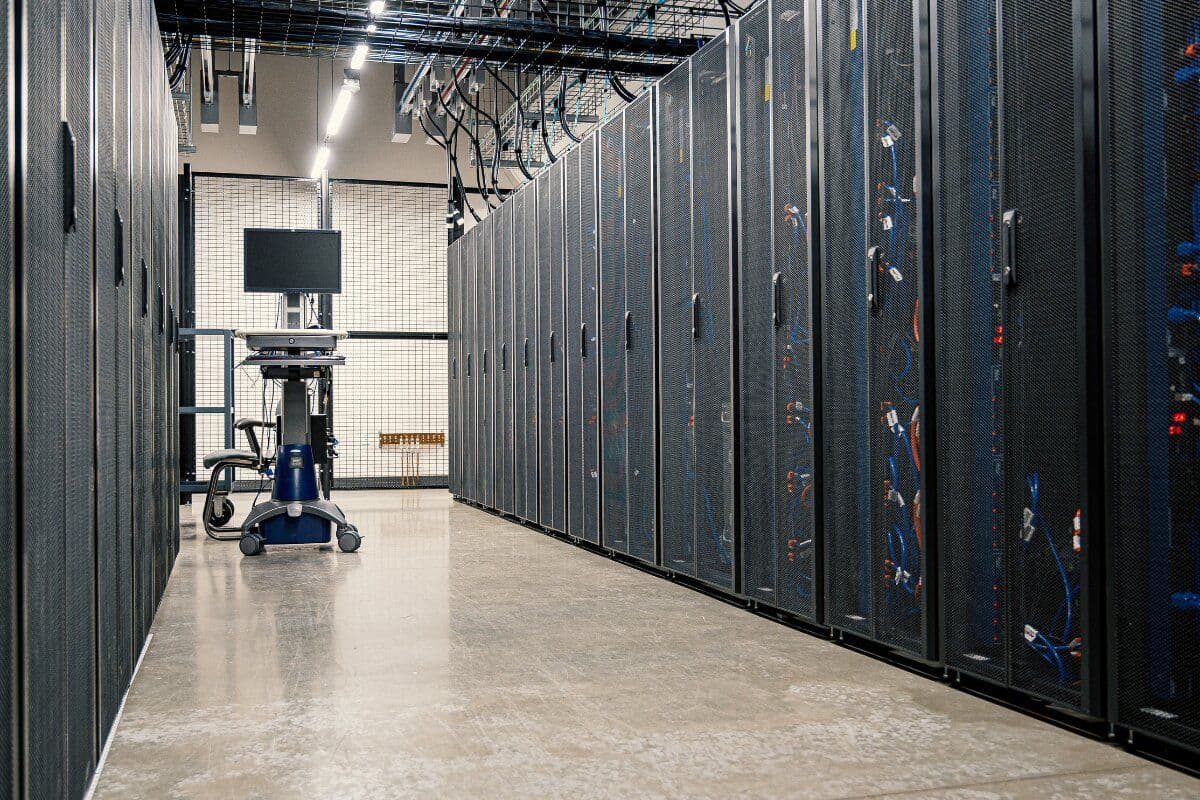
The AI boom is being built on concrete and copper. Behind every model and every cloud service sits a data center, and the race to train and serve AI has triggered the largest data center buildout in history across the US and around the world. Hyperscale campuses are rising fast, power densities are climbing, and the people who build, run and maintain these facilities are working around some of the most serious physical hazards in any modern industry.
It is easy to think of a data center as a clean, quiet, low-risk environment. It is anything but. High-voltage power, fire suppression systems, heavy equipment, extreme heat rejection, battery rooms and round-the-clock lone working combine into a risk profile that demands real management, not assumptions. For US, AI and Big Tech operators running facilities at home and overseas, getting this right consistently is a genuine challenge, and exactly where experienced health and safety consultants add value.
Use the ten areas below as a working checklist. Each one is a place where serious incidents happen, and where a strong system prevents them.
1. Electrical safety and arc flash
Electrical energy is the defining hazard of any data center. Switchgear, transformers, distribution boards and live maintenance create the risk of shock, burns and arc flash, an explosive release of energy that can be fatal in an instant. In the US, this falls squarely under OSHA electrical safety requirements, and similar duties apply in every other country an operator works in.
The checklist essentials are clear procedures for safe isolation and lockout, arc flash risk assessment and boundary marking, the correct personal protective equipment, and strict permit-to-work controls for anyone touching live systems. This is the area where shortcuts kill, and where documentation must be flawless.
2. Fire detection and suppression
Data centers pack enormous fire load into dense, valuable space, and they protect it with systems that carry their own risks. Clean-agent and gas suppression systems can displace oxygen, and detection must work flawlessly without triggering needless discharges. Standards bodies such as the NFPA publish detailed guidance for facilities of this type.
Your checklist should confirm that detection and suppression are designed, maintained and tested correctly, that staff understand what happens during a discharge, and that evacuation procedures account for suppression systems rather than ignoring them. Fire safety here is a specialist discipline, not a generic office assessment.
3. Battery and UPS rooms
Need Expert H&S Guidance?
Our qualified consultants can help you implement the right health & safety measures for your business.
Uninterruptible power supply rooms keep the facility alive during outages, and they concentrate hazard. Traditional lead-acid banks can release hydrogen and corrosive electrolyte; the lithium-ion systems increasingly used in modern and AI-focused facilities add thermal runaway and intense fire risk. Either way, a battery room is a hazardous area that needs its own assessment.
The checklist covers ventilation, gas detection, spill containment, thermal monitoring and emergency response specific to the battery chemistry in use. As power demands rise with AI workloads, these rooms are getting bigger and more critical, and they deserve proportionate attention.
4. Heat and thermal stress
The same heat that AI hardware generates has to go somewhere, and the people working among hot aisles, plant rooms and rooftop chillers can be exposed to significant thermal stress. Heat is a recognized occupational hazard, monitored closely by bodies such as the US National Institute for Occupational Safety and Health.
Your checklist should address hot and cold aisle working conditions, plant room temperatures, hydration and rest for staff in hot areas, and clear limits on time spent in extreme conditions. As rack densities climb to feed AI compute, thermal management is a people-safety issue, not just an equipment one.
5. Working at height and raised floors
Data centers are full of level changes and overhead work: raised access floors with open tiles, overhead cable trays, ladder racks and rooftop plant. Falls, both from height and into open floor voids, are a constant risk during installation and maintenance.
The checklist confirms safe systems for open-tile working, edge protection, proper access equipment and controls for any rooftop or elevated plant work. In a fast fit-out, when racks and cabling are going in at speed, this is precisely when corners get cut and people get hurt.
6. Lone and remote working
Data centers run every hour of every day, often with skeleton crews overnight and increasingly with remote or lights-out sites that are normally unstaffed. A technician alone in a facility at 3am, working near live power, is a textbook lone-working risk.
Your checklist should include check-in procedures, communication and alarm systems, and clear rules about what work can and cannot be done alone. For AI and data businesses operating distributed estates, lone working is one of the most underestimated hazards on the list.
7. Manual handling of heavy equipment
Servers, switchgear, batteries and rack units are heavy and awkward, and they are moved constantly during build and refresh cycles. Poor lifting and handling cause musculoskeletal injuries that are both common and entirely preventable.
The checklist covers mechanical aids, team-lift procedures, loading dock and goods-lift safety, and training for the staff and contractors who move equipment. In a hyperscale refresh, the sheer volume of handling makes this a frequent source of injury if it is not managed.
8. Noise exposure
Generators, cooling plant, transformers and fans make data centers genuinely loud in places. Sustained exposure damages hearing permanently, and it is easy to overlook because the harm is invisible until it is done.
Your checklist should confirm noise assessments in plant and generator areas, hearing protection where needed, and signage marking high-noise zones. It is a simple area to control once it is measured, and a costly one to ignore.
9. Access control and emergency egress
Tight physical security is a feature of every data center, and it can work against safety if it is not designed carefully. Secured doors, mantraps and restricted zones must never trap people during an emergency, and responders must be able to get in.
The checklist confirms that egress routes remain usable under all conditions, that security and life-safety systems are reconciled rather than in conflict, and that emergency plans account for the facility's access controls. Safety and security have to be designed together.
10. Documentation, training and audits
The first nine areas only hold if they are written down, taught and checked. The final item on any data center checklist is the system itself: current risk assessments, trained staff and contractors, recorded incidents, and regular health and safety audits that test whether reality matches the paperwork.
For multi-site and multi-country operators, this is where consultants and software work together. A central platform pushes the same standards, checklists and training to every facility, while giving leadership a live view of compliance across the estate. Expert advice keeps the system correct; the software keeps it visible.
The data center quick-audit checklist
Run these questions against any facility. A no answer is a priority, not a footnote.
- Are arc flash risks assessed, with isolation, lockout and permit-to-work controls in place? Yes / No
- Are fire detection and suppression systems maintained, tested and understood by staff? Yes / No
- Do battery and UPS rooms have ventilation, detection and chemistry-specific emergency plans? Yes / No
- Is thermal stress in hot aisles and plant rooms assessed and controlled? Yes / No
- Are working-at-height and open-floor-tile risks managed during all work? Yes / No
- Do lone and night-shift workers have check-in and alarm procedures? Yes / No
- Are manual handling and heavy-equipment moves supported by aids and training? Yes / No
- Is noise assessed and hearing protection provided in loud areas? Yes / No
- Do emergency egress and physical security work together rather than conflict? Yes / No
- Are risk assessments, training and audits current and consistent across every site? Yes / No
A clean run is rare on a first pass, especially across a growing estate, and that is the value of running it. The gaps you find now are the incidents you avoid later.
Where Arinite fits
Arinite has spent 15+ years helping technology and infrastructure businesses turn health and safety into a managed system. We support 1,500+ businesses across 50+ countries and have helped protect 100,000+ employees, with a 95% client retention rate. That international reach matters for data center operators, because a single AI or Big Tech business now runs facilities across many jurisdictions at once.
As global health and safety consultants, we help operators hold one high standard everywhere, adapted lawfully to each country. In the US, that means working with the relevant frameworks set by OSHA rather than reinventing them; internationally, it means aligning with recognized standards such as ISO 45001 and coordinating compliance across the estate. Our United States coverage and wider international support are built for exactly this kind of distributed, fast-moving operation.
The quickest way to find your gaps is a free gap analysis. Our specialists review your current arrangements and tell you plainly what is working and what is not. Book your free gap analysis and find out exactly where your facilities stand.
Written by
Arinite Health & Safety Consultants
Health & Safety Expert at Arinite