School Estates: The 15 Statutory Checks a Trust Has to Evidence

A trust takes on its ninth school. The due diligence covered finances, staffing and the condition survey. Nobody asked for the asbestos management plan, and three months later a contractor drills into a ceiling void in a 1970s block.
That sequence is common because the compliance burden on a school estate is unusually wide and unusually invisible. A single secondary site can carry asbestos, legionella, gas, lifts, playground equipment, lightning protection, fume extraction and an oil tank, each with its own interval, its own competent person and its own record. Multiply that across a multi-academy trust and the trust board is accountable for several hundred recurring obligations it has never seen a list of.
The uncomfortable part is the allocation. The Department for Education is explicit that an employer can delegate the management of health and safety on the estate to a designated person, but cannot delegate the legal duty itself. So the duty sits at trust level while the evidence sits in fifteen different filing systems at school level.
Here are the fifteen statutory checks, with the intervals the DfE's guidance actually states.
Who the employer is, and why it matters first
Settle this before the list, because trusts and maintained schools are in different positions.
The DfE's Good Estate Management for Schools guidance sets out who employs staff. The local authority is the employer at community, voluntary controlled, maintained nursery and pupil referral schools. The governing body is the employer at foundation and voluntary aided schools. The academy trust or proprietor is the employer at academies, free schools and other independent schools.
On top of the employer duty, anyone in control of premises carries duties under section 4 of the Health and Safety at Work etc. Act 1974, and schools also have duties under occupiers' liability. A trust that lets its hall to a weekend community group is in control of premises used by people who are not its employees.
For trusts there is a governance layer too. Accountability for compliance runs to the board under the Academy Trust Handbook, which is why "the site manager handles it" is not an answer a board can give. The HSE's education pages sit alongside all of this and are clear that risk management should be proportionate rather than theatrical.
The fifteen
1. Asbestos. A management survey carried out by a competent surveyor, an asbestos register recording remedial actions, and an asbestos management plan. Critically, the information must be given to contractors before work begins, which is the step that fails in the scenario at the top of this article. Our asbestos work in education almost always starts with whether the register matches the buildings the trust now holds.
2. Legionella. Appoint a responsible person, assess the risk in line with the HSE approved code L8, prepare and operate a written control scheme, and keep records. Swimming and hydrotherapy pools come inside it, which catches trusts with a leisure facility. Our legionella programmes in education are usually the first place a seasonal occupancy pattern shows up.
3. Fire risk assessment. Must be up to date and reviewed regularly. The guidance expects a review annually, or at least every three years. A fire risk assessment that predates a new block, a changed layout or a change of use is the most common single defect we find on a school estate.
4. Fire alarm system. Weekly tests, with quarterly and annual checks by a competent person, and all work recorded. The weekly test is the one that drifts over a long summer.
5. Firefighting equipment and fire doors. Extinguishers, fire blankets, hose reels, fixed systems and fire doors each need periodic checks by a competent person. Fire doors in schools take more abuse than in almost any other setting, which makes the interval a practical question rather than a formal one.
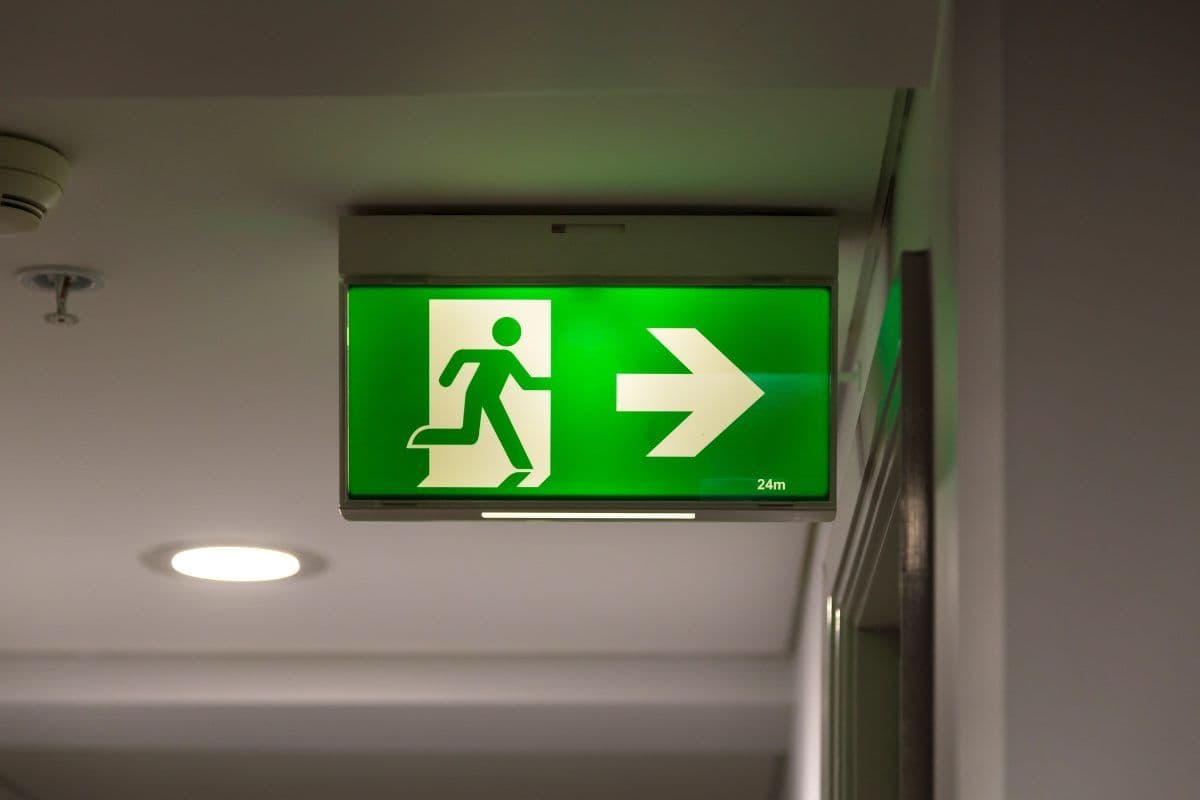
6. Emergency lighting. The guidance sets a monthly flash test and a six-monthly condition test, including a three-hour battery test. Worth noting that this is more frequent than the general commercial pattern, so a trust applying a generic facilities contract may be under-testing against the guidance written for its own sector.
7. Fixed electrical installation. Periodic inspection by a competent person, and all electrical testing carried out by a suitably qualified electrician.
8. Portable appliances. There is no fixed legal frequency. Frequency follows risk, and anything found unsafe must be taken out of use. In practice a drama department, a design workshop and a staff room have different answers, and a single trust-wide interval is usually both too much and too little.
9. Gas. Work by a Gas Safe registered engineer holding a valid certificate of competence, a maintenance plan, and at least annual safety checks as good practice. Boarding schools and staff housing carry additional annual check duties, which catches trusts with a caretaker's house nobody has thought about for years.
10. Lifts. Passenger lifts need thorough examination every six months by a competent person under the lifting operations regulations. Platform lifts installed for accessibility are frequently missed because they are not thought of as lifts.
11. Playground equipment. The relevant British and European standard expects inspection at regular intervals determined by how the equipment is used and where it sits. Coastal and exposed sites corrode faster, and heavily used equipment in a primary school is not on the same cycle as a rarely used trim trail.
12. Lightning protection. Annual inspection. Almost universally forgotten, and usually present on older and taller school buildings.
13. Local exhaust ventilation. Thorough examination and testing every fourteen months. This reaches science prep rooms, design and technology extraction and any fume cupboard, and the fourteen month figure is the one people misremember as annual.
14. Air conditioning. Inspection by an energy assessor at least every five years. An energy obligation rather than a safety one, but it sits in the same compliance register and gets missed in the same way.
15. Oil tanks. Weekly checks with an annual inspection, where the site has one. Rural and older sites often do, and the tank frequently sits outside the fabric of anybody's contract.
Beyond the fifteen, the guidance also expects routine tree inspections and radon measurement where the location requires it. Neither belongs on a conventional compliance schedule, which is exactly why both go unrecorded.
The documents a trust has to be able to produce
Need Expert H&S Guidance?
Our qualified consultants can help you implement the right health & safety measures for your business.
The guidance also names the records themselves, which is the practical test an auditor applies.
| Document | Common failure on a multi-site estate |
|---|---|
| Health and safety policy with risk assessments and arrangements | One trust policy, no school-level arrangements behind it |
| Asbestos register and management plan | Register exists, but not reissued after building works |
| Fire risk assessment and management plan | Current at one school, three years old at another |
| Statutory maintenance and testing certificates | Held by contractors rather than by the trust |
| Legionella risk assessment and control scheme | Assessment present, written scheme absent |
| Inspection logs and registers, including structural records | Paper logs in a site office nobody can access centrally |
| Maintenance and emergency contractor contacts | Current at the school, unknown at the centre |
Row four is the one that matters most at trust level. Certificates held only by the contractor who issued them are not evidence the trust can produce, and a change of facilities provider can take the compliance history with it.
Holding fifteen recurring obligations across nine or nineteen sites, each with its own interval and competent person, is precisely where health and safety consultants and software are worth more in combination than either alone. A spreadsheet per school survives until the business manager changes, which on a trust estate is continuously. Our note on statutory building checks covers the generic occupier version of this list, and the school estate adds roughly a third more to it.
What a trust should actually audit
Three questions separate a trust that is compliant from one that has a compliance folder, and periodic health and safety audits should be built around them rather than around the schedule.
Ask for one interval at one school. Not the schedule, the evidence: the emergency lighting six-monthly condition test for this building, this year, with the actions arising. If that takes more than a few minutes the control may well be real and the evidence is not.
Ask whether the register matches the estate. Buildings get added, mothballed, demolished and let. A compliance register built at conversion and never reconciled against the current property schedule will have both orphans and gaps.
Ask who holds the duty for a let. Weekend lettings, holiday clubs, nurseries on site and community use all put people who are not employees into the buildings, and section 4 does not care whose income line the letting sits on. Our note on the duties education settings miss covers the wider set.
How this looks for an international group of schools
Groups running schools in more than one country find this list is the least exportable thing they own, because almost every item on it is defined by a national standard, a national interval and a nationally recognised competent person.
The structure of the problem is identical everywhere. A school is an unusually complex building occupied by people who need protecting more than most, with plant, play equipment and specialist teaching spaces. The answers are not identical at all. Inspection intervals differ, the category of person permitted to sign off differs, and in several countries inspection of defined installations falls to an approved body rather than to a contractor of the group's choosing, which makes it a legal question rather than a procurement one.
So an international group can hold one methodology and one register, with the local interval, the local standard and the local signatory attached per site. What it cannot do is publish a group compliance calendar built on British intervals and expect it to satisfy an inspection abroad. A fourteen month figure for extraction testing is a British figure, and the fact that it is written in a group policy does not make it the right one in Dubai or Madrid.
Where Arinite fits
Arinite has spent 15+ years running statutory compliance programmes for organisations whose buildings exist to do something other than be buildings, which is exactly the position a school trust is in. We support 1,500+ businesses in 50+ countries and protect 100,000+ employees, with 95%+ client retention. Our health and safety consultants work extensively with education clients and with the property and real estate teams that manage estates on their behalf, and the first thing we usually do is reconcile the compliance register against the property schedule.
For groups with schools or campuses in more than one country, our global health and safety consultants apply the local interval and signatory category rather than exporting the DfE's, and our international health and safety consultants can tell you which sites are being checked to the wrong standard.
Pick one school and ask for one record: the last emergency lighting condition test, with the actions arising. Then book a free gap analysis and we will tell you in one call how many of the fifteen your estate can evidence today.
Related Articles
Written by
Arinite Health & Safety Consultants
Health & Safety Expert at Arinite