Statutory Building Checks: 11 an Occupier Needs to Track
Most organisations discover their statutory checks one at a time, usually because somebody asks for a certificate. An insurer wants the alarm test records. A client questionnaire asks about legionella. A new facilities manager finds a folder and starts working out what is missing.
That is an expensive way to build a schedule, and it reliably leaves gaps, because the requirements sit in different regulations and are held by different parties under the lease.
This is the whole set for an ordinary commercial building, what each requirement actually rests on, and the question of who owns it.
Eleven checks.
1. Fire detection and alarm
Where it comes from: Article 13 of the Regulatory Reform (Fire Safety) Order 2005 requires premises to be equipped with appropriate detection and alarm, and article 17 requires everything provided under the Order to be subject to a suitable system of maintenance and kept in efficient working order.
In practice: a weekly test from a rotating call point, plus periodic servicing at intervals set by the relevant standard rather than by the Order itself.
Who holds it: usually the landlord for a system covering the whole building, though the tenant needs the records.
2. Emergency lighting
Where it comes from: article 17 again, plus article 14, which requires escape routes needing illumination to be provided with emergency lighting.
In practice: a short monthly function test and a full-duration annual test, with the latter requiring the system to run for its rated duration and then recharge.
The common gap: nobody schedules the annual test because it is disruptive, so the system is never proven to last the duration it is rated for.
3. Firefighting equipment
Need Expert H&S Guidance?
Our qualified consultants can help you implement the right health & safety measures for your business.
Where it comes from: article 13 requires appropriate firefighting equipment that is easily accessible, simple to use and indicated by signs; article 17 requires it to be maintained.
In practice: an annual service by a competent person, plus a visual check by somebody on site at shorter intervals confirming extinguishers are present, unobstructed, sealed and in date.
The common gap: the annual service happens and nobody notices between visits that an extinguisher has been moved behind a filing cabinet.
4. Fire doors
Where it comes from: article 17, since fire doors are part of the provision the fire strategy relies on.
In practice: routine inspection of doors on escape routes, checking gaps, seals, closers and that nothing is holding them open.
The common gap: wedges. A fire door propped open is not a door.
5. Fire risk assessment and arrangements review
Where it comes from: article 9 requires review where there is reason to suspect the assessment is no longer valid or there has been a significant change, and since October 2023 the assessment must be recorded in full and the fire safety arrangements recorded separately.
In practice: an annual review cycle plus event triggers such as a fit-out, a change in occupancy, subletting or an incident.
Who holds it: both you and the landlord, for your respective areas, and you must take reasonable steps to identify each other.
6. Fixed electrical installation
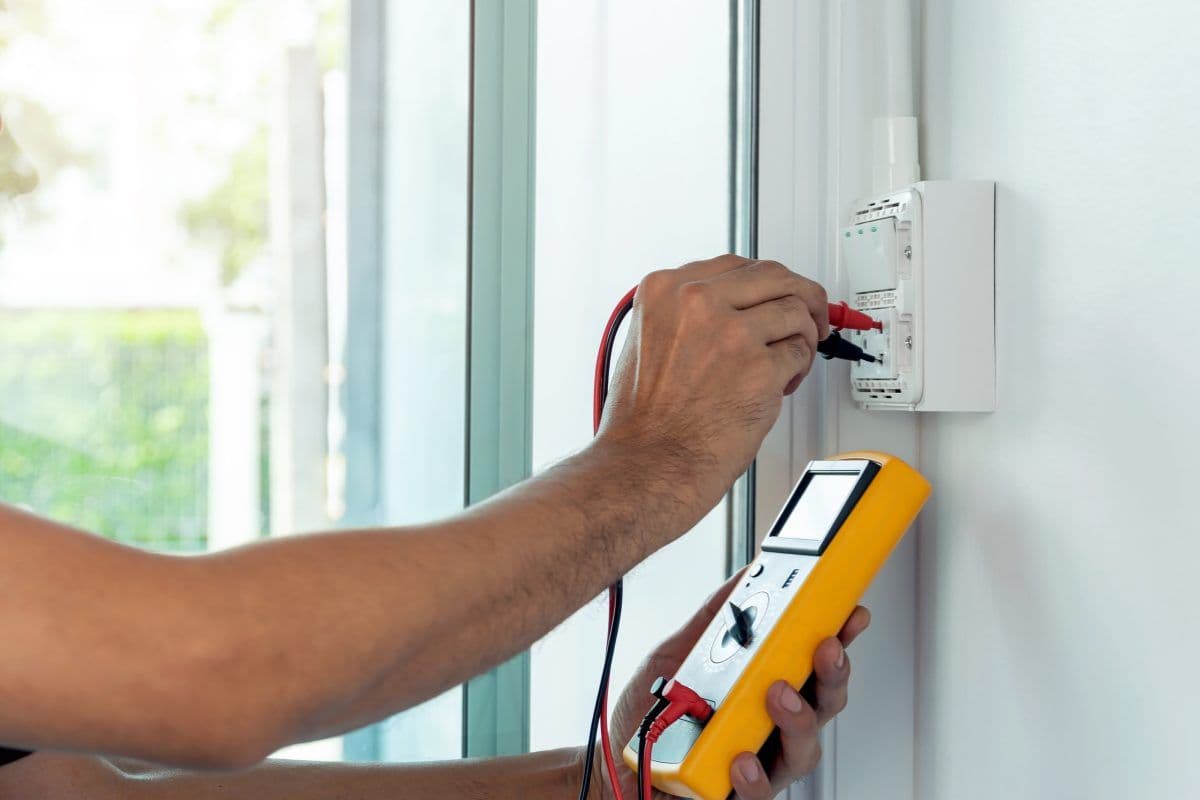
Where it comes from: regulation 4 of the Electricity at Work Regulations 1989 requires systems to be maintained so as to prevent danger so far as is reasonably practicable.
In practice: periodic inspection and testing producing an installation condition report, at an interval set against the installation rather than by a figure in law.
Who holds it: follows the repairing obligation, and any fit-out you commissioned is almost certainly yours.
7. Portable appliances
Where it comes from: the same maintenance duty in regulation 4, applied to appliances rather than the installation.
In practice: a combination of user checks, visual inspection and, where justified, combined inspection and testing. Frequency follows risk, and the annual figure people quote is not in the regulations.
The common gap: an inventory that has not kept up with equipment arriving and leaving, so the testing covers a building that no longer exists.
8. Passenger lifts
Where it comes from: the Lifting Operations and Lifting Equipment Regulations 1998. A passenger lift is lifting equipment, and lifting equipment used to lift people carries the shortest thorough examination interval, at six months.
In practice: a thorough examination by a competent person, commonly arranged through the insurer, plus routine maintenance which is a separate activity.
The common gap: treating the maintenance contract as covering the examination. They are different things done for different purposes.
9. Water systems
Where it comes from: the duty to assess and control risks from hazardous substances, with legionella addressed through HSE's legionnaires' disease guidance and its approved code of practice.
In practice: a written risk assessment, a scheme of control, temperature monitoring, flushing of infrequently used outlets, and periodic review.
The common gap: outlets that became infrequently used when occupancy patterns changed, and nobody updated the flushing regime. Hybrid working made this materially worse in a lot of buildings.
10. Gas appliances
Where it comes from: the Gas Safety (Installation and Use) Regulations 1998. Regulation 35 requires an employer or self-employed person to ensure that any gas appliance, installation pipework or flue installed at a place of work under their control is maintained in a safe condition so as to prevent risk of injury.
In practice: maintenance and safety checks by a registered engineer, with records kept.
Who holds it: often the landlord for building plant, and a tenant with a catering kitchen or its own appliances holds it for those.
11. Asbestos management plan review
Where it comes from: regulation 4 of the Control of Asbestos Regulations 2012, which requires not only identification but a plan for managing the risk, kept under review.
In practice: periodic monitoring of the condition of known materials, review of the plan, and confirmation that the information is actually reaching contractors before they work.
The common gap: a survey from years ago, no plan, and no route by which a cabling contractor would ever see either.
The 11, in short
| Check | Rests on | Usual holder |
|---|---|---|
| Fire detection and alarm | Fire Safety Order, articles 13 and 17 | Landlord, records to tenant |
| Emergency lighting | Articles 14 and 17 | Landlord or tenant by area |
| Firefighting equipment | Articles 13 and 17 | Tenant for its demise |
| Fire doors | Article 17 | Both, by area |
| Fire risk assessment review | Article 9, as amended in 2023 | Both, for their areas |
| Fixed electrical installation | Electricity at Work Regulations | Follows repairing obligation |
| Portable appliances | Same duty, applied to appliances | Whoever owns the equipment |
| Passenger lift | LOLER, six months for people | Landlord usually |
| Water systems | Hazardous substances duty and ACOP | Landlord for systems, tenant for outlets |
| Gas appliances | Gas Safety Regulations, regulation 35 | Split by what is whose |
| Asbestos plan review | Control of Asbestos Regulations | Follows repairing obligation |
The right-hand column is the one to resolve first. Most gaps in practice are not refusals to do a check; they are two parties each assuming the other holds it.
The one that is not health and safety
Worth a note, because it lands on the same desk and is frequently missed entirely.
Buildings with air conditioning systems above a defined output require periodic inspection by an accredited energy assessor under the energy performance regime, commonly referred to by the technical memorandum that sets the methodology. It is an energy efficiency requirement rather than a safety one, and it is a statutory periodic inspection that a facilities team owns.
If your schedule was built from safety requirements alone, this will not be on it.
Three habits that make the schedule work
Hold one list per building, not per contract. Contracts fragment the picture; buildings are how the risk actually presents.
Record who holds each line. Where the answer is the landlord, record how you obtain the evidence and when you last had it.
Track the findings, not just the visits. A completed service with open remedial items is not a completed check, and this is where most audit findings come from.
Holding this across every building in one register is where health and safety consultants and software are worth more together than either alone, and periodic health and safety audits are how organisations discover which lines nobody owns.
For international groups
Two considerations.
The list is national. Intervals, who may carry out an examination and what records must be kept all differ, and several jurisdictions covered in this series prescribe accredited examiners and fixed cycles where Britain sets an outcome and leaves the interval to assessment.
The landlord and tenant split is a property law question as much as a safety one, so it must be established per building and per lease rather than by group policy.
Where Arinite fits
Arinite builds the schedule for each building, establishes who holds each line under the lease, and checks that findings are closed rather than filed. We support 1,500+ businesses across 50+ countries and protect 100,000+ employees, with 95%+ client retention over 15+ years.
Our health and safety consultants work extensively with legal, finance and banking and IT and software organisations occupying space they do not own, and our fire risk assessment, asbestos and legionella work covers several of the lines above directly.
Where premises span several countries, our global health and safety consultants and international health and safety consultants establish what each jurisdiction requires.
If you could not produce a single list showing every statutory check for one of your buildings and who holds it, a free gap analysis is the right place to start.
Related Articles
Written by
Arinite Health & Safety Consultants
Health & Safety Expert at Arinite