Working at Height Regulations: The 3 Gates Every Task Must Pass
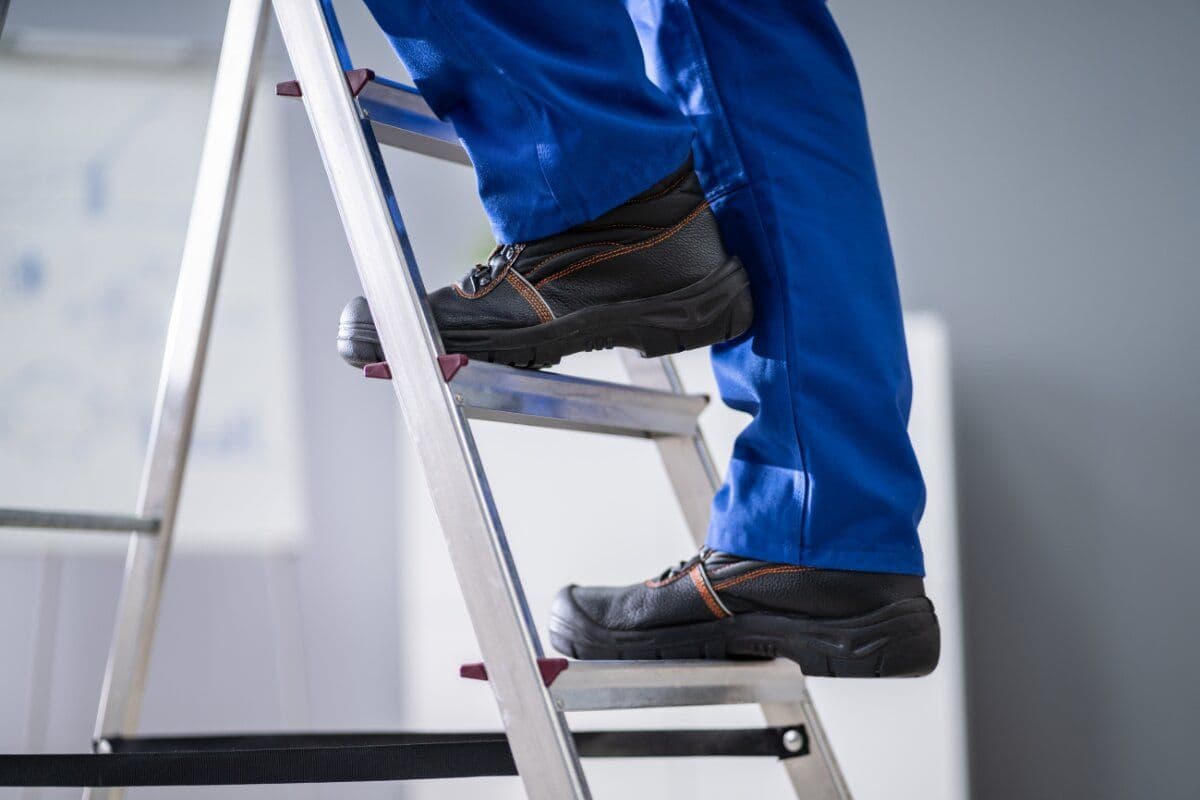
Falls from height remain among the most common causes of workplace death and life-changing injury, and not mainly from the dramatic heights people imagine. The stepladder in the stockroom, the mezzanine edge in the warehouse, the chair someone stood on to reach a shelf: this is where the harm actually happens, which is why the Work at Height Regulations 2005 cast their net wider than most businesses realise. The HSE's work at height guidance makes the scope plain: work at height means any place where, without precautions, a person could fall a distance liable to cause injury. There is no minimum height. The regulations apply at two metres and at two feet, on ladders, on roofs, beside openings, and near any edge a person could fall from or through.
The good news is that the regulations have an unusually clean logic. Strip away the schedules and they are three questions, asked in strict order, and every task involving height must pass through them like gates. A business that internalises the three gates has understood the law; a business that skips to gate three, as most do, has misunderstood it in exactly the way that causes falls. Here are the gates, in the order the law insists on.
First, who carries the duty, and what counts
Before the gates, two scoping points. The duty falls on employers and those who control work at height, including where contractors are engaged: controlling the work means owning the duty, and "they were contractors" is not a transfer mechanism. And the definition of work at height is activity-based, not altitude-based: changing a light fitting from a stepladder, retrieving stock from the top shelf, clearing a blocked gutter, accessing a mezzanine, all of it is work at height the moment a fall could injure. The question is never "how high?" but "could they fall, and would it hurt?"
That framing matters because the tasks businesses miss are the mundane ones. The law's structure also expects work at height to be properly planned, supervised and carried out by competent people, and weather taken into account where it applies. With scope established, the gates.
Gate one: avoid working at height altogether
The first question the regulations ask is the one workplaces routinely skip: does this work need to happen at height at all? If the work can reasonably be done from the ground, the law expects it to be. Extendable tools that clean, inspect or reach from floor level. Lowering the thing instead of raising the person: light fittings on drop-down mechanisms, stock stored so the heavy and frequent items sit in the reachable zone, equipment designed for ground-level servicing.
This gate is where the biggest wins live and the least attention goes, because avoiding height work looks like nothing happening, and nothing happening is the point. A genuine assessment records what was considered here even when the answer is that some height work remains, because passing gate one legitimately is what earns the right to move to gate two.
Gate two: prevent falls
Need Expert H&S Guidance?
Our qualified consultants can help you implement the right health & safety measures for your business.
For the height work that cannot be avoided, the second question: how do we prevent a fall from happening at all? The regulations prioritise, in order, existing safe places of access (a properly guarded mezzanine needs no further fall prevention, that is what the guardrail is), then collective protection that guards everyone without anyone doing anything, guardrails, platforms with edge protection, tower scaffolds, and only then personal measures such as work restraint systems that stop a person reaching a position they could fall from.
The collective-before-personal ordering is deliberate and worth internalising: a guardrail protects the untrained visitor and the distracted employee alike, while a harness protects one person, only if worn, clipped and anchored correctly, every time. Equipment choice lives at this gate too: the right platform or podium instead of a ladder where the task justifies it, and where ladders are used, used within their proper limits, for short-duration, light work, three points of contact, on stable ground, and in good condition. The ladder is not banned; the casual ladder is.
Gate three: minimise the distance and consequences
Only when a fall cannot be entirely prevented does the third gate open: minimise how far a person can fall and how badly it ends. This is the territory of fall-arrest systems, nets and airbags, and of minimising distance through work positioning, and it comes with obligations the gate-skippers never plan for: equipment that is inspected and maintained, users genuinely trained, anchor points that hold, and a rescue plan, because a person arrested in a harness needs recovering quickly, and dialling 999 is not a rescue plan.
Gate three existing at all is why the order matters. Fall arrest is the law's last resort, not its default, and a business whose height work relies mainly on gate three measures is a business that has not seriously asked the first two questions. That pattern, personal protection standing in for planning, is among the first things a competent health and safety audit looks for in height work, and among the most common findings.
The gates in practice: a stockroom, a warehouse, a facilities team
Run three ordinary examples through. The retail stockroom: gate one asks whether top-shelf storage is needed at all (slow-moving stock down, frequent stock in the reach zone); what remains gets a proper platform step with a rail rather than the wobbling ladder, and gate three is never reached. The warehouse mezzanine: gate two's guarded edges and gated pallet access do the work, with the audit checking the gates are kept closed. The facilities team clearing gutters: gate one asks about ground-level tools and camera inspection first; only the remainder justifies access equipment, chosen and used properly. None of these is exotic, and that is the point: the regulations are a thinking order for ordinary tasks.
For a business running many such tasks across many sites, the challenge is consistency: every task through the gates, assessed, equipped, inspected and current, everywhere. That is where consultants and software hold the standard together, with qualified health and safety consultants making the gate-one and gate-two judgements and the platform keeping every assessment, inspection and training record visible. And since falls obey the same physics in every country while the rulebooks differ, UK regulations here, their equivalents abroad, international health and safety consultants keep one world-class standard passing through every local version, aligned with frameworks such as ISO 45001.
Where Arinite fits
Arinite has spent 15+ years walking businesses' real tasks through exactly these gates, from stockrooms to warehouses to whole international estates. We support 1,500+ businesses across 50+ countries and have helped protect 100,000+ employees, with a 95% client retention rate. As global health and safety consultants, we bring the judgement the gates demand and the system that proves every task passed them.
If reading this raised a task in your business that has never been asked gate one, that is the finding. Our free gap analysis reviews your arrangements, work at height included, and tells you plainly where you stand. Book your free gap analysis and put your height work through the gates before gravity audits it for you.
Written by
Arinite Health & Safety Consultants
Health & Safety Expert at Arinite