Health and Safety at Work Act 1974: 21 Sections Every Office Should Know
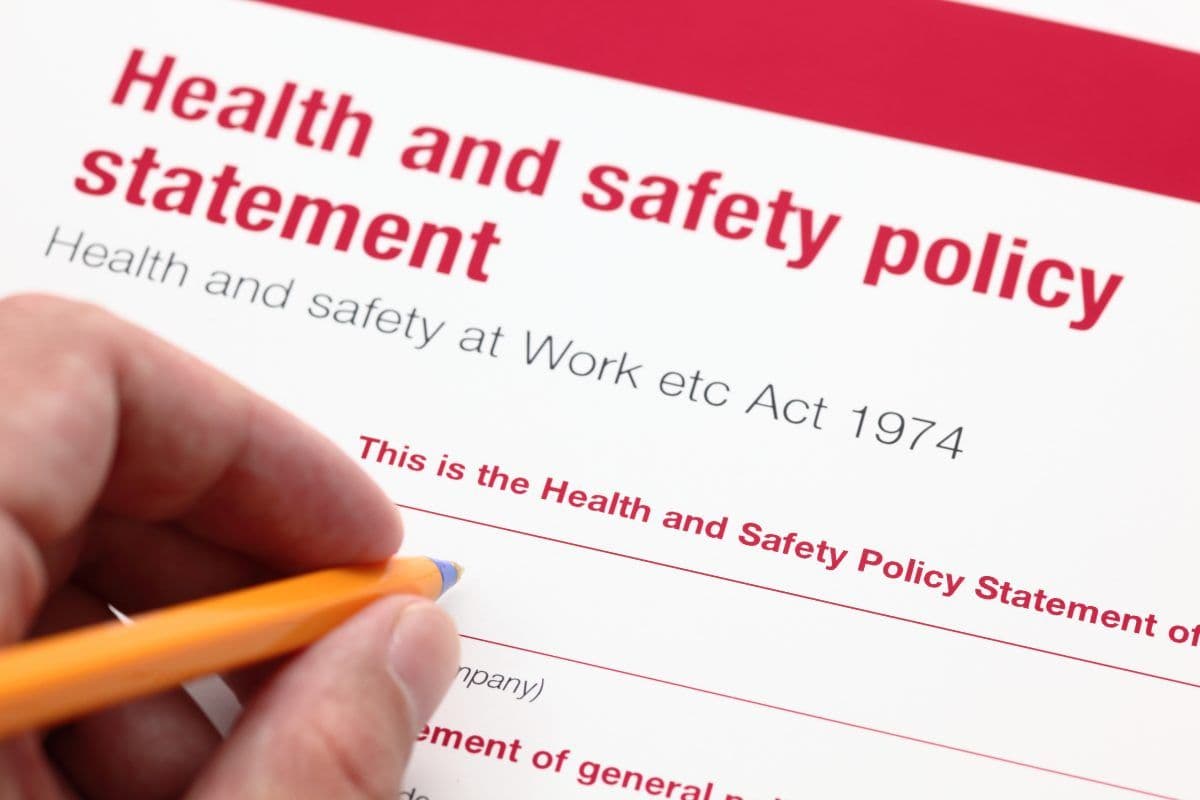
The Health and Safety at Work etc. Act 1974 is more than 50 years old, has 85 sections, and still sits underneath almost every health and safety duty in Great Britain. Most people who rely on it have never read it. Most do not need to read all of it. They need to know which parts matter.
The Act, often shortened to HSWA, replaced a patchwork of industry-specific laws with a single framework built on general duties. It did not try to list every hazard. Instead, it told employers and others to manage risk "so far as is reasonably practicable", and created the system of regulations, approved codes of practice, inspectors and enforcement that still operates today.
This summary picks out the 21 provisions that matter most for offices and professional businesses, in the order they appear in the Act, with a plain-English note on what each one means for you. It finishes with how the Act influenced health and safety law in other countries, which is useful context for any UK business operating internationally. You can read the full text on legislation.gov.uk, and HSE has a short overview of the Act.
---
Part 1: The Purpose
1. Section 1: What the Act Is For
Section 1 sets out the aims: securing the health, safety and welfare of people at work, and protecting others from risks arising from work activities.
What it means for an office: the Act is not just about employees. It covers anyone affected by your work, including visitors, clients and the public.
---
Part 2: Who Owes What Duty
2. Section 2(1): The General Duty to Employees
Section 2 requires every employer to ensure, so far as is reasonably practicable, the health, safety and welfare at work of all employees.
What it means for an office: this is the foundation. Every risk assessment, policy and procedure you have exists to meet this duty.
3. Section 2(2): The Five Specifics
Section 2(2) spells out what the general duty includes: safe plant and systems of work; safe use, handling, storage and transport of articles and substances; information, instruction, training and supervision; a safe place of work with safe access and egress; and a safe working environment with adequate welfare facilities.
What it means for an office: "information, instruction, training and supervision" is the clause most often tested after an incident in office businesses. Can you show people were told and trained?
4. Section 2(3): The Written Policy
Employers must prepare, and revise as often as appropriate, a written statement of their general health and safety policy, together with the organisation and arrangements for carrying it out, and bring it to the notice of employees. Employers with fewer than five employees are exempt from the written requirement.
What it means for an office: see what is a health and safety policy: the 3 parts every one must have.
5. Sections 2(4) to 2(7): Consultation and Representatives
These subsections provide for safety representatives, consultation with employees, and safety committees, supported by regulations that set out the detail.
What it means for an office: you must consult employees on health and safety matters. In unionised workplaces, recognised trade unions can appoint safety representatives.
6. Section 3: Duties to People Who Are Not Your Employees
Section 3 requires employers and the self-employed to conduct their undertaking so that people not in their employment are not exposed to risks, so far as is reasonably practicable.
What it means for an office: visitors, clients, contractors, cleaners and members of the public in your reception all fall here. See visitors and reception: 7 duties offices miss.
7. Section 4: Duties of People Who Control Premises
Section 4 places duties on those who control non-domestic premises used by others as a place of work, such as landlords and managing agents, in relation to the premises, access and plant.
What it means for an office: in a multi-let building, your landlord has duties too. See landlord health and safety documentation and coworking and serviced offices: 7 duties that stay with you.
8. Section 6: Designers, Manufacturers and Suppliers
Section 6 places duties on those who design, manufacture, import or supply articles and substances for use at work.
What it means for an office: mostly relevant to your suppliers, but worth knowing if your business designs or supplies equipment, hardware or fit-out products used in workplaces.
9. Section 7: Employees' Duties
Section 7 requires every employee to take reasonable care of their own health and safety and that of others affected by what they do, and to cooperate with their employer on health and safety.
What it means for an office: employees have legal duties too. Make sure your induction and policy explain them.
10. Section 8: No Interfering or Misusing
Section 8 makes it an offence for anyone to intentionally or recklessly interfere with or misuse anything provided for health, safety or welfare.
What it means for an office: propping open fire doors, disabling alarms or removing first aid supplies are all examples.
11. Section 9: No Charging for Safety
Section 9 prevents employers charging employees for anything done or provided to meet specific health and safety requirements.
What it means for an office: for example, you cannot charge employees for eye tests or basic corrective glasses provided under display screen equipment requirements.
---
Part 3: How the System Works
Need Expert H&S Guidance?
Our qualified consultants can help you implement the right health & safety measures for your business.
12. Section 15: Regulations
Section 15 allows the government to make health and safety regulations. Almost every specific duty you deal with, from risk assessment to first aid to display screen equipment, comes from regulations made under this power.
What it means for an office: the Act sets the principles; regulations fill in the detail. See our overview of health and safety legislation.
13. Sections 16 and 17: Approved Codes of Practice
Section 16 allows HSE to approve codes of practice. Section 17 gives them special legal status: if you do not follow an approved code, a court may find you in breach unless you show you complied in another equally effective way.
What it means for an office: an approved code is not law in itself, but ignoring one without a good alternative is risky.
14. Sections 18 and 19: Enforcing Authorities and Inspectors
Section 18 sets out who enforces the law, and section 19 provides for the appointment of inspectors.
What it means for an office: most offices, shops and similar premises are enforced by local authorities rather than HSE, under the Health and Safety (Enforcing Authority) Regulations 1998.
15. Section 20: Inspectors' Powers
Section 20 gives inspectors wide powers, including entering premises, examining and investigating, taking measurements and samples, requiring information and documents, and taking statements.
What it means for an office: if an inspector visits, you will need to produce documents quickly. Keep them current and organised.
16. Section 21: Improvement Notices
Section 21 allows an inspector to serve an improvement notice requiring a breach to be put right within a set period.
What it means for an office: typical triggers include missing risk assessments, inadequate fire arrangements or poor welfare facilities.
17. Section 22: Prohibition Notices
Section 22 allows an inspector to stop an activity that involves a risk of serious personal injury, with immediate effect where necessary.
What it means for an office: less common in offices, but possible where there is, for example, a serious electrical or structural danger.
---
Part 4: Liability and Proof
18. Section 33: Offences
Section 33 lists the offences under the Act. Penalties were increased by the Health and Safety (Offences) Act 2008, which made imprisonment available for many offences, and in England and Wales fines in the magistrates' courts became unlimited from 2015.
What it means for an office: fines for organisations are set using sentencing guidelines that take turnover into account, so larger businesses face larger fines.
19. Section 37: Directors and Senior Managers
Section 37 makes directors, managers, company secretaries and similar officers personally liable where an offence by the organisation was committed with their consent or connivance, or was attributable to their neglect.
What it means for an office: health and safety is a board-level responsibility. See our leadership guide for directors and senior managers.
20. Section 40: Proving What Was Reasonably Practicable
Section 40 puts the burden on the defendant to prove that it was not reasonably practicable to do more.
What it means for an office: this is why records matter. If you cannot show what you did and why, you will struggle to prove you did enough. See how much is enough? What reasonably practicable actually requires.
21. Section 47: Civil Liability
Section 47 deals with whether breaches can be used to bring compensation claims. Breach of the general duties in sections 2 to 8 does not in itself give a right to sue, and since 2013 breach of most health and safety regulations is generally not actionable either.
What it means for an office: injured employees usually bring claims in negligence instead, where your risk assessments and records will still be central evidence.
---
Beyond Great Britain: The Act's International Reach
The Act applies in England, Wales and Scotland. Northern Ireland has its own equivalent, the Health and Safety at Work (Northern Ireland) Order 1978. Section 84 deals with the Act's extent.
The Act grew out of the 1972 Robens Report, which argued for one framework of broad, goal-setting duties rather than detailed rules for each industry. That model influenced health and safety law well beyond the UK.
| Country | Main framework | Similarity to the UK model |
|---|---|---|
| Ireland | Safety, Health and Welfare at Work Act 2005 | General duties qualified by reasonable practicability, with a written Safety Statement. See our Ireland page |
| Australia | Model Work Health and Safety Act | A broad primary duty of care, with duties for officers. See Australia WHS |
| New Zealand | Health and Safety at Work Act 2015 | Goal-setting duties, currently being reformed. See New Zealand's 2026 reform |
| United States | Occupational Safety and Health Act 1970 | A General Duty Clause alongside many detailed standards. See how OSHA enforces its standards |
For a UK business opening an office abroad, the familiar concepts usually exist, but the documents, thresholds and enforcement differ. That is where most international gaps open up.
For the history of the Act, see the impact of the Health and Safety at Work Act and our article marking its golden jubilee.
---
Sector Notes
AI, software and tech: sections 2(2)(c) on training and supervision and section 3 on non-employees are most relevant to fast-growing teams with frequent visitors and contractors. See our software and AI and data pages.
Legal and insurance: section 37 is a reminder that partners and directors carry personal exposure. See our legal and insurance pages.
Education: section 3 matters for pupils, students, parents and visitors on site. See our education page.
---
How Arinite Helps
Arinite has supported 1,500+ businesses across 50+ countries for 15+ years, protecting 100,000+ employees, with 95%+ client retention. Our qualified consultants turn the duties in the Act into practical arrangements, and help you prove you meet them.
- Done For You: our health and safety consultants act as your competent advisers, write your policy and risk assessments, and check compliance through independent health and safety audits.
- Done With You: we work alongside your team to close gaps and train managers and directors on their duties.
- DIY: you manage your documents, actions and evidence on our health and safety consultants and software platform, building the records section 40 makes so important.
For groups operating beyond Great Britain, our international health and safety consultants apply each country's equivalent law, and our global health and safety consultants keep one group standard across every office.
---
Frequently Asked Questions
What is the main purpose of the Health and Safety at Work Act 1974?
To secure the health, safety and welfare of people at work, and to protect others from risks arising from work activities. It does this through general duties on employers, employees and others, supported by regulations and enforcement.
What does section 2 of the Health and Safety at Work Act require?
Section 2 requires employers to ensure, so far as is reasonably practicable, the health, safety and welfare of employees, including safe systems of work, training and supervision, a safe workplace and welfare facilities, and a written policy for employers with five or more employees.
What does section 7 of the Health and Safety at Work Act require?
Section 7 requires employees to take reasonable care for their own health and safety and that of others, and to cooperate with their employer on health and safety.
What does "so far as is reasonably practicable" mean?
It means balancing the level of risk against the cost, time and effort of reducing it. Measures must be taken unless the cost is grossly disproportionate to the risk. Under section 40, the employer has to prove that more was not reasonably practicable.
Does the Health and Safety at Work Act apply in Northern Ireland?
No. Northern Ireland has its own equivalent, the Health and Safety at Work (Northern Ireland) Order 1978.
---
Turn the Act Into Evidence
The Act asks you to do what is reasonably practicable, and section 40 asks you to prove it. Book a free gap analysis with Arinite and we will review your arrangements against the Act, and against the equivalent law in every country where you operate.
Written by
Arinite Health & Safety Consultants
Health & Safety Expert at Arinite