Health and Safety in Malta: 6 Things That Changed Under the 2024 Act
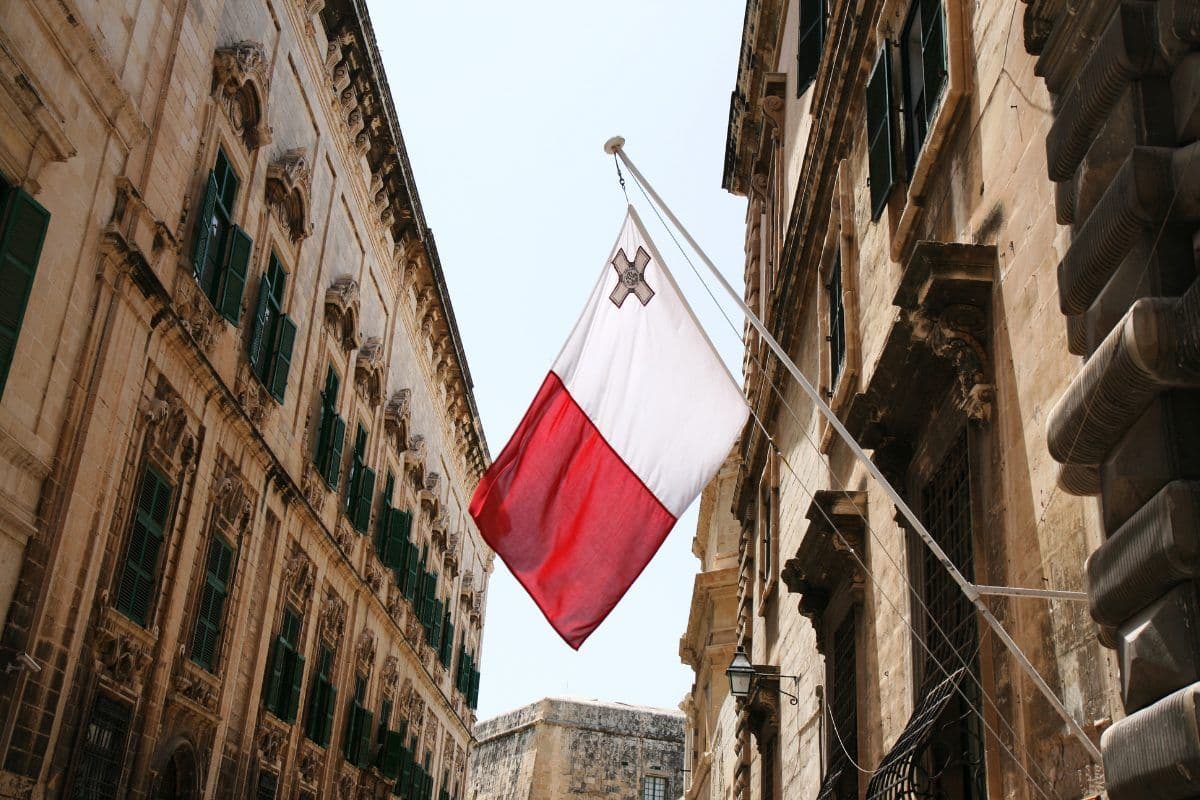
Malta hosts a concentration of insurance undertakings, protected cell companies, fund administrators, gaming operators and the legal and professional firms that serve them. A great many of those entities are UK-connected, small in headcount, and managed from elsewhere.
If that describes an entity you are responsible for, its health and safety documents almost certainly cite a statute that no longer exists. In 2024 Malta replaced the framework that had governed occupational health and safety for close to twenty-five years, and the change was well covered domestically and almost invisible to foreign parents.
Six things to know.
1. Chapter 424 has been replaced
The Health and Safety at Work Act, Act XXXIII of 2024, was published in August 2024 and became Chapter 646 of the Laws of Malta. It repeals the Occupational Health and Safety Authority Act, Chapter 424, which had been the principal framework since 2000.
Regulations previously made under the old Act have been renumbered as though enacted under the new one, and health and safety provisions in a range of other statutes were amended in consequence. Maltese firms have published detailed commentary on the new Act and on its practical implications.
The immediate consequence is documentary and cheap to fix. Any policy, risk assessment, induction pack or compliance register naming Chapter 424 or the OHSA Act is citing repealed legislation. That is not a technicality when a document is produced to an inspector or to a client conducting supplier due diligence. Confirm commencement and transitional details locally, since these were staged.
2. Scope is comprehensive, including the self-employed
The Act applies to all workplaces and all sectors, public and private, and extends to work activities carried out on a self-employed basis.
Self-employed individuals are required to assess risks to the health and safety of all persons including themselves, and to take appropriate preventive measures. For an entity that engages consultants, contractors or gaming and financial services specialists on a self-employed basis, that is worth knowing, because it means those individuals carry their own duties alongside yours rather than sitting outside the framework.
3. Penalties were strengthened and a tribunal introduced
Need Expert H&S Guidance?
Our qualified consultants can help you implement the right health & safety measures for your business.
The reform reworked the penalty regime with the stated intention of increasing its deterrent effect, and established a Health and Safety Tribunal with a compromise procedure intended to resolve disputes more efficiently.
For a group treating its Maltese entity as a low-risk administrative outpost, the direction of travel is the point. This moved from a settled twenty-five-year-old framework to a reformed one with sharper consequences, and the reform was not driven by anything happening in small offices, which is precisely why small offices have not noticed it.
4. A new reporting officer role
The Act introduces a Health and Safety Reporting Officer, which may be required by regulation in certain industries.
The role is to be filled from among high-ranking employees at management level, or another person the employer considers suitable. Whether it applies to your sector depends on regulations made under the Act, so this is one to confirm rather than assume, but it is worth being aware that Malta now has a named management-level role in its framework that did not previously exist.
5. Workers' representatives must be in place and consulted in advance
The employer's duty is to ensure that workers' health and safety representatives are chosen, elected or designated, and that they are consulted in advance on matters affecting occupational health and safety.
The phrasing matters, and it is the same point that recurs across the European Union. Consultation in advance is not notification after a decision. A group that determines an arrangement centrally and communicates it to the Maltese entity has informed rather than consulted, and the fact that the entity is small does not remove the obligation.
6. Inspectors have wide powers, and psychological health is in scope
Two features worth noting together.
Health and safety officers may enter workplaces freely, at any time of day or night and without prior notice, question employers, employees or representatives, inspect and take samples, review documentation, and require that areas or items remain undisturbed for examination.
Separately, the employer's duty extends to preventing psychological as well as physical occupational ill health, and the authority's remit is expressed in terms of physical, psychological and social wellbeing. For an insurance or gaming operation where the meaningful risks are workload, hours and behaviour rather than anything physical, that is where the substance of an assessment should sit. EU-OSHA's overview of the Maltese national system sets out the wider framework.
What a Maltese entity needs
| Item | What to check | Likely position | |---|---|---| | Legal references | No document cites Chapter 424 or the OHSA Act | Cites repealed law | | Risk assessment | Current, specific to the premises and the work | Group document, translated or not | | Psychological risk | Assessed, not delegated to a wellbeing programme | Not assessed | | Workers' representatives | In place, and consulted in advance | Absent, or informed after decisions | | Reporting officer | Confirm whether regulations apply to your sector | Not considered | | Self-employed engagements | Their duties understood alongside yours | Assumed covered by contract | | Inspection readiness | Documents retrievable without notice | Held abroad |
The last row deserves attention given the inspection powers. Documents held on a group system in another country, accessible only to people in a different time zone, are not retrievable at the moment an officer arrives unannounced.
The wider pattern
Malta is the third jurisdiction in recent years where the underlying statute has been replaced or restructured rather than amended.
Sweden renumbered its entire work environment rulebook at the start of 2025, so references to its former regulations are now wrong. India brought four labour codes into force in November 2025, repealing twenty-nine Acts. Malta replaced its principal statute in 2024.
In each case the change was thoroughly covered domestically and close to invisible to a parent company relying on English-language summaries written before it happened. Our post on legal registers sets out how to keep that current, and the underlying European framework derives from Directive 89/391/EEC in each member state's own implementation.
Holding one group view while each entity satisfies its own national test is where health and safety consultants and software are worth more together than either alone, and periodic health and safety audits catch exactly this kind of change before an inspector does.
Where Arinite fits
Arinite works with locally qualified practitioners in Malta, so documents are produced under the current Act rather than its predecessor, while your group keeps one point of contact across every country. We support 1,500+ businesses across 50+ countries and protect 100,000+ employees, with 95%+ client retention over 15+ years. Our health and safety consultants work extensively with insurance, finance and banking and legal organisations, which describes most of the international presence in Malta.
Our global health and safety consultants handle the jurisdictions that usually accompany a Maltese entity, and our international health and safety consultants can establish what is outstanding locally. If your Malta documents have not been reviewed since 2023, a free gap analysis will tell you what needs rewriting.
Related Articles
Written by
Arinite Health & Safety Consultants
Health & Safety Expert at Arinite