Health and Safety Compliance in Europe: 15 Essential Things UK and Global Businesses Must Know
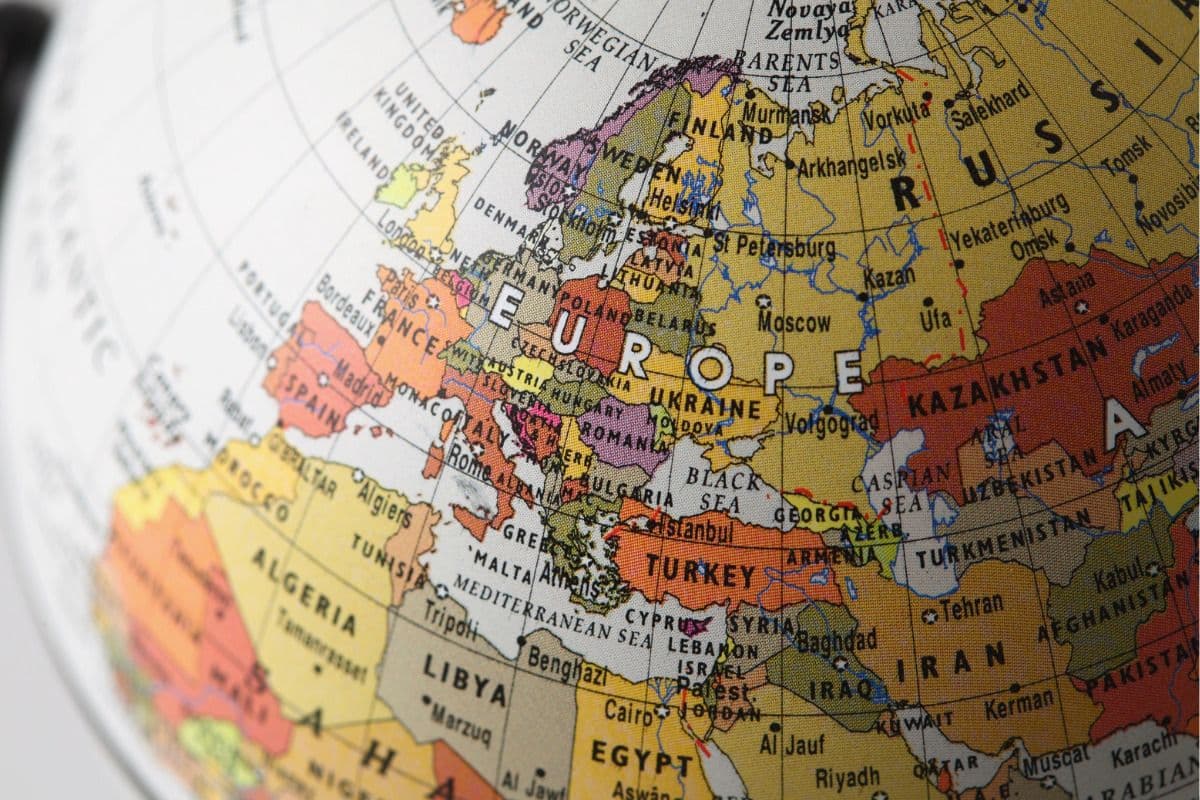
Health and safety compliance in Europe is governed by one of the most developed occupational safety and health frameworks in the world. Built on the EU Framework Directive 89/391/EEC, it establishes minimum standards applicable across all 27 EU member states while allowing each country to impose stricter national requirements. For UK businesses expanding into Europe, and for international businesses managing European operations, this framework creates both a shared foundation and a patchwork of country-specific obligations that generic compliance approaches cannot address. With the EU's Strategic Framework on Health and Safety at Work 2021-2027 driving sustained enforcement reform across Europe, and individual member states strengthening their inspection regimes, the stakes have never been higher. This guide covers 15 essential things every UK and global business must understand about health and safety compliance in Europe.
Why European Health and Safety Compliance Demands Specialist Attention
Europe's occupational health and safety framework is the most developed in the world. The European Agency for Safety and Health at Work (EU-OSHA) estimates that work-related accidents and occupational diseases cost the EU approximately 3.3% of GDP annually. The EU's response has been a sustained legislative programme — begun in 1989 and still actively developing — that has progressively raised minimum standards across all member states.
For UK businesses operating post-Brexit, this creates a specific challenge. The UK no longer automatically implements EU directives, but every European office, every European employee, and every European contractor relationship requires compliance with the relevant member state's national implementation of EU law. The UK's own legislative framework — however well-managed — provides no protection in France, the Netherlands, Germany, Italy, Spain, or any other European jurisdiction.
For US, Asian, or other non-European businesses entering European markets, the challenge is equivalent: understanding a framework that is both more prescriptive than many they have encountered elsewhere and more variable in its national implementation than its common EU foundation might suggest.
International Health and Safety Consultants with genuine European expertise help businesses navigate this complexity — building compliance programmes that meet local requirements while maintaining the consistent group standards that multinational governance demands.
1. The EU Framework Directive 89/391/EEC: The Foundation of All European Compliance
Everything in European occupational health and safety law traces back to one document: Council Directive 89/391/EEC of 12 June 1989, the OSH Framework Directive.
The Framework Directive guarantees minimum safety and health requirements throughout Europe while member states are allowed to maintain or establish more stringent measures. It was, as described by the European Agency for Safety and Health at Work, accompanied by further directives focusing on specific aspects of safety and health at work, together forming the fundamentals of European safety and health legislation.
The Framework Directive establishes nine core principles that every EU employer must apply. These align closely with the UK's own prevention hierarchy but carry the force of EU law transposed into national legislation across all 27 member states:
- Avoiding risks
- Evaluating unavoidable risks
- Combating risks at source
- Adapting work to the individual
- Adapting to technical progress
- Replacing the dangerous with the safe or less dangerous
- Developing a coherent overall prevention policy
- Giving collective protective measures priority over individual measures
- Giving appropriate instructions to workers
Article 153 of the Treaty on the Functioning of the European Union gives the EU the authority to adopt directives in the field of safety and health at work. Member states are free to adopt stricter rules for the protection of workers when transposing EU directives into national law. Therefore, legislative requirements in the field of safety and health at work can vary across EU member states.
This final point is the critical practical implication for businesses. The Framework Directive creates a floor, not a ceiling. Every EU country meets or exceeds it. Understanding which countries go further — and by how much — is the starting point for European compliance management.
2. The 20 Individual Directives That Govern Specific European Hazards
Need Expert H&S Guidance?
Our qualified consultants can help you implement the right health & safety measures for your business.
The Framework Directive is supplemented by 20 individual directives covering specific workplace hazards and activities. As of 2018, 20 individual directives were adopted under the Framework Directive. Together, these form the comprehensive European occupational safety and health legislative architecture.
Key individual directives that apply across European operations include:
Workplace conditions (Directive 89/654/EEC): Minimum safety and health requirements for the workplace covering temperature, ventilation, lighting, floors, doors, and welfare facilities.
Work equipment (Directive 2009/104/EC): Minimum requirements for the use of work equipment, including machinery, vehicles, and tools.
Personal protective equipment (Directive 89/656/EEC): Requirements for the provision and use of PPE.
Manual handling (Directive 90/269/EEC): Minimum health and safety requirements for manual handling of loads.
Display screen equipment (Directive 90/270/EEC): Safety and health requirements for work with display screen equipment — covering workstation design, eye tests, breaks, and training.
Carcinogens and mutagens (Directive 2004/37/EC): Protection of workers from risks related to exposure to carcinogens and mutagens.
Biological agents (Directive 2000/54/EC): Protection from risks related to exposure to biological agents.
Construction sites (Directive 92/57/EEC): Minimum requirements for temporary and mobile construction sites.
Chemical agents (Directive 98/24/EC): Protection from risks related to chemical agents at work.
Noise (Directive 2003/10/EC): Minimum requirements regarding exposure to noise.
Pregnant workers (Directive 92/85/EEC): Measures to encourage improvements in safety and health at work for pregnant workers and workers who have recently given birth or are breastfeeding.
Each of these directives has been transposed into national law in every EU member state — but with variations in specific requirements, documentation obligations, and enforcement approaches.
Health and Safety Consultants help businesses understand which of these directives apply to their European operations and how they have been implemented in each relevant jurisdiction.
3. The EU Strategic Framework on Health and Safety at Work 2021-2027
The current direction of European health and safety policy is set out in the EU Strategic Framework on Health and Safety at Work 2021-2027, adopted by the European Commission in 2021. The strategic framework on health and safety at work 2021-2027 identifies key objectives for health and safety at work, presents key actions and describes instruments to address these.
The Strategic Framework has three overarching priorities that signal where enforcement attention and legislative development are concentrated across Europe:
Anticipating and managing change brought about by the green, digital, and demographic transitions: New risks from climate change (including heat stress), digital monitoring technologies, and ageing workforces all require updated preventive frameworks.
Improving prevention of work-related diseases and accidents: Specific targets include reducing fatal work-related accidents by 50% and reducing work-related diseases by 50% over the period to 2030. The Framework prioritises cancer prevention (including occupational exposure to carcinogens), musculoskeletal disorders, and psychosocial risks including mental health.
Increasing preparedness for potential future health crises: Post-pandemic reforms to biosafety protocols and emergency response frameworks.
New heat risk requirements: From 2025, the Commission has introduced guidance and is developing mandatory measures on heat stress risk assessment and protection for outdoor workers — a development that affects construction, agriculture, logistics, and hospitality operations across the EU.
Understanding the Strategic Framework's priorities tells businesses where European regulators will focus enforcement resources over the next five years. Psychosocial risks, carcinogen exposure, musculoskeletal disorders, and heat stress are all areas of active regulatory development.
4. The Netherlands: RI&E, Arbodienst, and Proactive Enforcement
The Netherlands combines a rigorous compliance framework with one of Europe's most proactive enforcement regimes. Every business operating in the Netherlands faces obligations that go significantly beyond the UK baseline.
The RI&E (Risico-Inventarisatie en -Evaluatie): The RI&E is mandatory for every Dutch employer from the first employee. For companies with 25 or more employees, an external certified review by a qualified expert (kerndeskundige) is required. The RI&E must cover all hazards including psychosocial workload (PSA). An Action Plan (Plan van Aanpak) must accompany the RI&E.
Arbodienst obligation: Every employer must contract a certified occupational health service (arbodienst) or qualified company doctor. The arbodienst supports sickness absence management, health surveillance, and reintegration — obligations that go well beyond the UK's voluntary occupational health arrangements.
Trusted person (vertrouwenspersoon): Mandatory for all employers with 10 or more employees since 2023, providing employees with a confidential point of contact for reporting undesirable behaviour.
Enforcement: The Nederlandse Arbeidsinspectie (NLA) completed over 20,000 workplace inspections in 2024, issuing enforcement action in approximately 35% of cases. The NLA inspects proactively across all sectors without requiring a prior incident to trigger a visit.
The sick pay obligation: Dutch employers must continue paying at least 70% of wages for the first two years of illness — a powerful financial driver for preventive investment that has no direct UK equivalent.
5. France: DUERP, PAPRIPACT, and the CSE
France's occupational health and safety framework is among the most prescriptive in Europe. The 2021 Loi Santé au Travail significantly strengthened requirements, and the July 2025 enforcement reforms have further intensified regulatory scrutiny.
DUERP: The Document Unique d'Évaluation des Risques Professionnels is mandatory for every employer from the first employee. Unlike the UK's risk assessment, the DUERP must be retained for 40 years, must cover psychosocial risks (RPS) explicitly, and must be accessible to the CSE, the SPST, and labour inspectors.
PAPRIPACT: Companies with 50 or more employees must produce a PAPRIPACT — an annual programme of prevention measures including financial cost estimates, performance indicators, and an implementation calendar. There is no direct UK equivalent.
CSE (Comité Social et Économique): Mandatory for companies with 11 or more employees. The CSE has statutory consultation rights over the DUERP and PAPRIPACT — rights that are legally enforceable, not merely advisory.
SPST affiliation: Every employer must affiliate with a Service de Prévention et de Santé au Travail from the first employee. Medical monitoring is mandatory for all employees.
Obligation de sécurité de résultat: France's duty standard is an obligation to achieve safety, not merely to take reasonable precautions. This is materially more demanding than the UK's "so far as is reasonably practicable" standard.
2025 enforcement reforms: From July 2025, labour inspectors can impose penalties without a preceding workplace accident. Principal contractors now face systematic prosecution for fatal accidents involving subcontractor employees.
6. Germany: DGUV, Berufsgenossenschaften, and Works Councils
Germany's occupational health and safety system combines federal legislation with an elaborate sectoral self-governance structure that has no equivalent elsewhere in Europe.
Legislative framework: The Arbeitsschutzgesetz (Occupational Health and Safety Act) transposed the EU Framework Directive. The DGUV (Deutsche Gesetzliche Unfallversicherung) provides the technical regulations through the Berufsgenossenschaften — sector-specific statutory accident insurance institutions.
Berufsgenossenschaften: Every business must register with the appropriate Berufsgenossenschaft for its sector. Each BG issues its own regulations (DGUV Vorschriften) and conducts sector-specific inspections. There are currently nine industrial and several public sector BGs covering all employment categories.
Gefährdungsbeurteilung: The German risk assessment (Gefährdungsbeurteilung) must be conducted for all activities and documented. The approach and documentation requirements differ from the UK framework and from French DUERP requirements.
Betriebsrat (Works Council): German works councils have extensive co-determination rights over health and safety arrangements. Any significant change to working conditions, safety procedures, or health management systems requires works council agreement before implementation — not merely consultation.
Fachkraft für Arbeitssicherheit: The appointment of a qualified safety specialist is mandatory for most employers, with the required qualifications set by the relevant BG.
Mental health: The 2013 amendment to the Arbeitsschutzgesetz explicitly included psychosocial hazards in the scope of the Gefährdungsbeurteilung. Germany was among the first EU member states to make workplace stress assessment a formal legal requirement.
7. Italy: RSPP, DVR, and Multi-Layered Enforcement
Italy's occupational health and safety system, governed principally by Legislative Decree 81/2008 (the Testo Unico sulla salute e sicurezza sul lavoro), combines the EU Framework Directive's principles with a distinctively structured prevention system.
RSPP (Responsabile del Servizio di Prevenzione e Protezione): The RSPP is a designated responsible safety officer required for every employer. The qualifications required depend on the business's risk category, with the highest-risk categories requiring the most extensive qualifications. The employer can act as RSPP in certain small businesses, but must complete the required training.
DVR (Documento di Valutazione dei Rischi): The DVR is the Italian risk assessment document, required from the first employee. It must be reviewed when the organisation changes and at intervals specified by the risk category.
DUVRI: Where multiple employers work on the same site, a DUVRI (Documento Unico di Valutazione dei Rischi da Interferenza) is required — an interference risk assessment coordinating the safety arrangements of all employers present.
RLS (Rappresentante dei Lavoratori per la Sicurezza): Workers' safety representatives are elected or designated depending on company size. They have rights to information, consultation, and participation similar to, but distinct from, French CSE rights.
Multi-layered enforcement: Italy's enforcement involves ASL (local health authorities), the Ispettorato Nazionale del Lavoro (INL), and the INAIL insurance institute, creating overlapping inspection authority that requires businesses to maintain compliance with requirements assessed by multiple bodies.
8. Spain: LPRL, Psychosocial Risks, and the Strengthened ITSS
Spain's occupational health and safety framework, built on the Ley de Prevención de Riesgos Laborales (LPRL, Law 31/1995), has undergone significant reform in 2025 with a strong focus on psychosocial risks.
Plan de Prevención: Every employer must maintain a Plan de Prevención de Riesgos Laborales setting out the prevention structure, objectives, and resources. Unlike the UK health and safety policy, the Plan de Prevención has prescribed content and is subject to ITSS audit.
Evaluación de Riesgos: The risk assessment must cover all hazards including psychosocial risks. From 2025, burnout (síndrome de desgaste profesional) is formally recognised as an occupational risk requiring assessment and management.
Digital disconnection (Derecho a la desconexión digital): Every employer must produce a written digital disconnection protocol, establishing clear boundaries on after-hours availability. ITSS inspectors are specifically targeting businesses without this document.
ITSS enforcement: The Inspección de Trabajo y Seguridad Social can enter any workplace without notice. LISOS fines range from €40 for minor infractions to €819,780 for very serious violations, applied per infraction and per affected worker.
Prevention service modality: Every Spanish employer must organise prevention through one of four recognised modalities: employer assumption, designated workers, internal prevention service, or external prevention service (SPA).
9. Other Key European Markets: Belgium, Sweden, Poland, and Beyond
Beyond the five major markets covered above, European compliance extends across 27 EU member states plus additional European Economic Area countries including Norway and Iceland.
Belgium: The Codex on Wellbeing at Work (formerly the Wellbeing Act 1996) governs occupational health and safety. Every employer must appoint an internal or external prevention advisor, with qualifications depending on company risk category. The Psychosocial Wellbeing Act specifically requires psychosocial risk assessment and policy.
Sweden: Sweden's Work Environment Act (Arbetsmiljölagen) places strong emphasis on systematic work environment management (SAM — Systematiskt Arbetsmiljöarbete). The Swedish Work Environment Authority (Arbetsmiljöverket) has an active inspection programme. Sweden is notable for its early and comprehensive approach to psychosocial risk management.
Poland: Poland's Labour Code and associated regulations implement EU directives. As the EU's sixth largest economy, Poland is an increasingly important compliance market for businesses expanding eastward. The PIP (Państwowa Inspekcja Pracy — National Labour Inspectorate) conducts proactive inspections with an active online complaint portal.
Nordic markets (Denmark, Finland, Norway): Nordic countries consistently lead European rankings in workplace safety performance and have extensive worker participation requirements. All maintain mandatory occupational health service arrangements and robust psychosocial risk frameworks.
Eastern EU members: Romania, the Czech Republic, Hungary, and other central and eastern European members have progressively strengthened their frameworks, with EU accession driving significant legislative development. Enforcement capacity varies but is growing.
Global Health and Safety Consultants maintain current knowledge of requirements across all European markets, enabling businesses to achieve compliance in less-familiar jurisdictions without relying on outdated or incomplete information.
10. What the EU Framework Requires of Every European Employer
Despite the variation between member states, the EU Framework Directive creates a set of core obligations that apply to every employer across all 27 EU member states. Understanding these obligations establishes the baseline from which country-specific requirements build.
Risk assessment: Every EU employer must conduct and document a risk assessment. The specific format varies by member state, but the obligation to systematically identify hazards, evaluate risks, and implement controls is universal.
Prevention measures: Employers must implement appropriate preventive and protective measures based on the hierarchy of control, with collective measures given priority over individual measures.
Information and instruction: Workers must receive comprehensible and relevant information about the risks they face and the measures taken to protect them.
Training: Workers must receive adequate health and safety training at recruitment and when exposed to new risks. Training must be adapted to the nature of the work and the individual's role.
Consultation and participation: Workers (or their representatives) must be consulted on all health and safety matters. The Framework Directive introduces as a key element the principle of risk assessment and defines its main elements including hazard identification and worker participation.
Competent persons: Employers must designate competent persons to assist with prevention activities, whether internal or external.
Health surveillance: Workers must have access to appropriate health monitoring where the risk assessment identifies it as necessary.
Emergency procedures: Employers must establish first aid, fire-fighting, and evacuation arrangements, and identify responsible persons for their implementation.
11. The Psychosocial Risk Agenda: Europe's Fastest-Growing Compliance Priority
Psychosocial risks — work-related stress, harassment, burnout, and mental health — have become the fastest-growing area of European occupational health and safety enforcement. Every major European jurisdiction has either recently strengthened its psychosocial risk requirements or is in the process of doing so.
EU-OSHA data: The European Agency for Safety and Health at Work reports that stress is the second most common work-related health problem in the EU, affecting around 40% of workers. Psychosocial risks cost the EU economy an estimated €240 billion annually through absenteeism, presenteeism, and healthcare costs.
Country-specific developments: - France: RPS (risques psychosociaux) must be explicitly covered in the DUERP; burnout cases trigger regulatory scrutiny - Spain: Burnout is formally an occupational risk from 2025; digital disconnection protocols are mandatory - Germany: Psychosocial Gefährdungsbeurteilung has been a legal requirement since 2013 - Netherlands: PSA (psychosocial workload) is a primary RI&E category with mandatory policy requirements - Belgium: The Psychosocial Wellbeing Act requires formal psychosocial risk assessment and policy - Sweden: Systematic management of psychosocial work environment is a core SAM requirement
EU Strategic Framework: The 2021-2027 Strategic Framework explicitly identifies psychosocial risks as a priority area. The Commission is developing updated guidance and potential legislative revisions to specifically address mental health, long-term stress, and burnout as EU-level priorities.
For businesses operating across European markets, a group-wide psychosocial risk programme that meets the most stringent national requirements is both good practice and increasingly a compliance necessity.
Health and Safety Consultants and Software solutions support psychosocial risk assessment, manager training tracking, and monitoring of mental health KPIs across European operations.
12. How European Enforcement Differs from the UK Approach
UK businesses accustomed to the HSE's enforcement culture encounter meaningfully different approaches in European jurisdictions. Understanding these differences helps businesses calibrate their compliance investment appropriately.
Proactive vs reactive inspection: The UK HSE conducts proactive inspections primarily in higher-risk sectors and relies significantly on reactive investigation following reported incidents. European enforcement bodies vary in their approach, with several — including the Netherlands NLA, France's ITSS, and Spain's ITSS — conducting proactive inspections across all industries without requiring a prior incident to trigger a visit.
No-notice entry: Both French and Spanish labour inspectors can enter premises at any time without prior notice. Dutch NLA inspectors operate similarly. This creates a compliance environment where documentation and practice must be consistently maintained rather than managed to inspection cycles.
Worker privacy interviews: French and Spanish inspectors routinely interview workers privately during inspections to verify that documented procedures reflect actual practice. This creates specific risk for businesses where policy commitments and operational reality diverge.
Personal director liability: France imposes criminal penalties directly on company directors (dirigeants) for health and safety breaches including absent or inadequate risk assessment documentation. This personal liability dimension is more direct and explicit than UK corporate liability provisions.
Fine structures: Spain's LISOS fines of up to €819,780 per infraction per affected worker dwarf the UK's Fee for Intervention charges, though UK unlimited prosecution fines can also reach significant levels. Italian, French, and German penalty structures also differ materially from the UK model.
Supply chain liability: France's July 2025 reforms extended prosecution to principal contractors and clients following fatal accidents involving subcontractor employees — a supply chain liability dimension that affects every business operating as a principal contractor in France.
Health and Safety Audits of European operations verify compliance against the enforcement standards of each relevant national inspectorate, providing the independent assessment that management and governance require.
13. Common Compliance Gaps for UK and International Businesses in Europe
Businesses entering European markets consistently encounter predictable compliance failures. Understanding these patterns enables proactive gap closure.
Applying UK documentation globally: The most common error. A UK risk assessment does not satisfy the French DUERP. A UK health and safety policy does not meet the German Arbeitsschutzgesetz documentation requirements. A UK occupational health arrangement does not replace the Dutch arbodienst obligation. UK documentation is UK-specific — every European jurisdiction requires its own locally compliant documents.
Missing employee representative obligations: UK businesses frequently underestimate the statutory rights of European works councils and employee representatives. French CSE consultation is legally enforceable before decisions are implemented. German Betriebsrat co-determination requires agreement, not merely consultation. Dutch works council consent is required for RI&E instrument selection.
Ignoring mandatory occupational health service obligations: The Netherlands and France both require every employer to affiliate with a certified occupational health service from the first employee. This is not an optional best practice — it is a legal obligation with no UK equivalent, unfamiliar to many UK employers until enforcement action occurs.
Overlooking psychosocial risk requirements: UK businesses treating psychosocial risk assessment as discretionary encounter specific legal compliance gaps in France, Germany, the Netherlands, Belgium, Spain, and Sweden. Each requires explicit psychosocial risk coverage in risk assessment documentation.
Inadequate language provision: Key documents must be accessible to employees, works councils, and regulators in the local language. English-only documentation creates barriers to compliance validation regardless of its technical quality.
Failing to register with sector enforcement bodies: Germany's Berufsgenossenschaften registration is mandatory and triggers specific DGUV regulation application. Failure to register is a distinct legal breach independent of other compliance failures.
14. ISO 45001 as a Framework for Consistent European Compliance
ISO 45001 provides an internationally recognised management system framework that enables businesses to manage health and safety consistently across multiple European jurisdictions.
To better protect workers in the EU from work-related accidents and diseases, the European Commission has adopted various strategic policy documents identifying key challenges and actions to be taken to improve health and safety at work. ISO 45001 provides a complementary management framework that works alongside national legislative requirements.
Why ISO 45001 supports European compliance:
Consistent methodology: ISO 45001's Clause 6.1 risk assessment requirements create a consistent approach applicable across all European operations, with national regulatory requirements incorporated as mandatory compliance obligations within the management system.
Hazard identification breadth: The standard requires systematic hazard identification covering physical, chemical, biological, ergonomic, and psychosocial hazards — aligned with EU-OSHA's comprehensive hazard taxonomy.
Worker participation: ISO 45001's strong emphasis on worker consultation and participation aligns with EU Framework Directive requirements that are more extensive than many businesses from non-European backgrounds are accustomed to.
Continuous improvement: The PDCA (Plan-Do-Check-Act) cycle at the heart of ISO 45001 creates the systematic review and improvement processes that European enforcement bodies increasingly expect.
International recognition: ISO 45001 certification is recognised in all European markets and increasingly required by European enterprise clients as a supply chain standard.
Audit alignment: Health and Safety Audits conducted against ISO 45001 criteria provide a consistent assessment baseline across all European locations, enabling meaningful group-level benchmarking.
15. Getting Expert Support for European Health and Safety Compliance
The breadth and complexity of European health and safety compliance — across the EU Framework Directive, 20 individual directives, five major country frameworks, and the emerging priorities of the Strategic Framework 2021-2027 — makes specialist support essential for businesses operating across multiple European markets.
International Health and Safety Consultants provide:
Country-specific documentation: DUERP and PAPRIPACT for France, RI&E with certified review for the Netherlands, DGUV Gefährdungsbeurteilung for Germany, DVR and RSPP documentation for Italy, and Plan de Prevención and evaluación de riesgos for Spain — all in compliant formats and bilingual where required.
Employee representative engagement: Facilitating legally required consultation with French CSEs, Dutch works councils, German Betriebsräte, and equivalent bodies across other European markets.
Occupational health service coordination: Supporting mandatory arbodienst arrangements in the Netherlands and SPST affiliation in France.
Health and Safety Audits: Consistent, comparable audit programmes across all European locations using methodology aligned with ISO 45001 and local regulatory requirements, providing group management with reliable compliance visibility.
Regulatory monitoring: Proactive tracking of legislative developments across all European markets, including the emerging requirements of the EU Strategic Framework 2021-2027, country-specific enforcement campaigns, and national legislative reforms.
Technology support: Health and Safety Consultants and Software solutions enabling centralised document management, multilingual document storage, consistent risk assessment tools, cross-border audit management, and group compliance dashboards across European and wider international operations.
Arinite supports over 1,500 global businesses across 50+ countries, with a 95%+ client retention rate and more than 500 years of combined consultant experience. Our CMIOSH-qualified consultants deliver practical, locally compliant European health and safety support, whether your business is entering its first European market or managing compliance across multiple established operations.
Frequently Asked Questions
Does UK health and safety law apply to our European offices?
No. UK health and safety law applies in Great Britain. Each European country where you employ people requires compliance with its own national framework — which implements EU directives plus any stricter national provisions. UK documentation, policies, and risk assessments do not satisfy European regulatory requirements.
What is the EU Framework Directive and why does it matter?
Directive 89/391/EEC guarantees minimum safety and health requirements throughout Europe while member states are allowed to maintain or establish more stringent measures. It is the foundation of all European health and safety law, establishing core principles including risk assessment, worker participation, competent persons, and health surveillance that apply across all 27 EU member states.
Which European countries have the most demanding H&S compliance requirements?
The Netherlands, France, Germany, Sweden, and Belgium consistently have the most prescriptive requirements, particularly around mandatory occupational health services, psychosocial risk assessment, employee representative rights, and documentation obligations. Spain has significantly strengthened its framework with the 2025 LPRL reforms.
Do we need separate risk assessments for each European country?
Yes. Each jurisdiction has its own risk assessment format, content requirements, language obligations, and review cycles. The French DUERP must be retained for 40 years. The Dutch RI&E requires certified review for companies with 25 or more employees. German DGUV assessments follow sector-specific formats. Applying a single document across all markets creates non-compliance in every location.
How does ISO 45001 help with European compliance?
ISO 45001 provides a consistent management system framework applicable across all European markets. Implementing ISO 45001 supports systematic compliance with national regulatory requirements within a coherent management structure, and provides internationally recognised certification that is increasingly expected by European enterprise clients.
What are the consequences of non-compliance with European health and safety law?
Consequences vary by country but include: French criminal penalties for directors and fines per infraction per worker; Spanish LISOS fines of up to €819,780 per violation; Dutch NLA enforcement in 35% of inspections; German Berufsgenossenschaft sanctions and works council challenges; and Italian multi-authority enforcement. Beyond financial penalties, non-compliance can restrict ability to operate, damage supplier relationships, and create significant reputational harm.
How should multinational businesses manage European H&S compliance?
The most effective approach combines global minimum standards (ideally aligned with ISO 45001) with locally compliant documentation and management arrangements for each European jurisdiction. Global Health and Safety Consultants provide coordinated support enabling consistent group oversight while meeting each country's specific requirements.
What is the EU Strategic Framework 2021-2027 and does it affect our business?
The strategic framework on health and safety at work 2021-2027 identifies key objectives for health and safety at work, presents key actions and describes instruments to address these. Its priorities — psychosocial risks, cancer prevention, musculoskeletal disorders, and heat stress — signal where enforcement attention and legislative development are concentrated across Europe. Businesses should align compliance programmes with these priorities proactively.
Taking the Next Step
Health and safety compliance in Europe is not a single framework — it is a layered architecture of EU directives and national legislation that requires specific expertise in each jurisdiction where you operate. The businesses that manage this complexity most effectively are those that engage specialist support early, build locally compliant documentation, and maintain genuine management system consistency across all their European locations.
Assess your position: Take our Health and Safety Quiz to evaluate your current compliance across key areas.
Discuss your European operations: Book a free Gap Analysis Call with an Arinite consultant to identify where your European compliance gaps lie and what priority actions are needed.
Get expert European support: Contact Arinite to learn how our International Health and Safety Consultants support businesses across Europe and 50+ countries worldwide.
Arinite is a leading provider of International Health and Safety Consultants services, supporting over 1,500 global businesses across 50+ countries including all major European markets. Key external resources: EU-OSHA Framework Directive | European Commission H&S at Work | EUR-Lex Directive 89/391/EEC | EU-OSHA Directives by Topic | ISO 45001
Written by
Arinite Health & Safety Consultants
Health & Safety Expert at Arinite