Healthcare Health and Safety: 11 Risks a General Policy Misses
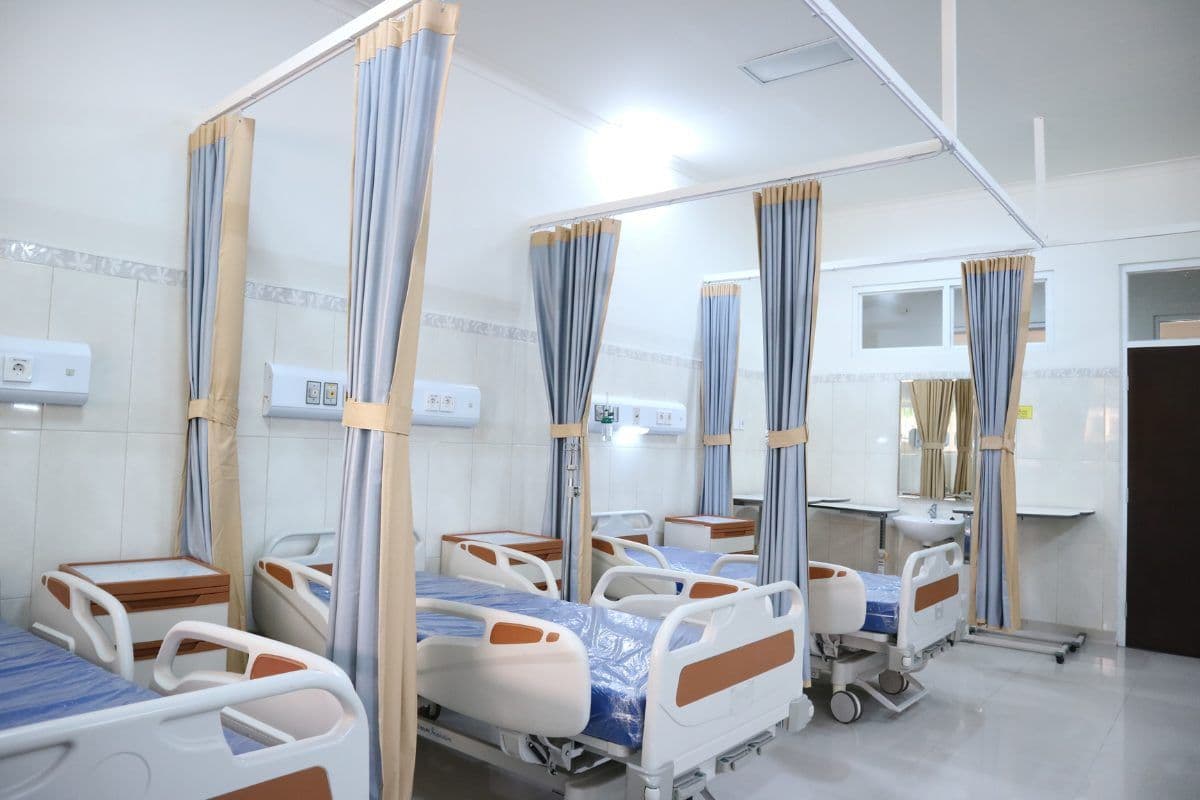
Healthcare organisations are unusually good at patient safety and frequently much weaker at staff safety. The governance, the incident systems and the audit culture all exist, and they point outwards at clinical risk.
That matters because health services carry a risk profile no general safety policy reaches. There is a set of regulations that applies only to this sector, the sector reports more violence against staff than almost any other, and several of its everyday activities would receive close attention in any other industry.
Eleven risks, written for the people who run the organisation rather than the clinicians in it.
1. Sharps: healthcare has its own regulations
The clearest example of a sector-specific duty, and the one most non-clinical managers have never read.
The Health and Safety (Sharp Instruments in Healthcare) Regulations 2013 apply to healthcare employers. Regulation 5 requires the employer to ensure that the use of medical sharps at work is avoided so far as is reasonably practicable, that safer sharps are used where sharps are used, and that needles are not capped after use, unless recapping is required to control a risk identified by a risk assessment and the risk of injury is effectively controlled by a suitable appliance or tool.
Three operative points. Avoidance comes first, as it does everywhere. Safer-engineered devices are a legal expectation rather than a procurement preference. And recapping is prohibited by default, with a narrow, evidenced exception.
The Regulations also address safe disposal, procedures following an injury, and information and training. HSE's guidance on sharps injuries covers the practical arrangements.
2. Violence and aggression against staff
The largest single injury category in health services, and the one most often treated as unavoidable.
HSE publishes specific guidance on violence in health and social care, and the duty is the ordinary one: it is a foreseeable risk arising from the work, so it is assessable and controllable.
The controls that work are environmental and organisational rather than personal: reception and waiting area design, sightlines, exit routes for staff, a functioning alarm with an agreed response, waiting-time communication, a clear position on withdrawing service, and support afterwards.
The obligation strengthens from 30 October 2026, when the Employment Rights Act 2025 provisions on third-party harassment and the duty to take all reasonable steps take effect.
3. Moving and handling people
Need Expert H&S Guidance?
Our qualified consultants can help you implement the right health & safety measures for your business.
Distinct from handling loads, and it needs its own treatment.
People move unpredictably, cannot be put down, and the task changes with their condition. The general manual handling duty applies, and the relevant controls are equipment availability, assessment per person rather than per task, and enough staff on the shift to use the two-person technique the assessment specifies.
The recurring failure is an assessment that assumes a staffing level the rota does not deliver at night.
4. Biological agents
Infection risk to staff sits within the hazardous substances regime rather than outside it.
That brings the ordinary discipline: identify the agents, assess exposure, control by the hierarchy, and provide health surveillance where indicated. Immunisation, containment, ventilation and protective equipment are controls within that framework rather than a separate system.
5. Hazardous substances beyond infection
The category that non-clinical managers underestimate.
Healthcare holds a substantial chemical inventory: high-level disinfectants, sterilising agents, cytotoxic and other hazardous medicinal products, anaesthetic gases, laboratory reagents and ordinary cleaning products at industrial strength.
Regulation 7 of the Control of Substances Hazardous to Health Regulations 2002 requires exposure to be prevented or, where that is not reasonably practicable, adequately controlled. For several of these substances the control is engineering, such as ventilation and containment, rather than protective equipment.
6. Lone and community working
Staff visiting people in their own homes face a different risk profile from staff in a building.
The questions are the standard lone working ones and the answers must actually function: who knows where the person is, what happens if they do not check in, what the withdrawal position is if a situation feels unsafe, and whether anyone is required to enter a property they judge unsafe.
Travel between visits is part of the working day and belongs in the assessment.
7. Shift work and fatigue
Around-the-clock services create fatigue risk that is structural rather than individual.
Night work brings specific entitlements around health assessments and working time limits, and fatigue degrades exactly the capacities clinical work depends on. Rota design, rest facilities, and realistic handover time are the controls; resilience training is not.
8. Equipment, including lifting equipment
Hoists and patient lifting equipment are lifting equipment, and lifting equipment used to lift people carries the shortest statutory examination interval, at six months.
Beyond hoists, the ordinary work equipment duties apply to beds, trolleys, sterilising equipment and everything else, covering suitability, maintenance and training.
9. Fire, where evacuation is not straightforward
Healthcare buildings are among the few where "evacuate the building" is not the plan.
Progressive horizontal evacuation, moving people to an adjoining compartment rather than outside, depends entirely on compartmentation being intact, fire doors working and staff knowing the strategy. Contractor work that breaches compartmentation is therefore a much bigger issue here than in an office.
Since October 2023, the fire risk assessment must be recorded in full and the fire safety arrangements recorded separately, which for a complex site is a substantial document rather than a formality.
10. Slips, trips and the estate
Unglamorous and consistently near the top of the injury figures.
Wet floors during cleaning, spillages, trailing equipment leads, thresholds, and older estates with level changes and worn surfaces. In a setting where staff move quickly and patients may be unsteady, the consequences differ from an office.
Estate condition also carries the ordinary premises duties: asbestos in older buildings, water hygiene in systems with intermittently used outlets, and equipment maintenance.
11. Staff psychological health
The risk with the largest effect on the workforce, and the one most often addressed through support rather than assessment.
The drivers are documented and organisational: workload, emotional demand, exposure to distressing events, staffing levels, and the difficulty of taking breaks.
The duty is to assess the causes by group and act on them. Support services matter and do not discharge it, for the same reason a first aid kit does not discharge the duty to prevent injury.
The 11, in short
| Risk | What it needs |
|---|---|
| Sharps | Avoid, use safer sharps, do not recap by default |
| Violence | Environment and organisation, not personal resilience |
| Moving people | Equipment plus the staffing the assessment assumes |
| Biological agents | Assessed within the substances regime |
| Other substances | Engineering controls for the serious ones |
| Lone and community working | Arrangements that function, including travel |
| Shift work | Rota design and realistic handover |
| Equipment | Six-month examination for people-lifting equipment |
| Fire | Compartmentation intact; strategy understood |
| Slips and estate | Cleaning regimes and premises duties |
| Psychological health | Assess causes, not just provide support |
Rows one, two and eight are the three where a general policy will simply not reach, because each has a sector-specific requirement behind it.
The governance point
Healthcare organisations usually have strong clinical governance and weaker staff safety governance, and the two sit in different committees with different data.
Three questions a board can ask. Are staff injuries reported into the same rigour as patient incidents? Do sharps injuries get investigated for the system cause, or recorded and closed? And does anybody compare violence reports against turnover and absence in the same areas?
Independent health and safety audits are useful here precisely because the internal assurance machinery is pointed elsewhere.
For international groups
Two considerations.
Sharps rules derive from a European directive and appear in recognisable form across the European Union, with national variations in scope and in what must be reported. Outside Europe the position varies widely.
Occupational health involvement is often compulsory. Several jurisdictions covered in this series require pre-employment and periodic examinations delivered through an approved provider, with immunisation and exposure records held to prescribed standards and retained for long periods. A group applying British arrangements will do less than those jurisdictions require.
Holding immunisation status, examinations, incidents and equipment examinations across sites in one register is where health and safety consultants and software are worth more together than either alone.
Where Arinite fits
Arinite works on staff safety in settings where the assurance effort is concentrated on patients, which is where the gaps usually are. We support 1,500+ businesses across 50+ countries and protect 100,000+ employees, with 95%+ client retention over 15+ years.
Our health and safety consultants work with healthcare and care home providers, and our fire risk assessment and asbestos work covers estates where compartmentation and older fabric both matter. HSE's health services pages cover the sector.
Where a group operates in several countries, our global health and safety consultants establish what each jurisdiction requires of occupational health, and our international health and safety consultants keep that current.
If your organisation investigates patient incidents thoroughly and closes sharps injuries with a form, a free gap analysis is the right place to start.
Related Articles
Written by
Arinite Health & Safety Consultants
Health & Safety Expert at Arinite