New Zealand Health and Safety: 6 Changes in the 2026 Reform
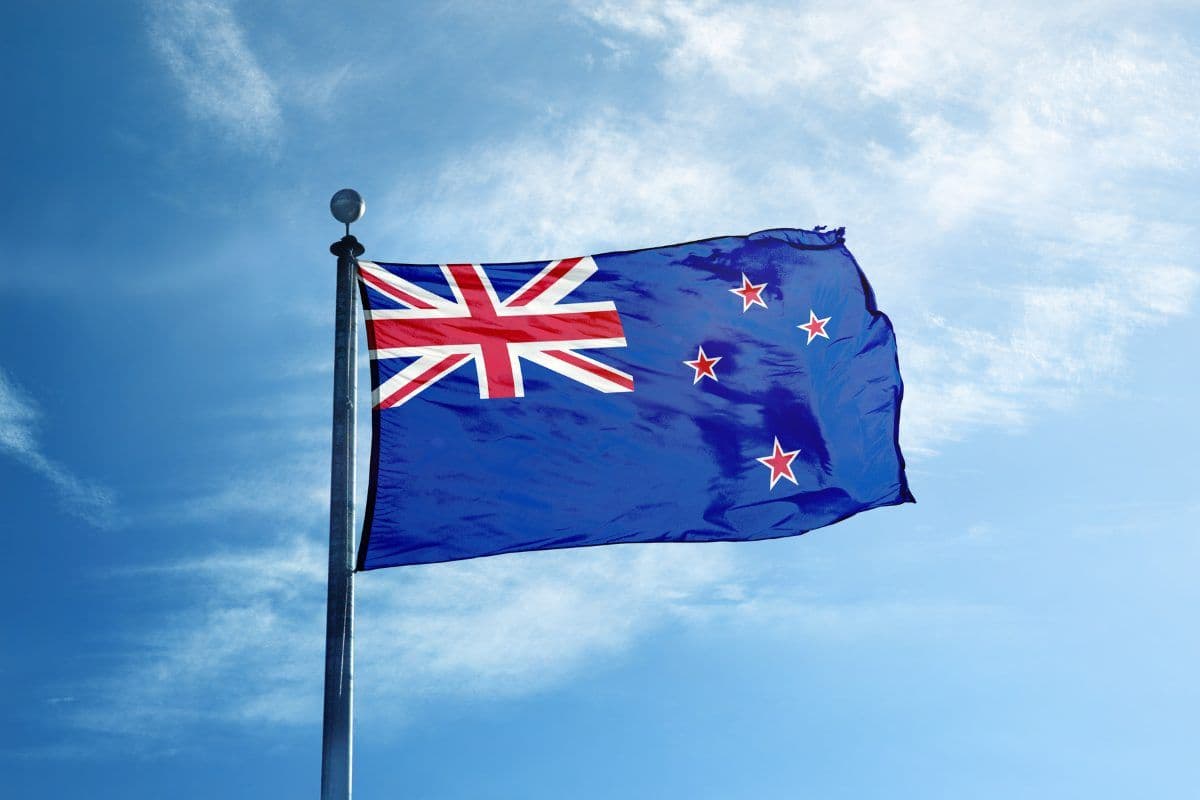
If your group has an Auckland or Wellington entity, the law it operates under changed five weeks ago.
The Health and Safety at Work Amendment Act received Royal Assent on 9 July 2026, making the most significant change to New Zealand's health and safety framework since the principal Act was passed in 2015. It amends the Health and Safety at Work Act 2015, the WorkSafe New Zealand Act 2013 and the general risk and workplace management regulations.
The reform runs in an unusual direction. Most of the changes covered in this series add obligations. This one is explicitly intended to reduce compliance burden and increase certainty, which creates a different risk for a foreign parent: assuming that less burden means less to do, when what has actually happened is that the target has moved.
Six changes.
1. The Act now focuses on critical risk
The organising idea behind the reform.
The purpose of the Act has been sharpened to focus businesses on managing risks that could cause serious harm, and the regulator's main objective has been aligned to match. Organisations are expected to prioritise critical risks over less serious ones, including by allocating more resources to them and reviewing their controls more frequently.
For an office-based financial or professional entity this is worth thinking about carefully rather than welcoming reflexively. Critical risk in a corporate office is rarely a machine. It is more likely to concern psychosocial harm, fatigue from extended hours, travel, or an individual's ability to evacuate. A firm that reads "critical risk" as meaning "not us" has misread it.
2. A new category of small PCBU
The change most likely to apply to a foreign-owned entity directly.
The reform creates a subset of persons conducting a business or undertaking, defined by size and by being low risk, whose obligations are limited to providing basic worker welfare facilities and managing critical risks. The threshold discussed through the reform process was fewer than twenty workers.
A twelve-person Auckland office of an international group may fall within this. That is genuinely helpful and it is not an exemption: welfare facilities and critical risk management remain, and the classification depends on the nature of the business as well as its size. Confirm whether your entity qualifies rather than assuming, because assuming wrongly is the expensive direction of error.
3. Officer due diligence has been clarified
Need Expert H&S Guidance?
Our qualified consultants can help you implement the right health & safety measures for your business.
The change that matters most to anyone reading this from London or New York.
New Zealand, like Australia, imposes a personal due diligence duty on officers of a PCBU. The reform clarifies its scope, particularly where the same individual holds both a governance role and an operational one. The effect is that officers hold the duty in respect of governance rather than in respect of other activities they perform as a worker, and the due diligence obligations are confined to those listed in the Act.
New Zealand commentary connects this directly to the prosecution of a former chief executive of a port company, a case which was still subject to appeal, and which focused attention on how the duty applies to someone who is both a director and an executive.
Two points for a group. The duty remains personal and it still attaches to people who participate in decisions affecting a substantial part of the business, which in a group structure can include people outside New Zealand. And clarification of scope is not reduction of exposure: what has been tightened is the boundary, not the seriousness.
4. Overlapping legislation no longer means double compliance
A practical simplification with a specific example attached.
Where a person complies with requirements under other legislation that manage a particular risk, they are treated as having complied with the Act in respect of that risk. The reform specifically addresses earthquake-prone buildings: a PCBU meeting its obligations under the building legislation does not carry further duties under the health and safety Act for that risk.
For an occupier of leased premises in a seismic country, that is a meaningful clarification and one to raise with whoever manages your property arrangements.
5. Approved codes of practice carry more weight
The change that alters how you demonstrate compliance.
The reform strengthens approved codes of practice, with the stated position that a business following an approved code's processes for managing a risk can be confident it is meeting its obligations for that risk.
This is worth noting alongside the Australian position, where New South Wales moved in a similar direction by requiring compliance with a code or demonstration of an equivalent standard. Codes are becoming the practical benchmark in both jurisdictions, which makes knowing which apply to you more important than it was.
6. Notification requirements have narrowed
Reporting to the regulator has been reduced to significant workplace events.
The practical consequence for a group is that your New Zealand entity's notification threshold now differs from those of your other entities, which were already different from each other. Your internal incident procedure should record what New Zealand now requires rather than defaulting to the group standard, and the reduction in external reporting does not reduce the value of recording events internally.
What a New Zealand entity should do now
| Change | Question to answer | Action | |---|---|---| | Critical risk focus | What are the critical risks in an office setting? | Reassess, do not assume there are none | | Small PCBU | Does the entity qualify? | Confirm, do not assume | | Officer duties | Who are the officers, including outside New Zealand? | Identify and brief them | | Overlapping legislation | Which risks are managed under other regimes? | Map, particularly building-related | | Codes of practice | Which approved codes apply? | Identify and follow the processes | | Notification | What must now be reported, and by whom? | Update the local procedure |
Commencement provisions in reforms of this size are frequently staged, so confirm which changes are already in force for your entity. MBIE publishes the reform detail and supporting papers on its health and safety reform pages, the government's announcement of the final reading sets out the intent, and WorkSafe publishes operational guidance.
New Zealand and Australia are now diverging
Worth understanding for any group with entities in both, which is most groups with an Australasian presence.
The two systems share a common architecture: duties on a PCBU rather than an employer, workers defined broadly, and a personal due diligence duty on officers. That shared architecture is why groups routinely treat them as one arrangement.
They are moving apart. New Zealand has narrowed its focus to critical risk, created a lighter category for small low-risk businesses, clarified officer duties around governance, and reduced notification. Australia's model law has no equivalent small-PCBU category, its industrial manslaughter offences vary by jurisdiction, and Victoria operates outside the harmonised model altogether.
An Australasian standard built on the assumption of equivalence will drift out of alignment with both. This is the same lesson the European entities in this series keep teaching: common architecture, national machinery, and it is the machinery you comply with. Holding one group view while each entity meets its own national test is where health and safety consultants and software are worth more together than either alone, and periodic health and safety audits catch divergence of this kind before an inspector does.
Where Arinite fits
Arinite coordinates locally qualified practitioners so that New Zealand obligations are addressed under New Zealand law as it now stands, while your group keeps one point of contact across every country. We support 1,500+ businesses across 50+ countries and protect 100,000+ employees, with 95%+ client retention over 15+ years. Our health and safety consultants work extensively with finance and banking, legal and IT and software organisations.
Our global health and safety consultants can establish which of your people hold officer duties in which jurisdictions, which is a question New Zealand and Australia both now put sharply, and our international health and safety consultants confirm what is outstanding locally.
If nobody has briefed your board on what changed in July, a free gap analysis is the right place to start.
Related Articles
Written by
Arinite Health & Safety Consultants
Health & Safety Expert at Arinite