How Many First Aiders Do You Need? The 12 Factors That Decide
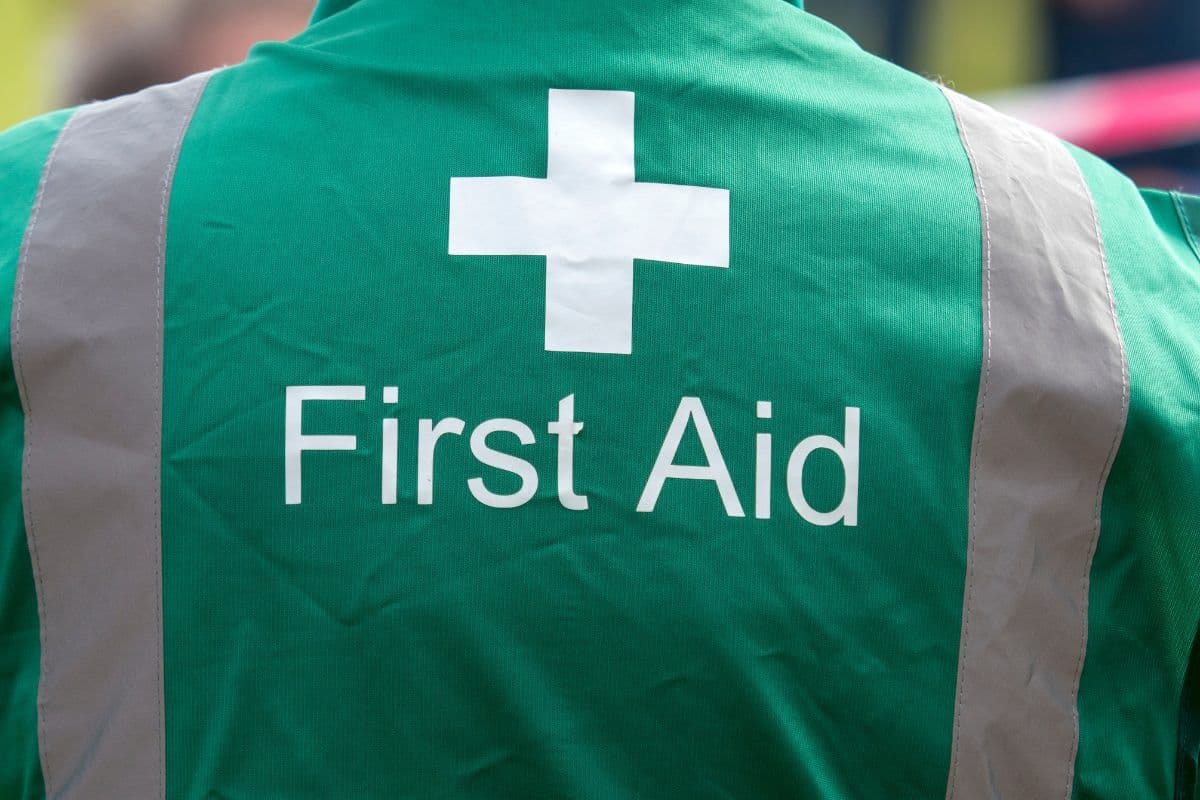
Somebody has told you the answer is one per fifty people. Somebody else has said one per hundred. A training provider has quoted for six. None of those figures comes from the law, because the law contains no ratio at all.
The HSE's position is explicit: there are no hard and fast rules on exact numbers. Regulation 3 of the Health and Safety (First-Aid) Regulations 1981 requires equipment and facilities that are adequate and appropriate in the circumstances, and a person available to render first aid. Adequate and appropriate is the whole test, so the number falls out of an assessment rather than a ratio, which is why two businesses of identical headcount can correctly land on very different answers.
Good news and bad. Good, because you are not obliged to train a fixed percentage of your workforce. Bad, because without the assessment you have no defensible basis for whatever number you did choose. Here are the twelve factors that produce it.
Before the twelve: the minimum is lower than you think
Worth clearing up first, because it changes the starting point.
The minimum personnel requirement is not a trained first aider. It is an appointed person: someone to take charge of the arrangements, look after the equipment and facilities, and call the emergency services. No formal training is required for that role, and someone must be available to take charge whenever people are at work. An appointed person can also provide emergency cover for an absent first aider, within the limits of their role and competence.
So a very small, low-hazard office can be compliant with an appointed person and a properly stocked kit. The assessment is what tells you whether you are that business. The HSE's guidance on what employers need to do is the primary reference, with the approved code in L74 and the short guide in INDG214 behind it.
1. The nature of the work
The first and most obvious input. A commercial brokerage, a litigation practice and a hardware prototyping team carry different injury profiles despite all being offices. What matters is what people actually do, not what the business is called.
2. The hazards present, including any needing special arrangements
Need Expert H&S Guidance?
Our qualified consultants can help you implement the right health & safety measures for your business.
Where a specific hazard exists, generic cover may not be enough. Chemicals in a teaching or research laboratory may call for particular antidotes, eyewash provision or training beyond the standard syllabus. A workshop with machinery raises different questions again. The assessment should name the hazards that need something extra rather than assume the standard course covers everything.
3. The size and nature of the workforce
Headcount matters, but so does composition. A workforce including young workers, people with disabilities or employees with known health conditions may need arrangements that a simple number does not capture, and that assessment should be made without requiring anyone to disclose a diagnosis to a line manager.
4. Work patterns
Cover has to exist when people are present, not on average. Shift patterns, out-of-hours working, weekend access and hybrid attendance all break the arithmetic. The common failure in professional firms is a complement of first aiders who are all in on Tuesdays and Wednesdays, leaving Thursday afternoons and the entire out-of-hours period uncovered while the headline number looks healthy.
5. Absence and holiday cover
The HSE lists this explicitly, and it is the factor that turns an adequate complement into an inadequate one without anybody changing anything. Two first aiders is one first aider in August. Build the number to survive leave, sickness and departures, and track expiry dates, because certificates lapse quietly.
6. Accident and incident history
Your own record is evidence, and it points both ways. A pattern of slips, manual handling strains or fainting episodes tells you where provision needs strengthening. An implausibly clean record over three years usually means the reporting route is not being used, which is its own finding.
7. Lone and remote workers
Someone working alone has no colleague to respond. That moves the question away from how many first aiders you have and towards how a person in difficulty raises an alarm and how long help takes to arrive, which is a different control altogether and frequently a technical one.
8. How the workforce is distributed
Three floors, two buildings or five sites are not one population. A first aider four floors away behind a secure door is not available in any practical sense. Distribution is the factor most often ignored when a central function calculates a number from total headcount.
9. Distance from emergency medical services
Provision is a bridge to professional help, so the length of the bridge matters. A city centre office and a rural campus with a twenty-minute ambulance response need different levels of capability for the same hazard profile. This is also where a workplace defibrillator becomes worth considering, and the Resuscitation Council UK is the right reference for that decision rather than a supplier.
10. Shared and multi-occupancy premises
In a serviced or multi-let building there may be arrangements in place already, and you may be able to rely on them. Rely is the operative word: it has to be a documented arrangement rather than an assumption that the building has someone. Shared responsibilities need to be agreed in writing, and the agreement needs reviewing when either party's occupancy changes.
11. Non-employees on site
The Regulations do not require you to provide first aid for people who are not your employees, but the HSE recommends including them, and for most of our clients it is unavoidable in practice. Visitors, conference delegates, students, clients attending meetings and members of the public at an open day are all on your floor. Education settings and any business that hosts events should assess on the basis of everyone present, not payroll.
12. Travelling and overseas staff
The factor a UK assessment routinely omits. Staff on business travel, on secondment or working at client sites are outside your provision, and groups with overseas entities face a further problem covered below. If people travel, the assessment should say what happens when they are injured somewhere your arrangements do not reach.
The number, and what sits behind it
| Factor | What it changes | Common failure |
|---|---|---|
| Nature of work and hazards | The level of capability needed, not just the count | Standard course assumed to cover specific hazards |
| Size and composition of workforce | Whether particular arrangements are needed | Headcount used as the only input |
| Work patterns | When cover exists | Everyone trained is in on the same two days |
| Absence and holiday cover | Resilience of the complement | Two first aiders, one in August |
| Accident history | Where to strengthen provision | A clean record treated as good news |
| Lone and remote working | Whether the control is a person or a system | Not considered at all |
| Distribution across floors and sites | Practical availability | One number calculated from group headcount |
| Distance from emergency services | Capability, and the defibrillator question | Treated as the same everywhere |
| Shared premises | Whether you can rely on others | Assumed rather than agreed in writing |
| Non-employees | Who you are actually providing for | Payroll used as the population |
| Travelling and overseas staff | Cover outside your premises | Omitted from the UK assessment |
| Training and provider competence | Whether the certificate is worth anything | No due diligence, because people assume approval |
That last row catches almost everyone. The HSE stopped approving first aid training providers and qualifications on 1 October 2013, so the employer now carries the duty to satisfy itself that the provider is competent, which makes due diligence part of your record rather than something the regulator has done for you. Certificates issued in Northern Ireland by HSE-approved providers are recognised in Great Britain without further checks, and certificates obtained overseas need verifying against the HSE's criteria before you rely on them. Our health and safety training work frequently starts by reviewing certificates a client assumed were automatically valid.
One more correction. Mental health first aid is a choice, not a statutory requirement. The HSE sets out options for supporting mental ill health at work and training some staff is one of them, but it does not sit inside the first aid duty and should not be presented internally as though it does.
Why the answer changes when you cross a border
This is where a UK-trained instinct causes real exposure, because the UK's no-ratio approach is the exception rather than the rule.
Article 8 of the EU Framework Directive 89/391/EEC requires employers to arrange first aid, firefighting and evacuation of workers, and to designate workers responsible for it, with member states setting the detail. Several of them set it numerically.
Germany is the clearest example. The accident insurance institutions coordinated by the DGUV prescribe a proportion of trained first aiders rather than leaving it to assessment, broadly five per cent of employees in administrative and commercial undertakings and ten per cent elsewhere once a business passes a small headcount threshold, with approved providers and centrally set refresher intervals. A UK group that has reasoned its way to two first aiders for a forty-person Düsseldorf office has reasoned correctly under UK law and under-provided under German rules.
France routes the requirement through its own training scheme and occupational medicine arrangements, and EU-OSHA's overview of the French system explains where that sits. Outside Europe the picture fragments further.
The workable pattern is one assessment methodology with the local minimum applied as a floor: assess properly everywhere, then check whether the jurisdiction imposes a number above your answer. Holding that in one place, with certificate expiry dates and site-by-site cover visible, is where health and safety consultants and software are worth more in combination than either alone, and periodic health and safety audits are how a group notices a site's cover lapsed rather than hearing it after an incident.
Where Arinite fits
Arinite has spent 15+ years producing first aid needs assessments for organisations that had been working from a ratio somebody once mentioned. We support 1,500+ businesses in 50+ countries and protect 100,000+ employees, with 95%+ client retention. Our health and safety consultants work extensively with offices, legal and education clients, where distribution across floors and the out-of-hours gap are the two findings we see most.
For multi-country groups, our global health and safety consultants apply the prescribed local minimum where one exists rather than exporting a UK conclusion, and our international health and safety consultants can tell you which of your sites is below its national floor. The legislation and the wider HSE first aid material remain the UK reference, including the duty to inform employees of the arrangements, which is a separate requirement people forget, and the Regulations themselves.
Work the twelve factors, then check who is covered at 6pm on a Thursday. Then book a free gap analysis and we will tell you in one call whether your number holds up.
Related Articles
Written by
Arinite Health & Safety Consultants
Health & Safety Expert at Arinite