Health and Safety in Sweden: 6 Mistakes UK and US Employers Make
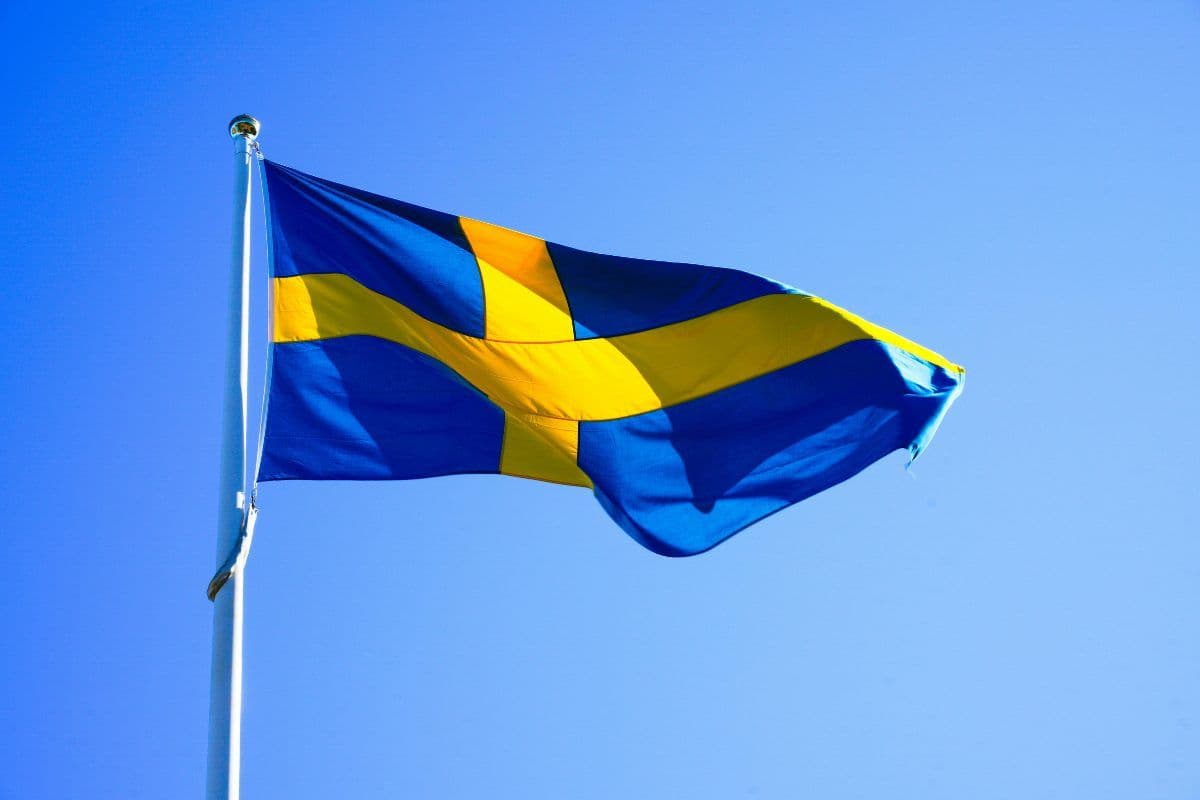
Sweden has a reputation among foreign employers for being straightforward: a well-run country, a co-operative workforce, sensible regulation. That reputation is broadly deserved and it produces a particular failure mode, which is that companies assume they will drift into compliance without especially trying.
Two features make that assumption unsafe. Swedish rules place unusually strong emphasis on the organisational and social work environment, which is precisely the area a technology or financial employer is most likely to underestimate. And the entire rulebook was restructured on 1 January 2025, which means most English-language guidance about Sweden, including material still circulating inside multinational groups, cites regulations that no longer exist.
Six mistakes recur.
1. Citing regulations that were withdrawn in January 2025
Start here, because it is the cheapest to fix and the most visible.
Swedish work environment rules are issued by the Work Environment Authority as AFS, and until recently there were roughly sixty-seven separate ones. From 1 January 2025 they were consolidated into fifteen. Every one of the approximately 2,300 paragraphs was reviewed and re-sorted, and all the regulations and their sections received new numbers and names.
Two replacements matter most. The systematic work environment management rules, long known by the reference AFS 2001:1, are now AFS 2023:1. The organisational and social work environment rules, AFS 2015:4, no longer exist as a standalone instrument and have been absorbed into AFS 2023:2, along with several others including lone working, violence and threats, and work adaptation.
The requirement levels were largely preserved. The references were not. If your Swedish policy, risk assessment template, induction pack or training material cites AFS 2001:1 or AFS 2015:4, it points at withdrawn regulations, and paragraph numbers have not carried across, so a citation to a specific section is now simply wrong. The Work Environment Authority publishes the current structure in English.
2. Treating the psychosocial environment as wellbeing rather than regulation
The most consequential mistake, and the one that separates Sweden from most jurisdictions a UK or US employer will have dealt with.
Workload, working hours and victimisation are regulated subjects in Sweden, not themes for an engagement survey. The employer is expected to have arrangements addressing them, to know whether workload is reasonable relative to resources, and to have a documented approach to victimisation and harassment rather than a general commitment to respect.
For a technology business running release cycles and on-call rotations, or a financial one running reporting peaks, this is the area where a group approach imported from London or New York falls furthest short. A wellbeing platform is not an arrangement. What is required is closer to a risk assessment of how the work is organised, with measures that follow from it.
3. Assuming the safety representative is a consultative role
Need Expert H&S Guidance?
Our qualified consultants can help you implement the right health & safety measures for your business.
Swedish workplaces have safety representatives, skyddsombud, and foreign managers routinely read the role through the lens of a staff forum or a health and safety committee member.
That underestimates it. Under Chapter 6 of the Work Environment Act the safety representative has genuine statutory standing, including the ability to halt work where they judge there to be immediate and serious danger, pending a determination by the authority. That power is used sparingly and rarely in an office environment, but its existence changes the character of the relationship. The representative is not asking to be consulted as a courtesy.
The practical implication is that the representative should be engaged early and substantively on anything affecting the work environment, including office moves, fit-outs and changes to how work is organised.
4. Not putting the committee structure in place
Above fifty employees a safety committee is required, composed of employer and employee representatives, addressing work environment matters on a continuing basis.
The recurring failure is a Swedish subsidiary that has grown past the threshold while its governance still reflects the twelve-person office it used to be. The committee is not onerous. Not having one when the headcount requires it is a straightforward finding for an inspector, and it is discovered by counting rather than by investigating.
5. Treating systematic work environment management as an annual document
The Swedish model, systematiskt arbetsmiljöarbete, is a continuous cycle: investigate conditions, assess risks, take action, follow up, and repeat, integrated into ordinary operations rather than run as a separate compliance project. It descends from the same EU Framework Directive 89/391/EEC as its German and French counterparts, but Sweden implemented it with a markedly stronger emphasis on how work is organised.
Foreign subsidiaries frequently produce a good document once a year and treat the obligation as discharged. That is not what the rules describe. The expectation is that work environment considerations are part of how decisions get made, in the same way cost and delivery are, and that the loop closes visibly: something was found, something was done, someone checked whether it worked.
This is where regular health and safety audits are genuinely useful rather than merely reassuring, because the thing being tested is whether the cycle actually turns, which is not visible from the documentation alone.
6. Ignoring the collective agreement
The final one, and the one most often missed by groups used to jurisdictions where statute is the whole picture.
A large share of Swedish employers are bound by collective agreements, and those agreements can impose requirements beyond the statutory baseline, including on work environment matters. A subsidiary can therefore be fully compliant with the regulations and still in breach of what it has agreed.
Confirm whether your Swedish entity is bound, directly or by extension, and read what the agreement says about the work environment before concluding that the statutory position is the complete answer.
The six in short
| Mistake | What it looks like | Fix |
|---|---|---|
| Withdrawn references | Documents cite AFS 2001:1 or AFS 2015:4 | Update to AFS 2023:1 and 2023:2, recheck section numbers |
| Psychosocial as wellbeing | An engagement survey and a benefits platform | Arrangements for workload, hours and victimisation |
| Misreading the safety representative | Treated as a consultative staff role | Engage early and substantively, understand the standing |
| No committee above fifty | Governance still reflects a smaller office | Constitute it, minute it |
| Annual document | One good file, produced each January | A cycle that visibly closes |
| Collective agreement ignored | Statutory compliance assumed sufficient | Read the agreement |
Numbers one and two are the pair worth acting on first. The first is a document exercise that costs an afternoon. The second is the one an inspector, a safety representative or a departing employee is most likely to raise.
Sweden alongside the rest of the group
Sweden is rarely a standalone operation, and it usually sits alongside entities whose obligations look superficially similar and are not.
A German entity requires a documented Gefährdungsbeurteilung, a French entity a DUERP in the prescribed format, and a Swedish entity a functioning systematic cycle under AFS 2023:1. None of the three is satisfied by a translated version of either of the others, and EU-OSHA's overview of the Swedish national system is a reasonable orientation for a parent trying to understand what is genuinely different. Keeping one group view across all of them, while each satisfies its own national test, is where health and safety consultants and software are worth more in combination than either is alone.
Where Arinite fits
Arinite works with locally qualified practitioners in each country, so Swedish obligations are met under Swedish rules by people who work with them daily, while your group keeps one point of contact and one view of where every entity stands. We support 1,500+ businesses across 50+ countries and protect 100,000+ employees, with 95%+ client retention over 15+ years. Our health and safety consultants work extensively with IT and software and finance and banking businesses, the two sectors most heavily represented among foreign employers in Stockholm, and our global health and safety consultants handle the Nordic and European jurisdictions that usually come with it.
If your Swedish entity still works from documents written before 2025, our international health and safety consultants can tell you what needs updating and what needs rebuilding. A free gap analysis will separate the two in a single call.
Related Articles
Written by
Arinite Health & Safety Consultants
Health & Safety Expert at Arinite