Office Amenities: 12 Duties That Arrive With the Perks
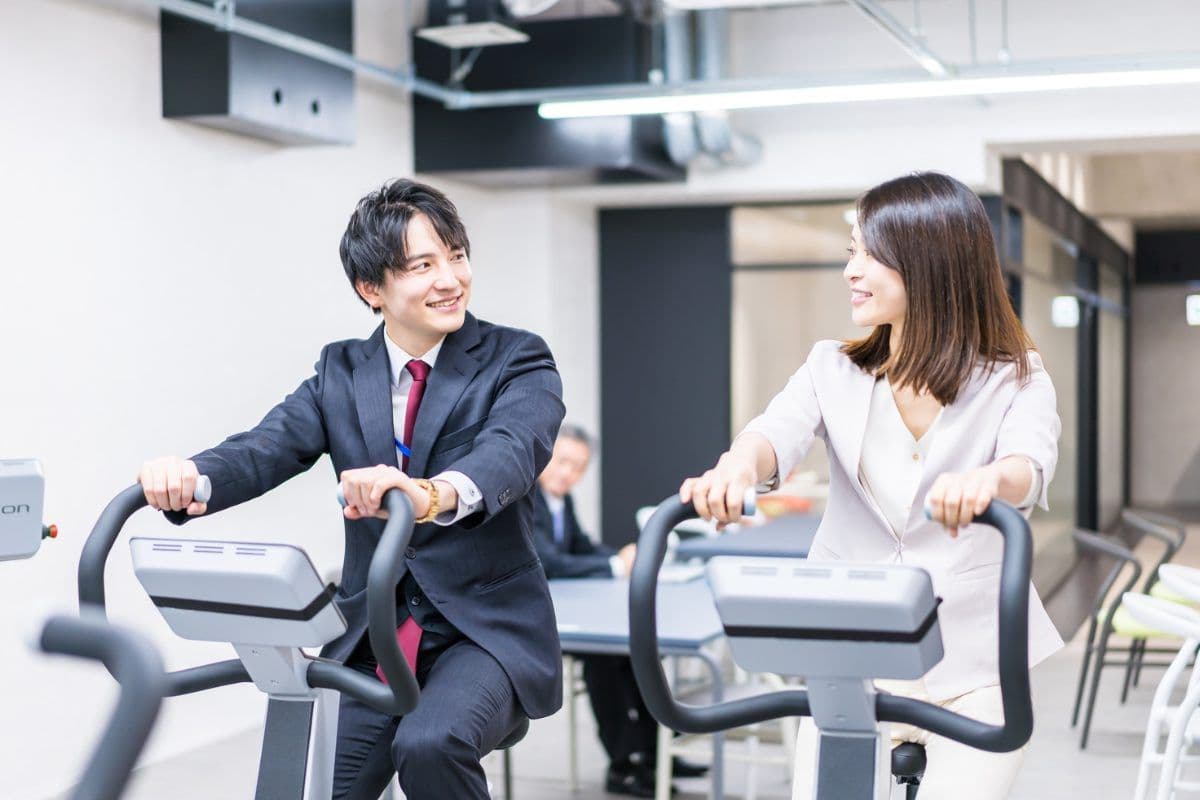
Technology and financial firms compete for people partly through what the office contains. A gym on the ground floor, a games room, a bar for Friday evenings, sleep pods, showers, secure bike storage, sometimes a climbing wall or a padel court.
These are good things. They help retention, they get people into the building, and nothing in this article argues against any of them.
They also arrive with duties that nobody assigns, because they are procured by workplace or people teams as amenities rather than by facilities as equipment. The health and safety document describes the desks.
Twelve duties that come with the perks.
1. Is it "at work"? The scoping question
Answer this first, because it determines the other eleven.
Where an employer provides a facility on premises it controls, for the benefit of its employees, the position is straightforward: section 2 of the Health and Safety at Work etc. Act 1974 duties apply to employees, and section 3 reaches anybody else affected.
Voluntary use does not remove the duty. A person choosing to use the gym at lunchtime is using equipment you provided, in premises you control, and "they used it in their own time" is not a defence to a poorly maintained machine.
Regulation 3 of the Management of Health and Safety at Work Regulations 1999 requires assessment of the risks to employees and to others. If your assessment does not mention the gym, the assessment does not describe the building.
2. Fitness equipment is work equipment
The technical point that surprises people.
Regulation 5 of the Provision and Use of Work Equipment Regulations 1998 requires work equipment to be maintained in an efficient state, in efficient working order and in good repair, with maintenance logs kept up to date where they exist.
Treadmills, cross trainers, cable machines and free weights all sit within that framing when provided by an employer for use at work. The practical requirement is a servicing schedule and a record, which most office gyms do not have because the equipment was bought as furniture.
3. Somebody has to be shown how to use it
Need Expert H&S Guidance?
Our qualified consultants can help you implement the right health & safety measures for your business.
Regulation 9 of the same Regulations requires adequate training in the use of work equipment, including the methods to be adopted, any risks, and the precautions to be taken.
For an unstaffed office gym that does not mean personal training. It means an induction covering the equipment provided, clear instructions at each machine, and a stated position on what people should not attempt alone.
Free weights are where this matters most, because unsupervised heavy lifting without a spotter is the highest-consequence activity in a typical office gym.
4. Unstaffed, out of hours, and alone
The combination that turns a minor incident into a serious one.
Office gyms are used early, late and at weekends, frequently by one person. Somebody who has a cardiac event, drops a weight, or slips in the shower may be alone in a part of the building nobody else visits.
Practical arrangements: a means of raising an alarm from inside the facility that does not rely on a phone left in a locker, a stated position on lone use of free weights, and a check that building security or reception knows the space is occupied.
5. First aid provision has to cover the actual population
Provision under the first aid regulations follows from an assessment of needs, and that assessment should reflect who is in the building and when.
An office whose first aiders all work nine to five, with a gym open from six in the morning until ten at night, has a mismatch. This is the same arithmetic covered in our first aid needs work: the number and cover pattern follow the actual occupancy rather than the headcount.
Cardiac events are the specific scenario worth planning for. Where a defibrillator is provided, people need to know where it is and it needs checking.
6. Games rooms are more physical than they look
Table tennis, pool, darts, arcade cabinets and consoles look benign and produce a steady trickle of injuries: struck by objects, collisions with furniture, slips, and eye injuries from darts.
The controls are layout rather than rules: enough clear space around a table, nothing to trip over or collide with, sensible siting away from walkways and glazing, and equipment that is maintained.
Where a space includes anything more demanding, a climbing wall, a simulator or a court, that is a different category and needs assessing properly rather than by analogy with a pool table.
7. Alcohol on site
Common in both technology and financial offices, and it belongs in the assessment rather than only in the HR policy.
The relevant questions are practical: who serves and whether they are trained, whether glassware is used near hard floors or stairs, how people get home, what the position is on returning to work afterwards, and how conduct is handled.
The October 2026 change to the preventative duty on harassment, including third-party liability, reaches these settings directly, as covered in our work on social events.
8. Sleep and rest spaces
An increasingly common amenity with a specific set of questions.
Rooms designed for rest raise access control, occupancy awareness, evacuation, and cleaning and hygiene. The most important is evacuation: somebody asleep in a small enclosed room may not hear an alarm designed for an open-plan floor, and the fire risk assessment should record how that is addressed.
Where such rooms are also used for prayer, first aid recovery or expressing milk, those uses have their own requirements and should not simply share the space by default.
9. Bikes, e-bikes and scooters
The amenity with the most rapidly changing risk profile.
Secure cycle storage is a straightforward welfare benefit. Once it holds e-bikes and e-scooters it holds lithium battery products, and where charging is provided or tolerated, that is a fire risk requiring assessment.
The practical position is a decision rather than a drift: whether charging is permitted, where, on what circuits, and whether damaged devices have a route to be reported and quarantined. Storage located under an escape route or against a means of escape is the arrangement to avoid.
10. Showers, changing and hygiene
Provision brings maintenance obligations: slip resistance, drainage, ventilation, cleaning specification, and water systems.
Water systems are the one to attend to. Showers used intermittently, which describes most office facilities, need to be within the building's water hygiene regime rather than outside it, and that is usually a conversation with the landlord.
11. Who is actually covered
The population question, and the answer is wider than the badge list.
Contractors, visitors using facilities during an event, family members at an open day, and members of other tenant organisations in a shared building may all use these spaces. Section 3 duties reach them.
Establish who is permitted to use what, and make sure the induction and the alarm arrangements reach anybody who is.
12. Insurance, records and the review trigger
The administrative half, and it is quick.
Tell your insurer what the premises contain. A gym, a bar or a climbing feature may be material to cover, and discovering otherwise after an incident is the worst moment.
Keep maintenance and inspection records for the equipment as you would for anything else. And treat the installation of a new amenity as a trigger for review of both the general risk assessment and the fire risk assessment, because it changes the use, the occupancy pattern and often the fire load of the space.
The twelve, in short
| Amenity or duty | Common position | What is needed |
|---|---|---|
| Scoping | "Voluntary use" | Assessed as part of the premises |
| Fitness equipment | Bought as furniture | Maintained as work equipment |
| Training | None | Induction and instructions at the machine |
| Lone and out-of-hours use | Unmanaged | Alarm, stated limits, occupancy known |
| First aid | Office hours only | Cover matched to opening hours |
| Games spaces | Assumed benign | Layout, clearance, maintenance |
| Alcohol | HR policy only | Service, glassware, travel, conduct |
| Sleep and rest rooms | Not assessed | Evacuation addressed explicitly |
| Bikes and e-bikes | Storage provided | Charging decision and fire assessment |
| Showers | Cleaning contract | Within the water hygiene regime |
| Coverage | Employees assumed | Contractors, visitors, families |
| Insurance and review | Not notified | Insurer told, review triggered |
Rows one and twelve bracket the rest. The first determines that these duties exist; the last is the mechanism that keeps them current as the amenity list grows.
For international offices
Two considerations.
Amenity provision travels as a cultural expectation and the underlying duties do not. Several jurisdictions covered in this series require the risk assessment to be produced by a specified professional, filed with an authority, or updated on a prescribed cycle, and adding a facility is exactly the kind of change that triggers those obligations. Estonia files the analysis into a state database. Croatia requires an evacuation plan with a graphical part, which a new room layout affects. Kenya requires an annual fire safety audit by an approved auditor.
And alcohol, in particular, is regulated and culturally situated very differently across markets. A group standard that assumes a Friday bar is normal will be wrong in several of the jurisdictions where your people work.
Holding assessments and equipment records for every site in one register is where health and safety consultants and software are worth more together than either alone, and periodic health and safety audits reliably find the amenity that was installed after the last assessment.
Where Arinite fits
Arinite assesses buildings as they are actually used, and in a modern technology or financial office that includes the parts people enjoy. We support 1,500+ businesses across 50+ countries and protect 100,000+ employees, with 95%+ client retention over 15+ years. Our health and safety consultants work extensively with IT and software, finance and banking and professional services organisations, and our fire risk assessment work covers spaces whose use changed after the assessment was written.
Where offices span several countries, our global health and safety consultants establish what each jurisdiction requires, and our international health and safety consultants keep that current.
If your office gained an amenity in the last two years and neither assessment was revisited, a free gap analysis is the right place to start. HSE's guidance on electrical safety covers the charging question in point nine.
Related Articles
Written by
Arinite Health & Safety Consultants
Health & Safety Expert at Arinite