Health and Safety in Denmark: 7 Yes/No Questions for Foreign Employers
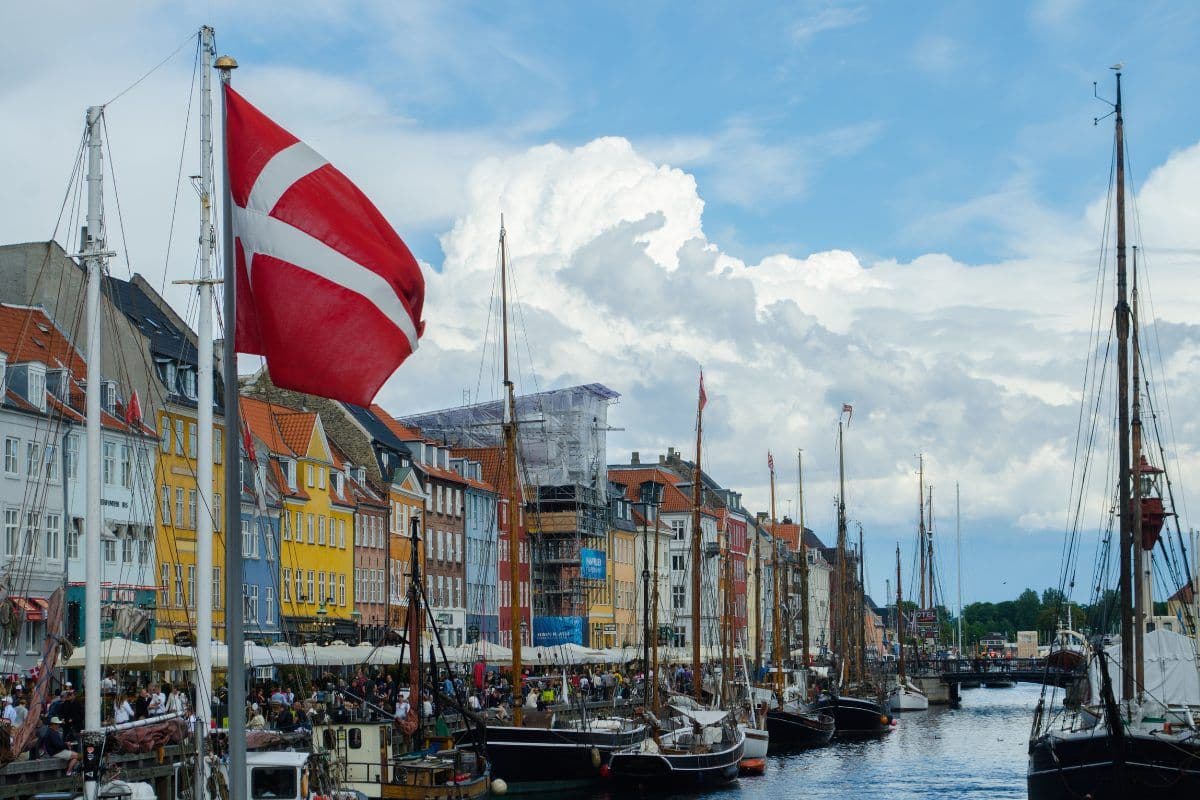
Denmark is an easy country to operate in and a surprisingly easy one to be non-compliant in. The obligations are light by European standards, clearly published, and mostly inexpensive. They are also specific, they attach at low headcounts, and one of them requires a written document from the day you employ a single person.
The other feature worth knowing before you start is that the outcome of an inspection is not private. Denmark publishes inspection results, which means a finding is visible to anyone who looks, including clients and candidates. That changes the calculation for a business that would otherwise treat a minor administrative gap as tolerable.
Seven questions, each a yes or a no. There is no partial credit.
1. Do you have a written workplace assessment?
The APV, arbejdspladsvurdering, is the foundation of the Danish system and the item most often missing in a foreign-owned subsidiary.
It is required of every workplace with employees. Not ten employees, not fifty: one is enough, regardless of hours worked and regardless of whether the contract is permanent, fixed-term or casual. It must be written, and it must be available at the workplace so that management, employees and the authority can all read it. It covers the physical and the psychological working environment, and it must include an action plan with prioritised measures and arrangements for following them up.
Arbejdstilsynet publishes the requirements in detail. A yes means a document exists, in writing, that somebody in Copenhagen could hand to an inspector today.
2. Has it been reviewed within three years, and after every material change?
Two conditions, and both must be met.
The three-year cycle is the backstop. The real requirement is that the assessment is updated whenever something changes that could affect the working environment: new premises, a fit-out, new technology, changes to how work is organised or to working methods. A subsidiary that moved office eighteen months ago and last revised its APV before the move has a current-looking document describing a building it no longer occupies.
3. Does it cover homeworkers and agency staff?
The question that catches technology and financial employers most reliably.
The APV must cover all employees, and the authority is explicit that where people work from home, the homeworking is covered by it. Temporary and agency workers are included too. A hybrid organisation whose assessment describes only the Copenhagen floor has not assessed the arrangements under which most of its people actually work.
If your group already runs DSE assessments for home setups elsewhere, the material largely exists. It has to be reflected in the Danish document rather than held separately in a group system.
4. Have you established an AMO if you have ten or more employees?
The working environment organisation, arbejdsmiljøorganisation, becomes mandatory at ten employees.
Between ten and thirty-four, it consists of at least three people: an appointed supervisor, an elected working environment representative, and a chair who is the employer or the employer's representative. The representative is elected by employees rather than appointed by you, which is a distinction foreign managers sometimes discover late.
Below ten there is no AMO, but the obligation to co-operate directly with employees on the working environment remains. There is no headcount at which the subject is somebody else's problem.
5. Have you moved to the two-tier structure at thirty-five?
At thirty-five employees the structure changes rather than merely growing. The AMO must then consist of one or more working environment groups, each pairing an elected representative with an appointed supervisor, and one or more working environment committees sitting above them.
This is a genuine restructure, not an addition, and it is the threshold most often crossed without anyone noticing. A Danish entity that scaled from twenty to forty-five people over two years will frequently still be running the three-person arrangement it set up at the start.
6. Can you evidence the annual discussion and the training offer?
Two administrative requirements that are simple to meet and simple to fail.
The annual working environment discussion is mandatory. You may hold it however and whenever you like, but you must be able to document to the authority in writing that it took place. An undocumented conversation does not count.
Separately, the employer must offer AMO members supplementary working environment training each year, amounting to a day and a half, and the offer and the choices made should sit in a competence development plan available to AMO members. Our overview of health and safety training covers the wider principle, but the Danish requirement is specific and quantified, which makes it easy to check and easy to miss.
7. Would you be comfortable with your inspection result being public?
Denmark operates a smiley scheme under which the outcome of an inspection is published by the authority and visible to anyone. A green smiley indicates the workplace complies with the rules, including on matters such as the psychological working environment, and requires among other things a written APV and, where the headcount requires it, an AMO.
Inspections are risk-based, selected through an index model and by sampling, so being small or low-hazard is not a reliable defence against being visited. The practical consequence is reputational as much as regulatory: a finding sits in public alongside your recruitment marketing.
What a no means
| Question | If the answer is no | Difficulty to fix | |---|---|---| | 1. Written APV | The foundational requirement is unmet | Low, but do it properly | | 2. Reviewed in three years and after changes | The document describes a workplace that has moved on | Low | | 3. Homeworkers and agency staff covered | Most of your workforce is unassessed | Low if the material exists elsewhere | | 4. AMO at ten employees | A structural requirement is absent | Moderate, an election is involved | | 5. Two-tier at thirty-five | You are running the wrong structure | Moderate | | 6. Annual discussion and training documented | Compliance exists but cannot be evidenced | Low | | 7. Comfortable with publication | Everything above becomes visible | Depends on the rest |
Five of the seven are cheap to remedy. Questions four and five involve an election and a restructure, so they take longer, which is precisely why they should be dealt with before the headcount crosses rather than after.
Denmark alongside the rest of the group
Denmark rarely sits alone, and the Nordic and northern European entities around it are less similar than they appear.
A Swedish entity works to a rulebook that was renumbered in its entirety at the start of 2025. A German entity requires a documented Gefährdungsbeurteilung. A French entity requires a DUERP in a prescribed format. All descend from the same EU Framework Directive 89/391/EEC, and none is satisfied by a translated version of another. EU-OSHA's overview of the Danish national system is a reasonable orientation for a parent company.
This is the point at which most groups engage global health and safety consultants, because verifying four northern European entities against four different statutory tests is not a task a single group function can do from London. Holding one group view while each entity satisfies its own national test is where health and safety consultants and software are worth more together than either alone, and periodic health and safety audits confirm that each local instrument is still current rather than merely present.
Where Arinite fits
Arinite works with locally qualified practitioners in each country, so your APV is produced under Danish rules by people who work with them, while your group keeps one point of contact and one view of where every entity stands. We support 1,500+ businesses across 50+ countries and protect 100,000+ employees, with 95%+ client retention over 15+ years. Our health and safety consultants work extensively with IT and software and finance and banking businesses, the sectors most heavily represented among foreign employers in Copenhagen.
If you answered no to any of the seven, our international health and safety consultants can tell you what closing it involves. A free gap analysis will establish where your Danish entity stands before an inspector publishes an opinion on it.
Related Articles
Written by
Arinite Health & Safety Consultants
Health & Safety Expert at Arinite