Health and Safety in Bahrain: 5 Duties for a Manama Office
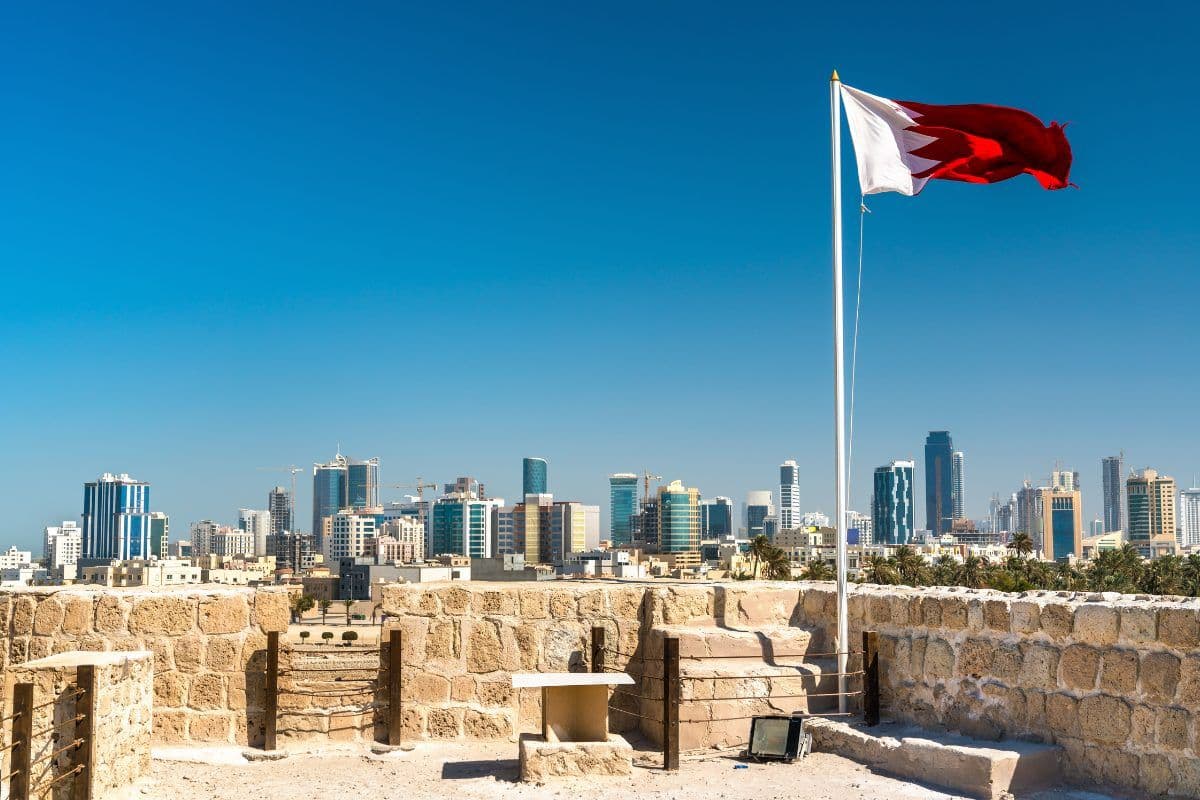
Bahrain has been a Gulf banking centre for decades, and its regulated financial sector brings a steady population of foreign-owned offices: banks, insurers, asset managers, professional firms and the technology functions that support them.
Those entities tend to be well governed on the things their financial regulator examines and unexamined on the things their labour regulator examines. The two are entirely separate, and only one of them has ever asked.
Five duties.
1. The framework sits in a Labour Law and its ministerial orders
Bahrain's principal instrument is the Labour Law for the Private Sector, promulgated by Law No. 36 of 2012, enforced by the labour ministry. The operative detail sits beneath it in ministerial orders, principally Order No. 8 of 2013 on regulating occupational safety and health in establishments, and Order No. 12 of 2013 on the procedures required to report occupational injuries and diseases.
Bahrain acceded to the International Labour Organisation convention on occupational safety and health, and the ILO publishes the standards that convention sits within. The Bahrain Society for Safety publishes English texts of the ministerial orders.
The practical point for a foreign parent is the same one that recurs across the Gulf and much of Asia: reading the Labour Law alone will not tell you what to do. The orders carry the requirements.
2. What you must appoint scales by risk, not by headcount alone
The provision that distinguishes Bahrain from the threshold-driven systems covered elsewhere in this series.
Order No. 8 of 2013 requires employers to provide occupational safety and health arrangements, and it addresses both larger establishments and those falling below the threshold for full arrangements. Where an establishment is not subject to the fuller requirement, the employer must appoint one or more part-time qualified persons, or select one of its own workers, to assist in fulfilling the occupational safety and health requirements appropriate to the nature of the hazards in that establishment.
The Order then requires the employer to ensure the suitability of the number of persons employed in that role, the time required for them to perform their duties, their cooperation with one another, and the equipment available to them, having regard to the extent of the risk to which workers are exposed and the extent and distribution of the work areas they supervise. The full English text is published as a PDF.
Two things follow for a Manama office.
Even a small entity must designate somebody. There is no version of this in which nobody holds the function.
And the adequacy test is qualitative. An employer that has named a person and given them no time is not meeting a requirement expressed in terms of time, cooperation and equipment. That is the same principle seen in Slovakia and Lithuania, and it is a judgement you have to be able to justify.
Confirm the specific thresholds and the fuller requirements applicable to your establishment through Bahraini advice.
3. The occupational safety and health committee
Need Expert H&S Guidance?
Our qualified consultants can help you implement the right health & safety measures for your business.
Order No. 8 of 2013 provides for an establishment occupational safety and health committee, with the safety function responsible for matters including preparing the committee's agenda, and with provision for the committee to invite others to attend its meetings where necessary.
Confirm the threshold at which a committee is required for your establishment. As across the region, it is set in the order rather than in the Law, and circulating guidance reports these figures inconsistently.
4. Four reportable categories, and a seven-day clock
The most concrete obligation, and the one to build into your incident process now.
Under Order No. 12 of 2013, an employer in any establishment, branch or workplace must notify the labour ministry of:
Death of a worker.
A serious injury.
Any injury resulting in the worker's absence from work for seven successive days, not counting the day on which the injury occurred. Where the day following the injury is a holiday, that day is included in the days of absence.
Vehicle accidents that take place in the establishment or workplace.
Three points a foreign parent should note.
The seven-day counting rule is specific, and the treatment of a following holiday is the sort of detail an international incident process will get wrong by default.
The fourth category is unusual. Vehicle accidents occurring in your establishment or workplace are reportable in their own right, which for an office with a car park or a loading area is a category most incident processes do not capture at all.
And violations of the reporting order carry the penalties provided in the Labour Law, so this is enforceable rather than administrative.
5. Heat, records and enforcement
Three closing items that belong together.
Heat. Bahrain operates a summer restriction on outdoor work during the hottest part of the day. Reported dates and hours vary between sources and have been amended over time, so confirm the current position locally. An office-based firm reasonably concludes this is not about its analysts, and that conclusion is correct for the people at desks and wrong for everyone else connected to the operation: security personnel, drivers, facilities and grounds staff, and couriers, whether engaged directly or through a provider. That is the same analysis that applies in Qatar, Saudi Arabia and the United Arab Emirates.
Records. Employers are expected to maintain records including injuries and occupational diseases, medical examination results where applicable, protective equipment issued, training and competency, and risk assessments. Held locally and produced on request, as everywhere in this series.
Enforcement. The labour ministry inspects, and its powers extend beyond fines to work suspension and, in serious cases, prosecution. Inspections follow complaints and injuries as well as routine campaigns.
What a Manama entity needs
| Duty | Requirement | Common position |
|---|---|---|
| Framework | Law plus ministerial orders | Labour Law read alone |
| Appointment | Somebody designated, with time and equipment | Named, unresourced |
| Committee | Per the applicable threshold | Not constituted |
| Reporting | Death, serious injury, seven-day absence, vehicle accidents | Categories not captured |
| Heat, records, enforcement | Reaches providers; records held locally | Assumed irrelevant |
Row four is where to start, because it attaches to events rather than to a calendar and your process needs to recognise the categories before one occurs.
The Gulf, completed
Bahrain is the fourth Gulf jurisdiction in this series, and together they show why a regional compliance strategy fails.
Saudi Arabia embeds employer obligations in its Labour Law, requires safety instructions displayed in Arabic, and enforces a seasonal midday restriction. The United Arab Emirates operates its own framework, and its free zones raise a separate question about which regime applies. Qatar exempts sectors governed by separate legislation, so a firm in the Qatar Financial Centre may sit outside the general Labour Law entirely, and its heat regime is tied to a measured index as well as to clock hours. Bahrain scales its appointment requirement by risk and area rather than by headcount alone, and adds vehicle accidents on site to its reportable categories.
Four countries, four architectures. The consistent lesson is the one this series found first in Qatar: financial centres and free zones change which rules apply, and a group treating the Gulf as one territory will be wrong in at least one entity.
What travels is the methodology, the register and the review cycle. What does not travel is the appointment, the reportable category or the seasonal restriction. Holding one group view while each entity meets its own national test is where health and safety consultants and software are worth more together than either alone, and periodic health and safety audits confirm each entity is working to the framework that actually governs it.
Where Arinite fits
Arinite coordinates locally qualified practitioners across the Gulf, so Bahraini obligations are established under Bahraini requirements while your group keeps one point of contact across every country. We support 1,500+ businesses across 50+ countries and protect 100,000+ employees, with 95%+ client retention over 15+ years. Our health and safety consultants work extensively with finance and banking, insurance and professional services organisations, which describes most of the international presence in Manama.
Our global health and safety consultants handle the regional jurisdictions that accompany a Bahraini entity, and our international health and safety consultants can establish what is outstanding locally.
If a vehicle incident happened in your Manama car park last year and nobody notified the ministry, a free gap analysis is the right place to start.
Related Articles
Written by
Arinite Health & Safety Consultants
Health & Safety Expert at Arinite