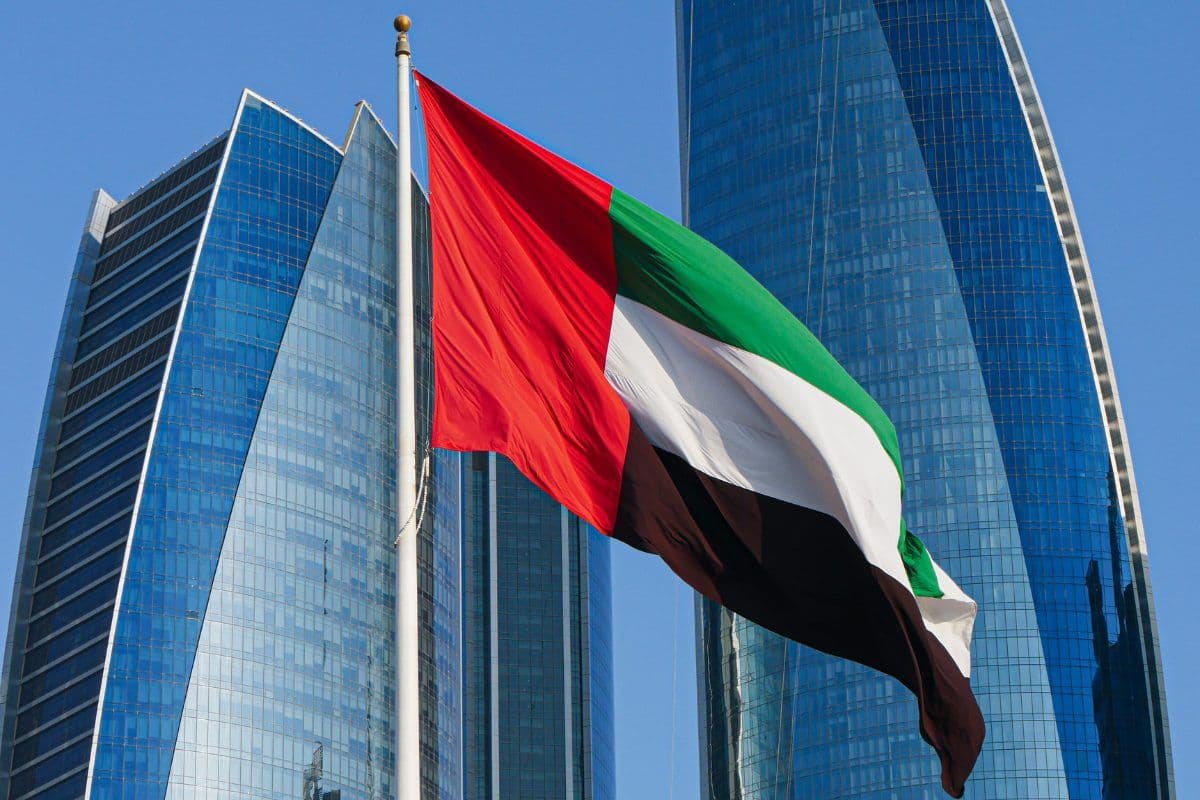
Finance Health and Safety in the UAE: 6 Priorities for Dubai and Global Firms

Dubai and the wider United Arab Emirates have become a magnet for international financial services. Banks, insurers, asset managers and fintech firms base their regional operations there, drawn by the business environment and the position between East and West. For all of them, health and safety in the UAE comes with a structure that is distinctive, layered and unfamiliar to businesses used to a single national regulator.
The principles will feel recognisable to any finance firm: protect your people, assess your risks, manage them properly. What differs is how the system is organised, and getting that right from the outset saves a great deal of difficulty later. Whether you are a global institution setting up a Dubai base or a growing regional firm, here are six priorities to get right, and how expert support makes them manageable wherever your business is headquartered.
1. Understand the UAE's layered framework
The first thing to grasp is that health and safety in the UAE operates on more than one level. Federal law, principally the UAE Labour Law, sets out employers' core duties, overseen at national level by the Ministry of Human Resources and Emiratisation, known as MOHRE. On top of that sit emirate-level requirements and, crucially, the rules of the individual free zones. The UAE government's official guidance is the starting point, but the full picture depends on exactly where and how you operate.
This layered structure is the single biggest difference for incoming firms. Meeting federal law is necessary but not always sufficient, because the specific regime that applies to you may depend on your location and licence. Understanding which rules govern your business is the foundation everything else builds on.
2. Know your free zone, including DIFC
Many international finance firms in Dubai operate within the Dubai International Financial Centre, or DIFC, and other free zones each have their own regulatory frameworks, including their own employment and workplace requirements. What applies inside a free zone can differ from the mainland, and assuming the two are identical is a common and avoidable mistake.
For financial services firms in particular, the free zone you operate in shapes your obligations, so establishing this early matters. This is precisely the kind of jurisdictional detail where international health and safety consultants help incoming firms navigate what actually applies to them rather than guessing.
3. Office and workplace risk assessments
Need Expert H&S Guidance?
Our qualified consultants can help you implement the right health & safety measures for your business.
Financial services is office-based work, and it carries the office-based risks that are easy to underestimate: fire safety, electrical safety, first aid provision, and the general condition of the workplace. Assessing these risks and putting controls in place is a core duty, and a well-run office environment is the baseline every finance firm should meet.
For businesses occupying modern towers and shared buildings, fire safety and evacuation planning deserve particular attention. A thorough, documented risk assessment is the backbone of compliance, and honest health and safety audits keep it aligned with how the business actually operates.
4. Display screen equipment and ergonomics
Like all office-intensive sectors, finance runs on screens. Analysts, traders and support teams spend their days at workstations, which makes musculoskeletal risk one of the most widespread health issues in any financial services business. It builds slowly and quietly, and it is entirely preventable.
A proper display screen and workstation assessment checks the chair, screen, keyboard and posture, and identifies the support each person needs. In a sector where people sit for long, intense hours, this is a priority rather than a formality.
5. Work-related stress and wellbeing
Financial services is known for its pressure, and the UAE's fast-paced, high-expectation environment can intensify it. Long hours, demanding targets and an always-on culture make work-related stress a genuine health and safety consideration, not merely a wellbeing nicety. Managing it protects both people and the performance that depends on them.
That means being honest about workloads, supporting managers to recognise the signs of pressure, and giving people real routes to raise concerns. Treating stress as a managed risk, in line with how leading standards approach psychosocial health, is increasingly what separates responsible employers from the rest.
6. One consistent standard across the region and beyond
Because so many UAE finance operations are the regional arm of a global institution, consistency is often the defining challenge. A strong safety culture at head office counts for little if the Dubai office, or any other, is held to a different standard, and leadership frequently cannot see the difference until a problem arises.
This is where the combination of expertise and technology proves its worth. As global health and safety consultants, we help firms hold one high standard across every location while meeting each jurisdiction's specific rules, from the UAE's layered system to the equivalents elsewhere. Backed by software that gives central visibility and aligned with recognised frameworks such as ISO 45001, it turns a multi-country operation into something genuinely managed. The universal duty to protect people, reflected in the work of bodies such as the International Labour Organization, is the constant beneath every local difference.
The UAE finance readiness checklist
Run these questions across your UAE operations. Each no answer is a priority to address.
- Do you understand which federal, emirate and free zone rules apply to you? Yes / No
- If you operate in DIFC or another free zone, do you know its specific requirements? Yes / No
- Do you have current, documented risk assessments, including fire safety? Yes / No
- Has every screen user had a display screen equipment assessment? Yes / No
- Is work-related stress assessed and managed as a health and safety risk? Yes / No
- For regional or international operations, is your UAE standard consistent with the group? Yes / No
- Do regular health and safety audits confirm all of this in practice? Yes / No
If you cannot answer yes with confidence, the gaps are ones a regulator, or an incident, could expose.
Where Arinite fits
Arinite has spent 15+ years helping businesses meet local health and safety obligations without getting lost in unfamiliar rules, in the United Arab Emirates and around the world. We support 1,500+ businesses across 50+ countries and have helped protect 100,000+ employees, with a 95% client retention rate. We combine practical advice from qualified consultants with software that keeps every site visible and accountable.
As global health and safety consultants, we help financial services firms hold one high standard across every location, meeting the UAE's requirements while keeping the wider international picture consistent. Whether you are a global institution establishing a Dubai base or a regional firm scaling fast, the goal is the same: compliance you can prove, wherever you operate.
The fastest way to see where you stand is a free gap analysis. Our specialists review your current arrangements and tell you plainly what is working and what is not. Book your free gap analysis and find out exactly where your business stands.
Written by
Arinite Health & Safety Consultants
Health & Safety Expert at Arinite