Health and Safety in Slovenia: 11 Duties for a Ljubljana Office
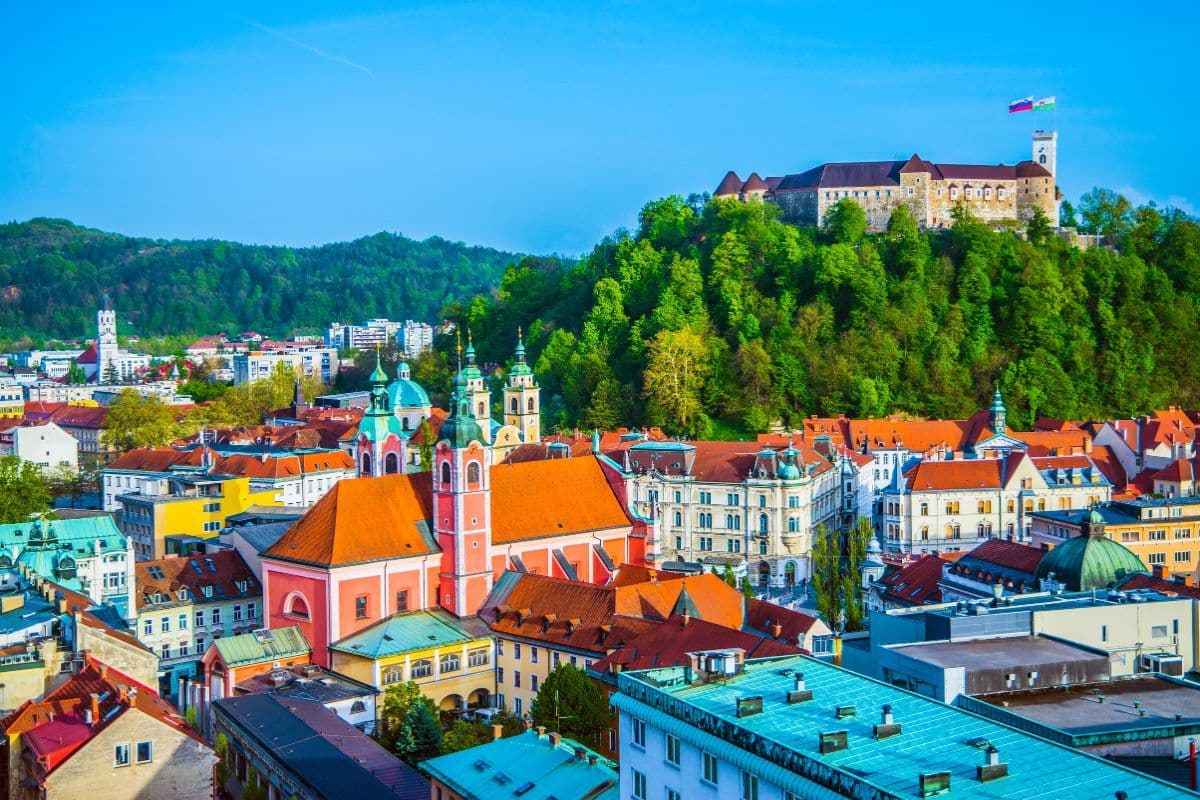
Slovenia does something no other jurisdiction in this series does.
It requires every employer to plan workplace health promotion, to allocate the funds necessary for it, and to determine how its implementation will be monitored, and it puts all three inside a named statutory document with a penalty attached for omitting them.
For a foreign parent that treats wellbeing as a discretionary benefit administered by HR, that is a category error with a legal consequence. Ljubljana hosts engineering teams, shared services and regional offices for international groups, and this is the obligation those entities are least likely to have met.
Eleven duties under the Occupational Safety and Health Act, published in consolidated form by the Slovenian legal information system.
1. The safety statement is a named document, not a folder
Everything in Slovenia runs through one artefact.
Article 17 requires the employer to carry out a written risk assessment and, on that basis, to adopt an izjava o varnosti z oceno tveganja, a safety statement with risk assessment. It is a specific document with a specific name, and the Act then hangs a series of further obligations off it.
A group that has produced risk assessments in its own format has not produced this. The statement is the thing the inspectorate asks for.
2. Consultation minutes are attached to it
An evidential requirement that makes consultation verifiable rather than asserted.
Article 17 requires the employer to attach to the written risk assessment the minutes of the consultation with workers or their representatives.
Read that as written. It is not enough to have consulted; the record of having done so forms part of the document. A group that decides centrally and informs Ljubljana cannot produce that minute, and its absence is visible on the face of the statement.
3. Special health requirements are determined in it
Need Expert H&S Guidance?
Our qualified consultants can help you implement the right health & safety measures for your business.
The statement also carries the occupational health interface.
Article 17 requires the employer to determine, in the safety statement, the special health requirements that workers must meet for particular work, within the work process, or for the use of particular work equipment, on the basis of the professional opinion of the occupational medicine provider.
So the statement cannot be completed without input from an occupational medicine provider. That is a relationship a Ljubljana entity needs in place before the document can exist, not afterwards.
4. It must be published and accessible
Article 18 requires the employer to publish the safety statement in the usual manner, to communicate to workers the part that relates to them, and to provide access to it.
This is the same pattern seen in Peru's displayed risk map and Croatia's accessible documentation: the assessment is not an internal management file. Workers are entitled to see the part that concerns them.
5. Health promotion, planned, funded and monitored
The distinctive obligation, and the reason this article opens as it does.
Article 32 requires the employer to plan and determine workplace health promotion in the safety statement, to ensure the funds necessary for it, and to determine the manner of monitoring its implementation. Failing to do any of those three is a specific offence.
The Act defines workplace health promotion as systematic, targeted activities and measures the employer implements in order to maintain and strengthen the physical and mental health of workers.
Three consequences for a foreign parent.
It is not a benefit. It is a planned programme with allocated funds and a monitoring method, recorded in a statutory document.
Mental health is named expressly, which places Slovenia alongside the growing group of jurisdictions in this series treating psychological health as a regulated matter rather than a discretionary one.
And a group wellbeing platform, purchased centrally and rolled out globally, does not by itself satisfy any of the three limbs. What is missing is usually the plan, the identified funds and the monitoring method for that entity.
6. Your professional worker must be genuinely independent
The appointment, with unusually explicit protections.
The employer entrusts professional occupational safety tasks to a strokovni delavec, a professional worker. Article 28 requires the employer to enable that person to perform their tasks with professional independence, to ensure them adequate time and access to all necessary data, and to enable them to further their knowledge.
It also provides that the employer must not place the professional worker in a less favourable position, or in a position where they suffer other detrimental consequences in connection with their work, because of that work. Breaching those protections is a specific offence.
That is a stronger statutory position than the British competent person arrangement, and it matters for a group where the safety adviser reports into a manager whose targets the advice may inconvenience.
7. An external service needs ministerial authorisation
The practical route for most foreign-owned entities.
The Act defines an external professional service as a legal or natural person holding an authorisation from the minister responsible for labour to perform professional tasks, to whom the employer may entrust all or some of those tasks.
So the provider must hold Slovenian authorisation. A group health and safety function elsewhere in Europe does not, and cannot discharge the role.
8. An occupational medicine provider
Separate from the professional worker and equally necessary.
The Act defines the izvajalec medicine dela as a health service provider carrying out occupational medicine activity, to whom the employer entrusts the implementation of health measures.
Two services, two disciplines, two relationships, as in Bulgaria, Slovakia and Argentina. An entity that has arranged the safety side has arranged half.
9. Health examinations follow ministerial regulation
The Act provides for the minister responsible for health, in agreement with the minister responsible for labour, to prescribe the types, manner, scope and intervals of health examinations by subordinate regulation.
Establish which examinations apply to your activity and on what cycle through local advice, rather than assuming an office population sits outside the regime.
10. First aid, fire protection and evacuation
Articles 20 and 21 address first aid and protection against fire and evacuation as distinct employer obligations.
For an office-based entity these are the day-to-day substance of compliance, and they are the area where a group standard transfers most readily, provided the arrangements are genuinely local: named people in Ljubljana, routes in that building, and drills that have actually happened.
11. Training is part of induction, and costs fall on the employer
Two provisions that operate together.
The Act provides that training for safe and healthy work is a constituent part of induction into work, which means it happens at the start rather than at the next scheduled session.
And article 14 provides that measures relating to safety and health at work must not cause workers any financial obligations. That is an express prohibition rather than an implication, and it covers training, examinations and protective provision. The full text is available through the ILO's legislative database and a structured version through Zakonodaja.
What a Ljubljana entity needs
| Duty | Requirement | Common position |
|---|---|---|
| Safety statement | Named document, adopted | Group risk assessments |
| Consultation minutes | Attached to it | Not held |
| Special health requirements | Determined on medical advice | Not in the document |
| Publication | Published and accessible | Held internally |
| Health promotion | Planned, funded, monitored | Global wellbeing platform |
| Professional worker | Independent, resourced, protected | Reports to a conflicted manager |
| External service | Ministerial authorisation | Group function assumed |
| Occupational medicine | Separate provider | Not engaged |
| Health examinations | Per subordinate regulation | Not established |
| First aid and fire | Local arrangements | Translated procedure |
| Training and costs | In induction, employer pays | Annual module |
Rows one and five are where to start. The first is the document everything hangs from, and the fifth is the obligation most likely to be entirely absent.
The regional picture
Slovenia is the tenth jurisdiction in central and eastern Europe and the Baltics covered in this series, and it adds a genuinely new mechanism to a set that already contained nine.
Poland requires a medical certificate before admission to work. The Czech Republic categorises every job. Romania requires a handwritten training record. Hungary reserves risk assessment to a qualified specialist. Bulgaria requires occupational medicine from the first employee and an annual filing. Slovakia requires an annual joint assessment by two services. Estonia files the analysis into a state database. Lithuania tests the director before the business may trade. Croatia requires a committee session within two working days of a fatality. Slovenia requires a funded, monitored health promotion plan inside a named statutory document.
Ten countries, ten mechanisms, all implementing the same EU Framework Directive 89/391/EEC.
What travels is the methodology, the register and the review cycle. What does not travel is the artefact, the appointment or the funding commitment. Holding one group view while each entity meets its own national test is where health and safety consultants and software are worth more together than either alone, and periodic health and safety audits confirm each entity satisfies its own requirements.
Where Arinite fits
Arinite works with locally qualified practitioners in Slovenia, so the safety statement exists in the form the law names, the health promotion obligation is planned and funded rather than assumed, and the providers hold Slovenian authorisation, while your group keeps one point of contact across every country. We support 1,500+ businesses across 50+ countries and protect 100,000+ employees, with 95%+ client retention over 15+ years. Our health and safety consultants work extensively with IT and software and finance and banking organisations, which account for most foreign-owned headcount in Ljubljana.
Our global health and safety consultants handle the neighbouring jurisdictions that usually accompany a Slovenian entity, and our international health and safety consultants can establish what is outstanding locally.
If your Ljubljana entity has no safety statement naming a funded health promotion plan, a free gap analysis is the right place to start.
Related Articles
Written by
Arinite Health & Safety Consultants
Health & Safety Expert at Arinite