Health and Safety in Croatia: 11 Duties for a Zagreb Office
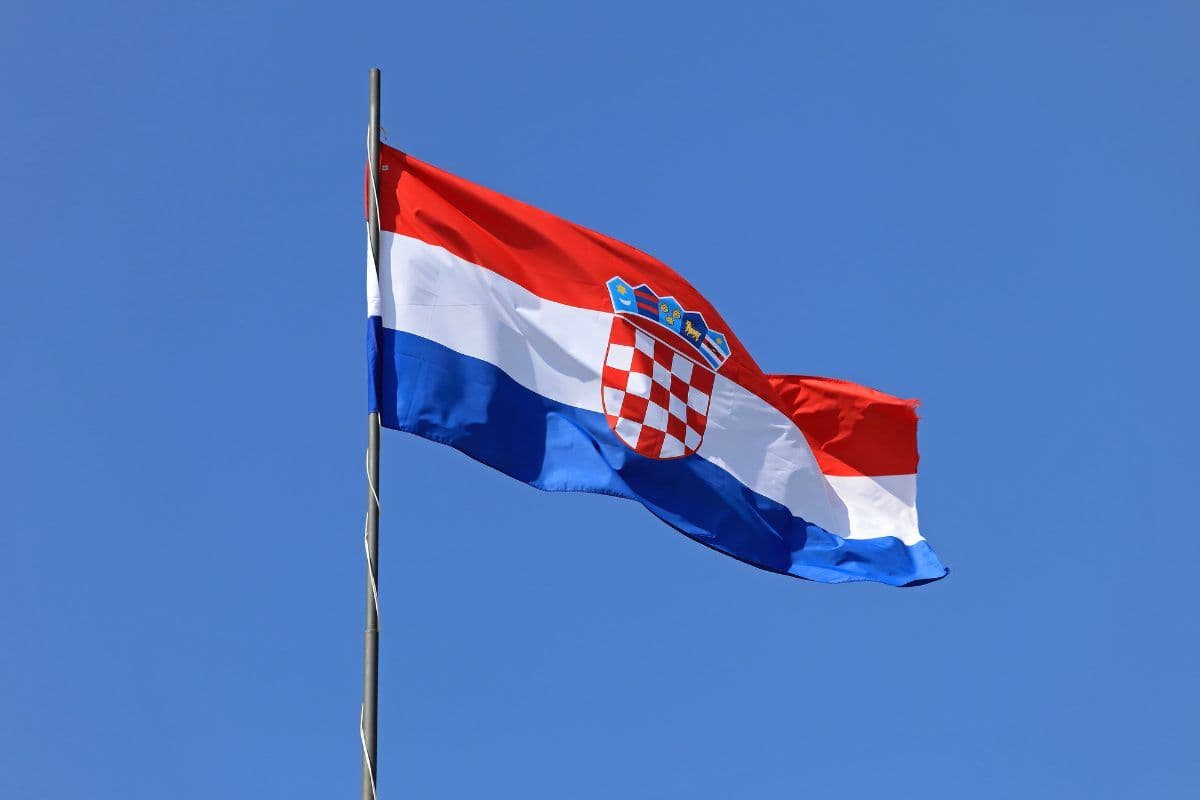
Zagreb has become a credible technology location. Homegrown companies have scaled internationally, and foreign groups have followed with engineering teams, support functions and regional offices.
Croatia's occupational safety framework is more prescriptive than those groups expect, and it contains an obligation with a two-day clock on it that no group compliance calendar will ever prompt.
Eleven duties, under the Act on Occupational Safety, published in consolidated form by Zakon.hr.
1. An occupational safety expert, internal or contracted
The core appointment.
The employer must have occupational safety work performed by an occupational safety expert. That can be an employee holding the relevant qualification, or the employer can contract the work to an authorised person, meaning a company licensed to provide occupational safety services.
For most foreign-owned Zagreb entities the contracted route is the practical answer, and the provider must hold Croatian authorisation. A group safety manager elsewhere does not satisfy this.
The employer must also enable the expert to undertake continuing professional development and bear the cost of it, which is an obligation on you rather than on them.
2. The ovlaštenik, and why it must be in writing
A feature of Croatian practice with no direct British equivalent.
The employer may transfer the implementation of occupational safety, in writing, to an authorised representative known as an ovlaštenik. This is a delegation of implementation within the organisation rather than a transfer of the employer's duty.
Two points. It must be in writing to be effective, and the person needs training for the role, which is a defined category of training rather than general awareness. A Zagreb entity where the country manager is assumed to hold this position without a written appointment has an arrangement that does not formally exist.
3. Risk assessment, and who must be able to see it
Need Expert H&S Guidance?
Our qualified consultants can help you implement the right health & safety measures for your business.
The assessment itself is required, and the Act is specific about access to it.
The employer must make appropriate documentation available to the occupational safety expert, the ovlaštenik and the worker safety representative. That includes the risk assessment and the list of measures being implemented to remove or reduce the assessed risks, the records and documents the employer is obliged to keep, and any administrative measures ordered by the competent inspector.
Note the third item. Measures ordered by an inspector are not internal management information; named people are entitled to see them.
4. A worker safety representative
Workers choose a safety representative from among themselves, and the employer must provide that person with the time and conditions to carry out the role without obstruction, give them all necessary information, and allow them access to the relevant regulations.
Confirm the applicable threshold and the election procedure for your entity through local advice, since these are set in the Act and in subordinate rules and are reported inconsistently in circulating guidance.
5. A committee at fifty, with a doctor on it
The structural threshold, and its composition is what distinguishes it.
An employer with fifty or more workers must establish an occupational safety committee as an advisory body for improving occupational safety. Certain employers below fifty must also establish one where other legislation requires it.
The committee comprises the employer or their ovlaštenik, the occupational safety expert who performs the work for that employer, a specialist in occupational medicine selected in accordance with the relevant regulations, and the worker safety representative or their coordinator.
The occupational medicine specialist is the notable element. A Zagreb entity crossing fifty needs a relationship with occupational medicine in order to constitute the committee at all, which is a procurement question as well as a compliance one.
6. Two working days after a fatal injury
The obligation with a clock, and it is the one to build into your incident process now rather than discover later.
Where a fatal injury occurs, the employer must convene a session of the occupational safety committee within two working days of the injury. Failure to do so is a specific offence attracting a financial penalty.
Two working days is faster than most international groups can convene anything, particularly where the decision-making sits abroad and the committee includes an external occupational medicine specialist. The people who would need to attend should be identified in advance, with contact arrangements that work outside office hours.
7. Quarterly written reporting where there is no committee
The obligation that catches entities just below the threshold.
An employer that is not required to establish a committee, and where a works council is constituted or a union representative acts with the rights and obligations of a works council, must report in writing at least every three months to the worker safety representatives on the state of occupational safety.
That is a recurring documentary obligation for a smaller entity, and it is precisely the size of operation that assumes obligations scale with headcount and therefore has none.
8. An evacuation plan with a drawing, and real drills
More prescriptive than the British equivalent in two specific ways.
Croatian practice requires an evacuation and rescue plan comprising a textual part and a graphical part, and requires practical evacuation and rescue exercises to be carried out.
A translated group emergency procedure with no site drawing does not meet the first, and a plan that has never been exercised does not meet the second. Both are easy to establish and easy for an inspector to check.
9. Prescribed testing of installations and the working environment
The technical obligations attaching to the premises you occupy.
Employers are required to carry out prescribed testing of electrical and other installations, according to the equipment of the buildings and spaces used for work, and testing of the working environment where the risk assessment indicates it.
In a leased Zagreb office some of this belongs to the landlord and some to you, and the split needs establishing in writing rather than assuming. Obtaining current certificates is part of the arrangement, not an afterthought.
10. Training, in defined categories
Croatian practice runs on categories of training rather than a general duty.
The Act requires training of workers for working in a safe manner, training of the employer's ovlaštenici, and training of worker safety representatives, each with its own basis and its own record.
A group induction module does not map onto that structure, and the records an inspector expects are the prescribed ones.
11. Remote working is defined in the Act
Relevant to how technology companies in Zagreb actually operate.
Croatian law defines a separated place of work, meaning a place where the worker performs the agreed work at home or in another place other than the employer's premises.
That means homeworking sits inside the framework rather than in a gap, and the employer's obligations follow the worker rather than the address. For an engineering team working hybrid, that is the basis on which assessments and equipment provision need to be arranged. A summary of employer obligations is published by the Croatian institute for occupational health and safety.
What a Zagreb entity needs
| Duty | Trigger | Common position |
|---|---|---|
| Safety expert | All employers | Group manager assumed sufficient |
| Ovlaštenik | Written delegation | Assumed, not documented |
| Risk assessment access | Named roles entitled | Held centrally |
| Worker representative | Per the Act | Not elected |
| Committee | 50 or more workers | Not constituted |
| Fatal injury session | Within two working days | No mechanism |
| Quarterly reporting | Below threshold, with works council | Never produced |
| Evacuation plan | Text plus drawing, with drills | Translated procedure only |
| Testing | Installations and environment | Landlord split unclear |
| Training | Defined categories | Group module |
| Remote work | Defined in the Act | Treated as informal |
Rows one and two are the sequence, and row six is the one to solve before you need it.
Financial penalties apply to specific breaches, including the committee session obligation. Croatia adopted the euro in 2023, so figures quoted in older guidance in kuna are out of date. Confirm current amounts through local advice.
Where Croatia sits in the regional picture
Croatia is the ninth jurisdiction in central and eastern Europe covered in this series, and the set now makes its point beyond argument.
Poland requires a medical certificate and training before an employee may be admitted to work. The Czech Republic categorises every job and notifies the outcome. Romania requires a handwritten individual training record. Hungary reserves risk assessment to a qualified specialist. Bulgaria requires an occupational medicine service from the first employee and an annual filing. Slovakia requires both preventive services from the first employee and an annual joint assessment. Estonia files the risk analysis into a state database. Lithuania tests the head of the entity before it may trade. Croatia requires a committee including an occupational medicine specialist, convened within two working days of a fatality.
Nine countries, nine mechanisms, all implementing the same EU Framework Directive 89/391/EEC. A group operating a single regional pack has a document that is wrong in nine places rather than right in one.
What travels is the methodology, the register and the review cycle. What does not travel is the appointment, the artefact or the deadline. Holding one group view while each entity meets its own national test is where health and safety consultants and software are worth more together than either alone, and periodic health and safety audits confirm each entity meets its own requirements.
Where Arinite fits
Arinite works with locally qualified practitioners in Croatia, so the expert holds Croatian authorisation, the committee is properly constituted, and the mechanisms with deadlines attached exist before they are needed, while your group keeps one point of contact across every country. We support 1,500+ businesses across 50+ countries and protect 100,000+ employees, with 95%+ client retention over 15+ years. Our health and safety consultants work extensively with IT and software and finance and banking organisations, which account for most foreign-owned headcount in Zagreb.
Our global health and safety consultants handle the neighbouring jurisdictions that usually accompany a Croatian entity, and our international health and safety consultants can establish what is outstanding locally.
If your Zagreb entity has fifty people and no constituted committee, a free gap analysis is the right place to start.
Related Articles
Written by
Arinite Health & Safety Consultants
Health & Safety Expert at Arinite