Fire Drills: 7 Things Yours Is Probably Not Testing
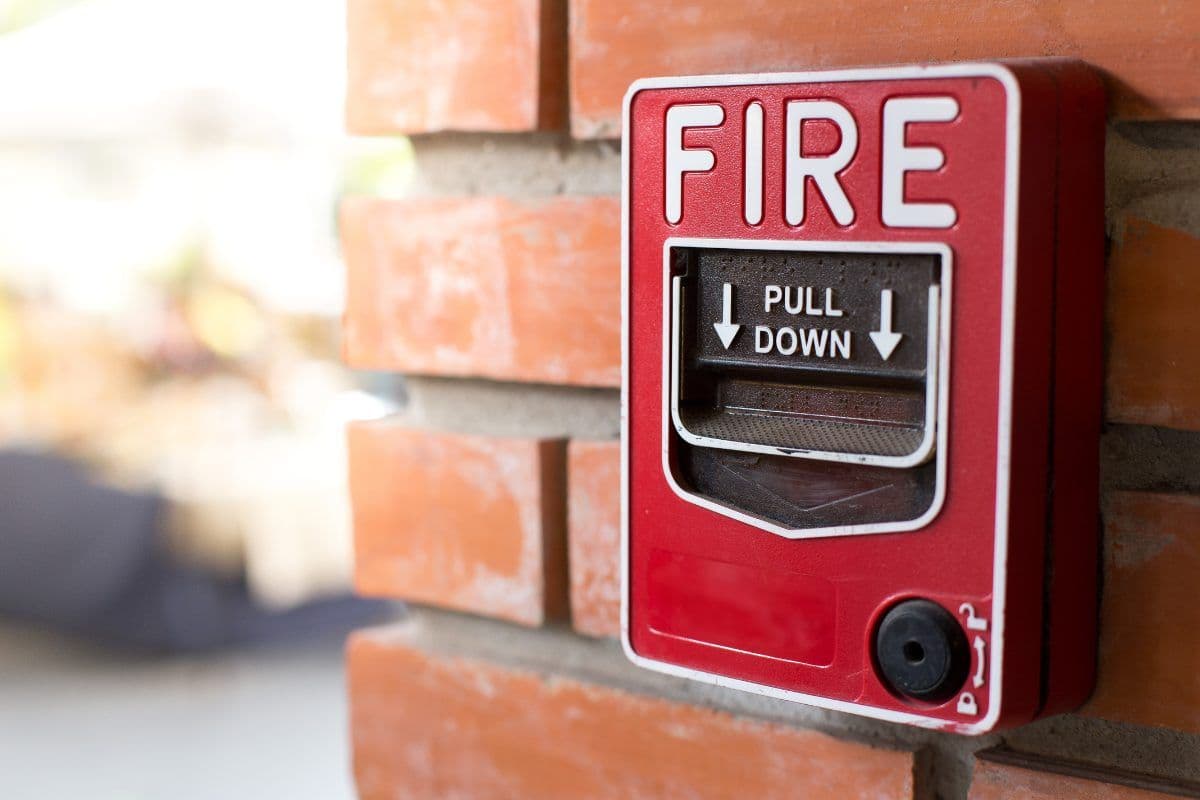
Your organisation runs a fire drill. Everyone leaves, somebody times it, the number goes in a spreadsheet, and the exercise is marked complete.
The number is the least useful thing the drill produced. A building full of office workers who know a drill is coming will always evacuate quickly, which tells you almost nothing about what would happen at seven in the evening in February when the person who normally helps a colleague down the stairs is on annual leave.
Article 15 of the Regulatory Reform (Fire Safety) Order 2005 requires the responsible person to establish appropriate procedures for serious and imminent danger and to nominate sufficient competent persons to implement them. A drill is how you find out whether those procedures work. Most drills are designed to confirm that they do, which is a different exercise.
Seven things yours probably is not testing.
1. What happens when it is not announced
The most common design flaw and the easiest to change.
An announced drill tests whether people can walk downstairs, which was never in doubt. It does not test whether the alarm is audible in the areas people actually occupy, whether anyone hesitates, whether visitors know what to do, or whether the people responsible for sweeping a floor are where they should be.
There are good reasons to announce some drills, particularly the first one after a move or where a workforce includes people for whom an unexpected alarm would be distressing. The problem is running only announced drills, which produces a clean record and no information.
2. Any time other than mid-morning on a Tuesday
Drills cluster in the middle of the working week in the middle of the day, because that is when the most people are present and it disrupts least.
That is precisely the period when your arrangements are strongest. The exposure sits in early mornings, evenings and weekends, when finance teams are covering other markets, technology teams are running releases, and professional teams are working to a deadline. Those periods have fewer wardens, fewer first aiders, thinner reception cover and often a different alarm mode.
Running one drill a year outside core hours will tell you more than the other three combined.
3. Whether assisted evacuation actually works
Need Expert H&S Guidance?
Our qualified consultants can help you implement the right health & safety measures for your business.
The most serious gap, and the one most drills deliberately avoid.
Where someone needs assistance to evacuate, their personal emergency evacuation plan names arrangements and usually names people. A drill that excuses those individuals from participating, which is common and well-intentioned, never tests the arrangement.
You do not need to require anyone to descend stairs to test this. You can test whether the designated assistants were present and knew their role, whether the refuge communication system worked, whether anyone checked the refuge, and what the plan is when the named assistant is absent. Doing that respectfully and in consultation with the individual is entirely achievable, and finding out on the day of a real fire is not.
4. Visitors, contractors and anyone unfamiliar
Clients in meeting rooms, engineers in plant areas, candidates in interviews, cleaners who arrive as everyone leaves.
These people are relevant persons under the Order and they do not know your building. A drill that happens when the building contains only staff tests a population that already knows what to do.
Where your organisation regularly hosts people, run at least one drill at a time when visitors are typically present, and check afterwards whether they were accounted for and how they knew where to go.
5. Whether you can actually account for people
The question hot desking broke and most organisations have not revisited.
Traditional roll calls assumed fixed desks and floor lists. In a flexible office with hybrid attendance, a list of who is employed tells you nothing about who is in the building, and a fire warden sweeping a zone cannot know whether a room was occupied ten minutes ago.
Establish what your actual method is: badge data, a booking system, sweep-based accounting, or a stated decision that you sweep rather than count. Any of those can be defensible. What is not defensible is a roll call procedure that describes an arrangement the building no longer has.
6. Whether a route being unavailable changes the outcome
Real fires block routes. Drills almost never do.
Occasionally running a drill with one exit marked unavailable tests whether people know a second route, whether signage supports finding it, and whether the alternative route is actually clear rather than storing furniture. It also tests the wardens, who in most drills simply repeat the route they use every day.
This needs care and should be planned with whoever holds the fire risk assessment, but it is the single most informative variation available.
7. Whether anything happens afterwards
The failure that undoes everything above.
Most organisations record a time and a date. Few record what went wrong, and fewer still track the fixes. A drill that identifies a door that would not release, an alarm not audible in a corner of the third floor, or a warden who did not know their zone, and produces no action, has documented a known defect.
Article 21 requires adequate safety training, refreshed as appropriate, and drill findings are the best evidence you have of what that training needs to cover. A short debrief with the wardens immediately afterwards, while it is fresh, is worth more than the report.
What to record
| Element | Weak record | Useful record | |---|---|---| | Type | "Fire drill completed" | Announced or unannounced, time, day, conditions | | Timing | Evacuation time only | Time plus whether it was representative of normal occupancy | | Coverage | Not noted | Which floors, zones and areas were swept, and by whom | | Assisted evacuation | Excluded | What was tested, what worked, what did not | | Non-employees | Not noted | Visitors and contractors present and accounted for | | Accounting method | "Roll call taken" | How people were actually accounted for | | Findings | None | What failed, who owns it, by when | | Closure | None | Evidence the fix happened |
The last two rows are what make the record worth keeping. Everything above them describes an event. Those two describe a system.
Frequency, briefly
There is no universally prescribed interval for an office in England and Wales. The requirement is that procedures are established and that people are adequately trained, with the frequency following from your fire risk assessment. Annual is the conventional minimum in practice, with more frequent drills after a move, a significant fit-out, a change in occupancy or a change in the evacuation strategy.
Government guidance on workplace fire safety responsibilities sets out the framework, and the interval should be a decision you can explain rather than a habit you inherited.
For international groups
Drill requirements are among the more prescriptive fire safety obligations internationally, and several jurisdictions set explicit frequencies where England and Wales do not.
That means a group standard specifying an interval may be below the local requirement in some countries and above it in others, and in neither case does it satisfy anything by itself. The workable approach is a group requirement that every site tests its evacuation procedures on a justified cycle and records findings and closure, with the interval and format determined locally.
Holding drill records, findings and closure dates across every site in one register is where health and safety consultants and software are worth more together than either alone, and periodic health and safety audits test whether findings are being closed rather than logged.
Where Arinite fits
Arinite designs drills that produce information rather than confirmation, and the fire risk assessment that sets what they should test. We support 1,500+ businesses across 50+ countries and protect 100,000+ employees, with 95%+ client retention over 15+ years. Our health and safety consultants work extensively with legal, finance and banking and IT and software organisations, and our wider fire safety work covers the arrangements a drill exists to test.
Where sites span several countries, our global health and safety consultants establish what each jurisdiction requires, and our international health and safety consultants keep that current.
If your last drill produced a time and nothing else, a free gap analysis will show you what it should have produced.
Related Articles
Written by
Arinite Health & Safety Consultants
Health & Safety Expert at Arinite