Skip to content

HSE inspections up 47% - HSE carried out over 13,200 workplace inspections in 2024/25.

Health and Safety in Manufacturing: Machinery, PUWER, LOLER, COSHH,Noise, and Compliance

Qualified manufacturing health and safety consultants. Machinery risk assessments · PUWER and LOLER compliance · COSHH assessments · Noise and vibration assessments · Manual handling training · Ongoing compliance for manufacturers across the UK and 50+ countries.

Manufacturing is one of the HSE's most actively regulated sectors. Machinery accidents, COSHH exposures, noise-induced hearing loss, and manual handling injuries account for a disproportionate share of UK workplace fatalities and major injuries every year. Arinite's Qualified consultants deliver the full manufacturing compliance stack: machinery risk assessments under PUWER, lifting equipment inspections under LOLER, COSHH assessments for hazardous substances, noise and vibration assessments, manual handling, and the documented management system that ties it all together.

1,500+ businesses
50+ countries
95%+ retention
Qualified Consultants
UK & International
Free Gap Analysis
Get in Touch

Contact Arinite Today

Fill out the form below and our team will get back to you within 24 hours.

By submitting, you agree to our Privacy Policy and consent to Arinite contacting you.

ABOUT

About This Sector

Manufacturing is on the HSE's priority list every year. Machinery guarding, work equipment, chemical exposure, noise, vibration, manual handling, and working at height are all elevated-risk activities common across the sector, and HSE inspections are intensive. Beyond enforcement risk, manufacturers face commercial pressure: tier-one supplier H&S pre-qualification (CHAS, Achilles, SafeContractor), customer audit cycles, and ISO 45001 expectations from major buyers.

Arinite provides Qualified health and safety consultants and compliance software to manufacturers across the UK and 50+ countries, from precision engineering and food manufacturing through chemicals, plastics, packaging, automotive, and heavy industrial.

COMPLIANCE GAPS

Common Compliance Failures We
Find in Manufacturing

These are the manufacturing health and safety failures Arinite's Qualified consultants find most frequently. Each one is a real exposure to HSE enforcement, civil claims, customer audit failure, and director liability under Section 37 HSWA 1974.

Machinery risk assessments missing or generic

Site-wide risk assessment exists but no machine-by-machine PUWER assessment of guarding, isolation, and safe operation. The single most common manufacturing compliance gap.

LOLER inspections out of date

Lifting equipment past its statutory thorough examination interval, or no documented register of lifting equipment at all.

COSHH assessments missing or stale

No documented assessment of hazardous substances, or assessments that pre-date current safety data sheets and current usage.

No noise risk assessment under the Control of Noise at Work Regulations 2005

Operations above the lower action value (80 dB(A)) without measurement, control programme, or hearing protection programme.

Manual handling treated as generic training, not task-specific assessment

HSE explicitly requires task-specific manual handling assessment, not blanket annual training.

Permits to work missing or informal

Hot work, confined space, work at height, and electrical isolation carried out without a documented permit-to-work system.

Contractor management informal

Subcontractors, maintenance contractors, and installation engineers on site without documented competence checks, induction, or permit-to-work coordination.

No machinery file under the Supply of Machinery (Safety) Regulations 2008

Imported or older machinery in service without CE/UKCA conformity evidence, declaration of conformity, or instructions in English.

MACHINERY

Machinery Risk Assessment, PUWER,
and Machinery Guarding

The Provision and Use of Work Equipment Regulations 1998 (PUWER) and the Supply of Machinery (Safety) Regulations 2008 set the framework for every piece of work equipment on a manufacturing site.

What PUWER Requires

1

Suitability for the intended use, taking into account the conditions in which it will be used.

2

Maintained in efficient working order and good repair, with a documented maintenance schedule.

3

Inspection by a competent person at suitable intervals and after exceptional circumstances.

4

Information, instruction, and training for users and managers, in a form they can understand.

5

Protection against dangerous parts of machinery through fixed guards, interlocked guards, light curtains, or other engineering controls.

6

Specific requirements on controls, isolation, stability, lighting, markings, and warnings.

Machinery Guarding

Machinery guarding is the most enforced PUWER topic. HSE inspectors routinely focus on:

1

Fixed guards in place and not removable without tools.

2

Interlocked guards operating correctly and not bypassed.

3

Trapped key systems and isolation procedures for maintenance access.

4

Light curtains and pressure mats configured and tested.

5

Emergency stops accessible, identified, and tested.

Imported and Legacy Machinery

Manufacturers buying machinery from overseas suppliers or operating legacy machinery routinely fail conformity expectations. Every piece of machinery placed on the UK market must carry CE or UKCA marking, a declaration of conformity, and instructions in English. Older machinery pre-dating Supply of Machinery Regulations remains subject to PUWER risk assessment and upgrade where required.

LOLER

LOLER Inspections and
Lifting Equipment

The Lifting Operations and Lifting Equipment Regulations 1998 (LOLER) apply to every piece of lifting equipment on site, from forklifts and overhead cranes to passenger lifts, vehicle hoists, lifting accessories (chains, slings, shackles), and even mobile elevating work platforms.

Thorough Examination Intervals

1

Lifting equipment for lifting persons

Every six months.

2

Lifting accessories

Every six months.

3

All other lifting equipment

Every twelve months.

4

After exceptional circumstances

Likely to have affected safety: regardless of the scheduled interval.

5

To an examination scheme

Drawn up by a competent person where bespoke intervals apply.

What Most Manufacturers Get Wrong

The single most common LOLER failure is an incomplete register. Forklifts and overhead cranes are captured, but:

1

Lifting accessories (slings, shackles, eye bolts, chains) used daily but never registered.

2

Mobile elevating work platforms (cherry pickers, scissor lifts) hired in for short jobs.

3

Vehicle hoists in the maintenance workshop.

4

Goods lifts and passenger lifts in the building.

5

Bespoke lifting frames and jigs manufactured in-house.

All of the above are LOLER lifting equipment and all require thorough examination. Arinite coordinates the LOLER inspection schedule, maintains the register in our health and safety software platform, and tracks defect close-out.

COSHH

COSHH Assessment for
Hazardous Substances

The Control of Substances Hazardous to Health Regulations 2002 (COSHH) require a documented assessment of every hazardous substance used, produced, or generated on site. Manufacturing routinely involves more substances than the safety officer realises.

What a Compliant COSHH Assessment Covers

1

Inventory of every hazardous substance: raw materials, intermediate products, process generated dusts and fumes, cleaning chemicals, maintenance chemicals, laboratory reagents.

2

Current safety data sheets (SDS) for each substance, in English, dated within the last three years where supplier updates are available.

3

Exposure assessment: how the substance is used, who is exposed, route of exposure, frequency, and duration.

4

Hierarchy of control: elimination, substitution, engineering controls (LEV, ventilation), administrative controls, PPE.

5

Health surveillance where required: respiratory, skin, hearing, biological monitoring.

6

Emergency procedures: spillage, fire, first aid, evacuation.

LEV Examination

Local Exhaust Ventilation (LEV) systems must be examined and tested by a competent person at least every fourteen months under COSHH Regulation 9. A documented LEV report is essential evidence in any HSE inspection following a respiratory complaint or occupational health finding.

NOISE AND VIBRATION

Noise and Vibration
Risk Assessment

The Control of Noise at Work Regulations 2005 and the Control of Vibration at Work Regulations 2005 set explicit numerical action values that trigger employer duties. Most manufacturers operate above at least one of them.

Noise at Work

1

Lower exposure action value (80 dB(A) daily exposure / 135 dB(C) peak)

Information, instruction, training, and hearing protection made available.

2

Upper exposure action value (85 dB(A) daily / 137 dB(C) peak)

Noise control programme required, hearing protection zones designated and signed, hearing protection use mandatory, and health surveillance through audiometry.

3

Exposure limit value (87 dB(A) / 140 dB(C))

Must not be exceeded taking account of attenuation provided by hearing protection.

Hand-Arm Vibration

1

Exposure action value (2.5 m/s² A(8))

Assessment, information, training, and health surveillance.

2

Exposure limit value (5.0 m/s² A(8))

Must not be exceeded.

Documentation Expected by HSE

1

Documented noise assessment with measurement data from a competent assessor.

2

Vibration exposure calculations for hand-held power tools and vibrating equipment.

3

Hearing protection programme with selection records.

4

Audiometry programme with results and individual notification.

5

Hand-arm vibration health surveillance Tier 1–4 management process.

MANUAL HANDLING

Manual Handling and
Musculoskeletal Risk

The Manual Handling Operations Regulations 1992 require employers to avoid manual handling operations where reasonably practicable, and to assess and reduce risk where avoidance is not reasonably practicable.

Task-Specific Assessment

HSE explicitly requires task-specific manual handling assessment, not blanket annual training. Each significant manual handling task must be assessed against the TILE framework (Task, Individual, Load, Environment) and controlled accordingly. Generic training without task-specific assessment is one of the most commonly cited HSE failures in manufacturing.

Mechanical Aids and Engineering Out

The hierarchy of control prioritises engineering out manual handling through lifting equipment, conveyors, tilters, and workstation redesign before relying on training and PPE. Arinite supports business cases for mechanical aids using HSE musculoskeletal risk data and accident-cost evidence.

EMPLOYER DUTIES

Core Employer Duties Under UK Manufacturing
Health and Safety Law

Every manufacturing employer must:

1

Conduct a documented general risk assessment under MHSWR Regulation 3 covering all activities, locations, and worker categories.

2

Conduct task-specific risk assessments under PUWER, LOLER, COSHH, the Noise at Work Regulations, the Vibration at Work Regulations, and the Manual Handling Operations Regulations as applicable.

3

Maintain a documented register of all machinery, lifting equipment, and LEV systems, with thorough examination dates and competent person records.

4

Appoint one or more competent persons under MHSWR Regulation 7.

5

Maintain a written health and safety policy signed by a director, reviewed annually, and communicated to employees.

6

Operate a permit-to-work system for hot work, confined space, work at height, and electrical isolation activities.

7

Conduct documented contractor management: pre-qualification, induction, permit coordination, and post-job review.

8

Report specified injuries, diseases, and dangerous occurrences under RIDDOR.

9

Operate health surveillance programmes appropriate to the workplace risks: audiometry, respiratory, skin, hand-arm vibration, and other COSHH-driven surveillance.

10

Provide information, instruction, training, and supervision appropriate to the workplace risks under MHSWR Regulation 10 and 13.

11

Maintain accident reporting and investigation arrangements including near-miss reporting, root cause analysis, and corrective action tracking.

12

Comply with sector-specific regulations including the Confined Spaces Regulations 1997, Work at Height Regulations 2005, Electricity at Work Regulations 1989, and the Construction (Design and Management) Regulations 2015 where construction work is involved.

REGULATIONS

Sector-Specific Regulations for
Manufacturing Employers

The full legislative framework applying to manufacturers in Great Britain.

The Health and Safety at Work etc. Act 1974

Sections 2 and 3 general duties; Section 37 director and manager liability.

The Management of Health and Safety at Work Regulations 1999

Risk assessment, competent person, training, worker information.

The Provision and Use of Work Equipment Regulations 1998 (PUWER)

Suitability, maintenance, inspection, training, guarding.

The Lifting Operations and Lifting Equipment Regulations 1998 (LOLER)

Lifting equipment, lifting operations, thorough examination.

The Control of Substances Hazardous to Health Regulations 2002 (COSHH)

Assessment, control, exposure monitoring, health surveillance, LEV.

The Control of Noise at Work Regulations 2005

Action values, hearing protection, audiometry, hearing protection zones.

The Control of Vibration at Work Regulations 2005

Hand-arm and whole-body vibration action and limit values.

The Manual Handling Operations Regulations 1992

Task-specific assessment, hierarchy of control, training.

The Confined Spaces Regulations 1997

Permit-to-work, rescue arrangements, training.

The Work at Height Regulations 2005

Planning, equipment, training, rescue.

The Electricity at Work Regulations 1989

Maintenance, isolation, competent persons.

The Supply of Machinery (Safety) Regulations 2008

CE/UKCA marking, conformity, declarations.

RIDDOR 2013

Reporting of injuries, diseases, dangerous occurrences.

The Regulatory Reform (Fire Safety) Order 2005

Fire risk assessment, emergency plan.

OUR SERVICES

Our Manufacturing Health
and Safety Services

Arinite delivers the full range of manufacturing health and safety services through Qualified consultants and integrated health and safety software.

Machinery risk assessments

Machine-by-machine PUWER assessments covering guarding, isolation, controls, maintenance access, and safe operation. CE/UKCA conformity review for imported and legacy machinery.

LOLER inspection coordination

Full LOLER register, scheduled thorough examination coordination through accredited competent persons, defect close-out tracking, and certificate management.

COSHH assessments

Hazardous substance inventory, SDS management, exposure assessment, LEV examination coordination, and health surveillance programme design.

Noise and vibration assessments

Workplace noise measurement, hand-arm vibration assessment, hearing protection programme, hearing protection zone signage, and audiometry coordination.

Manual handling risk assessment and training

Task-specific TILE assessments, mechanical aids business cases, and tailored manual handling training.

Permit-to-work systems

Design and implementation of hot work, confined space, work at height, and electrical isolation permit systems.

Contractor management

Pre-qualification, induction, on-site coordination, and permit integration for resident and visiting contractors.

ISO 45001 alignment

Gap analysis and implementation support for manufacturers pursuing ISO 45001 certification or contractual alignment.

Health and safety audits

Documented audits covering MHSWR, PUWER, LOLER, COSHH, noise, vibration, manual handling, fire, and sector-specific regulations, with prioritised remediation plans.

Competent person retainer

External Qualified competent person satisfying MHSWR Regulation 7 for manufacturers without an internal H&S specialist.

Health and safety software

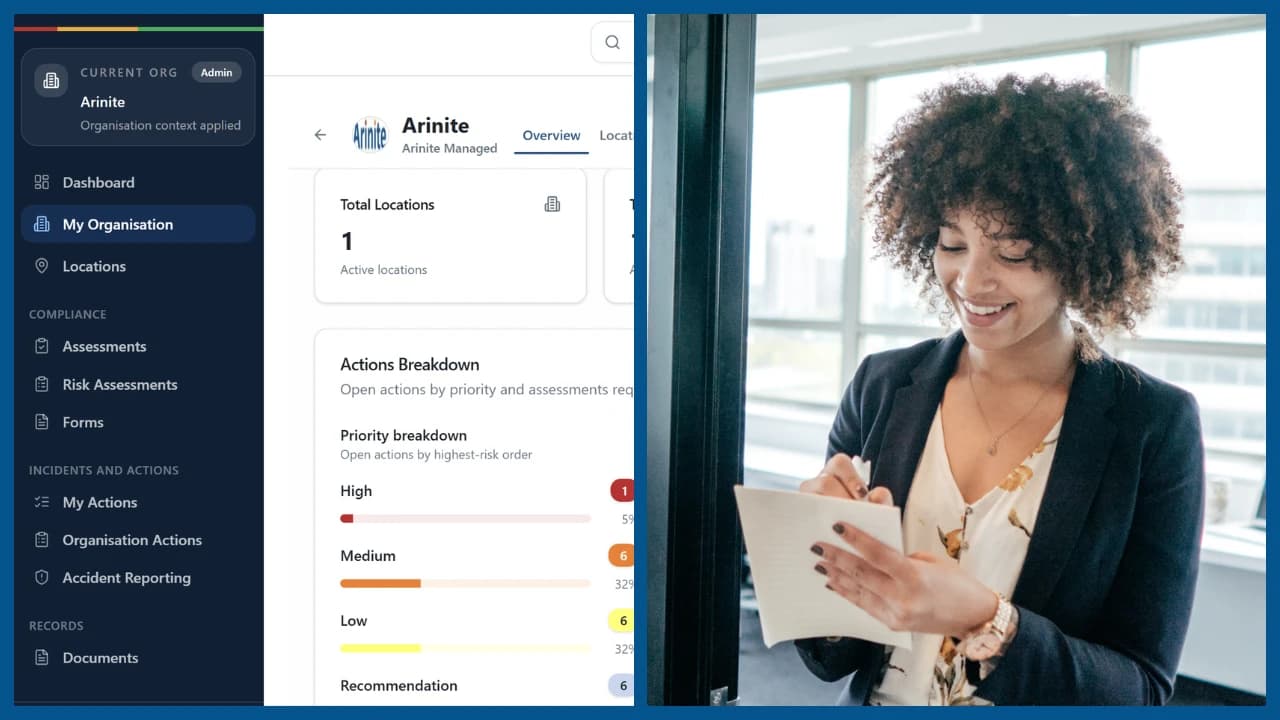
Centralised platform for risk assessments, machinery and LOLER registers, COSHH inventory, training, incidents, audits, and contractor management.

Customer audit support

CHAS, Achilles, SafeContractor, and bespoke customer audit support: documentation packs, gap closure, and audit-day attendance.

TRAINING

Health and Safety
Training for Manufacturing

Training is a specific legal requirement under MHSWR Regulation 10 and PUWER Regulation 9. For manufacturers, the core training stack covers:

Manual handling

Training, task-specific and supported by task assessments.

Machinery operation

Training including emergency stops, guarding, and lockout-tagout.

COSHH

Awareness and substance-specific training.

Hearing conservation

For workers in designated hearing protection zones.

Permit-to-work

Training for issuers, receivers, and supervisors.

Forklift and lifting operations

Training to ITSSAR, RTITB, or AITT standard.

Fire safety

Induction and fire warden training.

Accident reporting and investigation

For designated investigators.

Mental health awareness

For line managers, recognising the elevated psychosocial risk of shift work and high-demand manufacturing roles.

TYPICAL ENGAGEMENT

A Typical Manufacturing
Engagement With Arinite

The following is an illustrative example of how Arinite engagement typically runs for a manufacturing employer.

A precision engineering manufacturer with 180 employees across a single Midlands facility approaches Arinite after a HSE inspection identified the absence of documented LOLER inspection records for several overhead lifting devices and an out-of-date COSHH assessment for a recently introduced solvent. The HSE inspector left an improvement notice with 30 days to remediate. The company has an existing H&S manager but no Qualified competent person on retainer.

Mo
1

Arinite's free gap analysis call identifies the improvement notice priorities and the wider compliance gaps. We agree an accelerated 30-day remediation programme followed by a 90-day broader compliance lift. In the first 30 days, we deliver: LOLER thorough examination records reconciled and brought current through a competent person reinspection programme, refreshed COSHH assessment for the new solvent with risk control verification, and submitted improvement notice closure evidence to HSE.

Mo
2

In the following 60 days, we deliver: a refreshed MHSWR Regulation 3 risk assessment covering all manufacturing activities, a comprehensive PUWER review of machinery on the shop floor, a noise survey under the Control of Noise at Work Regulations 2005, a hand-arm vibration assessment under the Control of Vibration at Work Regulations 2005, a manual handling assessment for production roles, a refreshed COSHH inventory and assessment set, and a PAS 79:2020 fire risk assessment for the facility.

Mo
3

In parallel, we deliver: psychosocial risk assessment using HSE Stress Indicator Tool, document Worker Protection Act 2023 reasonable steps, train line managers and supervisors on Section 37 duties and PUWER inspection, and hand over to ongoing competent person retainer with monthly site visits.

The improvement notice closes within 30 days. The wider compliance lift completes within 90 days. The competent person retainer continues with monthly site visits.

WHY ARINITE

Why Manufacturing Companies
Choose Arinite

Five practical reasons manufacturers appoint Arinite as their outsourced competent person:

Industrial H&S expertise

Our consultants combine workplace H&S with PUWER, LOLER, COSHH, noise, vibration, and manual handling assessment capability under one engagement.

HSE inspection and improvement notice support

We have run remediation programmes for manufacturing clients across the full range of HSE intervention from advisory letters to prohibition notices.

Customer audit-ready by default

The integrated documentation pack satisfies the H&S sections of typical OEM and large customer supplier audits including ISO 45001 expectations.

Multi-site programme management

For manufacturers with multiple sites, Arinite operates centralised compliance programmes through our software platform with site-specific documentation, scheduled inspections, and action tracking.

Qualified consultants, not generalists

MHSWR Regulation 7 requires competent advice.

Book a Free Gap Analysis Call

Book a free gap analysis call with one of our Qualified health and safety consultants. In 30 minutes, we will assess your current manufacturing health and safety arrangements, identify the compliance gaps that matter most, and give you a clear recommendation and indicative cost.