The Fire Safety Order 2005: 11 Articles That Matter
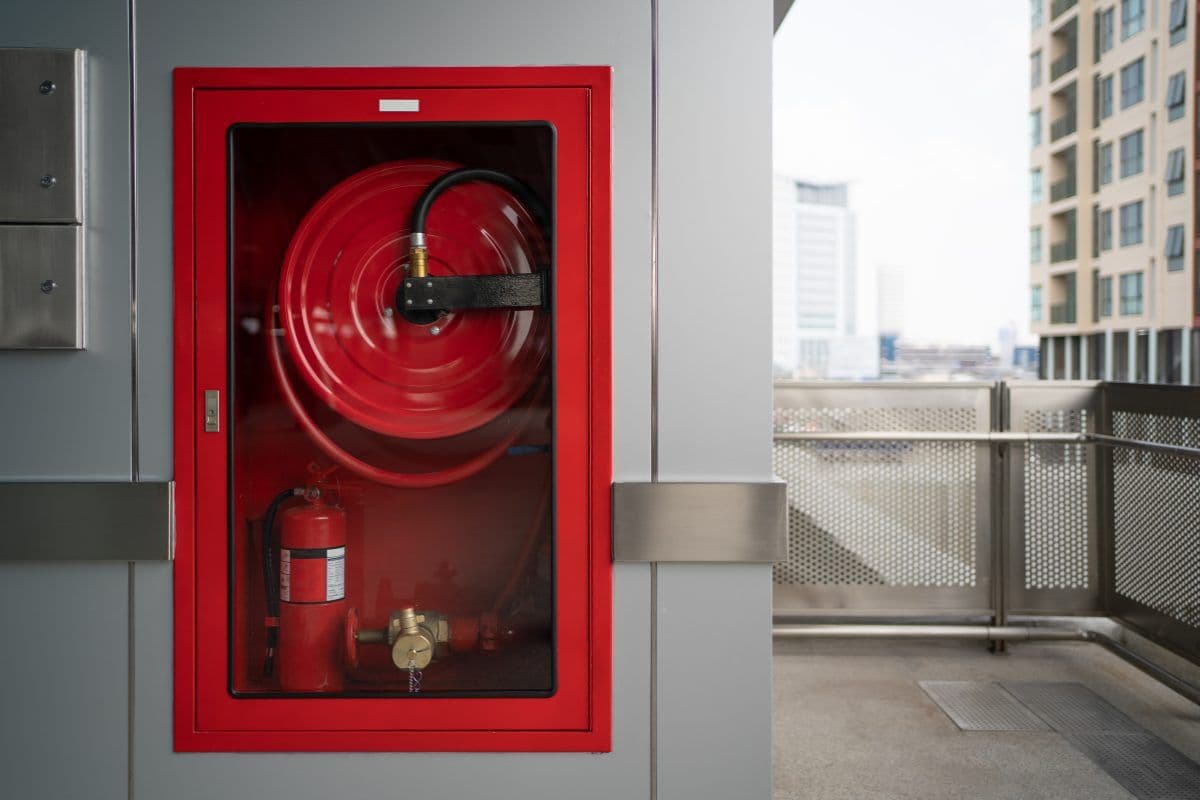
The Regulatory Reform (Fire Safety) Order 2005 governs fire safety in almost every non-domestic premises in England and Wales, including every office, shop, factory and shared building.
It replaced a system of fire certificates with a single approach built on risk assessment, and in doing so it put responsibility on the organisation rather than on the fire service. Nobody inspects your building in advance and issues a certificate. You assess it, you act on the assessment, and you are answerable for the result.
The Order is long, and most of what matters sits in eleven articles.
1. Article 3: who the responsible person is
The starting point, because every duty that follows attaches to this person.
Article 3 defines the responsible person. In a workplace, that is the employer if the workplace is to any extent under its control. In other premises, it is the person who has control of the premises in connection with carrying on a trade, business or other undertaking, or the owner where that person does not have control.
For a tenant in an office, that usually means the employer is a responsible person for the space it controls, and the landlord is a responsible person for common parts. Several responsible persons in one building is normal.
2. Article 5: others who carry duties
The provision that widens responsibility beyond the responsible person.
Article 5 extends duties to any person who has, to any extent, control of premises, so far as the requirements relate to matters within their control. That includes managing agents, facilities contractors and anyone with a contractual obligation for maintenance or repair.
So the question in a leased building is rarely who the single responsible person is. It is who controls which part, and whether that is written down.
3. Article 8: the general duty
Need Expert H&S Guidance?
Our qualified consultants can help you implement the right health & safety measures for your business.
The overarching duty the rest of the Order supports.
Article 8 requires the responsible person to take general fire precautions to ensure, so far as is reasonably practicable, the safety of employees, and such general fire precautions as may reasonably be required to ensure that the premises are safe for anyone else lawfully on or near them.
Two standards sit inside that sentence: reasonable practicability for employees, and what may reasonably be required for others such as visitors and contractors.
4. Article 9: the fire risk assessment
The core obligation, and it changed in 2023.
Article 9 requires the responsible person to make a suitable and sufficient assessment of the risks to which relevant persons are exposed, in order to identify the general fire precautions needed, and to review it regularly and where there is reason to suspect it is no longer valid or there has been a significant change.
The recording requirement is where much guidance is still out of date. Since October 2023, following section 156 of the Building Safety Act 2022, every responsible person must record the assessment in full, regardless of how many people they employ. The old five-employee threshold for recording no longer applies. Our coverage of section 156 sets out the full set of changes.
5. Article 11: arrangements for managing fire safety
The duty that turns an assessment into management.
Article 11 requires the responsible person to make and give effect to arrangements for the effective planning, organisation, control, monitoring and review of the preventive and protective measures.
Since October 2023 those arrangements must also be recorded. Many organisations have them in practice and have never written them down as a single document, which is now a requirement rather than good practice.
6. Article 13: firefighting and detection
Equipment appropriate to the premises.
Article 13 requires premises to be equipped with appropriate firefighting equipment and with fire detectors and alarms, and requires non-automatic equipment to be easily accessible, simple to use and indicated by signs.
"Appropriate" is the operative word, and it depends on what could burn. That is a fire classification question, and it is why extinguisher selection should follow the assessment rather than a standard list.
7. Article 14: emergency routes and exits
Getting people out.
Article 14 requires routes to emergency exits and the exits themselves to be kept clear at all times, and sets requirements including that routes lead as directly as possible to a place of safety, that exits open in the direction of escape where appropriate, that emergency doors are not locked or fastened so that they cannot be easily and immediately opened, and that routes are indicated by signs and provided with emergency lighting where needed.
In a professional office the common failures are storage in escape routes, doors held open or locked, and layouts altered after the assessment was written.
8. Article 15: procedures for serious and imminent danger
The evacuation duty.
Article 15 requires procedures to be followed in the event of serious and imminent danger, and the nomination of a sufficient number of competent persons to implement those procedures so far as they relate to evacuation.
This is where fire wardens, drills and personal evacuation arrangements for people who need assistance come from. A procedure that has never been practised is difficult to call effective.
9. Article 17: maintenance
Keeping it all working.
Article 17 requires the premises and any facilities, equipment and devices provided under the Order to be subject to a suitable system of maintenance and maintained in an efficient state, in efficient working order and in good repair.
That covers alarms, emergency lighting, extinguishers, fire doors and anything else the fire strategy relies on. The Order does not set intervals; the relevant standards and the assessment do, and our guide to fire safety testing covers them.
10. Article 21: training
People have to know what to do.
Article 21 requires employees to be provided with adequate safety training at the time they are first employed and on being exposed to new or increased risks, repeated periodically where appropriate.
"At the time they are first employed" makes this an induction obligation, which is why a building induction for every new starter, contractor and agency worker matters.
11. Article 22: cooperation and coordination
The article that governs shared buildings.
Article 22 requires responsible persons who share premises to cooperate and coordinate with each other and to inform one another of risks.
Since October 2023 this has been strengthened: responsible persons must take reasonably practicable steps to identify the other responsible persons in the building and share contact details including a UK address. In a multi-tenant office or a sublet floor, this is the article that decides how well the building actually works in an emergency.
The eleven, in short
| Article | What it does |
|---|---|
| 3 | Defines the responsible person |
| 5 | Extends duties to others with control |
| 8 | General duty to take fire precautions |
| 9 | Fire risk assessment, now recorded in full |
| 11 | Arrangements for managing fire safety, now recorded |
| 13 | Appropriate firefighting and detection |
| 14 | Emergency routes and exits |
| 15 | Procedures and nominated competent persons |
| 17 | Maintenance of everything relied on |
| 21 | Training at first employment and on change |
| 22 | Cooperation between responsible persons |
Articles 9 and 22 are the two that changed most recently and the two most often out of date in practice.
For international groups
Two considerations.
The Order covers England and Wales. Scotland and Northern Ireland have their own fire safety frameworks, so a group standard written around the Order does not describe the whole United Kingdom.
Elsewhere, fire documentation is prescribed. Croatia requires an evacuation and rescue plan with a graphical part and practical exercises. Kenya requires an annual fire safety audit by a separately approved auditor. Greece and Bulgaria attach fire duties to appointed professionals. The British risk-based approach, where the employer decides what is needed, is unusual.
Holding each site's fire risk assessment, arrangements and maintenance records in one register is where health and safety consultants and software are worth more together than either alone, and periodic health and safety audits reliably find assessments written before the 2023 changes.
Where Arinite fits
Arinite produces fire risk assessments written to the Order as it currently stands, including the recording requirements introduced in 2023. We support 1,500+ businesses across 50+ countries and protect 100,000+ employees, with 95%+ client retention over 15+ years. Our health and safety consultants work extensively with legal, finance and banking and IT and software organisations, and our fire risk assessment service covers single offices and multi-tenant buildings alike.
Where offices span several countries, our global health and safety consultants establish what each jurisdiction requires, and our international health and safety consultants keep that current.
If your fire risk assessment predates October 2023, or you could not name the other responsible persons in your building, a free gap analysis is the right place to start.
Related Articles
Written by
Arinite Health & Safety Consultants
Health & Safety Expert at Arinite