Incident Management Software: 6 Features Every Global Business Needs
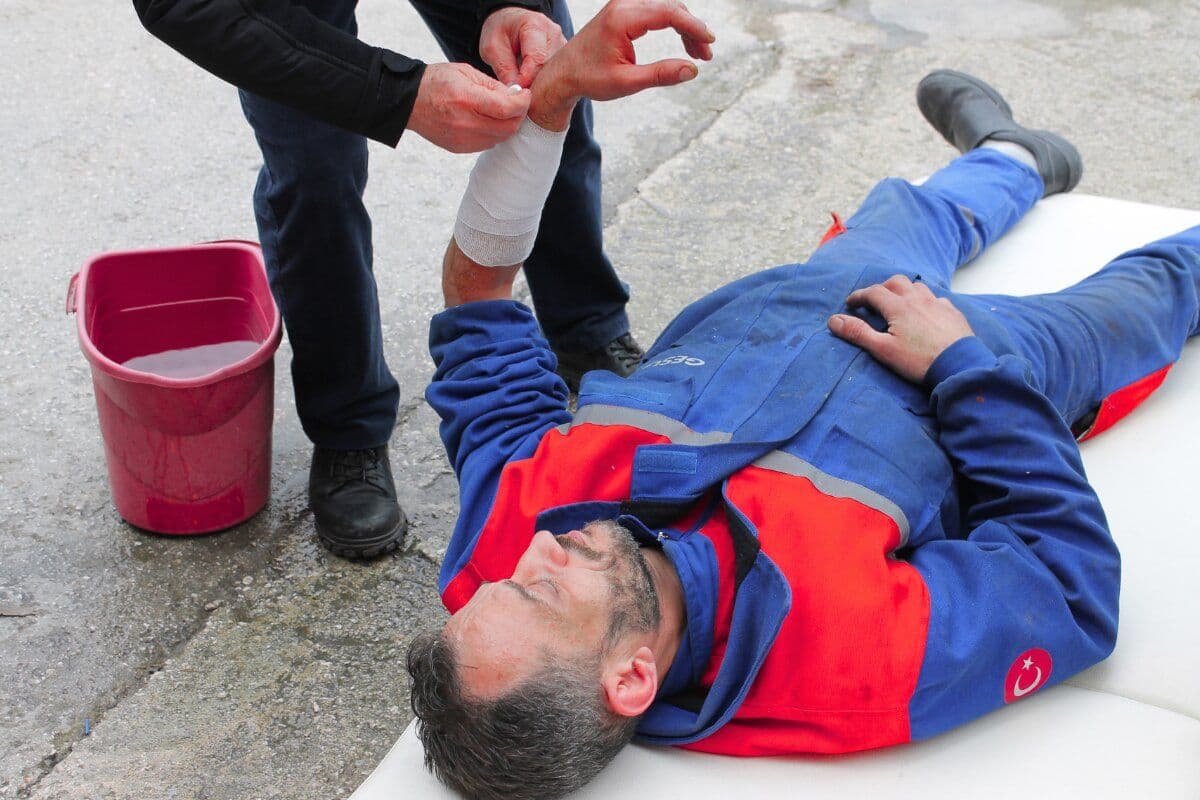
When something goes wrong on site, the clock starts immediately. Regulators expect certain incidents reported within days, insurers want evidence, and the rest of your business needs to know it will not happen again. Doing all of that by email and spreadsheet, across several countries, is how reportable incidents quietly become missed deadlines. Here are the six features that stop that happening.
Every business hopes to need incident management rarely. The reality is that incidents, near misses, and accidents happen, and what separates a well-run organisation from an exposed one is not whether they occur, but how quickly and completely they are captured, reported, investigated, and learned from. Research suggests a large share of workplace incidents go unreported in the first place, which means the real risk often never reaches the people who could prevent the next one. Our piece on why half of workers avoid incident reporting explores why.
This is the gap incident management software is built to close, and it is why so many businesses searching for a tool are really searching for confidence that nothing falls through the cracks. The strongest results, though, come from pairing the platform with expert health and safety consultants, the combination of health and safety consultants and software that ensures every incident is not just logged but handled correctly under the law of each country you operate in. Below are the six features to demand.
Why Incident Management Is Harder Across Borders
Reporting obligations are not universal. The United Kingdom has its own rules on which incidents must be reported to the regulator and within what timeframe, and the thresholds, categories, and deadlines differ in France, Germany, and the United States. An incident that is reportable in one country may not be in another, and a deadline that is comfortable in one market may already have passed in another.
For a single-country business, a knowledgeable manager can hold those rules in mind. For a multi-country operation, no individual can, and the cost of getting it wrong is both legal and reputational. This is why software built for genuine international health and safety matters, and why expert support behind it matters even more. Our complete guide to recording accidents and reporting compliance sets out the fundamentals. Here is what the software around them must do.
1. Fast, Simple Capture That People Actually Use
The first feature addresses the root problem: incidents that are never reported cannot be managed. Reporting has to be quick and simple enough that a worker on a shop floor or in the field will actually do it, on a phone, in the moment, without needing a manager or a desktop.
If logging an incident is harder than ignoring it, people will ignore it, and your data will understate your real risk. The best platforms make capture frictionless, which is the single biggest driver of whether incident management works at all.
2. Built-In Reporting Rules for Each Country
Need Expert H&S Guidance?
Our qualified consultants can help you implement the right health & safety measures for your business.
The second feature is jurisdiction awareness. Good software knows which incidents are legally reportable in each country you operate in, flags the relevant deadline automatically, and guides the user toward the correct action rather than leaving them to guess.
This is where generic tools fail international businesses. A platform that treats every country the same will let a reportable incident in one market sit unreported because it would not have been reportable in another. Genuine multi-country capability is not a nice-to-have here. It is the difference between compliance and a missed legal deadline.
3. A Structured Investigation Workflow
Capturing an incident is the start, not the end. The third feature is a guided investigation workflow that takes each incident from initial report through root-cause analysis to a documented conclusion, so that serious events are examined properly rather than filed and forgotten.
A consistent process matters across borders because it lets head office trust that an incident in one country was investigated to the same standard as one in another. It also produces the evidence trail that regulators and insurers expect to see when they ask what you did and why.
4. Corrective Actions That Are Tracked to Closure
Finding the cause of an incident changes nothing unless something is done about it. The fourth feature is corrective action management: every investigation should generate tracked actions with an owner, a deadline, and evidence of completion, closing the loop so the same incident does not recur.
This is also what protects you afterwards. When a regulator asks what you did about a known cause, "we identified it, assigned it, and resolved it on this date" is a far stronger position than a verbal assurance. Linking those actions to your health and safety audits ensures lessons from one site feed checks across all of them.
5. Reporting, Trends, and a Single Global View
The fifth feature turns individual incidents into intelligence. Real-time dashboards and trend analysis let leadership see patterns across every site and country: which locations, activities, or causes recur, and where to focus prevention before the next serious event.
For an international operation, a single consolidated view is what makes oversight possible at all. Instead of waiting for a quarterly pack assembled by hand, the board can see today where the real risk sits. Aligning that reporting to ISO 45001, the internationally recognised standard for occupational health and safety management, gives it a consistent framework across every market.
6. Expert Support Behind the Platform
The sixth feature is not a feature of the software at all. It is the people behind it. A platform with no expert support leaves you to interpret each country's reporting law alone; a platform backed by qualified consultants is a managed service with an excellent interface.
This is the deciding factor internationally. When a serious incident occurs in a market you have never had one in before, you want a consultant who knows the local obligations, not a help article. This is exactly where global health and safety consultants earn their value, and where the option of outsourced health and safety turns a tool into genuine assurance. For a wider evaluation framework, see our UK buyer's guide to health and safety software.
Quick Buyer's Checklist: Will This Platform Handle Incidents Globally?
Answer yes or no to each. Every "no" is a gap that will surface at the worst possible moment, during a serious incident.
- Can a worker report an incident in seconds, from a phone, at the point it happens? (Yes / No)
- Does it know which incidents are legally reportable in each country you operate in, and flag the deadline? (Yes / No)
- Does it guide a structured investigation through to a documented root cause? (Yes / No)
- Does every finding become a tracked corrective action with an owner, deadline, and evidence? (Yes / No)
- Does it give leadership one real-time view of incidents and trends across all sites? (Yes / No)
- Is there expert consultant support behind it, not just documentation? (Yes / No)
If you answered "no" to two or more, the platform is built for a single-country business and will expose you as you grow. Compare your options against our roundup of the leading EHS platforms and our overview of the benefits of health and safety software.
Arinite has coordinated health and safety for businesses for 15+ years, supporting over 1,500 organisations across more than 50 countries, with 100,000+ employees protected and a 95% client retention rate. That combination of qualified consultants and purpose-built software is exactly what international and global operations need to handle every incident correctly, in every market they enter.
Take the Next Step
If your incident reporting still runs on email and spreadsheets, the question is not whether something will be missed, but when, and how much it will cost. See how our health and safety software captures and manages every incident from one place, how our health and safety audits turn lessons learned into checks across all your sites, and how the full range of health and safety services sits behind it. Handled early, an incident becomes a lesson. Handled late, it becomes a liability.
Further reading from authoritative sources: the UK Health and Safety Executive publishes annual workplace statistics, and EU-OSHA provides cross-border guidance for European operations.
Written by
Arinite Health & Safety Consultants
Health & Safety Expert at Arinite