Health and Safety in the Philippines: 15 Duties and the Programme DOLE Has to Approve
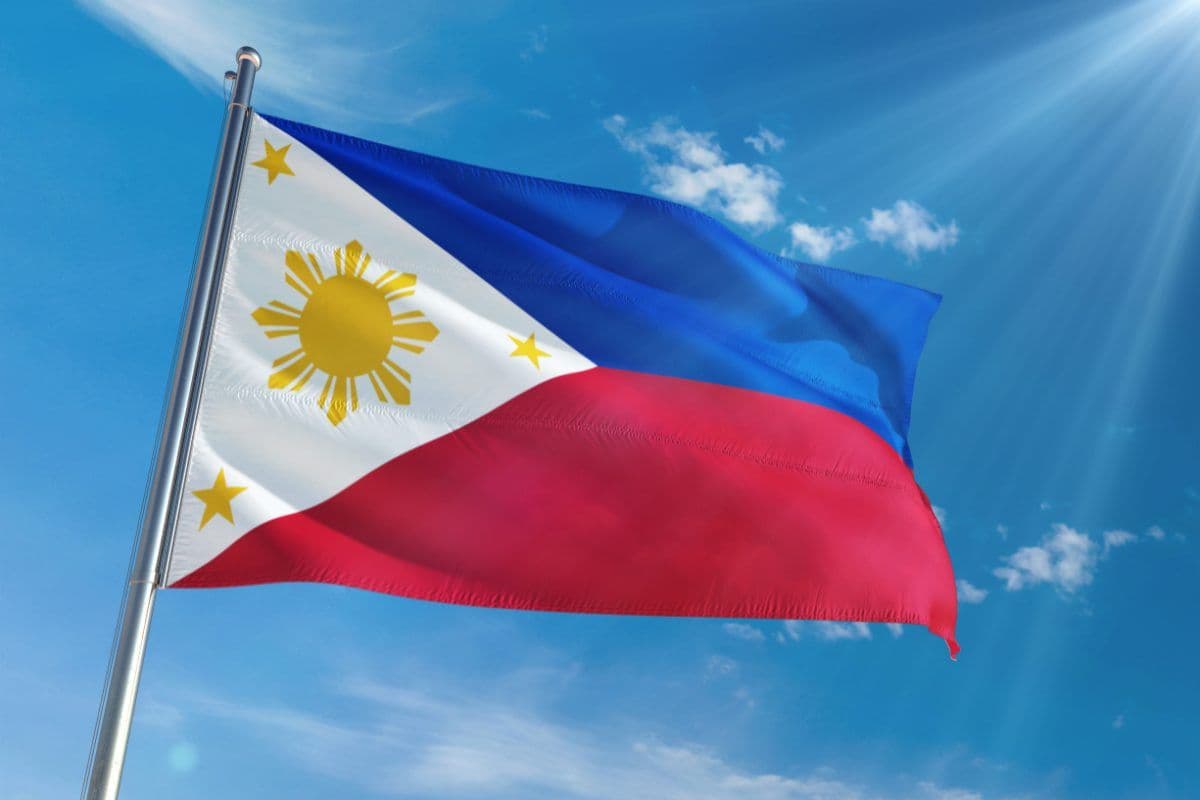
A UK insurer stands up a Manila operation. Two hundred people handling claims, then four hundred, in a tower inside an economic zone, with a local employer of record and a facilities provider who says compliance is covered.
Eighteen months later somebody asks to see the safety and health programme. Nobody has one, because nobody knew the Philippines requires a specific document, in a prescribed form, approved by a government department before it counts.
That is the structural difference, and it catches almost every British group. In the UK you decide what is adequate and justify it afterwards. In the Philippines the content of your programme is listed in a statute, the government reviews it, and the penalty for willful non-compliance accrues daily until you fix it.
Here are fifteen duties under that regime, grouped the way they land: what must exist on paper, who must be appointed, what every worker receives, and what happens when none of it is there.
First, you are definitely covered
Section 2 of Republic Act No. 11058, the Occupational Safety and Health Standards Act, applies to all establishments and all places where work is undertaken, "in all branches of economic activity", and it names Philippine Economic Zone Authority establishments expressly. Only the public sector is outside it.
That matters because most UK-owned shared service centres, claims operations, legal support teams and software delivery units in the Philippines sit inside PEZA-registered zones, and the zone is routinely assumed to be a separate compliance world with its own rules. On occupational safety it is not.
What has to exist on paper
1. A safety and health programme with sixteen prescribed elements. Section 12 lists them, and it is a list rather than a theme. Among them: a statement of commitment to comply, general safety and health including a drug-free workplace, a prevention and control element covering HIV and AIDS, tuberculosis and hepatitis, company details, the composition and duties of the safety and health committee, safety and health personnel and facilities, promotion and training, the conduct of toolbox meetings, accident and illness investigation and reporting, provision and use of PPE, safety signage, dust control and the regulation of specified activities, welfare facilities, an emergency preparedness and response plan, a waste management system, and the prohibited acts with their penalties.
A British organisation reading that list will recognise perhaps nine of the sixteen from its own arrangements. The remainder are not optional extras.
2. Consultation, then submission to DOLE for approval. Section 12 requires the programme to be prepared and executed in consultation with the workers and their representatives, then submitted to the Department of Labor and Employment, which approves, disapproves or modifies it. Once approved it must be communicated and made readily available to everyone in the workplace.
This is the provision with no British analogue at all. Nobody approves a UK employer's arrangements, and the idea that a regulator might modify your programme before you operate it is genuinely foreign.
3. Accident investigation, recording and reporting, plus the returns. Investigation and reporting is element (i) of the programme, and section 17 separately requires employers to submit all safety and health reports and notifications that DOLE prescribes. A group running one global incident system usually finds it captures the event and produces none of the required local returns.
Who has to be appointed
Need Expert H&S Guidance?
Our qualified consultants can help you implement the right health & safety measures for your business.
4. Safety officers. Section 14 requires covered workplaces to have safety officers, whose statutory duties are to oversee the programme, frequently monitor and inspect the operation, assist government inspectors during inspections and accident investigations, and issue work stoppage orders when necessary. The number and qualification are proportionate to the workforce, the equipment, the size of the work area and other criteria DOLE sets.
Note the fourth duty. A safety officer in the Philippines holds a stop-work power as part of the role, which is a different proposition from a UK adviser who recommends.
5. A safety and health committee, with its membership specified. Section 13 prescribes who sits on it: the employer or representative as chairperson ex officio, the safety officer as secretary, safety officers representing any contractor or subcontractor as members, physicians, nurses, certified first-aiders and dentists as ex officio members where applicable, and workers' representatives drawn from the union where the workforce is organised or elected by simple majority vote where it is not. The committee plans, develops, oversees and monitors the programme.
Compare that with the UK, where a committee is compelled only on the written request of two union-appointed safety representatives, and a non-unionised firm of any size need never have one. The Philippines mandates the body and names its members.
6. Occupational health personnel and facilities. Section 15 requires qualified occupational health personnel including physicians, nurses, certified first-aiders and dentists, with medical supplies, equipment and facilities, in numbers proportionate to the workforce and the risk, at ratios DOLE prescribes. The dentist surprises everybody, but it is in the statute, and for a large site it is a real staffing line.
7. Workers' representatives, properly elected. Where the workforce is unorganised, the committee's worker members come from a simple majority vote. An employer that appoints its own representatives has not satisfied section 13, and an inspection notices quickly, because the election either left a record or did not.
What every worker receives
8. The mandatory eight-hour seminar. Section 16(b) requires all workers to undergo an eight-hour safety and health seminar prescribed by DOLE, including a portion of joint employer-employee orientation. Every worker, which in an office means every analyst, team leader and new starter, with no low-hazard exemption. This is the most frequently missed duty in the whole regime for office operations, because UK groups substitute their own induction and assume equivalence.
9. Mandatory training for the safety personnel themselves. Section 16(a) requires all safety and health personnel to undergo the prescribed basic occupational safety and health training for safety officers. A British qualification does not satisfy it, and neither does seniority.
10. Toolbox meetings as a programme element. Element (h) of section 12 puts toolbox meetings inside the approved programme. In a UK office they are a good idea. In a Philippine office they are a commitment the regulator has signed off, so missing records are a departure from an approved programme rather than a missed opportunity.
11. PPE, free of charge. Section 8 requires protective equipment free of charge where the work process or environment makes it necessary. For an office this is a narrow duty, but it is not nil once you count cleaning, maintenance and any laboratory or workshop space on a campus-style site.
12. Safety signage people can actually read. Section 9 requires signage and devices posted in prominent and strategic positions "in a language understandable to all", to the standard DOLE sets. English-only signage in a multilingual workforce is a defect on its face, and one of the fastest things an inspector forms a view on.
13. Welfare facilities. Section 19 requires an adequate supply of safe drinking water, adequate sanitary and washing facilities, suitable living accommodation where applicable, and separate sanitary, washing and sleeping facilities for men and women where applicable. The sleeping limb reads oddly to a UK office manager until you remember that night shift working is the norm in the sector.
What happens if none of it exists
14. Liability runs along the whole chain. Section 21 makes the employer, project owner, general contractor, contractor or subcontractor, and any person who manages, controls or supervises the work, jointly and solidarily liable for compliance. An employer of record arrangement does not move the duty away from the organisation that controls the work, which is the assumption most often made and least often tested.
15. Daily fines, and a separate penalty for obstruction. Section 28 makes willful failure or refusal to comply with OSH standards or a compliance order punishable by an administrative fine of up to ₱100,000 per day until the violation is corrected, running from notification or service of the order, with the maximum reserved for violations exposing workers to risk of death or serious injury. A separate fine of up to ₱100,000 applies to acts that aid or conceal non-compliance: repeated obstruction or refusal of access to the workplace or records, misrepresentation in reports to DOLE known to be false, and retaliation against workers who gave information during an inspection. None of it prejudices criminal or civil proceedings.
Section 22 completes the picture: the Secretary of Labor and Employment or authorised representatives may enter workplaces at any time of the day or night to examine records, and conduct an annual spot audit on compliance.
The fifteen at a glance
| Group | Duties | The one most often missing |
|---|---|---|
| On paper | Programme with sixteen elements, DOLE approval, reports and investigation records | The approval itself. An unsubmitted programme is not a programme |
| Appointments | Safety officers, committee with prescribed membership, health personnel, elected worker reps | A properly elected worker representative rather than an appointed one |
| Every worker | Eight-hour seminar, safety officer training, toolbox meetings, free PPE, readable signage, welfare facilities | The eight-hour seminar, substituted with a group induction |
| Enforcement | Chain liability, daily fines, obstruction penalties, visitorial power | The assumption that an employer of record absorbed the duty |
Holding an approved programme, a committee roster, seminar completion per head and the prescribed returns for one country, while running fourteen other regimes that ask for different artefacts, is where health and safety consultants and software are worth considerably more in combination than either alone. Periodic health and safety audits should then test the Philippine entity against RA 11058 rather than the group standard, and the first question to ask is simply whether the programme was ever submitted.
Why the UK approach does not transfer
The contrast is not about strictness. It is about where discretion sits.
Section 2 of the Health and Safety at Work etc. Act 1974 imposes a general duty so far as is reasonably practicable, and regulation 3 of the Management of Health and Safety at Work Regulations 1999 requires a suitable and sufficient risk assessment. Both leave the method, the format and the staffing to the employer, who must defend the result. British groups are fluent in that model and build global frameworks in its image.
Applied to Manila, that framework produces a sensible set of arrangements that satisfies none of fifteen specific requirements. The programme exists but was never submitted. The committee exists but its membership does not match section 13. Induction exists but is not the eight-hour seminar. The gap is not quality. It is form, and form is what gets inspected.
The pattern that works across the region is the one our note on APAC and global finance firms sets out: a single methodology for identifying risk, with the local instrument, appointment, training and submission attached per country. Singapore, Malaysia and Japan each demand something different again, and the ILO's framework of international labour standards explains the shared vocabulary without harmonising any of the paperwork.
Where Arinite fits
Arinite has spent 15+ years producing the document each country actually requires rather than translating a British one, which in the Philippines is the difference between an approved programme and a file nobody has read. We support 1,500+ businesses in 50+ countries and protect 100,000+ employees, with 95%+ client retention. Our health and safety consultants work extensively with insurance, legal, IT and software and office-based clients, which is precisely the profile of UK operations in Manila and Cebu.
Our global health and safety consultants work with locally qualified practitioners to prepare and submit the programme, and our international health and safety consultants can tell you which of your entities is relying on a provider's assurance rather than a document. Our Philippines page sets out how we support groups operating there, and where delivery is outsourced our note on outsourced facilities management covers which duties stay with you regardless.
Ask your Manila operation one question this week: has our safety and health programme been submitted to DOLE, and do we have the approval. Then book a free gap analysis and we will tell you in one call how many of the fifteen are genuinely in place.
Related Articles
Written by
Arinite Health & Safety Consultants
Health & Safety Expert at Arinite