Health and Safety in Kuwait: 11 Duties for a Kuwait City Office
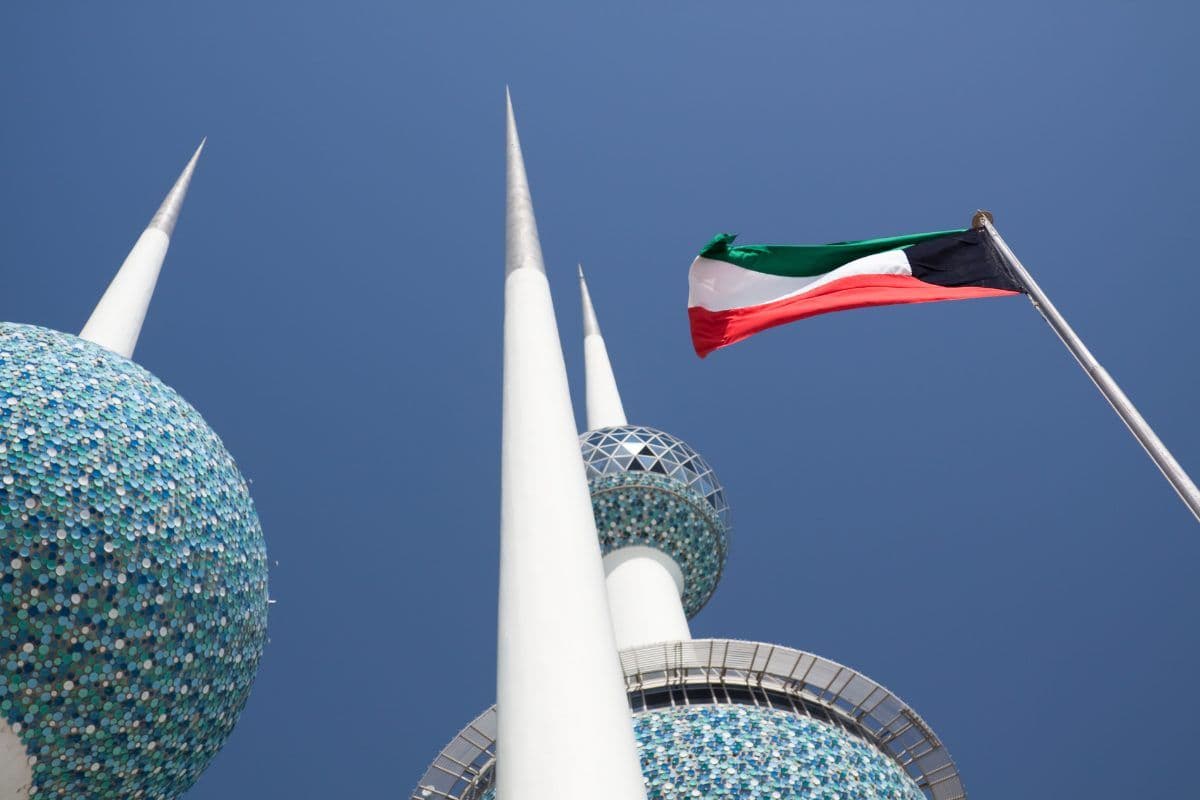
Kuwait City hosts a substantial banking and investment sector alongside the professional and technology functions that support it, and a significant share of that activity sits in foreign-owned entities.
Those entities are typically governed to a high standard on financial regulation and have rarely examined the labour side. Kuwait's occupational safety provisions sit inside its private sector Labour Law rather than in a standalone statute, and one of them captures a category of accident that most international incident processes ignore completely.
Eleven duties.
A note on sources before starting. English renderings of the Law number its safety articles inconsistently, so this article describes the duties rather than assigning article numbers to them. Confirm the specific provisions applicable to your entity through Kuwaiti advice.
1. The framework sits in the Labour Law, enforced by the manpower authority
Kuwait's principal instrument is Law No. 6 of 2010 on Labour in the Private Sector, which contains a chapter on safety and occupational hygiene. Enforcement sits with the Public Authority for Manpower, supported by ministerial decisions that carry the operative detail.
As across the Gulf, reading the Law alone will not tell you what to do. The ministerial decisions matter, and they are amended. The ILO publishes regional material for the Arab States useful for orientation, alongside the international standards many national frameworks measure themselves against.
2. The general duty: safe environment, equipment, training
The employer must maintain a safe working environment and adhere to the applicable safety standards, provide the necessary safety equipment, conduct regular safety training, and implement measures to prevent workplace accidents and occupational diseases.
Recognisable in substance, and expressed as specific provisions rather than as a general duty qualified by reasonable practicability. That difference matters for how a foreign parent should read it: these are things to be done rather than judgements to be made.
3. Explaining the risks and the means of protection
Need Expert H&S Guidance?
Our qualified consultants can help you implement the right health & safety measures for your business.
A distinct obligation within the safety chapter: the employer must explain to workers the risks of the job and the means of protection against them, before they begin work.
This is the informational counterpart to training, and it is the provision a Kuwaiti inspector can test simply by asking a worker. A group induction delivered in English to an Arabic-speaking workforce does not discharge a duty framed in terms of explanation.
4. Two separate files
An administrative requirement that is easy to satisfy and easy to omit.
The Law provides for a file to be kept for each worker containing the related documents, and separately for a file of safety records.
Two files, two purposes. Most foreign-owned entities maintain personnel files and have never established the second.
5. Internal work regulations
The Law provides for internal regulations governing the work system within the establishment.
For a group operating a global handbook, the question is whether a Kuwait-specific set exists in the form the Law contemplates. This is the same pattern seen in Qatar and Bahrain, where establishment-level documents are expected rather than group ones.
6. Insurance against work injuries and occupational diseases
Subject to the social security law, the employer must provide insurance coverage for its workers, from insurance companies, against work injuries and occupational diseases.
As in Germany, South Africa, Argentina, the Philippines and Saudi Arabia, this is a statutory requirement rather than a commercial policy of the British kind. A group that has arranged employers' liability cover elsewhere and assumed it travels should confirm the Kuwaiti position.
7. Accidents on the way to and from work are reportable
The provision that distinguishes Kuwait, and the one to build into your incident process immediately.
Where a worker suffers an injury in an accident that took place by cause of or during the work, or while on the way to work or back from work, the employer must report the accident immediately upon its occurrence, or as soon as the employer becomes aware of it.
Read that carefully. The commute is inside the reporting obligation. For an organisation whose incident process is built around events on premises, that is an entire category it is not capturing, and it is not a marginal one: road traffic accidents involving commuting staff are the most likely serious incident in an office-based operation anywhere.
Israel takes the same approach, and it is worth knowing which of your entities do.
8. Reporting is immediate, and the worker may report too
Two features of the reporting provision worth separating.
The obligation is expressed as immediate rather than as a period of days. An international escalation process that routes through a regional office before anyone notifies a local authority will not meet it.
And the Law allows the worker to report the accident where their condition permits, or for somebody to report on their behalf. Your entity may therefore find that a matter has been reported before it acted, which is a further reason to have the route established.
9. The employer bears the cost of treatment
Without prejudice to the health insurance legislation covering expatriates, the employer bears the expenses of treating the injured worker for work injuries and occupational diseases, at a governmental hospital or a private clinic determined by the employer, including the value of medicine and transport expenses.
The attending doctor determines the treatment period, the percentage of disability resulting from the injury, and the extent to which the worker is able to continue.
This is a direct financial obligation on the employer rather than a matter routed entirely through insurance, and the entity should know in advance which facility it would use.
10. Periodic injury statistics
Separately from individual incident reporting, the Law provides for periodical reporting on work injury statistics.
Establish who compiles that return and on what cycle, alongside the separate annual obligation to inform the competent authority of the number of employees.
11. Hours, overtime and the summer restriction
Three time-related provisions.
Overtime requires a written order and is permitted where necessary to prevent a dangerous accident, repair damage arising from one, avoid a loss, or meet an unusual workload. It is capped at two hours a day, three days a week, and defined annual limits, with a premium on the additional hours.
A ministerial resolution may reduce working hours in hard or harmful jobs, or in severe circumstances.
And Kuwait operates a summer restriction on outdoor work during the hottest part of the day. Reported hours and dates differ between sources and have been amended, so confirm the current position locally. As in Qatar, Saudi Arabia, the United Arab Emirates and Bahrain, an office-based firm is right that this does not reach its analysts and wrong if it concludes it reaches nobody: security personnel, drivers, facilities staff and couriers are within it, whether engaged directly or through a provider.
What a Kuwait City entity needs
| Duty | Requirement | Common position |
|---|---|---|
| Framework | Law plus ministerial decisions | Law read alone |
| General duty | Environment, equipment, training | Group standard assumed |
| Explaining risks | Before work begins, comprehensibly | English induction only |
| Files | Worker file and safety records file | Personnel file only |
| Internal regulations | Establishment level | Global handbook |
| Insurance | Statutory requirement | Group policy assumed |
| Commuting accidents | Reportable | Category not captured |
| Immediacy | Report at once | Routed through a region |
| Treatment costs | Borne by the employer | Assumed insured |
| Injury statistics | Periodic return | Owner unassigned |
| Hours and heat | Caps, premium, seasonal restriction | Global policy applied |
Rows seven and eight are where to start, because they attach to events and your process needs to recognise them before one happens.
The Gulf, at five
Kuwait completes the Gulf jurisdictions covered in this series, and the set makes a consistent point.
Saudi Arabia embeds employer obligations in its Labour Law and requires safety instructions in Arabic. The United Arab Emirates operates its own framework, with free zones raising a separate question about which regime applies. Qatar exempts sectors governed by separate legislation, so a firm in its financial centre may sit outside the general Labour Law entirely, and ties its heat regime to a measured index. Bahrain scales the appointment requirement by risk and area rather than headcount, and makes vehicle accidents on site reportable. Kuwait brings the commute inside the reporting obligation and places treatment costs directly on the employer.
Five countries, five architectures, and one lesson repeated: financial centres, free zones and sector-specific regimes change which rules apply. A group treating the Gulf as one compliance territory will be wrong in at least one entity.
What travels is the methodology, the register and the review cycle. What does not travel is the reportable category, the filing or the seasonal restriction. Holding one group view while each entity meets its own national test is where health and safety consultants and software are worth more together than either alone, and periodic health and safety audits confirm each entity is working to the framework that actually governs it.
Where Arinite fits
Arinite coordinates locally qualified practitioners across the Gulf, so Kuwaiti obligations are established under Kuwaiti requirements while your group keeps one point of contact across every country. We support 1,500+ businesses across 50+ countries and protect 100,000+ employees, with 95%+ client retention over 15+ years. Our health and safety consultants work extensively with finance and banking, insurance and professional services organisations, which describes most of the international presence in Kuwait City.
Our global health and safety consultants handle the regional jurisdictions that accompany a Kuwaiti entity, and our international health and safety consultants can establish what is outstanding locally. A worker-facing guide to rights in the private and oil sectors is published by the Kuwait Society for Human Rights.
If one of your Kuwait City staff had a road accident on the way to work last year and nobody reported it, a free gap analysis is the right place to start.
Related Articles
Written by
Arinite Health & Safety Consultants
Health & Safety Expert at Arinite