COSHH Symbols: A Field Guide to the 9 Hazard Pictograms and What Each One Demands
Everyone calls them COSHH symbols, so let us start there and then be precise. The red-bordered diamonds on chemical containers are officially hazard pictograms, set by the classification and labelling rules that implement the UN's globally harmonised system, GHS, which is why the same nine symbols appear on products from Birmingham to Berlin to Bangkok. COSHH is the UK regulation that tells employers what to do about the hazards those symbols announce, so "COSHH symbols" is technically shorthand, but it is universal shorthand, and this guide answers the question people are actually asking: what does each diamond mean, and what should a workplace do when it sees one?
Treat this as a field guide: nine pictograms, each with what it depicts, what it is telling you, where you will meet it, and the workplace response it demands. The HSE's official pictogram guidance is the authoritative reference, and everything below feeds the practical duty that follows: assessing and controlling the substance under COSHH.
1. The flame: flammable
What it depicts: an open flame. What it tells you: the substance catches fire easily, whether a flammable liquid or its vapour, a gas, an aerosol or a solid. Where you will meet it: solvents, cleaning products, adhesives, aerosols, fuels and alcohol-based products, which makes it one of the most common diamonds in ordinary workplaces.
The response: control ignition sources, store away from heat and oxidisers in suitable quantities, ventilate where vapours can build, and make sure your fire risk assessment knows these products exist. Flammables stored casually in cupboards are one of the most frequent findings in workplace inspections.
2. The flame over a circle: oxidising
What it depicts: a flame burning above a circle. What it tells you: the substance is an oxidiser, it will not necessarily burn itself, but it intensifies fire in anything that does, feeding flames with oxygen. Where you will meet it: certain disinfectants and bleaching agents, peroxides, and some water treatment chemicals.
The response: the cardinal rule is separation, keep oxidisers away from flammables and combustibles, because the pairing is what turns an incident into a serious fire. Storage segregation is the control that matters most, and it is exactly the kind of detail a proper COSHH assessment specifies.
3. The exploding bomb: explosive
Need Expert H&S Guidance?
Our qualified consultants can help you implement the right health & safety measures for your business.
What it depicts: a detonating sphere. What it tells you: the substance or mixture can explode, from self-reactive materials to organic peroxides in their more dangerous forms. Where you will meet it: rarely in ordinary workplaces, more in specialist industrial, laboratory and pyrotechnic contexts.
The response: this diamond means specialist territory. Handling, storage quantities and conditions are tightly prescribed, and if your business encounters it without specialist competence in-house, that is the moment to bring in expert help rather than improvise.
4. The gas cylinder: gas under pressure
What it depicts: a gas cylinder. What it tells you: the container holds gas under pressure, compressed, liquefied or dissolved, which can explode if heated or rupture if damaged, and refrigerated gases can cause cold burns. Where you will meet it: welding gases, CO2 cylinders in hospitality, medical and laboratory gases, refrigerants.
The response: secure cylinders upright, protect valves, store away from heat, and remember the hazard is physical as much as chemical: a toppled cylinder with a sheared valve is a projectile. Handling training for anyone moving cylinders is not optional.
5. The corrosion symbol: corrosive
What it depicts: liquid dripping onto a hand and a surface, eating into both. What it tells you: the substance destroys living tissue and materials on contact, causing severe burns and eye damage. Where you will meet it: strong cleaning agents, drain cleaners, descalers, acids and caustics, common far beyond industrial settings, especially in cleaning cupboards.
The response: this is the diamond that demands personal protection done properly: the right gloves and eye protection, safe decanting practices, and immediate access to washing facilities. Eye damage from splashed corrosives is among the most preventable serious injuries in workplaces, and the prevention is rigour, not luck.
6. The skull and crossbones: acute toxicity
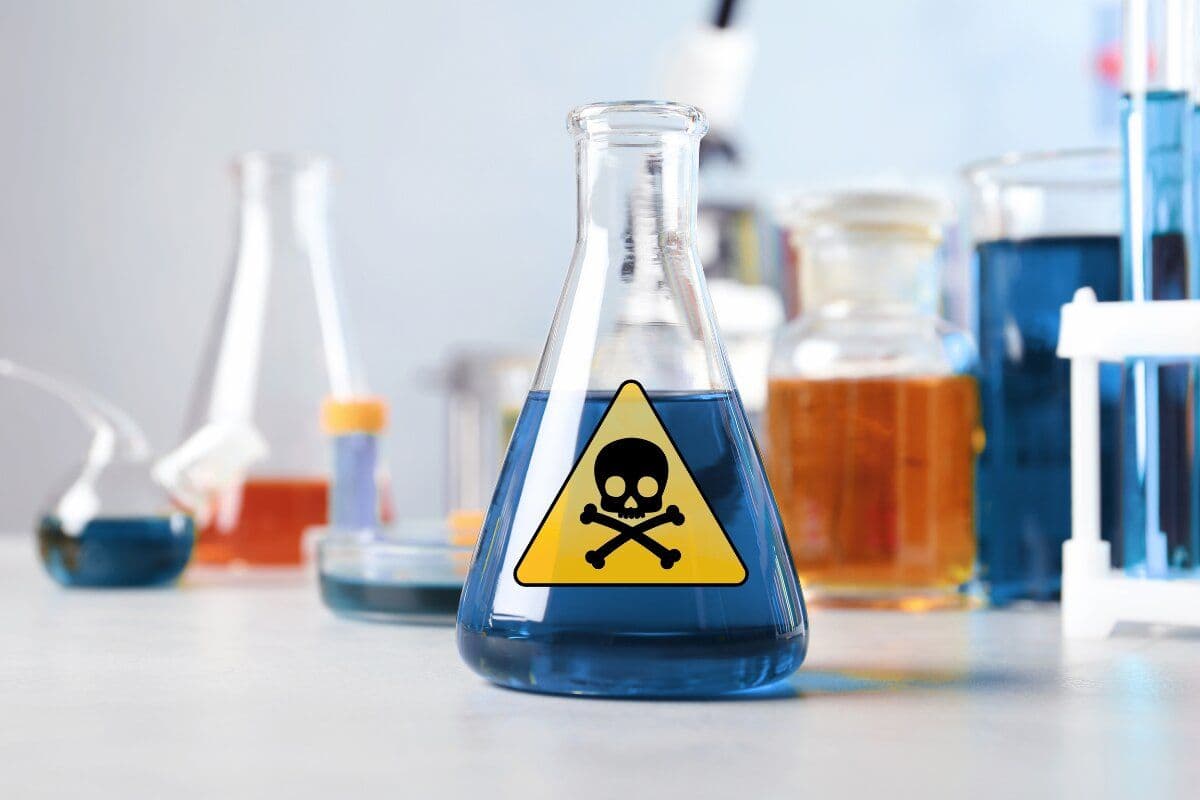
What it depicts: the classic skull over crossed bones. What it tells you: the substance can kill or seriously harm at low doses, by swallowing, skin contact or inhalation, and quickly. Where you will meet it: certain pesticides, laboratory reagents and industrial chemicals, not everyday products, and its rarity is exactly why it must never be normalised.
The response: strict control of access and quantities, sealed handling and storage, specific training for anyone using it, and emergency procedures that assume exposure is a medical emergency, because it is. If this symbol enters your workplace, your COSHH assessment for it should be among your most detailed documents.
7. The exclamation mark: harmful and irritant
What it depicts: a bold exclamation mark. What it tells you: a spread of lower-severity but genuinely harmful effects, skin and eye irritation, harmful if swallowed or inhaled, allergic skin reactions, drowsiness. Where you will meet it: everywhere, this is the most common pictogram in ordinary workplaces, on cleaning products, paints, adhesives and countless consumer-grade chemicals.
The response: the danger of this diamond is familiarity. Because it marks the mildest category, workplaces stop seeing it, yet dermatitis from repeated contact with irritants is one of the most widespread occupational health problems there is. Gloves, ventilation and sensible handling, consistently applied, are the entire game.
8. The health hazard silhouette: serious long-term harm
What it depicts: a human silhouette with a starburst across the chest. What it tells you: the most quietly serious diamond of the nine, chronic and severe effects including cancer, respiratory sensitisation, organ damage from repeated exposure, and harm to fertility. Where you will meet it: certain solvents, some resins and hardeners, silica-containing products and other materials whose harm arrives years after the exposure.
The response: this pictogram is the strongest argument for the hierarchy of control: substitute the substance if you possibly can, enclose and extract if you cannot, and treat protective equipment as the last layer, not the plan. Health surveillance may be required, and exposure records matter for decades. If one symbol justifies expert help with your assessments, it is this one.
9. The dead tree and fish: environmental hazard
What it depicts: a dead tree beside a dead fish. What it tells you: the substance is toxic to aquatic life, with lasting effects. Where you will meet it: certain cleaning concentrates, pesticides, oils and industrial chemicals.
The response: storage and disposal are the battleground: bunded storage where spills could reach drains, spill kits that staff can actually use, and disposal through proper routes rather than the sink. Environmental incidents carry their own enforcement regime, and prevention is dramatically cheaper.
From reading the label to running the system
Recognising the nine diamonds is the start, not the destination. The legal duty they trigger is COSHH: identifying every hazardous substance in the workplace, assessing who could be exposed and how, and controlling the risk at the most effective level, and our guides to what COSHH stands for and the COSHH assessment itself take the duty from here, alongside our COSHH support.
At scale the challenge changes shape: an inventory of hundreds of substances across multiple sites, each with its assessment, safety data sheet and controls, current and provable for any health and safety audit, is a system, and it is precisely where consultants and software work together, with qualified health and safety consultants making the assessments right and the platform keeping every substance, sheet and review date visible. And because the pictograms are global while the regulations wearing them are local, COSHH in the UK and its equivalents elsewhere, international health and safety consultants keep one world-class standard running through every jurisdiction, aligned with frameworks such as ISO 45001.
Where Arinite fits
Arinite has spent 15+ years helping businesses turn the chemicals in their cupboards and processes into managed, documented, defensible systems. We support 1,500+ businesses across 50+ countries and have helped protect 100,000+ employees, with a 95% client retention rate. As global health and safety consultants, we combine expert COSHH assessment with software that keeps every substance and every site visible.
If reading the nine diamonds made you wonder what is actually sitting in your own storerooms, that is the right instinct. Our free gap analysis reviews your arrangements, hazardous substances included, and tells you plainly where you stand. Book your free gap analysis and know exactly what your labels are telling you.
Written by
Arinite Health & Safety Consultants
Health & Safety Expert at Arinite