The Accident Book: 7 Things Employers Get Wrong
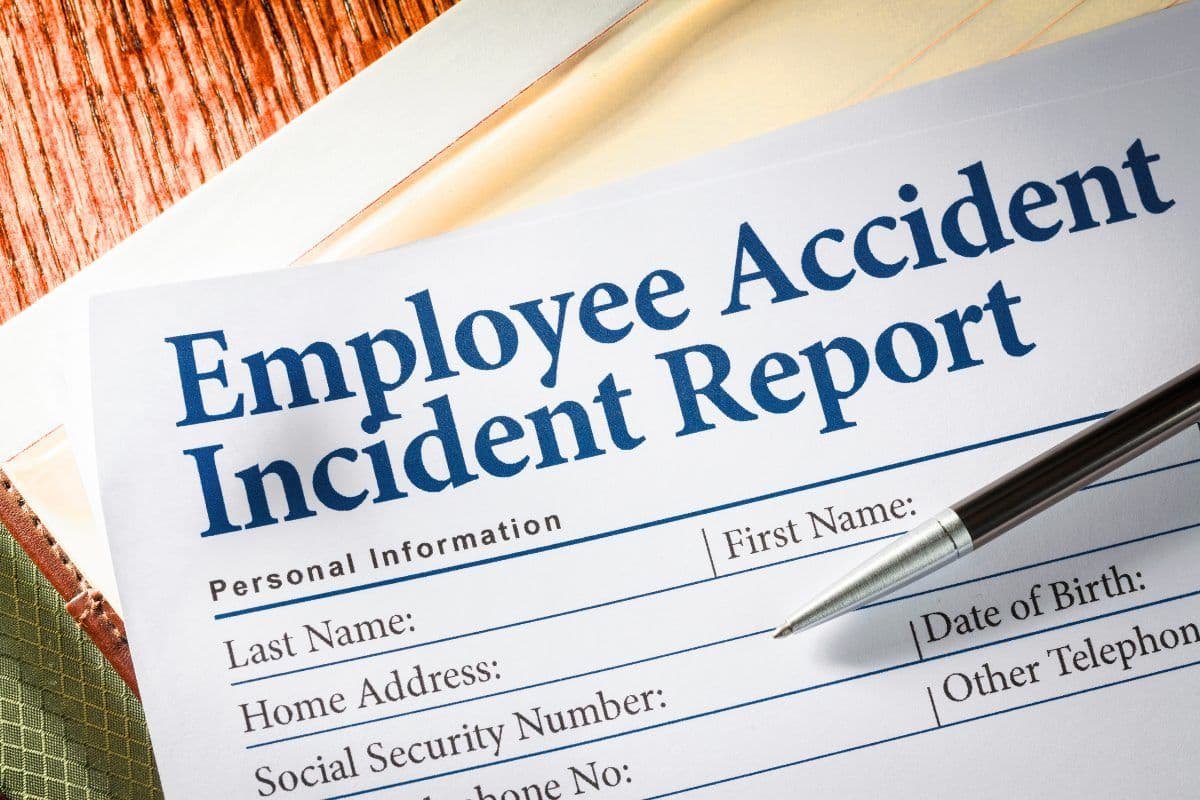
The accident book is the most familiar object in workplace health and safety and one of the least understood. Most organisations have one, most people assume it is a fire safety or health and safety requirement, and most of the books in circulation are being used in a way that would not withstand examination.
The confusion starts with the legal basis, which is not where people expect, and runs through to data protection, where a well-meaning arrangement can create a problem the book was redesigned to solve.
Seven things employers get wrong.
1. The legal basis is social security law, not health and safety law
The point that explains most of the rest.
The requirement to keep a record of accidents comes from the Social Security (Claims and Payments) Regulations 1979. Regulation 24 requires an employee who suffers an accident for which benefit may be payable to give notice of it, and regulation 25 places obligations on employers in relation to those records, including keeping the record readily accessible and preserving it.
The purpose is to support an injured person's ability to claim industrial injuries benefit later, sometimes years later. That is why the record exists, why it must be preserved, and why it is the employee's account rather than the employer's conclusion.
Understanding this changes how you treat the book. It is not primarily a management tool. It is evidence for somebody else's future claim, and your obligation is to enable it.
2. It is not the same thing as RIDDOR reporting
Two separate obligations, routinely conflated, with different triggers.
Recording an accident in the book is one thing. Reporting a qualifying event to the regulator under RIDDOR is another, with its own defined categories and short timeframes. HSE sets out the reportable categories.
The practical consequences run in both directions. Many recorded accidents are not reportable, and treating the book entry as discharging your reporting duty means missing deadlines. And a reportable event still needs recording, so a report filed without a book entry leaves a gap in the record the person may later rely on.
There is also a third obligation. RIDDOR itself requires records of reportable events to be kept under regulation 12, which is separate again from the accident book.
3. The old-style book was withdrawn for a data protection reason
Need Expert H&S Guidance?
Our qualified consultants can help you implement the right health & safety measures for your business.
The change many organisations never registered, and some still have the old format in use.
Traditional accident books were bound volumes in which each entry remained visible to whoever opened the book next. That arrangement disclosed one person's health information, and often their home address, to every subsequent user.
The current design uses removable pages, so that a completed entry is detached and stored securely rather than left in the book. If your book is a bound volume with visible historic entries, it should be replaced, and the historic entries should be secured rather than left on a shelf in a kitchen.
4. Accident records are special category data
The consequence of point three, stated properly.
An accident record contains information about an identified person's health, which falls within the special categories under data protection law. Processing it requires a condition in addition to a lawful basis, and the ICO's guidance on special category data sets out what those conditions are.
Three practical implications. Completed entries should be stored securely with access limited to those who need it. The book should not be left open on a reception desk or in a shared kitchen where entries can be read. And where you hold these records, employees should be told, which usually means the employee privacy notice needs a line about accident records that most notices do not contain.
5. Who fills it in, and what goes in it
More prescriptive than most people assume.
The entry is the injured person's account, and it may be completed by the injured person or by somebody acting on their behalf where they are unable to do it themselves. It records what happened, where, when, and who was involved.
What does not belong in it is the employer's view of cause, fault or blame. That analysis belongs in an investigation record, which is a separate document with a separate purpose. Mixing the two produces a record that is neither a clean account nor a proper investigation, and that reads badly if it is ever produced.
6. Retention is longer than most organisations assume
The requirement is to preserve the record, and the conventional period applied in practice is three years from the date of the last entry.
For records relating to young people, and for anything connected to a condition with a long latency, longer retention is commonly advised. Where a record relates to health surveillance under other regimes, retention periods can extend to decades.
The tension with data protection is real and it is resolved the same way as elsewhere: a retention schedule stating for each record type how long and why. Keeping accident records indefinitely because nobody decided otherwise satisfies neither obligation, and destroying them at an arbitrary point can leave an injured person without evidence for a claim your record was designed to support.
7. An electronic book is fine, if it is designed properly
Most organisations of any size now record electronically, which is entirely acceptable and frequently better.
Three conditions. The record must remain readily accessible, including to the person who made it and to anyone who needs it later. Access has to be controlled, so that entries are not visible to colleagues in the way the old bound book allowed. And the data has to survive: a system that is decommissioned in four years without migration will have destroyed records that were required to be preserved.
This is where health and safety consultants and software are worth more together than either alone, because the compliance question and the retention question are answered by the same system if it was specified with both in mind.
Quick check
| Item | Weak position | Position that holds |
|---|---|---|
| Legal basis | Assumed to be health and safety law | Understood as social security, preserved accordingly |
| RIDDOR | Book entry treated as the report | Separate assessment of reportability, separate record |
| Format | Bound book with visible entries | Removable pages or a controlled electronic system |
| Storage | On a shelf or reception desk | Secure, access limited to those who need it |
| Content | Employer's view of cause included | The person's account, investigation kept separate |
| Retention | Indefinite or arbitrary | Schedule stating period and reason |
| Transparency | Not mentioned to staff | Covered in the privacy notice |
Rows three and four are the ones to check this week, because they are visible, cheap to fix, and the kind of thing an inspector or a client auditor notices immediately.
For international groups
Accident recording is one of the more divergent areas internationally, and a group standard will not carry.
Reporting thresholds differ, notification routes differ, and several jurisdictions require records in prescribed forms rather than in whatever the group uses. Hungary treats accident investigation as a task reserved to a qualified specialist. Poland and Romania tie records to nationally structured formats. Japan and the Philippines require submissions to authorities on defined cycles rather than records held for inspection.
The workable pattern is one group register recording that an event occurred, with the nationally required artefact produced locally in the form that country demands. Periodic health and safety audits then confirm each entity's records are in the right form rather than merely present.
Where Arinite fits
Arinite sets up recording arrangements that work for the regulator, for data protection and for the person who may need the record in a decade. We support 1,500+ businesses across 50+ countries and protect 100,000+ employees, with 95%+ client retention over 15+ years. Our health and safety consultants work extensively with legal, finance and banking and professional services organisations, where information governance standards are already high and accident records are frequently the exception.
Where entities sit in several countries, our global health and safety consultants confirm what each jurisdiction requires to be recorded, reported and retained, and our international health and safety consultants keep that current.
If your accident book is a bound volume sitting where anyone can read it, a free gap analysis will identify what else is out of date alongside it.
Related Articles
Written by
Arinite Health & Safety Consultants
Health & Safety Expert at Arinite