Workplace Adjustments: 9 Points Where Safety and Adjustments Overlap

In most organisations, adjustments belong to HR and risk assessments belong to health and safety. The two functions rarely read each other's documents, and the people affected sit at the intersection.
That separation produces two failures that mirror each other. An adjustment that is genuinely a safety control gets handled as a discretionary accommodation, subject to negotiation and budget. And a safety measure that would resolve someone's difficulty never gets framed as an adjustment, so it is never provided.
The duties themselves overlap plainly. Regulation 3 of the Management of Health and Safety at Work Regulations 1999 requires assessment of the risks to employees, which means the employees you actually have. Section 20 of the Equality Act 2010 requires reasonable steps to avoid substantial disadvantage where a provision, criterion or practice, a physical feature, or the absence of an auxiliary aid puts a disabled person at that disadvantage.
Nine points where they meet.
1. The trigger is knowledge, not a formal request
The starting point, and it disposes of the most common defensive position.
The adjustments duty is engaged where the employer knows, or could reasonably be expected to know, that a person has a disability and is likely to be placed at a substantial disadvantage. Schedule 8 addresses the knowledge position, and section 6 defines disability as a physical or mental impairment with a substantial and long-term adverse effect on ability to carry out normal day-to-day activities.
"Could reasonably be expected to know" is the phrase that matters. An organisation whose managers have observed a pattern, or whose occupational health provider has reported something, or whose own records show repeated absence of a particular kind, cannot rely on never having received a written request.
Acas publishes practical guidance on reasonable adjustments, and HSE covers the safety dimension for disabled workers.
2. Evacuation is the clearest overlap, and the most serious
Where the two duties are indistinguishable in practice.
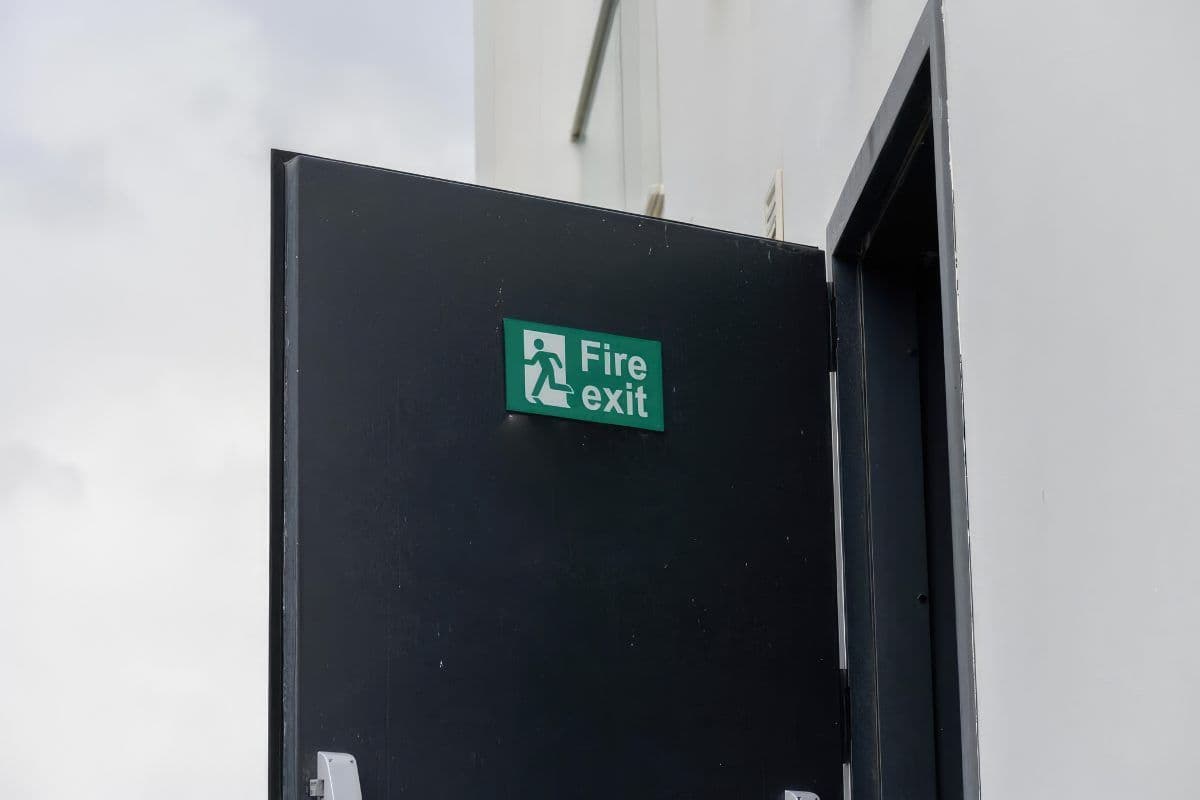
If a person cannot use the normal escape route unaided, that is simultaneously a risk requiring control and a physical feature placing them at a substantial disadvantage. A personal emergency evacuation plan is both a safety document and an adjustment.
Treating it as only one of those produces predictable gaps. Owned by health and safety alone, it addresses the building and not the person's actual working pattern. Owned by HR alone, it exists as an agreement with no operational arrangements behind it, and nobody on the floor knows what to do.
3. The physical environment is where most adjustments live
Need Expert H&S Guidance?
Our qualified consultants can help you implement the right health & safety measures for your business.
Screen setup, seating, lighting, temperature, noise and layout account for the majority of workplace adjustments, and every one of them is also a health and safety matter.
Display screen equipment assessment already produces recommendations for individuals; the adjustments duty may make some of them mandatory rather than advisable. Open-plan noise is a comfort issue for most people and a genuine barrier for someone with a hearing impairment or who is neurodivergent. Lighting affects everyone and affects some people substantially more.
The practical point is that your existing assessment processes are already generating adjustment candidates. Most organisations do not read them that way, so the findings sit in one system while requests are handled in another.
4. Organisational adjustments are safety controls too
The half that gets treated as purely an HR question.
Changes to hours, workload, breaks, meeting patterns, deadlines and how work is allocated are among the most effective adjustments available, and they are also exactly the controls a psychosocial risk assessment produces.
Several jurisdictions covered in this series regulate these conditions directly rather than treating them as discretionary. In those entities, an organisational adjustment is not a favour, it is a control measure with a legal frame around it.
5. Equipment provision, not paperwork
The point at which adjustments succeed or fail.
An assessment identifying a need, a request acknowledged, and an agreement recorded do nothing until the chair, the screen, the software or the arrangement actually exists. This is the same principle that applies to display screen equipment generally: provision changes outcomes, documentation records intentions.
Long procurement delays are a recurring failure. Where an adjustment is agreed and takes four months to arrive, the person has been at a substantial disadvantage for four months, and the record shows the organisation knew.
6. Adjustments have to travel to places you do not control
The gap that has grown with how people now work.
An adjustment implemented at a desk in your office does nothing at a client site, in a coworking space, on a business trip or at home. The person is the same, the barrier is the same, and the arrangement stops at the door.
Where equipment travels with the person rather than being fixed to a location, this largely resolves itself, which is another argument for issuing to individuals. Where the adjustment concerns the environment rather than equipment, it needs to be part of the conversation before someone is asked to work elsewhere.
7. Managers need the adjustment, not the diagnosis
The information governance point, and it determines whether people disclose at all.
Health information is special category data. The line manager needs to know what to do: what to change, for how long, and when to review. They do not need the diagnosis, and passing it to them without necessity is both a data protection problem and a reason the next person will not ask.
Structure the flow so that clinical detail stays with whoever holds occupational health or HR, and a written summary of the required adjustments reaches the manager. This is the same principle that applies to evacuation planning: those who act need to know what to do rather than why.
8. Adjustments decay, and nobody reviews them
The failure that appears eighteen months later.
Roles change, buildings are refitted, teams move floors, managers are replaced and equipment breaks. An adjustment agreed in one context quietly stops operating in another, and because it was recorded once and never revisited, everyone assumes it is still working.
Build review into the same cycle as risk assessment review. A move, a fit-out, a change of role or a change of manager should all trigger a check, and the check takes a conversation rather than a process.
9. The record has to outlive the individuals
The practical point that ties the rest together.
Adjustments are frequently agreed verbally between an employee and a sympathetic manager. When that manager leaves, the arrangement leaves with them, and the employee has to disclose again to someone new and argue for something they already had.
That is a poor experience and a legal exposure, because the organisation's knowledge does not reset when a manager changes. Holding adjustments, assessments and review dates in one place across every entity is where health and safety consultants and software are worth more together than either alone, and periodic health and safety audits test whether agreed arrangements are actually still in place.
Nine overlaps, and who usually owns them
| Point | Usually owned by | Should be joint |
|---|---|---|
| Knowledge trigger | HR | Both, since safety records show patterns |
| Evacuation | Split, badly | Both, with operational arrangements |
| Physical environment | Health and safety | Both, assessments feed adjustments |
| Organisational changes | HR | Both, they are psychosocial controls |
| Provision | Procurement | Whoever can make it arrive |
| Other locations | Nobody | Both, before someone is sent |
| Confidentiality | HR | Both, with a defined flow |
| Review | Nobody | Same cycle as assessment review |
| Records | The manager's memory | One durable register |
Two rows say "nobody", and those are the two that produce the complaints.
For international groups
Two considerations.
The legal framing differs substantially. Great Britain uses a reasonable adjustments duty under equality law running alongside health and safety duties. Other jurisdictions locate the same ground differently: some within employment protection, some within occupational health obligations, some within the general prevention duty. Several countries covered in this series require job adaptation or transfer to suitable work as an express employer obligation where health is affected, which is a stronger and more specific duty than the British formulation in some respects.
And accessibility of the premises is a separate question again, governed by building and accessibility law that varies widely and is not always aligned with what an employer can change in leased space.
A group standard describing how adjustments are requested, decided, provided and reviewed will transfer. The legal basis and the specific entitlements will not.
Where Arinite fits
Arinite works at the point where these two duties meet, which in most organisations is where neither function is looking. We support 1,500+ businesses across 50+ countries and protect 100,000+ employees, with 95%+ client retention over 15+ years. Our health and safety consultants work extensively with legal, finance and banking and IT and software organisations, where the environment is largely office-based and the barriers are correspondingly organisational and sensory rather than structural.
Where entities sit in several countries, our global health and safety consultants establish how each jurisdiction frames the duty, and our international health and safety consultants keep that current.
If an adjustment agreed two years ago would not survive a change of manager in your organisation, a free gap analysis will show you what else depends on somebody remembering.
Related Articles
Written by
Arinite Health & Safety Consultants
Health & Safety Expert at Arinite