Health and Safety in Morocco: 5 Duties for a Casablanca Office
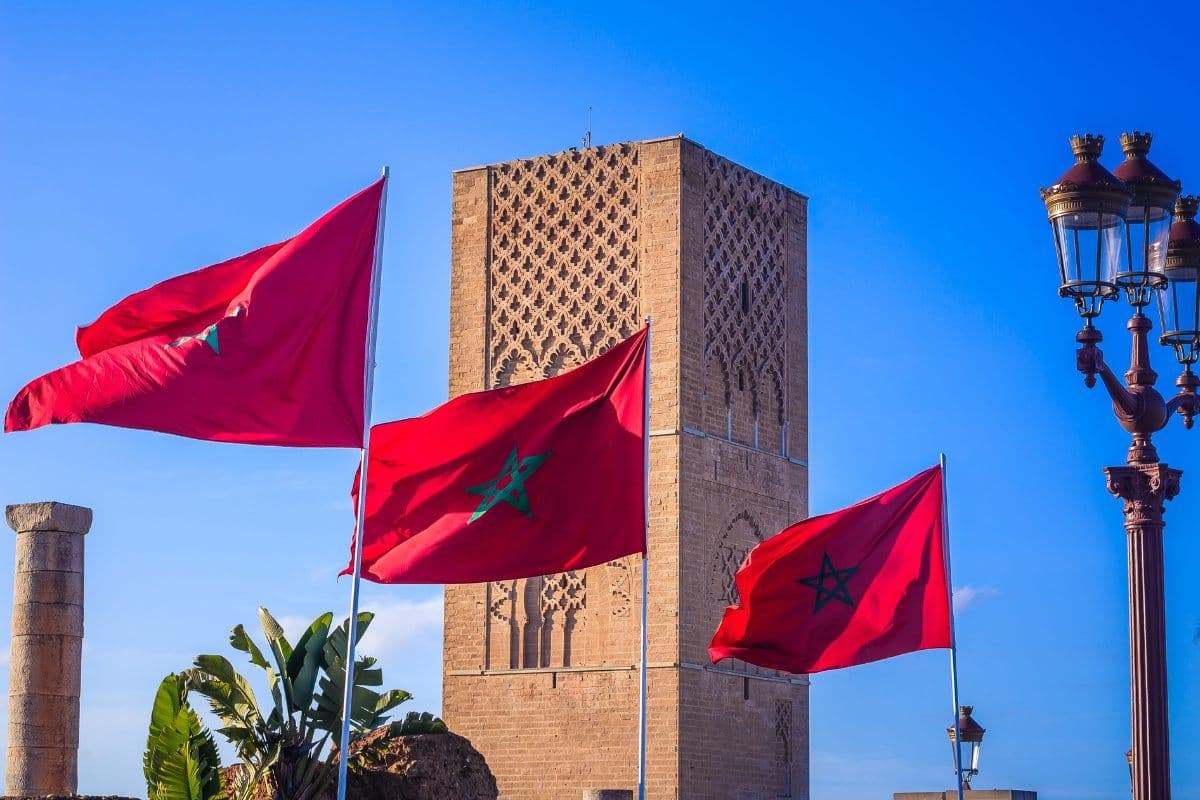
Casablanca has become two things at once for international business: a financial centre serving African and francophone markets, and one of the largest offshoring destinations outside Asia, with dedicated parks hosting customer service, finance processing and development work for European groups.
Both models produce the same compliance profile. A Moroccan entity, managed from Paris, Madrid or London, staffed by local employees, and operating on arrangements written somewhere else.
Morocco's framework is more prescriptive than that arrangement usually accounts for, and one of its obligations carries a fifteen day deadline that most foreign parents have never encountered.
Five duties.
1. The framework, and where it actually sits
Morocco's health and safety obligations sit inside the Labour Code, Law No. 65-99, promulgated in September 2003 and published in the Official Bulletin in 2004. There is no standalone safety statute in the British sense.
The relevant provisions occupy a defined block: general provisions on hygiene and safety, then the chapter on occupational medical services, then the chapter on safety and hygiene committees, with separate articles covering employees who are victims of workplace accidents or occupational disease. A ministerial order issued in 2008 sets out general and particular application measures for the general provisions.
The general duty itself will be recognisable. The employer must take the measures necessary to preserve the safety, health and dignity of employees, ensuring that workplaces present the hygiene conditions necessary for health and are arranged to guarantee safety, that machinery carries protective devices, that substances harmful to health are not used, and that employees are informed of the dangers and the precautions to take.
The ILO publishes the Code, and it is also available through WIPO Lex.
Note the inclusion of dignity alongside safety and health in the general duty. That is a broader formulation than the British equivalent and it provides a hook for the organisational and behavioural matters that dominate risk in an office.
2. An occupational medical service, from fifty employees
The obligation that will be unfamiliar to a British or American parent and entirely familiar to a French one.
Enterprises employing at least fifty employees must have an occupational medical service. Smaller enterprises may organise an inter-company service instead, which is the practical route for a representative office or a small advisory team.
The role of the occupational physician is expressly and exclusively preventive. It covers pre-employment medical examinations and periodic examinations, conducted at least annually, monitoring hygiene conditions in the workplace, proposing job transfers for employees found unfit for their post, and contributing to health education.
Two points for a group. The physician has technical independence guaranteed by law and protection against dismissal in the exercise of those functions, so this is not a supplier relationship you direct. And a fifty-person Casablanca operation crosses this threshold, which most offshoring centres do comfortably.
3. A safety and hygiene committee, from fifty employees
Need Expert H&S Guidance?
Our qualified consultants can help you implement the right health & safety measures for your business.
The second threshold, at the same headcount, and it is a functioning body rather than a formality.
Safety and hygiene committees must be created in enterprises employing at least fifty employees. The Code prescribes the composition, the missions, and the arrangements for meetings convened by the chair.
The committee's role is substantive: identifying occupational risks, alerting the enterprise to them, and participating in prevention. Moroccan academic commentary describes it as a genuine alert mechanism within the enterprise, which is a fair reading of what the provisions ask for. Guidance on the committee provisions is published by Moroccan legal sources.
An offshoring centre that has grown past fifty without constituting one has an unmet structural obligation, and it is the sort of thing an inspector establishes in a single question.
4. What the committee must produce, including a fifteen day deadline
The operational core, and the part most likely to be entirely absent.
Accident investigation. The committee investigates every workplace accident, occupational disease or disease of an occupational character. The investigation is conducted by two members, one representing the employer and one representing employees, who produce a report on the circumstances following a model set by the labour authority.
The fifteen day report. The employer must send a copy of that report to the labour inspector and to the medical labour inspector within fifteen days of the accident or of the finding of the disease. That is a hard deadline attaching to an event, and a foreign parent whose incident process routes everything through a group system will miss it.
An annual report on the evolution of occupational risks in the enterprise, produced by the committee at the end of each year.
An annual prevention programme against occupational risks.
A special register, held available to the labour inspectors and the medical labour inspector, recording the minutes of committee meetings in cases of serious accidents, the annual risk report and the annual prevention programme.
Read those together and the shape is clear: Morocco expects a documented annual cycle held locally and produced on demand, plus a rapid filing after any incident. Neither is satisfied by a group register in another country. Article-level references are set out by DRH.ma.
5. Accident cover sits outside the Code, and penalties sit inside it
Two closing points that are frequently conflated.
Workplace accidents and occupational diseases are governed by separate legislation rather than by the Labour Code, with compulsory employer accident insurance covering medical costs, daily indemnities and pensions for permanent incapacity. As in Germany, South Africa, Argentina and the Philippines, this is a statutory scheme rather than the commercial employers' liability policy a British group would arrange, and a group that assumes its home cover travels should confirm the Moroccan position.
Penalties for breaches of the hygiene and safety chapter are financial and, by international standards, modest. Confirm current figures locally rather than relying on any summary. The reason to comply is not principally the fine: it is that the committee, the medical service, the annual documents and the fifteen day report are all easily verified, and their absence is the first thing an inspection establishes.
What a Casablanca entity needs
| Duty | Trigger | Common position |
|---|---|---|
| General duty and premises | All employers | Group standard assumed sufficient |
| Occupational medical service | 50 employees, or inter-company below | Not engaged |
| Annual medical examinations | All covered employees | Not arranged |
| Safety and hygiene committee | 50 employees | Not constituted |
| Accident investigation | Every accident or occupational disease | Handled informally |
| Fifteen day report to inspectors | On every such event | Never filed |
| Annual report and prevention programme | Each year | Not produced |
| Special register | Held locally, available to inspectors | Records held abroad |
| Accident insurance | Statutory scheme | Assumed covered by group policy |
Rows two and four are the same threshold and should be settled together. Rows five to eight all follow from row four, because the committee is the body that produces them.
The francophone pattern
Morocco's system will be immediately recognisable to anyone who has dealt with France, and that similarity is useful and slightly dangerous.
Useful, because a group with a French entity already understands the shape: a preventive occupational medicine service, a committee at a headcount threshold, an annual prevention programme, and documents held locally for inspection. Dangerous, because the specifics differ, and a French document translated into a Moroccan context is the same error this series has found in every region.
The same applies more widely. Belgium requires an internal prevention service from the first employee. Luxembourg requires a designated employee. Greece requires a safety technician for every employer regardless of size. Tunisia and Algeria operate their own variants of the same broad model. Each is recognisable and none is interchangeable.
What travels is the methodology, the register and the review cycle. What does not travel is the artefact, the threshold or the deadline. Holding one group view while each entity meets its own national test is where health and safety consultants and software are worth more together than either alone, and periodic health and safety audits confirm the local documents exist in the form the local inspectorate expects.
Where Arinite fits
Arinite works with locally qualified practitioners in Morocco, so the medical service, the committee and the annual documents are established under Moroccan requirements, while your group keeps one point of contact across every country. We support 1,500+ businesses across 50+ countries and protect 100,000+ employees, with 95%+ client retention over 15+ years. Our health and safety consultants work extensively with finance and banking, IT and software and professional services organisations, which describes most foreign-owned headcount in Casablanca and Rabat.
Our global health and safety consultants handle the jurisdictions that usually accompany a Moroccan entity, and our international health and safety consultants can establish what is outstanding locally. The ILO publishes the international standards Morocco has ratified extensively.
If your Casablanca entity employs more than fifty people and has no safety and hygiene committee, a free gap analysis is the right place to start.
Related Articles
Written by
Arinite Health & Safety Consultants
Health & Safety Expert at Arinite