Health and Safety in Bulgaria: 9 Duties for a Sofia Office
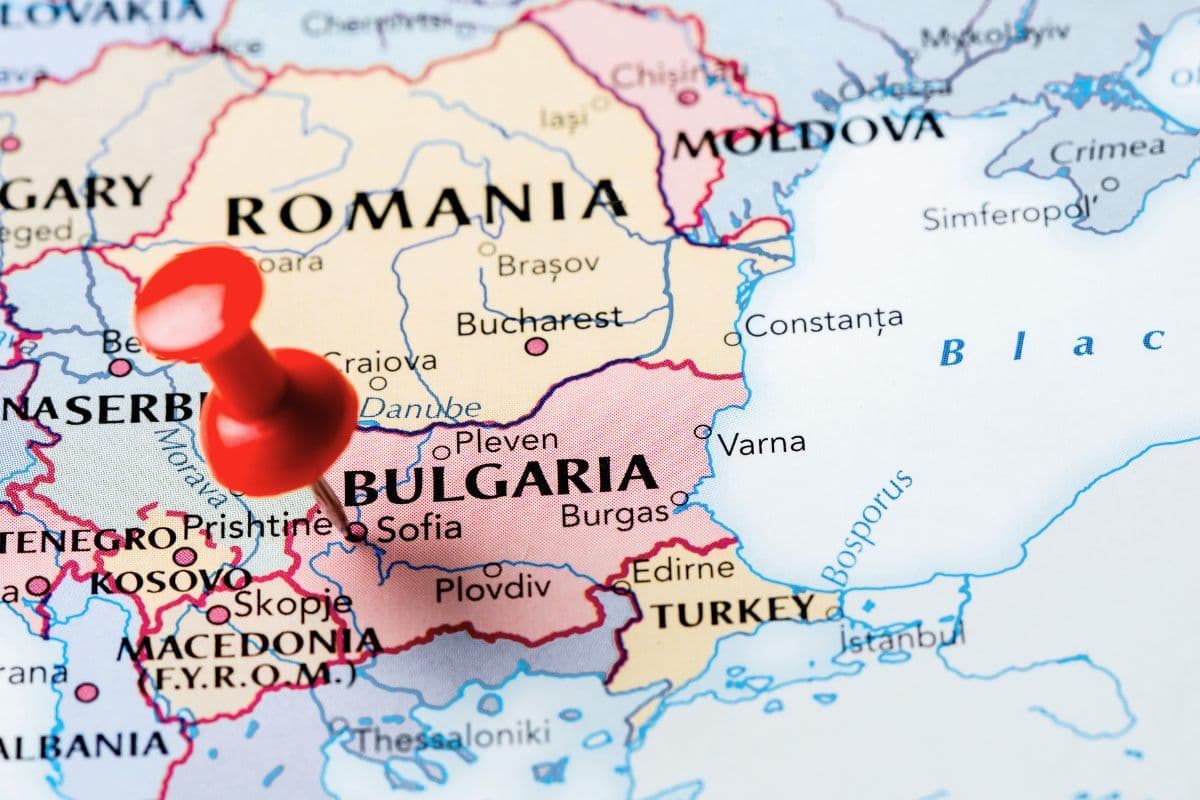
Sofia has become one of Europe's larger shared services locations. Finance operations, IT delivery, customer support and back-office processing for international groups, frequently several hundred people, and almost always managed as a delivery site rather than as an employer with its own statutory position.
Bulgaria's framework is more prescriptive than a foreign parent expects, and one of its obligations has a date attached. Every year, by the end of April, an employer files a declaration with the Labour Inspectorate describing its activity, its workforce, its working conditions and its risk factors. That filing exists whether or not anyone in the group knows about it.
Nine duties, and the first one attaches from your first employee.
1. A contract with a registered occupational medicine service
The obligation with no British equivalent, and no threshold.
Article 25 of the Health and Safety at Work Act requires employers to provide their workers with servicing by an occupational medicine service. These are preventive bodies that advise and support the employer, the working conditions committee and the working conditions group in planning and carrying out their duties.
An employer either establishes its own service, which almost nobody does, or contracts with one registered with the Ministry of Health. The requirement applies once the entity has any employed person, regardless of numbers and regardless of the office being low risk. The Ministry of Labour and Social Policy publishes an overview of occupational medical servicing.
For a group used to treating occupational health as a discretionary benefit, this is a contract that must exist from day one.
2. The annual declaration, due by 30 April
The item most likely to have been missed entirely, because nothing in a group compliance calendar prompts it.
Under article 15, employers must file an annual declaration with the territorial directorate of the Labour Inspectorate at their registered address, by 30 April of the following year. Filing opens on 1 January and can be done electronically.
There is also a separate obligation to declare within a short period on opening a business, or on changing the activity or the technology used. So a group establishing a Sofia entity, or materially changing what it does there, has a filing obligation at that point as well as annually.
The declaration itself is substantive. It covers location, the nature of the activity, headcount, working conditions, the hazards identified in the risk assessment, and the measures taken. Completing it honestly requires the rest of this list to exist.
3. A documented risk assessment
Need Expert H&S Guidance?
Our qualified consultants can help you implement the right health & safety measures for your business.
Required of every employer, with the content and method set out in subordinate regulation.
Occupational medicine services frequently carry out the assessment in practice, but that is a matter of contract rather than a statutory allocation, so if you want your service to do it the engagement needs to say so explicitly. A group that assumes its provider is producing the assessment, without having commissioned it, may find nobody has.
The Ministry publishes guidance on ensuring healthy and safe working conditions.
4. A committee above fifty, a group below
Article 27 requires a committee on working conditions in undertakings with more than fifty workers. Its size scales with headcount, and it comprises equal numbers of employer and worker representatives, chaired by the employer, with the occupational medicine service physician participating.
Smaller undertakings operate a working conditions group instead. Either way, worker representatives are chosen by the workforce, and the law protects them from being disadvantaged for acting in that capacity.
A Sofia delivery centre crosses fifty early, and the committee is expected to function rather than exist: it adopts its own rules and takes decisions the employer is bound by.
5. Annual training for committee members
An obligation that recurs and is therefore easy to let lapse.
Members of the committee or group require initial training and annual refresher training under the applicable regulation. This is a scheduling commitment rather than a one-off, and the absence of current training records is a straightforward finding for an inspector.
6. A structured instruction and training regime
Bulgarian practice runs on defined categories of instruction rather than on a general training duty.
The regulation distinguishes initial instruction, instruction at the workplace, periodic instruction, extraordinary instruction and, in some settings, daily instruction, each with its own trigger and its own record. A group induction module translated into Bulgarian does not map onto that structure, and the records an inspector expects are the prescribed ones.
7. A physiological work and rest regime
The requirement most likely to surprise a shared services operation, and the most relevant to what those operations actually do.
Article 12 requires the employer to develop a physiological work and rest regime where work involves high neuro-psychological load, an imposed rhythm, monotony, a forced working posture, a defined work rate, or shift working. The employer must prepare and maintain documentation establishing that such a regime exists.
Read that list against a back-office processing floor: imposed rhythm, monotony, defined work rate and shift working describe it directly. Most jurisdictions in this series address these conditions through general psychosocial duties. Bulgaria requires a specific documented regime, and its effectiveness is assessed by the occupational medicine service against physiological and health criteria.
8. Compulsory accident insurance for listed positions
Separate from the general framework and frequently overlooked.
Regulation requires compulsory insurance of workers against the risk of occupational accident for defined categories of position. On inspection the employer is expected to produce a list of the positions subject to it, together with evidence that the insurance has been arranged.
Establish whether any of your positions fall within the scope rather than assuming an office is outside it.
9. A written agreement where premises are shared
Article 18 requires that where two or more employers share a site, premises, workplaces or equipment, they agree in writing the measures for ensuring health and safety, mutually inform each other about the risks, and coordinate their protective activity.
For a Sofia entity in a serviced or multi-tenant building, that written agreement is a specific document rather than a general expectation, and it is one an inspector can ask to see. This is the Bulgarian expression of the shared workplace duty that appears across the European Union, and it is unusually explicit about the document.
What a Sofia entity needs
| Duty | Trigger | Common position |
|---|---|---|
| Occupational medicine service | From the first employee | No contract in place |
| Annual declaration | Every year by 30 April, plus on opening or change | Never filed |
| Risk assessment | All employers | Assumed to be the provider's job |
| Committee or group | Committee above 50, group below | Not constituted |
| Committee training | Initial and annual | Lapsed |
| Instruction regime | Prescribed categories and records | Group module translated |
| Physiological regime | High mental load, monotony, rhythm, shift work | Never produced |
| Accident insurance | Listed positions | Scope not checked |
| Shared premises agreement | Multi-tenant or serviced buildings | Not in writing |
Rows one and two are where to start. The first is a contract, the second is a deadline, and the declaration cannot be completed honestly unless most of the rest exists.
Financial penalties for failing to ensure healthy and safe working conditions run into the thousands of leva, with higher ranges for repeat findings within a year. Confirm current figures locally rather than relying on any summary.
The central and eastern European pattern
Bulgaria completes a set in this series, and the pattern across it is consistent.
Poland requires a medical certificate and initial training before an employee may be admitted to work. The Czech Republic requires every job to be categorised and the outcome notified to the public health authority. Romania requires an individual training record on a prescribed model, completed by hand. Hungary reserves risk assessment and accident investigation to holders of prescribed qualifications. Bulgaria requires a registered occupational medicine service from the first employee and an annual filing with the inspectorate.
Five countries, five different mechanisms, all deriving from the same EU Framework Directive 89/391/EEC. A group that has built one central and eastern European pack has produced a document that is wrong in five places rather than right in one.
What travels is the methodology, the register and the review cycle. What does not travel is the artefact, the filing or the person entitled to produce it. Holding one group view while each entity meets its own national test is where health and safety consultants and software are worth more together than either alone, and periodic health and safety audits confirm each local obligation is being met rather than assumed.
Where Arinite fits
Arinite works with locally qualified practitioners in Bulgaria, so the contract, the assessment and the filing are handled under Bulgarian requirements while your group keeps one point of contact across every country. We support 1,500+ businesses across 50+ countries and protect 100,000+ employees, with 95%+ client retention over 15+ years. Our health and safety consultants work extensively with finance and banking and IT and software organisations, which account for most foreign-owned headcount in Sofia.
Our global health and safety consultants handle the neighbouring jurisdictions that usually accompany a Bulgarian entity, and our international health and safety consultants can establish what is outstanding locally.
If nobody in your group can confirm that a declaration was filed for your Sofia entity by 30 April, a free gap analysis is the right place to start.
Related Articles
Written by
Arinite Health & Safety Consultants
Health & Safety Expert at Arinite