Health and Safety in Egypt: 11 Changes Under the 2025 Labour Law
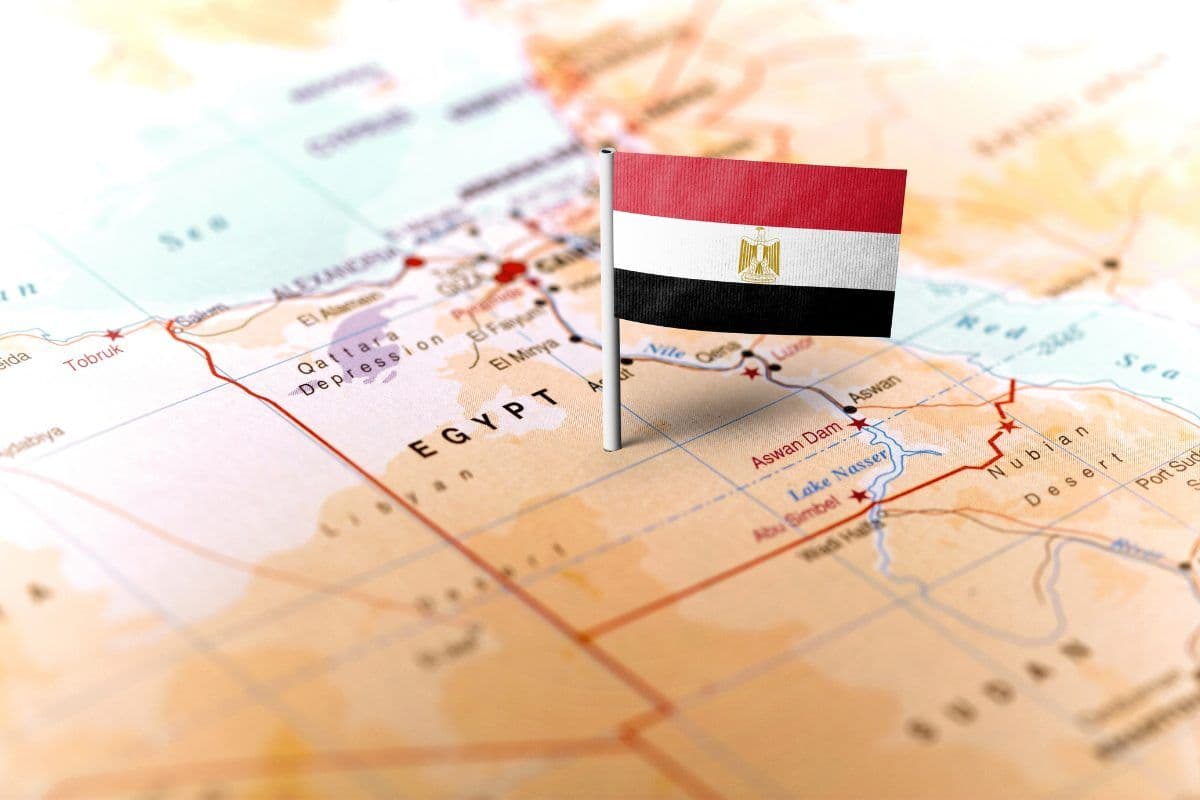
Cairo has become a significant destination for outsourced and offshored operations: customer support, finance processing, software development and back-office work for international groups, often at considerable scale.
Most of those entities were established under a legal framework that no longer exists. Egypt's Labour Law No. 12 of 2003 governed the private sector for more than two decades and was repealed by Labour Law No. 14 of 2025, published in the Official Gazette on 3 May 2025 and in force from 1 September 2025.
If your Cairo entity's health and safety documentation was written before that date, it cites a repealed statute. Eleven changes to work through.
1. The governing law changed entirely
The foundational point. Law No. 14 of 2025 replaces Law No. 12 of 2003, along with Law No. 125 of 2010, and repeals provisions inconsistent with it. An English translation is published by Andersen in Egypt, and EY published an overview of the changes affecting employers.
Any policy, induction pack, risk assessment or compliance register naming Law 12 of 2003 is now citing repealed legislation, which is a cheap fix and an awkward one to be caught on by an inspector or a client conducting supplier due diligence.
2. Much of the detail is in executive decisions, not the statute
The point that determines how you should approach compliance.
The new law recognised concepts not previously expressly regulated, and a number of them required elaboration through executive decisions to be issued after commencement. Commentary at the time of enactment indicated those instruments were expected within months of the effective date.
The practical consequence is that reading the statute alone will not tell you what to do, and that thresholds and procedures you documented under the old framework need re-verification rather than carrying forward. Confirm the current position through local advice rather than relying on any summary, including this one.
3. Old committee and appointment thresholds need checking
Need Expert H&S Guidance?
Our qualified consultants can help you implement the right health & safety measures for your business.
Following directly from the above, and this is the item most likely to be wrong in a group's Egyptian documentation.
The 2003 law contained a detailed occupational safety and health chapter with specific institutional requirements, including committee obligations at defined headcounts and safety personnel arrangements. Those numbers are widely quoted in circulating guidance, much of which has not been updated.
If your Egyptian entity's arrangements were built on figures drawn from the 2003 framework, treat them as requiring confirmation against the new law and its executive decisions. A committee constituted to a repealed threshold may be right, wrong or unnecessary, and none of those is a position to be in by accident.
4. A workforce statement had to go to the Ministry
An administrative obligation with a date attached, and one nothing in a group calendar would prompt.
The new law introduced a requirement for employers to file with the Ministry of Manpower a detailed statement covering the number of employees, their qualifications, professions, age groups, nationalities, gender and salaries, with an initial deadline shortly after commencement.
Establish whether your entity filed, and what the ongoing cycle is. This is the kind of requirement a foreign parent discovers during an inspection rather than in advance.
5. Employment contracts now require an extra counterpart
Small, specific and easy to get wrong.
Contracts are to be executed in four counterparts rather than three, with the additional copy deposited at the Ministry of Manpower. A group using a standard template and a standard signing process will not have adjusted for this.
6. Harassment and bullying are now defined and criminalised
The most substantive change for a professional or shared services employer.
The law introduces legal definitions for harassment, bullying and forced labour, criminalises sexual harassment and bullying in the workplace, and places an obligation on employers to actively prevent and respond to such conduct.
This puts Egypt alongside a growing group of jurisdictions covered in this series moving in the same direction. Chile introduced prevention protocol obligations in August 2024. Great Britain's preventative duty rises to all reasonable steps in October 2026. Brazil brought psychosocial factors within its risk management programme from May 2026.
For a Cairo entity, an employer obligation to prevent means arrangements rather than a policy statement: a route to report that does not run through the person complained of, someone trained to receive it, and a record of what happened next.
7. Medical examination powers, with strict confidentiality
A new power and a firm limit attached to it.
The law permits employers to request medical examinations to detect drug use or infectious diseases, conducted confidentially, and prohibits employers from disclosing medical information relating to an employee. Related provisions require confidentiality when conducting medical examinations and non-disclosure of health status.
For a group, the discipline is familiar from data protection generally: the manager needs the outcome relevant to the work, not the clinical detail. Building that separation into the process at the outset is considerably easier than retrofitting it after a complaint.
8. Remote, flexible and platform work are expressly covered
The change that matters most to how offshored operations actually run.
The new framework expressly addresses modern working patterns including remote work, part-time and flexible arrangements, and platform-based employment, which the 2003 law did not regulate.
An organisation running hybrid or fully remote teams from Egypt now operates inside an express framework rather than in a gap. That means the questions covered elsewhere in this series about homeworking, equipment and assessment of the actual working environment have a local legal frame around them.
9. Emergency procedures and training
Employers are required to maintain a safe and healthy working environment, with equipment meeting safety standards, and to implement emergency procedures including fire and evacuation arrangements with employees trained accordingly.
For an office-based operation this is the substance of day-to-day compliance, and it is the area where a group standard transfers most readily, provided the arrangements are actually local: routes, assembly points and named people in Cairo rather than a translated corporate procedure.
10. Penalties rose, and imprisonment was removed for safety breaches
A change that runs in two directions at once.
Penalty thresholds increased generally under the new law, with reported ranges running from around one thousand to one hundred thousand Egyptian pounds and doubling for repeat violations. At the same time, commentary noted that violation of health and safety provisions is no longer punishable by imprisonment, which it was under the previous framework.
Confirm current figures locally rather than relying on secondary sources. The direction is what matters: financial consequence increased, and the criminal consequence for safety breaches specifically was reduced, which is an unusual combination and worth knowing when briefing a board.
11. Disputes move faster now
The enforcement environment changed alongside the substance.
The law establishes specialised labour courts within the existing court structure, operating from October 2025, with the intention of resolving disputes considerably faster than previously. It also introduces pre-litigation reconciliation arrangements involving the Ministry, unions and employers.
Faster resolution cuts both ways for an employer. It reduces the tail of uncertainty and it removes the practical breathing space that slow proceedings previously created. Arrangements that were adequate when a dispute took years are less adequate when it takes months.
What a Cairo entity needs
| Item | Action | Likely position |
|---|---|---|
| Legal references | Remove citations to Law 12 of 2003 | Cites repealed law |
| Executive decisions | Confirm what they require | Not reviewed |
| Committee thresholds | Re-verify against the new framework | Carried forward from 2003 |
| Workforce statement | Confirm filed and the ongoing cycle | Unknown |
| Contracts | Four counterparts, one deposited | Three, group template |
| Harassment | Prevention arrangements, not a policy alone | Group policy translated |
| Medical examinations | Confidentiality built into the process | Not considered |
| Remote work | Assessed within the local framework | Group approach applied |
| Emergency procedures | Local routes, points and named people | Translated corporate procedure |
| Penalties | Board briefed on the new ranges | Not briefed |
| Disputes | Arrangements fit for faster proceedings | Unchanged |
Rows one to three are the sequence. Correcting references is trivial, confirming the executive decisions is a conversation with local counsel, and re-verifying thresholds is what protects you from an arrangement built on repealed numbers.
The pattern this represents
Egypt is now the fourth jurisdiction in this series to have replaced or restructured its framework rather than amended it.
Malta replaced its principal health and safety statute in 2024. Sweden renumbered its entire work environment rulebook at the start of 2025. India brought four labour codes into force in November 2025, repealing twenty-nine Acts. Egypt replaced its Labour Law from September 2025.
In every case the change was covered thoroughly in-country and was close to invisible to a parent company relying on English-language summaries written earlier. That is the practical argument for a maintained legal register rather than a one-off setup exercise, which is where health and safety consultants and software are worth more together than either alone, and periodic health and safety audits catch exactly this kind of change. The ILO publishes the international standards many of these reforms align themselves to.
Where Arinite fits
Arinite works with locally qualified practitioners in Egypt, so arrangements are built on the law as it now stands rather than on the framework your documents were written under, while your group keeps one point of contact across every country. We support 1,500+ businesses across 50+ countries and protect 100,000+ employees, with 95%+ client retention over 15+ years. Our health and safety consultants work extensively with finance and banking, IT and software and professional services organisations, which describes most foreign-owned headcount in Cairo.
Our global health and safety consultants handle the jurisdictions that usually accompany an Egyptian entity, and our international health and safety consultants can establish what is outstanding locally.
If your Egyptian documentation has not been reviewed since 2024, a free gap analysis will tell you what needs rewriting.
Related Articles
Written by
Arinite Health & Safety Consultants
Health & Safety Expert at Arinite