Health and Safety for Tech, AI and Software Companies: 7 Mistakes to Avoid
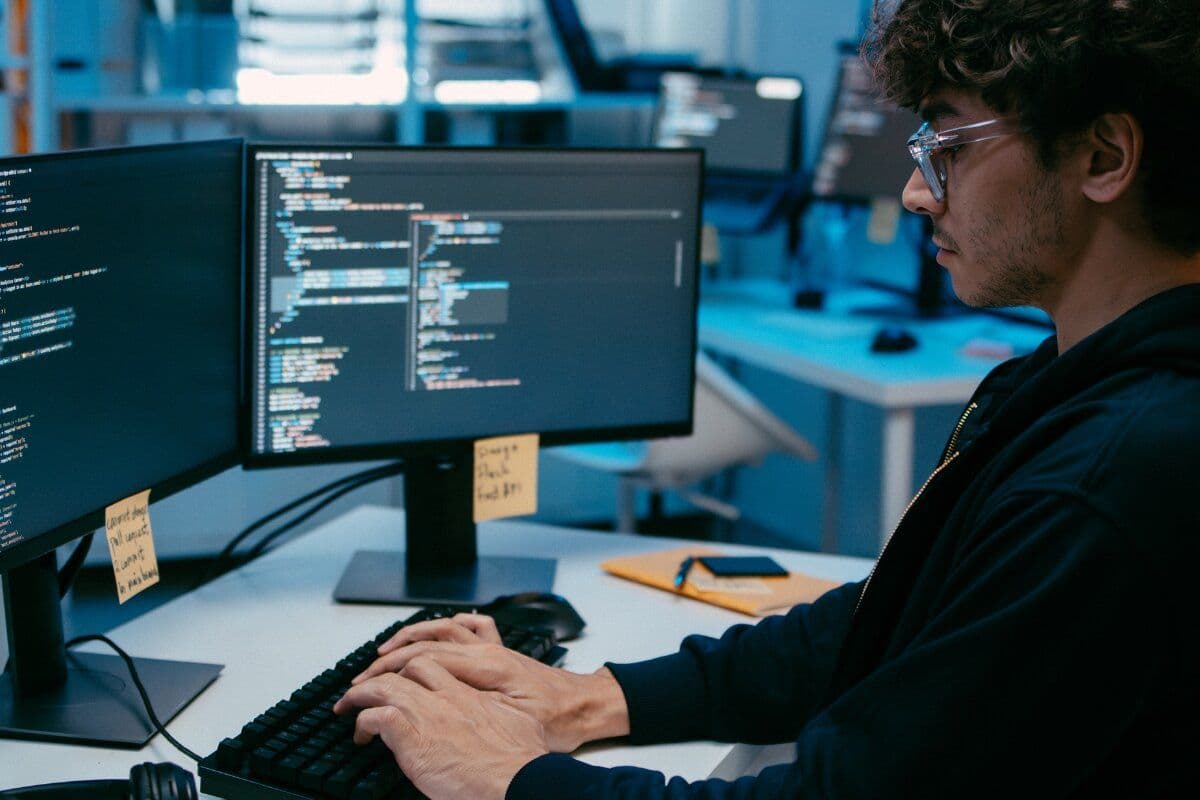
From the outside, a software business looks like one of the safest places to work. No heavy machinery, no hazardous chemicals, no production line. Just laptops, meeting rooms and good coffee. That appearance is exactly why so many tech, AI and software companies get health and safety wrong. The risks are real, but they are quiet: a back injury that builds over months at a badly set up desk, burnout that empties a team, a server room with a fire risk no one assessed, a remote employee no one checked on.
The legal duty to protect people does not depend on how clean your office looks. It applies to a fast-scaling AI startup and a global SaaS company just as firmly as it applies to a factory. The good news is that getting it right is straightforward once you know where companies like yours slip up. Below are seven of the most common mistakes, and how experienced health and safety consultants help fix them.
Mistake 1: Assuming a "low-risk" office means no obligations
The most damaging myth in the sector is that office-based work carries no real health and safety duty. It does. Employers in the UK and most jurisdictions are legally required to assess risks, provide a safe workplace, manage fire safety and look after employee wellbeing, regardless of how comfortable the environment seems.
The fix is to stop treating safety as something other industries worry about. A proper risk assessment for an office and tech environment covers display screens, fire, electrical safety, first aid, lone working and mental health. It takes far less effort than people expect, and it closes the gap between feeling compliant and being compliant.
Mistake 2: Ignoring display screens and ergonomics
The single most common injury in tech is musculoskeletal: necks, shoulders, wrists and backs worn down by long hours at poorly arranged workstations. According to HSE guidance on display screen equipment, employers have specific duties to assess and manage this risk, and those duties do not disappear because your team is young or your chairs look modern.
A simple DSE assessment for each employee, the right monitor height, a supportive chair, and guidance on breaks and posture prevent problems that otherwise compound silently for years. For a workforce that spends most of its day at a screen, this is not a nicety. It is the core of your physical risk profile.
Mistake 3: Treating stress and burnout as an HR issue only
Need Expert H&S Guidance?
Our qualified consultants can help you implement the right health & safety measures for your business.
In high-pressure tech and AI businesses, long hours, tight release cycles and always-on culture make work-related stress one of the biggest threats to both people and productivity. Too many companies file this under HR and morale, when it is also a recognised health and safety risk. The HSE treats work-related stress as something employers have a duty to assess and manage, using its Management Standards approach.
The fix is to bring mental health into the safety system rather than leaving it to chance. That means assessing the causes of pressure, setting realistic workloads, training managers to spot early warning signs and giving staff genuine routes to raise concerns. Protecting attention and energy is not soft. In a business that runs on its people's thinking, it is operationally essential.
Mistake 4: Letting hybrid and remote work fall outside the system
Tech led the world into hybrid working, and many companies still have a blind spot there. Your duty of care does not stop at the office door. A homeworker hunched over a kitchen table on a laptop is exposed to the same ergonomic and wellbeing risks as anyone in the office, often with less support and more isolation.
A modern safety system extends to wherever your people actually work. Home workstation self-assessments, clear guidance, equipment support and regular check-ins keep remote and hybrid staff inside the safety net rather than outside it. As distributed teams become the norm, this is fast becoming a defining test of whether a tech employer takes safety seriously.
Mistake 5: Forgetting the physical estate behind the software
Pure software may feel intangible, but the business rarely is. Server rooms, on-premise hardware, AI compute infrastructure, labs and data centre space all carry genuine physical risk: electrical hazards, heat, fire load, restricted access and lone working. AI and data businesses in particular often scale their hardware footprint long before they think about the safety implications. The risks for AI and data companies sit precisely where the digital meets the physical.
The fix is to assess these spaces specifically, not lump them in with the general office. Fire risk, electrical safety, access control and emergency procedures for technical areas deserve their own attention. The more critical the infrastructure, the more a quiet failure can hurt.
Mistake 6: Scaling people and offices faster than the safety system
Growth is the goal, and it is also the risk. A 20-person startup can manage safety informally. The same company at 200 people across three countries cannot, yet many try, bolting on new offices and headcount while the safety arrangements stay stuck at startup scale. The result is inconsistency: one site well managed, another neglected, and leadership unable to see the difference.
This is where health and safety consultants and software prove their value for software companies. A central platform gives every office the same risk assessments, checklists and training, while giving leadership a live view of compliance across the business. Expert advice keeps the system right; the software keeps it visible. Together they let you scale without leaving safety behind.
Mistake 7: Skipping audits and ignoring international obligations
Believing you are compliant is not the same as proving it, and assumptions are exactly what regulators and insurers test. Regular health and safety audits check your real arrangements against legal duties and tell you where the gaps are before an incident or an inspection does.
For tech businesses, the international dimension makes this sharper. A SaaS company with engineers in London, a sales hub in Dublin and a team in Singapore is answering to several legal frameworks at once. The underlying duty is universal, reflected in global standards such as ISO 45001, but the local detail varies in every country. This is the core work of international health and safety consultants: one high standard, adapted lawfully to each location. Arinite's locations coverage is built around exactly that, supporting UK tech firms expanding abroad and overseas businesses operating in the UK.
The tech and software safety readiness checklist
Run through these questions for your business. If you answer no to any of them, you have found your next priority.
- Do you have a current, documented risk assessment for every office? Yes / No
- Has every employee had a display screen and workstation assessment? Yes / No
- Is work-related stress assessed and managed as a safety risk, not just an HR one? Yes / No
- Are hybrid and remote workers covered by your safety arrangements? Yes / No
- Have server rooms, labs and hardware spaces been assessed in their own right? Yes / No
- Can leadership see real-time compliance across every office and country? Yes / No
- Do you run regular, structured health and safety audits? Yes / No
- For multi-country operations, is each jurisdiction's law mapped and met? Yes / No
A clean run of yes answers is unusual on a first pass, and that is the value of the exercise. It shows you where to act before a gap becomes an incident.
Where Arinite fits
Arinite has spent 15+ years helping office-based and technology businesses turn health and safety from an afterthought into a managed system. We support 1,500+ businesses across 50+ countries and have helped protect 100,000+ employees, with a 95% client retention rate. Our approach suits tech: practical advice from qualified consultants, delivered through software that keeps every site visible and every obligation accountable.
For tech, AI and software companies, that means one consistent standard as you grow, expert support when you need it, and proof you can put in front of clients, investors and regulators. As global health and safety consultants, we coordinate compliance wherever your teams are based.
If you are not sure where your gaps are, the quickest way to find out is a free gap analysis. Our specialists review your current arrangements and tell you plainly what is working and what is not. Book your free gap analysis and find out exactly where your business stands.
Written by
Arinite Health & Safety Consultants
Health & Safety Expert at Arinite