Aviation and Aerospace Health and Safety: 4 Risks in the Hangar, 4 Beyond It
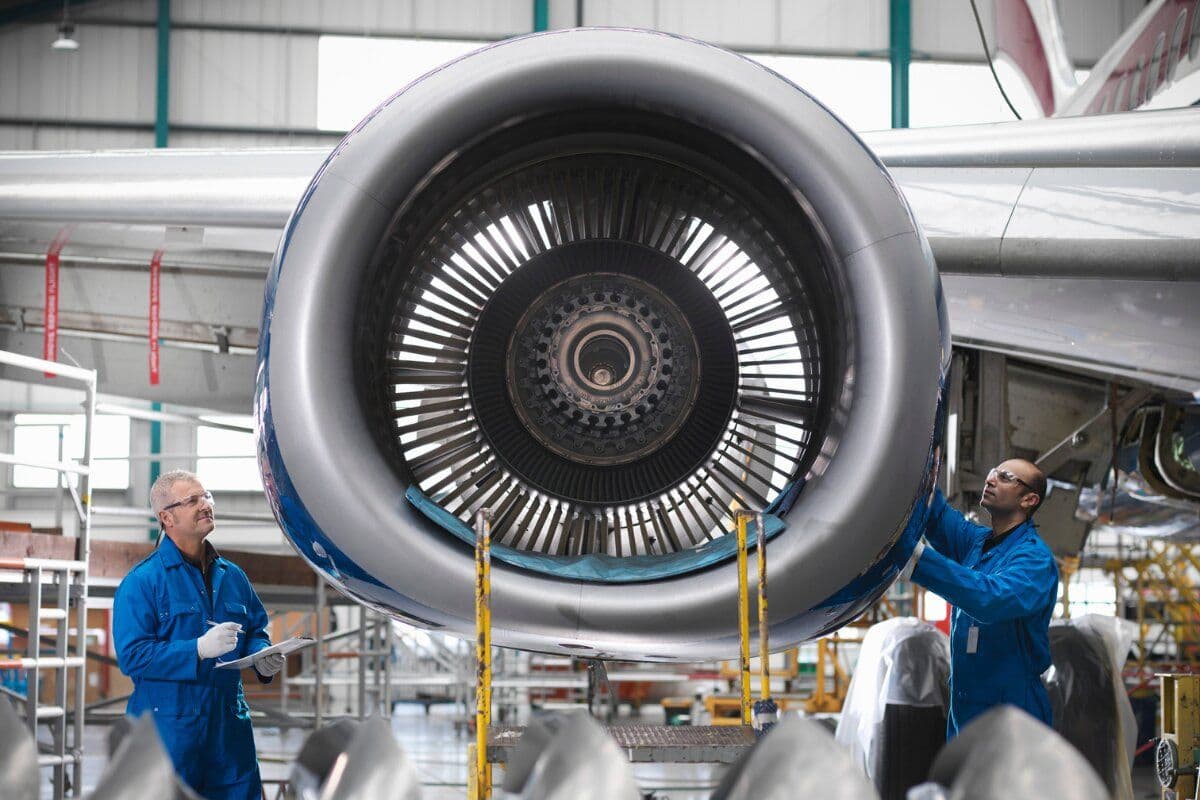
Aviation is obsessive about safety in the air, and rightly so. Flight safety is governed by its own demanding regimes, overseen by authorities such as the Civil Aviation Authority, and the industry's record reflects that discipline. But there is a second safety story in aviation and aerospace, and it gets a fraction of the attention: the workplace health and safety of the people on the ground. The engineers in the hangar, the ground crews on the apron, the technicians on the production line and the teams in the office face occupational risks that flight safety regulation was never designed to cover.
That is the gap this piece addresses. Workplace health and safety in aviation sits alongside the aviation-specific regimes, not instead of them, and it answers to the same employer duties as any other sector. The businesses with genuinely world-class records manage both with equal seriousness. Here are eight risks that deserve that seriousness, split where the work actually happens: four inside the hangar, four beyond it.
Part one: in the hangar
Working at height, on and around aircraft
An airliner's tail stands as high as a building, and maintenance means people working on docking, staging, platforms and the airframe itself. Falls from height are among the most serious risks in aircraft maintenance, and the HSE's work at height guidance applies in the hangar exactly as it does anywhere else. The controls are proven: proper access equipment rather than improvisation, edge protection on docking, and planned, supervised work. The routine nature of the task is precisely why discipline matters, because familiarity is where falls begin.
Hazardous substances in maintenance and manufacturing
Aviation maintenance and aerospace manufacturing run on chemicals: fuels, hydraulic fluids, solvents, paints, sealants, composite resins and their dusts. The harm ranges from immediate burns and fume exposure to occupational disease that appears decades later. Thorough COSHH assessment is the backbone of control: knowing what is in use and what processes create, controlling exposure through extraction and enclosure before reaching for masks, and monitoring health where the risk demands it. Composite work in particular deserves specific, current assessment as materials evolve.
Noise that never lets up
Engine runs, riveting, pneumatic tools and workshop machinery make aviation environments punishingly loud, and hearing loss is permanent, invisible while it happens and entirely preventable. The HSE's noise guidance sets the duties: measure exposure, engineer noise down where possible, and protect what remains. In a sector where an engineer's career spans decades, hearing conservation is one of the longest-value investments an employer makes.
Confined spaces and non-routine work
Fuel tanks, wing interiors and equipment bays are confined spaces, and entering them is exactly the kind of high-risk, non-routine work where formal control earns its keep. Permit to work systems, tested atmospheres, rescue arrangements and genuine competence are not bureaucracy here, they are the difference between a controlled entry and an emergency. Maintenance environments live or die by how they manage their non-routine work, and confined space entry is its sharpest test.
Part two: beyond the hangar
The apron: vehicles, aircraft and people in motion
Ground operations put people on foot among moving aircraft, tugs, baggage vehicles, fuel bowsers and stairs, often at night, in weather, under time pressure. It is workplace transport risk at its most intense, and the HSE's workplace transport principles apply in full: segregate people and vehicles wherever possible, mark and light routes, train and authorise drivers, and enforce the rules consistently across every shift. Turnaround pressure is real, and it is exactly when the discipline must hold.
Manual handling across the operation
Baggage and cargo handling, component lifting in manufacturing, and the awkward, cramped postures of aircraft maintenance all drive musculoskeletal injury, one of the sector's largest sources of harm and lost time. Proper manual handling assessment, mechanical aids genuinely available and used, and task design that respects human bodies pay for themselves quickly in a workforce this skilled and this hard to replace.
Shift work, fatigue and pressure
Aviation runs around the clock, and the people who keep it running absorb the cost in disrupted sleep, long shifts and sustained pressure. Fatigue degrades judgement and reaction, which is dangerous anywhere and doubly so around aircraft and machinery. Managing rosters, breaks and workload as genuine safety controls, rather than treating exhaustion as commitment, is a mark of the operators that lead this industry rather than follow it.
The office and the whole organisation
Behind every operation sit planners, engineers at screens, designers and administrators, and their risks, display screen work, workload and wellbeing, are as real as anything on the apron. A world-class aviation employer holds one standard across the entire organisation, hangar to head office. That consistency, especially for groups operating across multiple sites and countries, is where consultants and software work together: expert advice sets the standard, and a platform gives leadership live visibility that it is actually being met everywhere, in line with frameworks such as ISO 45001.
Three questions for your next leadership meeting
Need Expert H&S Guidance?
Our qualified consultants can help you implement the right health & safety measures for your business.
Instead of a checklist, take these to the top table. First: if the regulator that oversees our flying visited our hangars and offices tomorrow, would our workplace safety evidence look as strong as our airworthiness evidence? Second: which of the eight risks above would our own people say we manage worst, and have we asked them? Third: when did an independent health and safety audit last test our ground operations, and if the answer is embarrassing, what does that say about the gap between our two safety cultures? Companies that can answer all three without flinching are rare, and they are the benchmark.
Where Arinite fits
Arinite has spent 15+ years helping businesses in demanding technical environments build world-class workplace health and safety, including the aviation and aerospace sector and its close neighbours in engineering and manufacturing. We support 1,500+ businesses across 50+ countries and have helped protect 100,000+ employees, with a 95% client retention rate. We combine practical advice from qualified health and safety consultants with software that keeps every site, shift and standard visible.
As international health and safety consultants, we help aviation and aerospace businesses hold one standard across every hangar, apron, production line and office, in every country they operate. The industry already knows what world-class safety looks like in the air. We help bring the same rigour to the ground.
The fastest way to see where your ground operations stand is a free gap analysis. Our specialists review your current arrangements and tell you plainly what is controlled and what is not. Book your free gap analysis and close the gap between your two safety cultures.
Written by
Arinite Health & Safety Consultants
Health & Safety Expert at Arinite