What is Asbestos? 15 Things Every UK and Global Duty-Holder Must Know
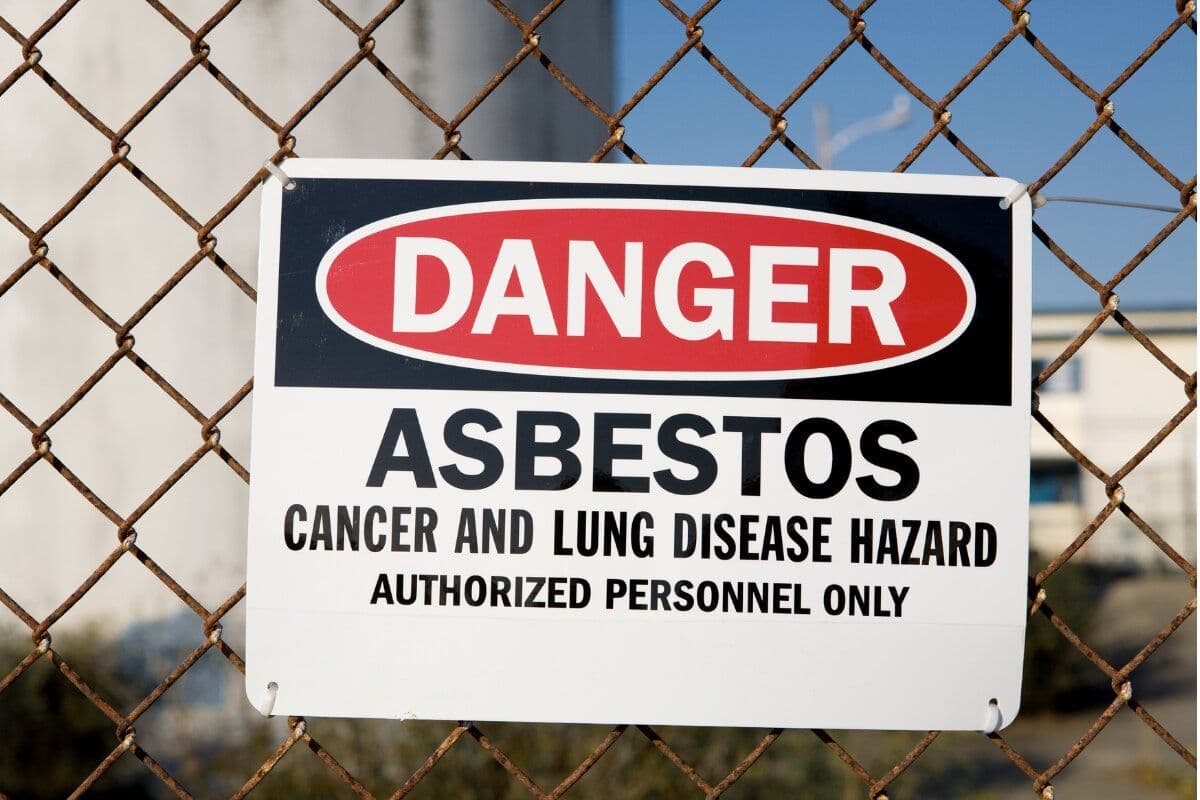
If your business owns, leases, manages, or maintains any building constructed before the year 2000, you are statistically very likely to have asbestos somewhere on site. In the UK alone, asbestos-related disease still kills more workers each year than any other single workplace hazard, decades after the substance was banned. Yet a remarkable number of directors, facilities managers, landlords, and international heads of property cannot answer the simple question their tenants, contractors, surveyors, and inspectors keep asking: what is asbestos?
This guide is for the business owners, building duty-holders, property managers, and international operations leaders who need a clear, plain-English answer, and a practical understanding of how asbestos fits into UK law and global expectations. Below are the 15 essentials every duty-holder should know in 2026.
1. Asbestos Is the Common Name for a Group of Naturally Occurring Fibrous Minerals
The simplest answer to "what is asbestos" is this: asbestos is the name given to a group of six naturally occurring fibrous silicate minerals that share three properties prized by 20th-century industry: extreme heat resistance, exceptional tensile strength, and chemical durability. Those qualities made it a perfect material for fireproofing, insulation, roofing, and reinforcement, and they are also the qualities that make it so harmful inside the human lung.
When materials containing asbestos are disturbed, microscopic fibres become airborne. When inhaled, they lodge deep in lung tissue, where they cause inflammation, scarring, and a small number of distinctive cancers over decades. The HSE's asbestos guidance sets out the full health picture.
2. There Are Six Types of Asbestos, Grouped Into Two Families
Asbestos minerals fall into two mineral families:
- Serpentine asbestos: chrysotile (white asbestos), the most widely used type historically
- Amphibole asbestos: crocidolite (blue), amosite (brown), tremolite, actinolite, and anthophyllite
All six are classified as Group 1 carcinogens. The amphibole types are generally considered more harmful, but there is no "safe" form. The control measures in the UK and most international jurisdictions treat all six the same way.
3. Asbestos Was Banned in the UK by the End of 1999
Need Expert H&S Guidance?
Our qualified consultants can help you implement the right health & safety measures for your business.
In the UK, the importation, supply, and use of all forms of asbestos was banned by the end of 1999. Crocidolite and amosite were banned earlier, in 1985, with chrysotile following at the close of the century. The ban does not mean asbestos has been removed from UK buildings. It simply means no new asbestos has been installed since.
That is why the dividing line that matters for duty-holders is whether a building was constructed, refurbished, or extended before 2000. If yes, you should presume asbestos may be present until a proper survey says otherwise.
4. Asbestos Looks Like Many Different Things
There is no single answer to "what does asbestos look like" because it was used in so many different products. Common asbestos-containing materials (ACMs) include:
- Sprayed coatings on steelwork and ceilings
- Pipe lagging and boiler insulation
- Asbestos insulating board (AIB) in ceiling tiles, partitions, and panels
- Asbestos cement in roofing sheets, gutters, downpipes, and water tanks
- Textured coatings such as Artex
- Floor tiles and bitumen products
- Gaskets, ropes, and seals on plant and equipment
You cannot reliably identify asbestos by sight. The only credible answer is laboratory testing through a UKAS-accredited body. Treating any suspect material as if it contains asbestos until proven otherwise is the safe default.
5. Asbestos Was Used Almost Everywhere Before 2000
Asbestos was woven into thousands of construction and industrial products through most of the 20th century: schools, hospitals, offices, factories, council housing, ships, trains, power stations, fire doors, cladding, brake linings, and countless others. That is why the HSE estimates that around 5,000 people in Great Britain still die from past asbestos exposure each year, more than die in road traffic accidents.
The implication for businesses is unambiguous: if your buildings predate 2000 and you do not have a current asbestos register, you are exposed.
6. Why Asbestos Is So Dangerous
Asbestos fibres are very fine, very durable, and shaped in a way that makes them particularly damaging once they enter the lungs. Health conditions associated with asbestos exposure include:
- Mesothelioma, an aggressive cancer of the lining of the lungs or abdomen
- Lung cancer, with significantly elevated risk in exposed populations
- Asbestosis, a progressive scarring of the lungs
- Pleural thickening and pleural plaques, non-cancerous but disabling conditions
The latency period is one of the most troubling features. Symptoms typically appear 20 to 50 years after exposure. By the time disease is diagnosed, prevention is no longer possible. That is why the regulatory focus is entirely on stopping exposure today.
7. The Control of Asbestos Regulations 2012 Is the UK Legal Framework
In the UK, asbestos is regulated under the Control of Asbestos Regulations 2012, which sits on top of the Health and Safety at Work etc. Act 1974 and the Management of Health and Safety at Work Regulations 1999.
CAR 2012 sets out duties around licensed work, notifiable non-licensed work (NNLW), and non-licensed work, depending on the risk. It also introduces the duty to manage, one of the most misunderstood obligations in UK law.
8. The Duty to Manage Asbestos Falls on a Wide Range of People
The "duty to manage" applies to anyone who has, by contract or tenancy, an obligation for the maintenance or repair of non-domestic premises. In practice, that often means landlords, freeholders, managing agents, employers, building owners, and facilities managers, and the duty is usually shared.
It requires duty-holders to:
- Take reasonable steps to find out if there are asbestos-containing materials, and if so, the amount, where they are, and their condition
- Presume materials contain asbestos unless there is strong evidence they do not
- Make and keep an up-to-date asbestos register
- Assess the risk of exposure
- Prepare a written plan setting out how the risk will be managed
- Provide information to anyone liable to disturb the materials
If you are unclear who holds these duties in your portfolio, a quick review with experienced health and safety consultants will clarify the position before the regulator does. Our dedicated asbestos service page sets out how we support duty-holders end to end.
9. Two Types of Asbestos Survey, and They Are Not Interchangeable
There are two principal types of asbestos survey:
- A Management Survey identifies the location, type, and condition of asbestos-containing materials likely to be disturbed during normal occupation and maintenance
- A Refurbishment and Demolition (R&D) Survey is more intrusive and is required before any significant refurbishment or demolition work
Using a management survey when an R&D survey is needed is one of the most common mistakes in property compliance, and one that can quickly turn into prosecution if work proceeds and fibres are released. Regular health and safety audits catch this kind of gap early.
10. Asbestos Removal Is Tightly Regulated and Almost Always Licensed
Most higher-risk asbestos work, including the removal of sprayed coatings, lagging, and most AIB, must be carried out by an HSE-licensed contractor. Lower-risk work, such as some asbestos cement removals, may fall into the non-licensed or notifiable non-licensed (NNLW) categories.
The wrong assumption about which category applies is one of the fastest routes to enforcement. The HSE enforcement policy makes clear that asbestos breaches are treated extremely seriously, with regular prosecutions of duty-holders, principal contractors, and individuals.
11. International Equivalents Exist Across Every Major Market
The UK is unusual in the depth and visibility of its asbestos regime, but the principle of mandatory exposure control is global. International approaches include:
- European Union: Directive 2009/148/EC on the protection of workers from exposure to asbestos, supported by EU-OSHA guidance, with national application in France, Germany, Italy, Spain, the Netherlands and elsewhere
- United States: OSHA's asbestos standards under 29 CFR 1910.1001 and 1926.1101, plus EPA rules for buildings
- Australia: the Work Health and Safety Regulations and a national asbestos eradication agency
- ILO members: Convention 162 on Safety in the Use of Asbestos, supported by the ILO
- ISO 45001 organisations: asbestos-related hazardous substance controls feed into Clauses 6.1 and 8.1 of ISO 45001:2018
Multinationals operating across multiple jurisdictions need a single, layered approach. The strongest global health and safety consultants design unified asbestos management systems that hold up to local inspection wherever the property sits.
12. The Duty to Manage Asbestos Connects Directly to Other Compliance Streams
Asbestos rarely sits in isolation. Managing it properly intersects with fire safety, COSHH compliance, construction (CDM 2015), waste and environmental rules, contractor management, and occupational health. A defensible asbestos position usually depends on a strong health and safety policy, a competent person, and joined-up management across these domains.
That joined-up view is exactly what specialist outsourced health and safety services are designed to deliver.
13. Training and Awareness Are Legal, Not Optional
CAR 2012 Regulation 10 requires employers to provide suitable and sufficient information, instruction, and training to anyone whose work could expose them, or others, to asbestos. That includes maintenance workers, electricians, plumbers, IT cabling installers, painters, decorators, surveyors, and many more.
Tailored health and safety training is far more effective than generic e-learning, particularly where contractors are involved. Asbestos awareness training is one of the cheapest and most defensible compliance investments a business can make.
14. Software and Registers Make Asbestos Management Defensible
Modern asbestos compliance is a data exercise. A well-maintained asbestos register tells you what is in your buildings, where it is, what condition it is in, when it was last inspected, and what should happen next. Stored in dedicated health and safety software, the register becomes a live system rather than a forgotten spreadsheet.
The best implementations combine specialist software with regular advisory input from experienced health and safety consultants and software experts. Data alone is not enough; it needs interpretation by people who understand the regime.
15. Asbestos Excellence Saves Lives, Protects Reputation and Wins Contracts
The often-missed truth: organisations with credible asbestos arrangements protect their workforce, their tenants, their contractors, and themselves. They also score better on procurement frameworks, satisfy insurers more easily, defend themselves more effectively in disputes, and win more work through stronger health and safety tenders submissions.
Aligning asbestos management with ISO 45001 is one of the highest-leverage long-term investments a property-owning business can make.
Where UK and Global Businesses Go from Here
If you are not 100% confident that your asbestos register, surveys, and management plan are current and properly maintained, you almost certainly have gaps worth closing. The good news is that they are nearly always fixable, often quickly, and the resulting confidence pays back across audits, insurance, tenders, and the wellbeing of everyone using your buildings.
At Arinite, we have spent decades helping UK and international organisations move from reactive asbestos compliance to proactive duty-to-manage excellence. Whether you are a single-site UK SME, a national property portfolio, or a global group with buildings across multiple countries, our international health and safety consultants can review your current asbestos arrangements and build a practical roadmap.
Book a Free Gap Analysis Call
Find out exactly where your asbestos management stands against UK regulations and international expectations, and what to fix first. Book a Free Gap Analysis Call with an Arinite specialist today.
Written by
Arinite Health & Safety Consultants
Health & Safety Expert at Arinite