What Does TILE Stand For in Manual Handling? 12 Essentials Every UK and Global Business Must Know
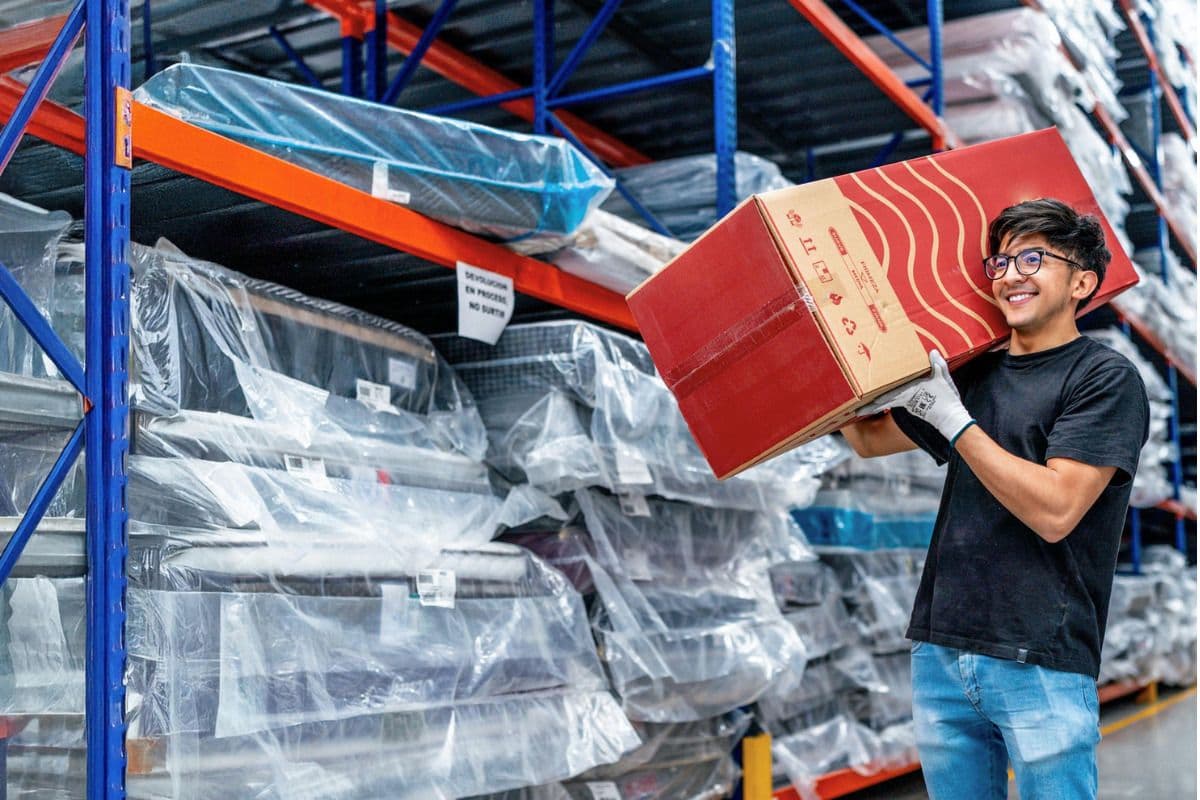
If you have ever asked a supervisor "is that load safe to lift?" and watched them shrug and guess, you have already met the gap that the TILE framework was designed to close. Manual handling injuries remain one of the largest single causes of workplace ill-health in the UK and across most major economies. The most reliable way to reduce them is not stronger backs or better belts, but smarter assessment. That is what TILE delivers.
Yet a surprising number of UK directors, HR leaders, ward managers, warehouse supervisors, and international operations heads cannot answer the simple question their trainers and inspectors keep asking: what does TILE stand for in manual handling?
This guide is for the people who need a clear, plain-English answer, plus a practical understanding of how TILE fits into UK law and international expectations. Below are the 12 essentials every UK and global business should know.
1. TILE Stands for Task, Individual, Load and Environment
The straightforward answer to "what does TILE stand for in manual handling" is this: Task, Individual, Load and Environment. It is the mnemonic used by HSE manual handling guidance to structure a proper manual handling risk assessment under the Manual Handling Operations Regulations 1992.
The framework is simple. For every lifting, lowering, pushing, pulling, carrying or supporting activity, you assess four factors: what the task involves, who is doing it, what is being moved, and where it is being done. Skip one factor and you have an incomplete assessment. Skip several and you have a problem waiting to happen.
2. The "T" in TILE Stands for Task
The Task is the activity itself. Assessing the task means asking questions such as:
- Does it involve twisting, stooping, reaching, or sudden movements?
- Is it carried out at high frequency or over long durations?
- Are there long carrying distances?
- Does it require precise positioning?
If the task can be redesigned, that is almost always the first and best control. A small layout change, a height adjustment, or a process tweak often removes the risk altogether, far more effectively than training staff to "lift correctly." A properly scoped health and safety audit will spot these task-level redesign opportunities quickly.
3. The "I" in TILE Stands for Individual
Need Expert H&S Guidance?
Our qualified consultants can help you implement the right health & safety measures for your business.
The Individual is the person doing the task. Manual handling capacity varies between people, and the same task can be safe for one worker and risky for another. The framework expects employers to consider:
- Strength, age, build, and physical capability
- Pregnancy or recent return from health absence
- Disability, impairment, or musculoskeletal history
- Training and competence
- Use of PPE that affects movement or grip
This is also where equality and inclusion intersect with safety: UK employers must avoid generic "average worker" assumptions. Modern health and safety policies build the individual lens into every manual handling assessment by default.
4. The "L" in TILE Stands for Load
The Load is the object or person being moved. Assessing the load means looking at:
- Weight and weight distribution
- Size, shape, and ease of grip
- Stability of the contents (liquids, loose items, awkward boxes)
- Surface temperature, sharp edges, or hazardous contents
- Whether the load is a person, as in care or healthcare settings
Care providers, hospitals, hospitality kitchens, retailers, warehouses, and manufacturers all face very different "load" risks. That is why global and international health and safety consultants build sector-specific TILE assessment templates rather than relying on a single generic form. Our manual handling service page sets out how this works in practice across UK and international sites.
5. The "E" in TILE Stands for Environment
The Environment is the physical setting where the task takes place. Questions to assess include:
- Available space and clear walking routes
- Floor conditions, including slip and trip hazards
- Lighting levels
- Temperature, humidity, and ventilation
- Vibration, noise, or weather exposure for outdoor tasks
- Steps, ramps, gradients, and confined spaces
Many businesses focus their manual handling training on technique while ignoring the environment. That is the wrong order. Environmental changes (lifting equipment, better lighting, removed obstacles) almost always outperform behavioural change as a long-term control.
6. Some Trainers Use TILEE or TILEO Instead of TILE
You will sometimes see manual handling courses use TILEE or TILEO instead of TILE. The extra "E" or "O" stands for Other factors (or "Other equipment / external factors"), covering anything that does not sit neatly inside the original four headings, including PPE, time pressure, supervision, work organisation, and contractor coordination.
All three acronyms point to the same idea: a complete, multi-dimensional view of the activity. If your current manual handling training uses only one acronym, it is worth asking whether the "Other factors" lens is being captured elsewhere in your assessment.
7. TILE Sits Inside a Wider UK Legal Framework
TILE is not law in itself. It is the practical structure the HSE recommends for meeting the legal duties set by:
- The Health and Safety at Work etc. Act 1974
- The Management of Health and Safety at Work Regulations 1999
- The Manual Handling Operations Regulations 1992 (MHOR), which require employers to avoid hazardous manual handling so far as is reasonably practicable, assess what cannot be avoided, and reduce the risk to the lowest reasonably practicable level
Our explainer on workplace health and safety law shows how MHOR fits into the wider compliance picture.
8. International Equivalents Exist, But the Format Varies
Manual handling assessment is universal, but the local format and the legal references shift by jurisdiction. International equivalents include:
- European Union: the Manual Handling Directive 90/269/EEC, applied through national rules in France, Germany, Italy, Spain, the Netherlands and beyond, supported by EU-OSHA guidance
- United States: OSHA's general duty clause and NIOSH lifting equation
- Australia and New Zealand: Hazardous Manual Tasks Code of Practice
- ISO 45001 organisations: musculoskeletal risk controls feed into Clauses 6.1 and 8.1 of ISO 45001:2018
Multinationals frequently want a single global TILE-style template adapted locally. Our international health and safety consultants build exactly this kind of layered system.
9. Only a Competent Person Should Sign Off Manual Handling Assessments
UK law expects manual handling assessments to be prepared, reviewed, and signed off by someone with appropriate competence. For most SMEs and many larger organisations, that competence is best sourced through a trusted competent person, backed by ongoing input from experienced health and safety consultants.
Check qualifications carefully. Chartered Membership of IOSH (CMIOSH), NEBOSH diplomas, and sector-specific experience are strong indicators. Generic "tick-the-box" trainers without operational experience tend to produce assessments that fail under scrutiny.
10. Training Turns TILE From a Form Into a Reflex
TILE only works if the people doing the lifting can actually apply it. That is why dedicated health and safety training is so important. Effective manual handling training is task-specific, hands-on, and short enough to keep attention without sacrificing depth.
Generic e-learning will not protect a care worker repositioning a resident, or a warehouse picker moving stock at speed. The best programmes combine TILE-based assessment with practical demonstration and refresher training at sensible intervals.
11. Software and Audits Make TILE Defensible
Paper TILE assessments get out of date the moment a job, layout, or workforce changes. Modern health and safety software lets you version-control assessments, push updates to site teams in real time, capture electronic sign-offs, and feed evidence straight into your audit trail.
The strongest setups combine specialist software with regular advisory input from health and safety consultants and software experts. Regular workplace health and safety audits keep both the system and the people honest.
12. Good TILE Practice Is a Commercial Asset
The often-missed truth: organisations with credible, well-documented manual handling assessments have fewer musculoskeletal injuries, lower sickness absence, lower insurance premiums, stronger tender scores, and far lower exposure to enforcement. Aligning manual handling controls with ISO 45001 is one of the most effective long-term investments an employer can make.
A mature TILE programme is not a defensive expense. It is a marker of a workplace that takes its people seriously, and a strong asset in any health and safety tenders submission.
Where UK and Global Businesses Go from Here
If your manual handling assessments are generic, out of date, or inconsistent between sites, you almost certainly have gaps worth closing. The good news is that they are nearly always fixable, often quickly, and the resulting confidence pays back across audits, insurance, tenders and culture.
At Arinite, we have spent decades helping UK and international organisations move from reactive manual handling paperwork to genuinely proactive injury prevention. Whether you are a single-site UK SME, a multi-site care or hospitality operator, or a global group with manual handling exposure across many countries, our outsourced health and safety team can review your current TILE arrangements and build a practical roadmap.
Book a Free Gap Analysis Call
Find out exactly where your manual handling assessments stand against UK regulations and international expectations, and what to fix first. Book a Free Gap Analysis Call with an Arinite specialist today.
Written by
Arinite Health & Safety Consultants
Health & Safety Expert at Arinite