Health and Safety in Turkey: 6 Duties, and the Rule That Finally Landed
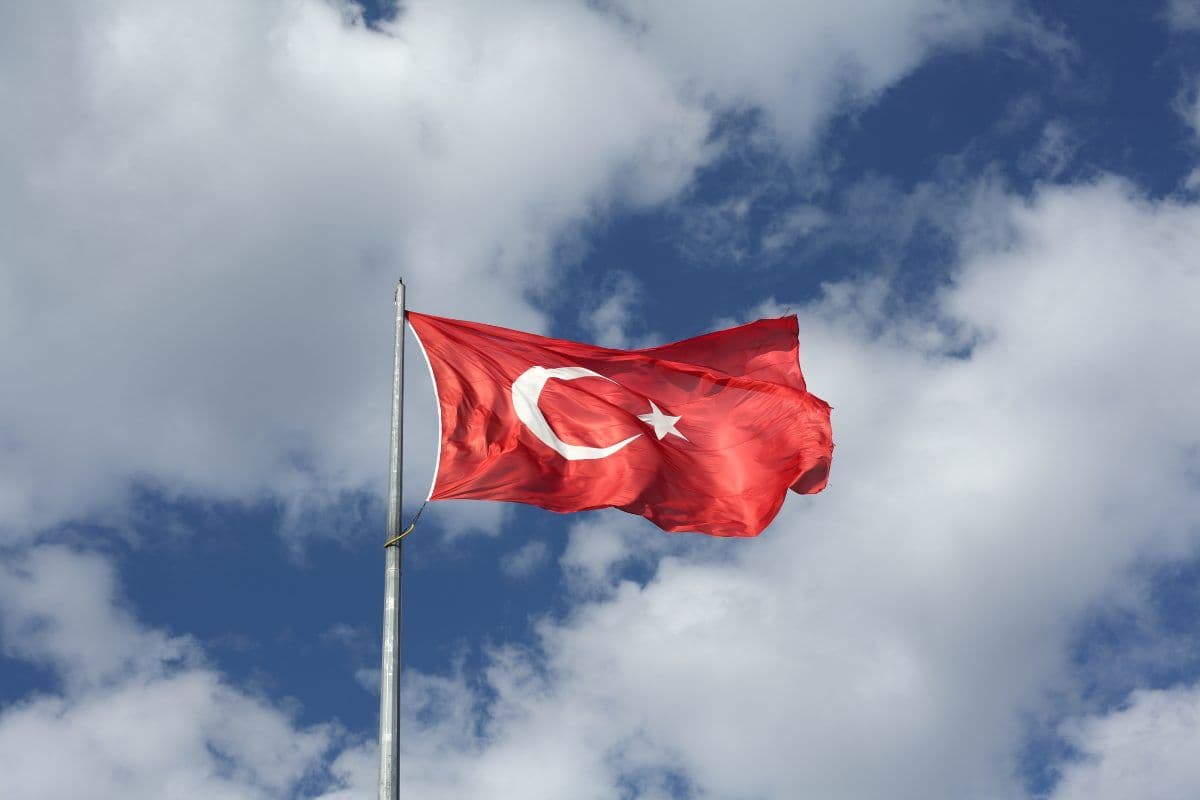
Turkey passed a comprehensive occupational health and safety law in 2012. For small, low-hazard workplaces, one of its central obligations was then postponed. Repeatedly, over more than a decade, to the point where a great many employers reasonably concluded it would never arrive.
It arrived. From 1 January 2025, workplaces in the low-hazard class with fewer than fifty employees became subject to the requirement to assign a workplace physician and an occupational safety specialist, alongside the obligations they already had.
A foreign-owned Istanbul office is very likely to be exactly that: low hazard, under fifty people, and previously outside the requirement. If nobody has revisited your Turkish entity since 2024, this is the reason to.
Six duties.
1. The obligation that changed in January 2025
Articles 6 and 7 of Law No. 6331 came into force for public institutions and for workplaces with fewer than fifty employees in the low-hazard class with effect from the end of December 2024.
From 1 January 2025 those workplaces became subject to the duty to assign an occupational safety specialist and a workplace physician, in addition to the duties they already carried, which include conducting risk assessment, providing occupational health and safety training, and monitoring the measures taken. Turkish firms published detailed commentary when the provisions came into force.
This is the single most likely gap in a foreign-owned Turkish entity, precisely because the deferral had run so long that the requirement dropped off everyone's list.
2. Three ways to meet it, and a fourth added in 2025
The obligation can be discharged in more than one way, which makes it considerably more manageable than it first appears.
An employer may employ a specialist and a physician directly. It may assign suitably qualified people from among its own employees. Or, most commonly for a small office, it may obtain the service from a Joint Health and Safety Unit, the OSGB, or from an employee health centre.
A further route was added through legislation adopted in January 2025. Employers or employer's representatives at workplaces with fewer than fifty employees in the low-hazard class, who do not themselves hold the prescribed qualifications, may carry out occupational health and safety services personally provided they complete training announced by the Ministry, with entry and periodic medical examinations and tests excluded from what they may perform.
That exclusion matters. Even where the employer takes on the general duties, the medical examinations still require the physician.
3. Hazard class determines almost everything
Need Expert H&S Guidance?
Our qualified consultants can help you implement the right health & safety measures for your business.
The organising concept of the Turkish system, and the first thing to establish about your entity.
Workplaces are classified as low hazard, hazardous or very hazardous, and the classification drives the qualification level required, the time that must be devoted, the frequency of periodic medical examinations and the intervals at which the risk assessment is renewed.
The certificate classes track the hazard classes directly: class A for very hazardous workplaces, class B for hazardous, and class C for low hazard. An office-based financial, technology or professional operation will normally sit in the low-hazard class, which means a class C specialist rather than a class A, and correspondingly less required time.
Confirm your classification rather than assuming it, because it is determined by activity code and it sets the rest of the requirements.
4. Risk assessment applies regardless of class
There is no exemption based on hazard class.
Turkish commentary is explicit that a risk assessment is required for every workplace irrespective of its hazard classification, so that the employer identifies the hazards affecting the health and safety of its workers and takes the necessary measures.
Renewal intervals are set by hazard class, with the longest interval applying to low-hazard workplaces and shorter intervals for hazardous and very hazardous ones. Confirm the applicable period for your classification, and note that a significant change to the workplace triggers a review regardless of where you are in the cycle.
5. Periodic medical examinations are scheduled by class
An obligation with no British equivalent for an ordinary office, and one that runs on a defined cycle.
Periodic examinations are repeated at intervals determined by hazard class, with the longest interval applying to low-hazard work and annual examination for very hazardous work. Shorter intervals apply for workers requiring special policy, including children, young workers and pregnant employees, and the workplace physician may require examination more frequently where the individual circumstances warrant it.
For a group used to treating occupational health as something arranged when someone becomes unwell, this is a scheduled programme rather than a reactive service.
6. Training, and the enforcement picture
Employers must provide occupational health and safety training to workers, with content and renewal periods set by regulation and again linked to hazard class.
Turkish practitioners reported through late 2025 that the Ministry has increased inspections and that administrative fines have been updated. Confirm current penalty levels through local advice rather than any summary, since these are revised periodically, but the direction is clear enough: an obligation that spent twelve years being deferred is now being enforced.
What an Istanbul office needs
| Duty | Requirement | Likely position |
|---|---|---|
| Specialist and physician | Assigned, by employment, internal appointment, OSGB or the 2025 employer route | Not assigned, deferral assumed to continue |
| Hazard class | Confirmed, driving qualification level and time | Not established |
| Risk assessment | Required regardless of class, renewed on cycle | Group document, or none |
| Medical examinations | Scheduled by class, physician-led | Not arranged |
| Training | Delivered and renewed per regulation | Group module, translated |
| Records | Retrievable for inspection | Held abroad |
Row one is the one to settle first, because rows four and five both depend on the physician being in place.
The pattern for foreign parents
Turkey belongs to a group of jurisdictions in this series where the obligation is not simply to manage risk but to appoint named, qualified people and to be able to show it.
Greece requires a safety technician for every employer regardless of size, notified electronically to the labour inspectorate. Hungary reserves risk assessment and accident investigation to holders of prescribed qualifications. Cyprus requires external advisers to be approved by the state. Belgium requires an internal prevention service from the first employee alongside an external one. Austria quantifies prevention support in hours per employee per year.
In each case a group standard describing good practice satisfies nothing on its own, because the requirement attaches to who does the work and how the arrangement is recorded. The ILO publishes regional material useful for orientation, and the compliance work is national.
Holding one group view while each entity meets its own national test is where health and safety consultants and software are worth more together than either alone, and periodic health and safety audits catch exactly this kind of long-deferred obligation once it lands.
Where Arinite fits
Arinite works with locally qualified practitioners in Turkey, so assignments are made and recorded as Law 6331 requires, while your group keeps one point of contact across every country. We support 1,500+ businesses across 50+ countries and protect 100,000+ employees, with 95%+ client retention over 15+ years. Our health and safety consultants work extensively with finance and banking, legal and IT and software organisations, which describes much of the international presence in Istanbul.
Our global health and safety consultants handle the jurisdictions that usually accompany a Turkish entity, and our international health and safety consultants can establish what is outstanding locally. Turkish law firm commentary on the new obligation for smaller low-hazard workplaces sets out the routes available.
If your Istanbul office has fewer than fifty people and no assigned specialist, a free gap analysis is the right place to start.
Related Articles
Written by
Arinite Health & Safety Consultants
Health & Safety Expert at Arinite