Health and Safety Consultants London: 12 Things Every London Business Must Know
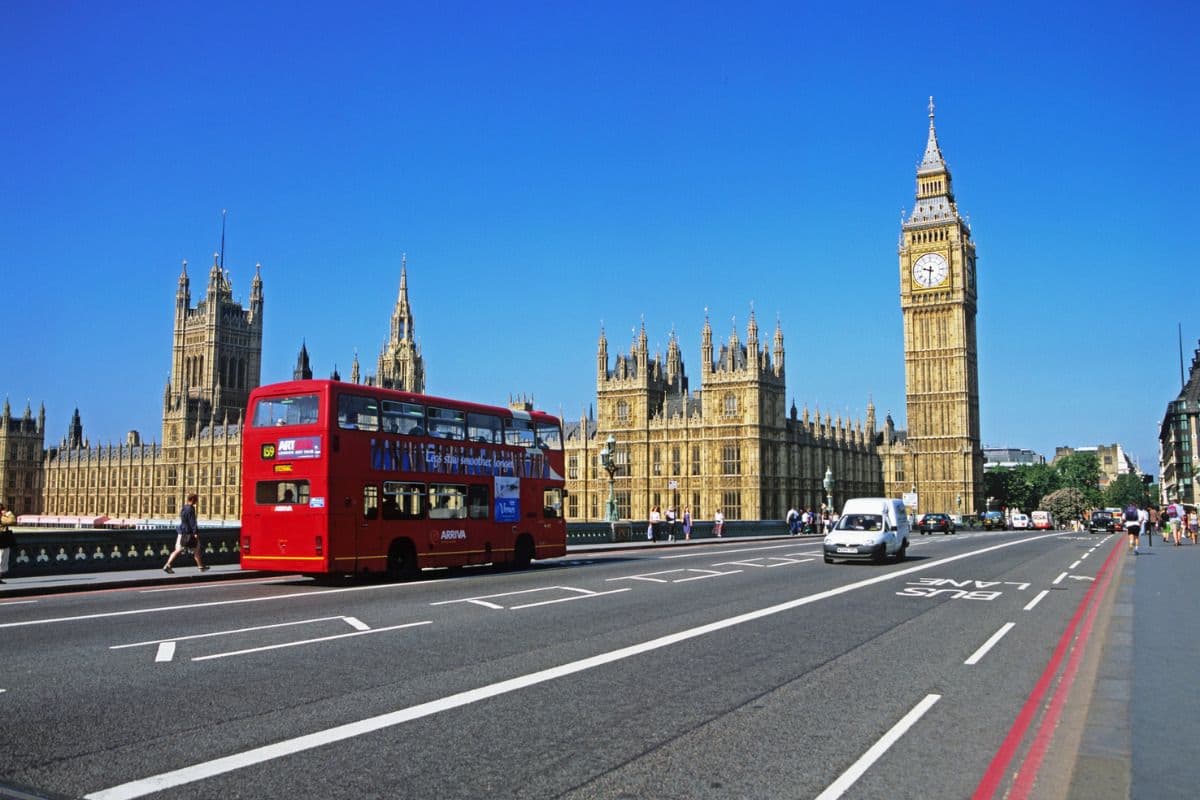
London is home to more than one million businesses and over five million workers across the most diverse economy of any city in the UK. It is also home to one of the most complex health and safety enforcement environments in the country — the HSE, 32 borough environmental health departments, the City of London Corporation's own enforcement programme, the London Fire Brigade, and the Building Safety Regulator all operate simultaneously across the capital. In 2024/25, the HSE completed 246 prosecutions with a 96% conviction rate and secured over £33 million in fines. London businesses face inspection from multiple authorities, procurement gatekeeping from major private and public sector clients, and the ESG reporting requirements of globally connected investors. Getting health and safety right requires more than good intentions — it requires expert support that understands London's specific environment. This guide covers the 12 essential things London businesses need to know about health and safety consultants.
Why London Is Different: The Capital's Unique Compliance Environment
Most health and safety guidance is written for a generic UK employer. For London businesses, the generic approach leaves significant gaps.
The capital's health and safety environment is distinguished by four characteristics that make expert local knowledge essential.
Multi-authority enforcement: London businesses do not face a single enforcement authority. They face the HSE for higher-risk sectors, borough environmental health departments for lower-risk premises, the City of London Corporation for the Square Mile, the London Fire Brigade for fire safety, and the Building Safety Regulator for high-rise properties — each with different priorities, different inspection approaches, and different enforcement powers.
Sector complexity: London's economy spans financial services, technology, construction, healthcare, retail, hospitality, media, legal services, and professional services — each carrying distinct health and safety risk profiles and distinct regulatory requirements. A consultant who excels in one sector may lack the knowledge to serve another effectively.
International reach: A significant proportion of London businesses have international offices. UK health and safety law does not apply in other countries. Managing compliance across multiple jurisdictions requires expert support with genuine in-country knowledge.
Reputational stakes: An incident, an enforcement notice, or a regulatory prosecution in London carries reputational consequences that amplify rapidly in a globally connected media environment. The cost of inadequate health and safety management in London extends well beyond direct regulatory penalties.
Health and Safety Consultants who understand London's specific environment — its enforcement landscape, its sectors, its buildings, and its international connections — provide materially more effective support than generalists applying the same framework to every UK client.
1. London's Enforcement Landscape: Who Inspects Your Business
Understanding who can inspect your London premises — and when — is the essential starting point for compliance management in the capital.
The Health and Safety Executive (HSE): The HSE enforces health and safety law in higher-risk sectors across all 32 London boroughs and the City. In London, HSE enforcement covers construction (which accounts for 28% of UK workplace fatalities), manufacturing operations, healthcare facilities, and any premises involving significant hazardous activities. The HSE's national enforcement campaigns — focused in 2025/26 on work-related ill health, musculoskeletal disorders, asbestos, falls from height, and workplace transport — land in London with the same force as elsewhere.
The 32 London borough environmental health departments: The Health and Safety (Enforcing Authority) Regulations 1998 allocate enforcement responsibility for lower-risk premises to local authorities. For London businesses in offices, retail, hospitality, and leisure, this means the relevant borough's environmental health team conducts inspections. A business with premises in multiple London boroughs faces inspection from multiple different enforcement teams, each with distinct priorities and approaches.
The City of London Corporation: The City operates its own environmental health enforcement function, separate from the borough network and the HSE. Its 2025/26 Commercial Environmental Health programme includes targeted health and safety intervention campaigns aligned with HSE national priorities. The City team reports annually to the HSE via the LAE1 return. For the 500,000 workers who commute into the Square Mile each day, the City Corporation's enforcement activity is a live and active compliance consideration.
The London Fire Brigade (LFB): The LFB enforces the Regulatory Reform (Fire Safety) Order 2005 across almost all non-domestic premises in Greater London. Following the Grenfell Tower fire of 2017 and subsequent legislative reform, the LFB has significantly intensified its inspection activity — particularly in high-rise commercial and residential buildings.
The Building Safety Regulator (BSR): Created by the Building Safety Act 2022 and operating within the HSE, the BSR oversees higher-risk buildings above 18 metres or seven storeys. London's extraordinary concentration of such buildings makes the BSR disproportionately relevant in the capital. In 2024/25, the BSR directed over 1,400 Principal Accountable Persons to submit safety cases.
Health and Safety Consultants with genuine London expertise understand the jurisdiction of each enforcement body, their current priorities, and how to prepare businesses for inspection by the relevant authority for their specific premises and activities.
2. How to Verify That a London Health and Safety Consultant Is Genuinely Qualified
Need Expert H&S Guidance?
Our qualified consultants can help you implement the right health & safety measures for your business.
London's health and safety consultancy market is large, competitive, and unregulated. Anyone can present themselves as a health and safety consultant regardless of qualification or experience. Three independent markers distinguish genuinely qualified practitioners.
CMIOSH — Chartered Member of IOSH: CMIOSH is the professional gold standard for health and safety practitioners in the UK. It requires NEBOSH Diploma-level qualifications or equivalent, independently verified professional experience, and ongoing continuing professional development. A CMIOSH-qualified consultant is bound by IOSH's code of conduct and can be held professionally accountable for their advice.
OSHCR registration: The Occupational Safety and Health Consultants Register (OSHCR) is actively supported by the HSE as a trustworthy way for businesses to find qualified consultants. OSHCR-registered consultants hold professional body membership, carry professional indemnity insurance, and maintain active CPD. The HSE explicitly recommends OSHCR as a starting point for businesses seeking consultancy support. You can verify any OSHCR registration directly on the register before appointing.
Professional indemnity insurance: Any London health and safety consultant advising on matters with legal and financial consequences for the business must carry adequate professional indemnity insurance. Verify the level and currency of cover as a standard step in any appointment process.
The practical check: Always verify that the individual consultant who will actually work with your business holds CMIOSH status and OSHCR registration — not only the firm's senior director or the profile used in marketing materials. The quality of advice depends on the individual providing it, not the brand name on the engagement letter.
3. Matching Sector Expertise to London's Economy
London's economic diversity means that sector expertise matters as much as professional qualification when choosing a health and safety consultant. The right consultant for a City financial services firm is not necessarily the right consultant for a West End hotel or a Stratford construction project.
Financial services (City, Canary Wharf, Mayfair): Primary compliance challenges: DSE compliance for large desk-based workforces, stress and psychosocial risk assessment for high-pressure roles, SMCR governance intersection with health and safety accountability, and international office compliance for global banks, insurers, and asset managers. Named Arinite clients in this sector include Bell Rock Capital.
Technology (Shoreditch, Old Street, King's Cross): Primary compliance challenges: DSE and home workstation assessment for hybrid-first workforces, cybersecurity team burnout as a specific psychosocial risk, remote working hazard assessment, and multi-jurisdiction compliance for international offices. Named Arinite clients include Figma, Akamai, SUSE, and Nikon.
Media and creative (Soho, Southwark, Islington): Primary compliance challenges: DSE and stress management for production-pressured creative teams, mobile and location-based working, and the distinctive demands of live event and broadcast production environments. Named Arinite clients include Shutterstock and Hearst.
Construction (across Greater London): Primary compliance challenges: CDM 2015 compliance, work at height on dense urban sites, workplace transport management, asbestos in refurbishment of London's older commercial and residential stock, and the Building Safety Act 2022 higher-risk building obligations.
Hospitality and night economy (West End, Southwark, East London): Primary compliance challenges: fire safety in high-occupancy premises, Legionella management in complex hotel water systems, manual handling, violence and aggression in licensed premises, Martyn's Law (the Terrorism (Protection of Premises) Act 2025), and seasonal workforce training.
Healthcare (NHS Trusts and private providers): Primary compliance challenges: manual handling of patients and service users, violence and aggression, infection prevention, stress and burnout in high-demand clinical environments, and the specific obligations of Care Quality Commission-regulated services.
Ask specifically about demonstrated experience in your sector — not generic reassurances about breadth of client base.
4. The Full Range of Services London Health and Safety Consultants Provide
A professional London health and safety consultancy provides far more than periodic audit visits. Understanding the full service range helps businesses specify what they need and avoid the fragmented support that leaves compliance gaps.
Competent person service: Every UK employer must appoint a competent person under Regulation 7 of the Management of Health and Safety at Work Regulations 1999. For London businesses without in-house health and safety expertise — the majority, given that most London employers are SMEs — an external consultancy provides this appointment and ensures ongoing access to CMIOSH-qualified expertise.
Health and safety policy: A current, signed, sector-specific policy appropriate to the business. Not a generic template — a document that reflects how the specific organisation actually operates and what its specific risks are.
Risk assessment programme: Comprehensive risk assessments covering all significant hazards — workplace, DSE, manual handling, COSHH, fire, lone working, stress, and any sector-specific activities.
Fire risk assessment: Meeting RRO 2005 obligations across all non-domestic premises, with specific expertise in London Fire Brigade enforcement requirements and Building Safety Act fire safety obligations for high-rise buildings.
Health and Safety Audits: Independent compliance assessment verifying that management systems work in practice — providing the documented evidence that HSE, borough enforcement teams, procurement processes, insurers, and boards require.
Training: Induction, fire safety, manual handling, DSE awareness, stress and mental health, fire marshal, and manager training — all documented with complete records.
Technology platform: Health and Safety Consultants and Software solutions providing digital risk assessment management, training records, incident reporting, action tracking, and compliance dashboards across London and multi-site operations.
International compliance: For London-headquartered businesses with international offices, International Health and Safety Consultants providing locally compliant support across 50+ countries.
5. The Building Safety Act 2022: London's Distinct Additional Obligation
No piece of recent legislation has created more specific compliance obligations for London businesses than the Building Safety Act 2022. London's density of high-rise commercial, mixed-use, and residential buildings makes this Act disproportionately relevant in the capital compared with the rest of England.
What the Act creates for London businesses:
Higher-risk buildings (HRBs): Residential buildings above 18 metres or seven storeys are designated HRBs subject to BSR oversight. London has more such buildings than any other city in England by a significant margin. Accountable Persons and Principal Accountable Persons for these buildings face registration, safety case, and mandatory occurrence reporting obligations that have no precedent in earlier health and safety legislation.
New dutyholder framework: The Act created a new dutyholder chain for construction projects involving HRBs, with Gateway requirements at design, pre-construction, and completion stages that must be navigated and documented.
Golden thread: All information about an HRB's design, construction, and safety-critical features must be maintained as a "golden thread" of digital records throughout the building's life. This obligation continues after practical completion and is ongoing for building owners and managers.
Fire safety interaction: The Building Safety Act works alongside the Regulatory Reform (Fire Safety) Order 2005 as amended by the Fire Safety Act 2021 and the Fire Safety (England) Regulations 2022 — creating an integrated and strengthened fire safety framework for London's multi-occupancy buildings.
London businesses occupying, managing, owning, or developing properties that may meet HRB criteria need health and safety support that understands the Building Safety Act framework in depth.
6. Mental Health and Psychosocial Risk: London's Leading Compliance Priority
Work-related stress, depression, and anxiety is the leading cause of work-related ill health in Great Britain, accounting for 52% of all cases and 964,000 workers in 2024/25 — a record high. Mental health and stress are central to HSE's 2025/26 enforcement strategy, with inspections increasingly assessing psychological health alongside physical risks.
For London's dominant sectors — financial services, legal, technology, healthcare, and professional services — the psychosocial risk profile is above the national average. London workers in these sectors are documented to experience above-average rates of chronic stress, driven by performance culture, billing pressure, long hours, high-stakes decision-making, and the always-on digital connectivity that characterises how London's knowledge economy operates.
What London employers must do:
Formal stress risk assessment: Using the HSE Management Standards framework, covering all six factors: Demands, Control, Support, Relationships, Role, and Change. This is not a wellbeing initiative — it is a legal requirement under the Management of Health and Safety at Work Regulations 1999.
Management training: Line managers are the primary point of contact for employees experiencing stress or mental health difficulties. Training managers to recognise indicators, hold supportive conversations, and connect employees with appropriate support is among the highest-impact investments a London employer can make.
DSE and home working: Inadequate home workstation conditions are a significant and often overlooked cause of musculoskeletal disorders and cumulative stress. The HSE confirmed in 2025 that DSE obligations extend explicitly to all home workers. Research indicates approximately 50% of hybrid workers have not received adequate DSE assessment — a compliance gap with direct enforcement implications.
The SMCR dimension for regulated London businesses: FCA-regulated financial services and fintech firms in London operate under the Senior Managers and Certification Regime. Individual senior managers responsible for people and operations carry health and safety governance accountability within their SMCR accountability maps. Systemic mental health failures in an area of personal responsibility can become relevant to FCA fitness and propriety assessments.
7. Health and Safety Audits for London Businesses: What Independent Review Delivers
Independent Health and Safety Audits are one of the most valuable investments a London business can make in its compliance management. They provide the objective, expert assessment that internal review cannot generate of its own operations — and they create the documented evidence that every significant compliance interaction in London ultimately requires.
What a London health and safety audit examines:
Beyond the standard audit framework — policy, risk assessment, training, incident management, equipment, emergency arrangements, and monitoring — a London audit should specifically address:
Building Safety Act compliance for businesses in or managing higher-risk buildings — verifying Accountable Person obligations, safety case status, and fire safety documentation.
Multi-authority compliance — checking whether documentation meets the requirements of each relevant enforcement body: HSE, borough environmental health, LFB, and BSR as applicable.
Home and hybrid working — verifying that DSE assessment coverage extends to all home workers, not only office-based staff, and that identified deficiencies have been addressed.
Psychosocial risk — examining whether a formal stress risk assessment exists, whether Management Standards factors have been assessed, and whether management training is in place.
International compliance — for London businesses with overseas offices, verifying that locally compliant documentation exists in each jurisdiction rather than UK-standard documents applied globally.
SMCR alignment — for FCA-regulated businesses, checking whether health and safety governance is mapped within accountability frameworks and evidenced appropriately.
Annual Health and Safety Audits are standard practice. London businesses facing specific enforcement scrutiny, material operational changes, or impending tender submissions benefit from additional audit activity.
8. International Health and Safety for London's Global Businesses
London is the European or global headquarters of thousands of multinational organisations — a defining characteristic of the capital's economy that creates a health and safety compliance dimension absent from most regional business environments.
UK health and safety law does not apply outside Great Britain. Every country where a London business employs people requires compliance with the local health and safety framework. Applying UK documentation globally creates the appearance of comprehensive management while generating systematic non-compliance in every international location.
Key international requirements for London-based multinationals:
Netherlands: The RI&E risk assessment is mandatory for every employer. Companies with 25 or more employees require certified external review. Every employer must contract a certified occupational health service (arbodienst) from the first employee.
France: The DUERP risk assessment is mandatory from the first employee with 40-year retention. Companies with 50 or more employees must produce a PAPRIPACT annual prevention programme. French labour inspectors can enter any premises without notice.
Germany: DGUV regulations through sector-specific Berufsgenossenschaften apply. Works council co-determination rights over health and safety arrangements are extensive and must be respected before significant changes are implemented.
Italy: RSPP responsible safety officer requirements apply to all employers. DVR risk assessment documentation is mandatory. Multi-authority enforcement creates overlapping inspection exposure.
International Health and Safety Consultants provide coordinated support across all these jurisdictions from Arinite's London headquarters — enabling London-based group management to maintain consistent standards while meeting each country's specific regulatory requirements.
ISO 45001 provides the internationally recognised management system framework that supports consistent health and safety management across London and international operations — increasingly required by European enterprise clients, supply chains, and institutional investors.
9. Technology and Health and Safety Management for London Businesses
London's professional and corporate business community sets high expectations for the quality and efficiency of every management function — and health and safety is no exception. Paper-based systems and email-driven processes do not meet the expectations of London's knowledge economy.
Health and Safety Consultants and Software solutions provide the digital infrastructure that turns health and safety from a periodic compliance task into a continuously managed, data-visible function.
What technology provides for London businesses:
Digital risk assessment management: Risk assessments created, reviewed, and stored in a managed system with version control, review scheduling, and employee acknowledgement tracking. Current at all times rather than filed after initial completion.
Training record management: Complete training histories for every employee, automatic alerts for approaching refresher dates, and management visibility of training compliance across the workforce — essential for London's large desk-based workforces with DSE, fire, and stress training obligations.
Incident reporting: Mobile-first incident and near-miss reporting from any London location, with RIDDOR classification support and root cause investigation workflows.
Audit action management: All Health and Safety Audit findings automatically assigned to named owners with deadlines. Overdue actions escalated to management without manual intervention.
Multi-site dashboards: For London businesses with multiple offices across boroughs or nationally, consolidated compliance visibility across all locations simultaneously — enabling management to identify where attention and resource are most needed.
SMCR-compatible reporting: Structured reports in formats appropriate for senior manager review and board-level governance — providing the evidence of systematic management that SMCR accountability requires.
10. The Real Cost of Getting Health and Safety Wrong in London
London's operating costs amplify the financial consequences of health and safety failures. Every dimension of incident cost — absence pay, replacement recruitment, management time, civil litigation, and reputational damage — runs at London wage and cost levels.
Direct financial consequences:
The HSE's Fee for Intervention charges £174 per hour for any material breach identified during inspection. At London management cost levels, this is the equivalent of senior employee time — but unlike management time, it produces no commercial output.
Prosecution fines are unlimited and calibrated to organisational turnover. The HSE secured £33 million in fines from 246 prosecutions in 2024/25. For a London financial services firm, technology company, or professional services practice, the reputational impact of a prosecution can be more damaging than the fine itself.
Indirect financial consequences:
Civil litigation at London costs generates claimant legal costs, expert witness fees, and settlement values that dwarf those in lower-cost regions. Employers' liability claims following serious London incidents can run to six figures.
Replacement recruitment in competitive London talent markets — for a skilled employee absent or departed due to a work-related health condition — typically costs one third of annual salary. At London compensation levels, this is a substantial operational cost.
The commercial enabler argument:
For London businesses tendering for public sector contracts, major corporate supply chains, or financial services procurement, health and safety is increasingly a pass/fail commercial prerequisite. A London professional services firm with a current independent audit report and a named CMIOSH-qualified competent person wins contracts that equivalent competitors without this evidence lose — regardless of price.
The annual cost of a retained advisory service and independent audit programme is a fraction of the value of a single major contract that health and safety compliance enables.
11. Choosing a London Health and Safety Consultancy With Long-Term Value
The final and most commercially important consideration when selecting a London health and safety consultant is the quality of the long-term relationship — not the quality of the initial proposal.
Health and safety compliance is not a project with a completion date. Regulations evolve. Martyn's Law (the Terrorism (Protection of Premises) Act 2025) introduced new obligations for London's public venues in 2025. The Building Safety Act continues to develop through secondary legislation and BSR enforcement. HSE enforcement priorities shift. New business activities, new premises, and new international offices all change the compliance requirements.
A consultancy that audits, reports, and leaves delivers a snapshot that begins to age immediately. A consultancy that maintains an ongoing relationship keeps documentation current, communicates legislative changes proactively, updates risk assessments as the business changes, and supports the business through incidents, inspections, and growth.
What to look for in a long-term London consultancy relationship:
CMIOSH-qualified, OSHCR-registered consultants who are professionally accountable for the quality of their advice.
Named consultant relationships — a specific individual who knows the business, not a rotating roster or anonymous call centre.
Proactive legislative monitoring — communication of regulatory changes before they create compliance gaps, not after an enforcement visit identifies them.
Integrated technology — Health and Safety Consultants and Software providing ongoing document management and compliance visibility between consultancy interactions.
International capability — for London businesses with or planning overseas operations, genuine in-country expertise in relevant jurisdictions rather than generic awareness.
Demonstrated client retention — consistently high retention rates indicate that clients receive value that makes renewal automatic, not merely renewal that feels difficult to avoid.
Arinite's 95%+ client retention rate across more than 1,500 global businesses reflects the consistent, long-term value that the right London health and safety consultancy partnership delivers.
12. Arinite: Health and Safety Consultants in London
Arinite is a City of London-headquartered health and safety consultancy providing Health and Safety Consultants services to London businesses across all sectors and internationally.
London credentials: Headquartered at 9 Throgmorton Avenue, EC2 — in the heart of the City — with consultants serving all London sectors and boroughs. Genuine understanding of London's multi-authority enforcement landscape, including the City of London Corporation's Commercial Environmental Health programme and London Fire Brigade enforcement priorities.
CMIOSH-qualified and OSHCR-registered: All client-facing consultants hold Chartered Member of IOSH status, independently verifiable through the OSHCR register.
Demonstrated London sector expertise: Serving financial services clients including Bell Rock Capital, technology businesses including Figma, Akamai, SUSE, and Nikon, media organisations including Shutterstock and Hearst, marketing groups including IPG, and retail businesses including B&Q.
Complete service range: Competent person service, risk assessment, health and safety policy, fire risk assessment, Health and Safety Audits, training, health and safety manual, and ISO 45001 implementation.
Integrated technology: Health and Safety Consultants and Software combining professional expertise with digital platforms for risk assessment management, training records, audit management, and compliance dashboards.
International reach: International Health and Safety Consultants supporting London-headquartered businesses with international offices across 50+ countries — Netherlands, France, Germany, Italy, Spain, Canada, and beyond.
Frequently Asked Questions
Who enforces health and safety for London businesses?
Enforcement is divided between the HSE (higher-risk sectors: construction, manufacturing, healthcare), 32 borough environmental health departments (lower-risk premises: offices, retail, hospitality), the City of London Corporation (premises in the Square Mile), the London Fire Brigade (fire safety), and the Building Safety Regulator (higher-risk buildings above 18 metres or seven storeys).
How do I find a qualified health and safety consultant in London?
The OSHCR register, supported by the HSE, allows you to search for qualified consultants by location and sector. Look for CMIOSH qualification and verify that the individual consultant — not just the firm — holds these credentials. Confirm sector-specific London experience, the full range of services offered, and whether the consultancy provides integrated technology alongside professional expertise.
Does health and safety apply to London office-based businesses?
Yes. The Health and Safety at Work Act 1974 applies to every employer regardless of sector. London office businesses have specific obligations under the DSE Regulations 1992 (covering all screen users including home workers), the Management of Health and Safety at Work Regulations 1999 (including stress risk assessment), the Regulatory Reform (Fire Safety) Order 2005 (fire risk assessment for all premises), and the general duty to protect employees from all significant risks.
What is the Building Safety Act 2022 and does it affect London businesses?
The Building Safety Act 2022 created the Building Safety Regulator and introduced new dutyholder obligations for higher-risk buildings above 18 metres or seven storeys. London's concentration of such buildings makes this legislation particularly relevant in the capital. Businesses occupying, managing, owning, or developing qualifying premises face registration, safety case, and mandatory occurrence reporting obligations.
How much does a London health and safety consultant cost?
Costs vary based on service scope, organisation size, risk profile, and whether international operations are included. For most London SMEs, a retained advisory arrangement including competent person service is available from a few hundred pounds per month. A free Gap Analysis Call with Arinite will clarify the right level of support and investment for your specific business.
Can a London consultant support our international offices?
Yes, if they have genuine international expertise. Arinite's International Health and Safety Consultants support London businesses with offices in the Netherlands, France, Germany, Italy, Spain, and 50+ other countries — providing locally compliant documentation and coordinated audit programmes.
What sectors does Arinite serve in London?
Financial services, technology, media and creative, professional services, construction, retail, hospitality, healthcare, marketing, and more. Named London clients include Bell Rock Capital, Figma, Akamai, SUSE, Nikon, Shutterstock, Hearst, IPG, and B&Q.
How often should a London business have a health and safety audit?
Annual Health and Safety Audits are standard practice as a minimum. Additional audits are warranted following significant business changes, new site openings, incidents, or when preparing for anticipated enforcement attention from HSE, borough environmental health, or the London Fire Brigade.
Taking the Next Step
London's health and safety environment demands expert support that understands the capital's specific enforcement landscape, its dominant sectors, its high-rise building stock, and the international reach that distinguishes so many London businesses from their counterparts elsewhere in the UK.
Assess your position: Take our Health and Safety Quiz to evaluate your current compliance across the areas most relevant to London businesses.
Speak to a London specialist: Book a free Gap Analysis Call with an Arinite consultant to discuss your specific situation, understand your obligations, and identify the right level of support.
Engage London expertise: Contact Arinite to learn how our Health and Safety Consultants, based in the City of London, support businesses across all London sectors and internationally.
Arinite is a City of London-headquartered provider of Health and Safety Consultants services, supporting over 1,500 global businesses across the UK and 50+ countries with a 95%+ client retention rate. Key external resources: HSE guidance on finding a consultant | OSHCR register | City of London H&S legislation | London Fire Brigade fire safety | Building Safety Regulator | HSE enforcement statistics
Written by
Arinite Health & Safety Consultants
Health & Safety Expert at Arinite