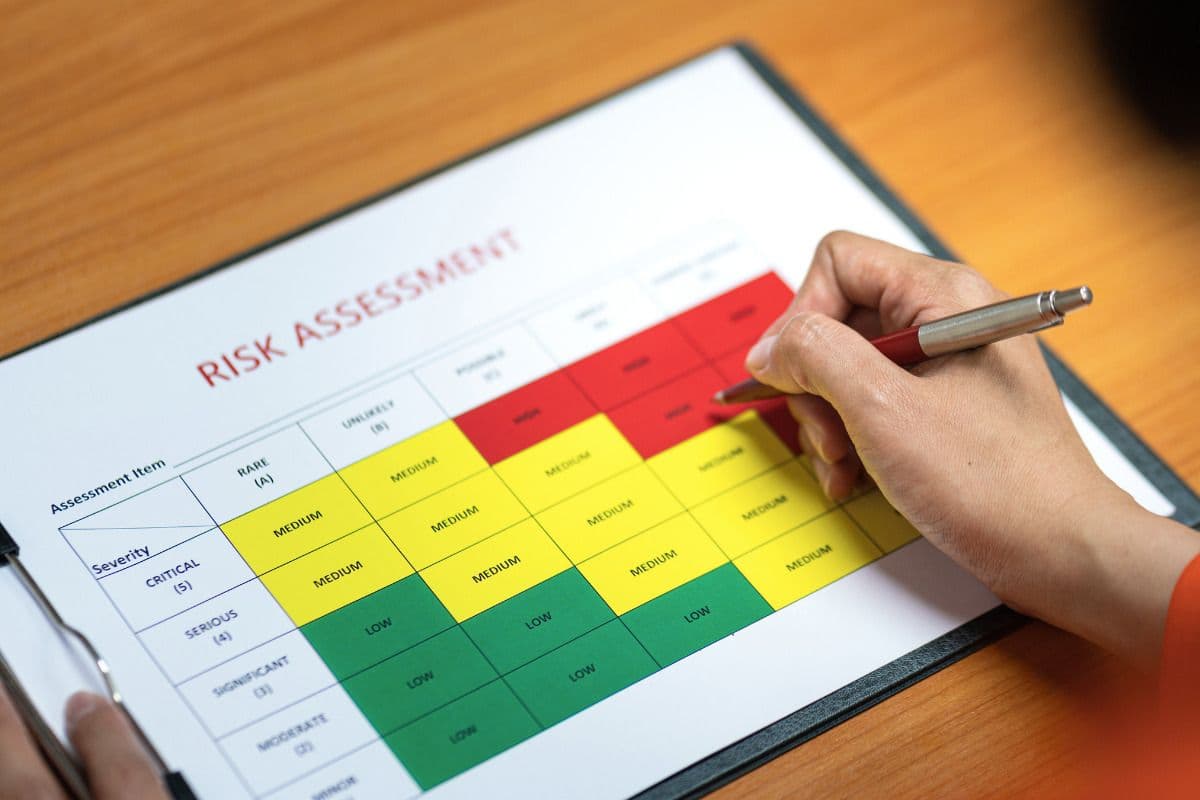
Fire Risk Assessment: What It Is, the Law, and Who Needs One
A fire risk assessment is a systematic examination of a premises to identify fire hazards, the people at risk, and the measures needed to keep them safe, and for the vast majority of UK premises it is a legal requirement. Under the Regulatory Reform (Fire Safety) Order 2005, the Responsible Person for almost every non-domestic premises in England and Wales must ensure a suitable and sufficient fire risk assessment is carried out and kept up to date. This is not optional, and the consequences of failing to comply are severe: unlimited fines, and in the most serious cases imprisonment. Yet many businesses, particularly office-based firms occupying space in larger buildings, misunderstand their obligations, assuming the landlord has it covered or that a small office does not need one. This guide explains what a fire risk assessment is, the law behind it, who is responsible, what the process involves, who can carry one out, and how to choose a competent provider.
Why Fire Risk Assessment Matters for Every Business
Fire is among the most serious risks any business faces. A significant fire can cause death and injury, destroy premises and stock, interrupt operations for months, and end businesses entirely. The law treats it with corresponding seriousness, and so should every employer and building occupier.
The legal framework is clear and demanding. The Regulatory Reform (Fire Safety) Order 2005 places a duty on the Responsible Person for virtually every non-domestic premises to carry out and maintain a fire risk assessment. Enforcement is active and the penalties are severe: fire and rescue authorities can issue enforcement and prohibition notices, and prosecution can result in unlimited fines and, for the most serious breaches, imprisonment. Following the strengthening of fire safety law in recent years, including the Fire Safety Act 2021 and the Fire Safety (England) Regulations 2022, the expectations on Responsible Persons have only increased.
Beyond compliance, a fire risk assessment is simply good business sense, protecting people, property, and continuity. A fire risk assessment carried out by a competent professional gives a business confidence that it has identified its fire risks and put adequate measures in place, and the documented evidence that it has met its legal duty.
1. What a Fire Risk Assessment Is
A fire risk assessment is a structured, systematic evaluation of a premises to identify what could cause a fire, who could be harmed, and what needs to be done to reduce the risk to an acceptable level.
It is not a one-off inspection or a tick-box exercise. It is an organised process that examines the building, its occupants, its activities, and its existing fire safety measures, and concludes with an action plan to address any deficiencies.
A fire risk assessment identifies and evaluates:
- The fire hazards present, sources of ignition, fuel, and oxygen
- The people at risk, employees, visitors, contractors, and anyone especially vulnerable
- The likelihood of a fire occurring and the potential consequences
- The adequacy of existing fire safety measures, detection, warning, escape routes, firefighting equipment, signage, and emergency lighting
- The additional measures needed to reduce risk to an acceptable level
The output: A fire risk assessment produces a documented record of the findings, the people identified as at risk, and an action plan setting out what must be done, by whom, and by when. For premises where five or more people are employed, or which are licensed, the significant findings must be recorded.
A fire risk assessment is the foundation of fire safety management, the document from which all other fire safety arrangements flow.
2. The Legal Requirement: The Regulatory Reform (Fire Safety) Order 2005
Need Expert H&S Guidance?
Our qualified consultants can help you implement the right health & safety measures for your business.
Fire risk assessment is a legal requirement, and understanding the law is essential for every Responsible Person.
The core duty: The Regulatory Reform (Fire Safety) Order 2005, often called the Fire Safety Order or the RRO, is the principal fire safety legislation for non-domestic premises in England and Wales. It requires the Responsible Person to carry out a fire risk assessment, identify the fire safety measures needed, implement and maintain them, and keep the assessment up to date.
Where it applies: The Order applies to virtually all non-domestic premises, including workplaces and offices, shops, restaurants and pubs, hotels, care homes, factories and warehouses, and the common parts of blocks of flats and houses in multiple occupation. Very few premises are exempt.
Recording the findings: Where five or more people are employed, where the premises are licensed, or where an alterations notice is in force, the significant findings of the assessment must be recorded in writing. In practice, almost all businesses should keep a written record regardless, as evidence of compliance.
Recent strengthening: Fire safety law has been strengthened following the Grenfell Tower tragedy. The Fire Safety Act 2021 clarified that the RRO applies to the structure, external walls, and flat entrance doors of multi-occupied residential buildings, and the Fire Safety (England) Regulations 2022 introduced further duties for certain buildings. The direction of travel is towards greater rigour and accountability.
The penalties: Breaches can result in enforcement notices, prohibition notices, and prosecution carrying unlimited fines and, for serious breaches, imprisonment. The government's guidance on workplace fire safety sets out the responsibilities in summary.
3. Who Is the Responsible Person?
The Fire Safety Order places its duties on the "Responsible Person," and identifying who this is matters, because it is they who carry the legal obligation.
In a workplace: The Responsible Person is the employer, if the workplace is to any extent under their control.
In other premises: The Responsible Person is the person who has control of the premises, or the owner, in connection with carrying on a trade, business, or other undertaking.
Where there are multiple duty holders: In many premises, particularly multi-occupied buildings, there is more than one Responsible Person, and they have a legal duty to cooperate and coordinate with one another.
The shared-building reality for office firms: This is where office-based businesses most commonly misunderstand their position. A firm occupying a floor in a larger building is frequently a Responsible Person for its own demised area, even though the building owner or managing agent is the Responsible Person for the common parts and the building structure. The duties are shared, not transferred. A common and dangerous assumption is that the landlord handles all fire safety, when in fact the tenant firm retains responsibility for fire safety arrangements within its own space, escape route awareness, fire warden arrangements, staff training, and assisting the building-wide fire strategy.
Identifying who the Responsible Person is, and what each duty holder is responsible for, is one of the first things a competent fire risk assessment clarifies.
4. The Five Steps of a Fire Risk Assessment
A fire risk assessment follows a recognised five-step methodology, set out in government guidance, that ensures a systematic and thorough examination.
Step 1: Identify the fire hazards Identify the sources of ignition (heaters, electrical equipment, faulty wiring, smoking, cooking, hot work), the sources of fuel (paper, packaging, furniture, flammable liquids and gases, waste), and the sources of oxygen that could enable a fire to start and spread.
Step 2: Identify the people at risk Identify who is at risk in the event of a fire, employees, visitors, contractors, members of the public, and in particular anyone especially at risk, such as people with disabilities, lone workers, those working near fire hazards, or, in residential settings, sleeping occupants.
Step 3: Evaluate, remove or reduce the risks Evaluate the likelihood of a fire and its potential consequences, then decide what to do about the risks identified, removing or reducing hazards where possible, and ensuring adequate fire safety measures: detection and warning, means of escape, firefighting equipment, emergency lighting, signage, and maintenance arrangements.
Step 4: Record, plan, inform, instruct and train Record the significant findings and the action plan, prepare an emergency plan, inform and instruct relevant people, and provide fire safety training to staff, including the appointment and training of fire wardens or marshals.
Step 5: Review and revise Keep the assessment under review and revise it whenever there is a significant change, to the building, its use, its occupants, or the activities carried out, or following a fire or near miss.
This methodology ensures that the assessment is suitable and sufficient, the legal standard, rather than a superficial walk-around.
5. What a Fire Risk Assessment Covers in Practice
A thorough fire risk assessment examines a wide range of elements across the premises.
Means of escape: Are there adequate, clearly marked, unobstructed escape routes and exits? Can everyone, including those with mobility needs, evacuate safely in the time available? Are travel distances acceptable?
Detection and warning: Is there an appropriate fire detection and alarm system, adequately maintained, that will warn everyone in time?
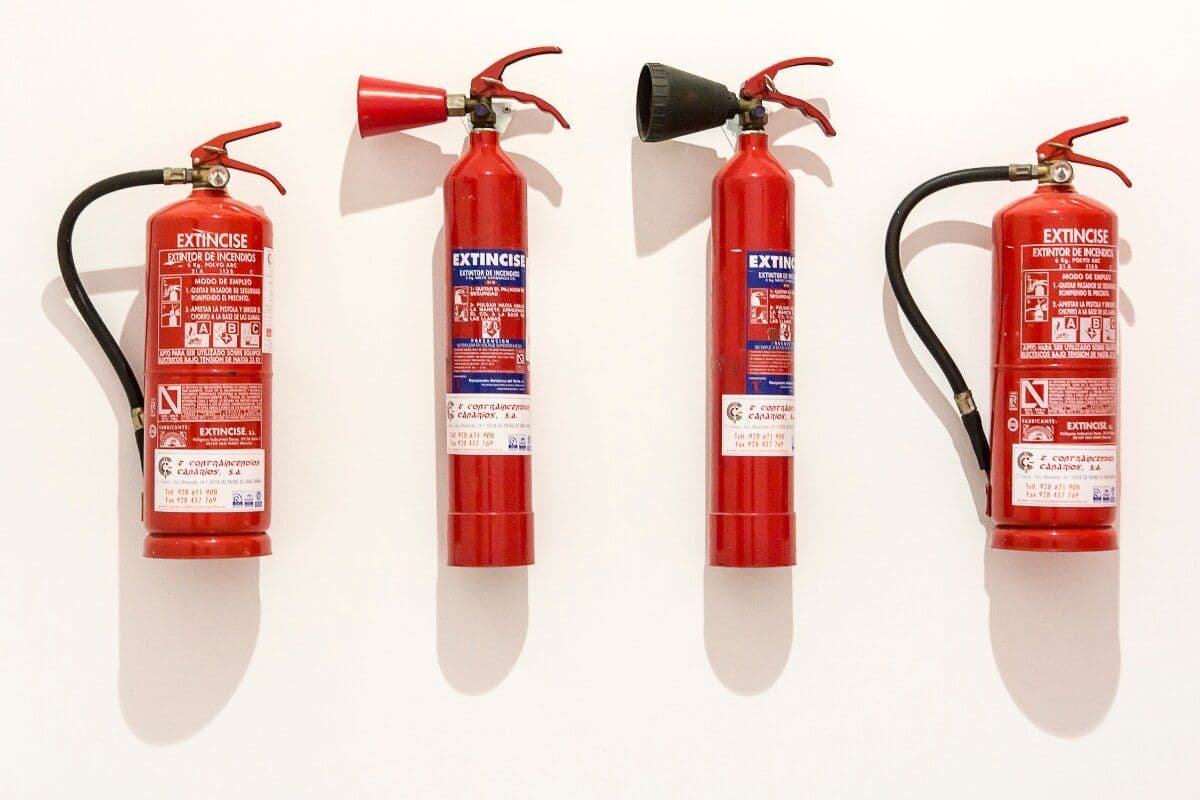
Firefighting equipment: Are suitable extinguishers and other firefighting provisions in place, correctly sited, and maintained?
Emergency lighting: Will escape routes remain usable if the power fails?
Signage: Are fire exits, equipment, and assembly points clearly signed?
Fire doors and compartmentation: Are fire doors present, in good condition, and not propped open? Is the building's compartmentation, which limits fire spread, intact?
Sources of ignition and fuel: Are ignition sources controlled and fuel loads managed, including good housekeeping and waste control?
Electrical safety: Is electrical equipment maintained and not overloaded, a common ignition source in offices?
Management arrangements: Is there an emergency plan? Are staff trained? Are fire wardens appointed? Are drills conducted? Is maintenance recorded?
Vulnerable people: Are Personal Emergency Evacuation Plans (PEEPs) in place for anyone who would need assistance to evacuate?
6. Who Can Carry Out a Fire Risk Assessment?
A frequently asked and important question: who is qualified to carry out a fire risk assessment? The answer matters legally and practically.
The legal position: The Fire Safety Order requires that the Responsible Person appoints a "competent person" to carry out or assist with the fire risk assessment. A person is competent if they have sufficient training, experience, knowledge, and other qualities to do so properly.
Can the Responsible Person do it themselves? For very simple, low-risk premises, a Responsible Person who has educated themselves using government guidance may be able to carry out their own assessment. However, for anything beyond the simplest premises, and certainly for any premises of meaningful size, complexity, or risk, this is rarely advisable. The Fire Safety (England) Regulations and the strengthening of fire safety law have raised expectations, and a Responsible Person who carries out an inadequate assessment remains legally liable.
Why competence matters: An inadequate fire risk assessment, one that misses hazards, underestimates risk, or fails to specify the right measures, exposes people to danger and the Responsible Person to prosecution. Fire safety is technical, and the consequences of getting it wrong are among the most serious in health and safety.
The professional route: For most premises, engaging a competent fire risk assessor, a professional with the relevant training, qualifications, and experience, is the sensible and often necessary route. This ensures the assessment is genuinely suitable and sufficient, and provides the Responsible Person with credible evidence that they discharged their duty properly. Many businesses engage Health and Safety Consultants who provide competent fire risk assessment as part of broader fire safety and health and safety support.
7. How Often Should a Fire Risk Assessment Be Reviewed?
The Fire Safety Order requires the assessment to be kept up to date, but does not specify a fixed interval. Best practice and the nature of the duty provide clear guidance.
Regular review: A fire risk assessment should be reviewed regularly. Common practice is an annual review, with a more comprehensive reassessment periodically, often every few years, depending on the premises and risk.
Review on significant change: Crucially, the assessment must be reviewed and, if necessary, revised whenever there is a significant change, including:
- Changes to the building, layout, extensions, alterations, or refurbishment
- Changes in the use of the premises or the activities carried out
- Changes in the number or type of occupants, including more vulnerable people
- The introduction of new equipment, processes, or hazards
- After a fire, a near miss, or a false alarm pattern
- Changes in fire safety legislation or guidance
The risk of the stale assessment: An assessment that no longer reflects the premises, because the layout has changed, the business has grown, or the use has altered, is no longer suitable and sufficient, and leaves the Responsible Person exposed. For growing businesses and changing premises, regular review is essential, not optional.
A professional provider will typically build review into an ongoing arrangement, ensuring the assessment stays current as the premises and business change.
8. Fire Risk Assessment for Offices and Multi-Tenant Buildings
Office-based firms, including the technology, finance, and professional services businesses that occupy much of the UK's commercial space, face specific fire risk assessment considerations.
The shared-responsibility challenge: As noted, a firm occupying part of a larger building is typically a Responsible Person for its own area, while the building owner or managing agent is responsible for common parts and structure. The duties must be coordinated. A competent assessment clarifies exactly where the firm's responsibility lies and ensures it is discharged, rather than the firm wrongly assuming the landlord covers everything.
What an office fire risk assessment addresses: Means of escape from the demised area and how they connect to the building's escape strategy, integration with the building's fire detection and alarm system, fire warden and evacuation arrangements for the firm's staff, electrical safety for the high volume of equipment in a modern office, good housekeeping and fuel control, and PEEPs for any employees who need them.
The coordination duty: The firm must cooperate with the building's other Responsible Persons, understanding the building-wide fire strategy, participating in building evacuation arrangements, and ensuring its own arrangements align.
Why office firms must not neglect this: Because office environments seem low-risk, fire safety is often the most neglected obligation in office-based firms. But the legal duty is identical to any other premises, and the consequences of an office fire, in a building full of people, are no less serious. An office fire risk assessment by a competent assessor ensures the firm meets its duty properly.
9. The Cost of a Fire Risk Assessment
Cost is a common question, and understanding what drives it helps businesses budget appropriately.
What determines cost: The cost of a fire risk assessment depends on the size and complexity of the premises, the nature of the activities carried out, the number of occupants, and the level of risk. A small, simple office will cost considerably less than a large, complex, or high-risk premises such as a factory, care home, or multi-occupied building.
Value, not just cost: A professional fire risk assessment is a modest cost set against what it protects, lives, premises, business continuity, and the Responsible Person's freedom from prosecution. The cost of an inadequate or absent assessment, an enforcement penalty, a prohibition notice closing the premises, a prosecution, or worst of all a fire causing harm, vastly exceeds the cost of doing it properly.
Ongoing arrangements: Many businesses build fire risk assessment into an ongoing health and safety support arrangement, which spreads the cost, ensures regular review, and connects fire safety to the wider management of risk. This is frequently more cost-effective and more reliable than commissioning one-off assessments and forgetting to review them.
The right comparison: The question is not whether a business can afford a fire risk assessment, but whether it can afford the consequences of not having a competent one. For a legal requirement that protects people and the business itself, professional assessment is among the most justified safety expenditures a business makes. A free Gap Analysis Call helps clarify what a specific business needs.
10. Choosing a Fire Risk Assessment Provider
With fire safety competence so important and the market varied, choosing the right provider matters. The following criteria help.
Demonstrable competence: The assessor should have relevant fire safety training, qualifications, and experience. Ask about their specific fire safety competence, not just general health and safety credentials, although the two often go together in a good provider. Membership of relevant professional bodies and registration schemes is a positive indicator.
Relevant experience: A provider experienced with premises like yours, offices, multi-tenant buildings, your particular sector, will identify the risks that matter. Ask for evidence of comparable work.
Professional indemnity insurance: Confirm the provider carries adequate, current cover, essential given the consequences of an inadequate assessment.
Quality of output: Ask to see an anonymised example assessment. Is it specific, thorough, and genuinely useful, with a clear, prioritised action plan? Or is it a generic template?
Independence and credibility: An independent, competent assessment carries credibility with enforcing authorities, insurers, and, in a multi-tenant building, other duty holders.
Ongoing support: A provider who offers review and ongoing fire safety support, rather than a single assessment, helps ensure the assessment stays current, and connects fire safety to wider health and safety management.
The integrated approach: For many businesses, the most efficient route is a provider who delivers fire risk assessment as part of broader Health and Safety Consultants support, so fire safety sits within a coherent, professionally managed approach to risk, supported by Health and Safety Consultants and Software that tracks assessments, actions, and reviews.
11. Fire Risk Assessment Within Wider Health and Safety Management
Fire risk assessment does not sit in isolation, it is part of an organisation's broader health and safety management, and managing it that way is more effective.
The connection to general risk assessment: Fire is one of the significant risks an organisation must assess under the Management of Health and Safety at Work Regulations 1999, alongside the specific duty under the Fire Safety Order. A coherent approach addresses fire safety within the overall risk management framework.
The connection to policy and training: The health and safety policy should address fire safety arrangements, and the health and safety training programme should include fire safety awareness, fire warden training, and evacuation drills. The fire risk assessment identifies these needs; the wider management system delivers them.
The connection to audit: Independent Health and Safety Audits verify that fire safety arrangements, like all other arrangements, are genuinely working, that the assessment is current, the actions completed, the training delivered, and the drills conducted.
The competent person: A competent person supporting the organisation's health and safety ensures fire safety is managed alongside everything else, coherently and continuously, rather than as an isolated annual task.
The integrated benefit: Managing fire risk assessment within wider health and safety support, rather than as a standalone purchase, ensures it stays current, connects to training and policy, is independently verified, and forms part of a genuinely managed approach to protecting people, exactly what the law and good practice intend.
12. How Arinite Delivers Fire Risk Assessment
Arinite provides competent fire risk assessment as part of comprehensive health and safety support to over 1,500 businesses across the UK and 50+ countries, with a 95%+ client retention rate.
Arinite's fire risk assessment service:
Competent, professional assessment: Fire risk assessments carried out by competent professionals, following the recognised five-step methodology, producing suitable and sufficient assessments with clear, prioritised action plans.
Office and multi-tenant expertise: Particular experience with office-based firms and multi-tenant buildings, clarifying the shared-responsibility position and ensuring the firm meets its own duties while coordinating with other duty holders.
Sector breadth: Fire risk assessment across sectors, offices, retail, hospitality, healthcare, industrial, and more, see the sectors page, with the relevant expertise for each.
Review and ongoing support: Fire risk assessment built into ongoing arrangements, with regular review and revision on change, so the assessment stays current as premises and businesses evolve.
Integration with wider health and safety: Fire safety managed within a coherent approach alongside risk assessment, policy, training, and audit, supported by Health and Safety Consultants and Software that tracks assessments, actions, and reviews.
Documented compliance: Assessments and records that provide the Responsible Person with credible evidence of compliance for enforcing authorities, insurers, and other duty holders.
International capability: For businesses with premises abroad, International Health and Safety Consultants coordinate fire and wider safety compliance across jurisdictions.
Named clients including Bell Rock Capital, Figma, Akamai, SUSE, Nikon, Shutterstock, Hearst, IPG, and B&Q rely on Arinite for fire risk assessment and the wider management of their health and safety obligations.
Frequently Asked Questions
Is a fire risk assessment a legal requirement?
Yes. Under the Regulatory Reform (Fire Safety) Order 2005, the Responsible Person for virtually every non-domestic premises in England and Wales must ensure a suitable and sufficient fire risk assessment is carried out and kept up to date. Where five or more people are employed, or the premises are licensed, the significant findings must be recorded in writing.
Who is responsible for the fire risk assessment?
The Responsible Person, in a workplace, usually the employer; otherwise the person or organisation in control of the premises, or the owner. In multi-occupied buildings there are often several Responsible Persons who must cooperate. A firm occupying part of a building is typically responsible for fire safety within its own area, even though the landlord is responsible for common parts, the duties are shared, not transferred to the landlord.
Who can carry out a fire risk assessment?
The Responsible Person must appoint a competent person, someone with sufficient training, experience, and knowledge. For very simple, low-risk premises this may be the Responsible Person themselves, but for anything beyond the simplest premises, a competent professional fire risk assessor is the sensible and often necessary route, given the technical nature and serious consequences of getting it wrong.
How often should a fire risk assessment be reviewed?
It must be kept up to date. Common practice is annual review, with periodic comprehensive reassessment. Crucially, it must be reviewed and revised whenever there is a significant change, to the building, its use, its occupants, or activities, or after a fire or near miss. A stale assessment that no longer reflects the premises is no longer suitable and sufficient.
Does my office need a fire risk assessment if we rent space in a larger building?
Almost certainly yes. A firm occupying part of a building is typically a Responsible Person for its own demised area, with duties to assess fire risk within that space, maintain escape awareness, appoint and train fire wardens, and coordinate with the building's other duty holders. Assuming the landlord covers all fire safety is a common and dangerous mistake.
How much does a fire risk assessment cost?
Cost depends on the size, complexity, and risk of the premises, the activities, and the number of occupants. A small simple office costs considerably less than a large or high-risk premises. Whatever the figure, it is modest set against the consequences of an inadequate assessment, an enforcement penalty, prohibition, prosecution, or a fire causing harm. A free Gap Analysis Call clarifies what a specific business needs.
Taking the Next Step
A fire risk assessment is a legal requirement and one of the most important steps any business takes to protect its people, premises, and continuity. Getting it right, with a competent, thorough, current assessment, discharges a serious legal duty and provides genuine protection. Getting it wrong, or neglecting it, exposes people to danger and the Responsible Person to severe penalties.
Assess your position: Take our Health and Safety Quiz to evaluate your fire safety and wider compliance.
Discuss your premises: Book a free Gap Analysis Call with an Arinite consultant to understand your fire risk assessment needs.
Arrange a fire risk assessment: Contact Arinite to arrange a competent fire risk assessment for your premises, anywhere in the UK and beyond.
Arinite provides fire risk assessment, Health and Safety Consultants, and Health and Safety Audits services to over 1,500 businesses across the UK and 50+ countries. Key external resources: Regulatory Reform (Fire Safety) Order 2005 | Fire Safety (England) Regulations 2022 | Government workplace fire safety guidance | HSE enforcement statistics | OSHCR consultant register
Written by
Arinite Health & Safety Consultants
Health & Safety Expert at Arinite