Health and Safety Consultants Ireland: 12 Essentials Every Irish and Global Business Must Know
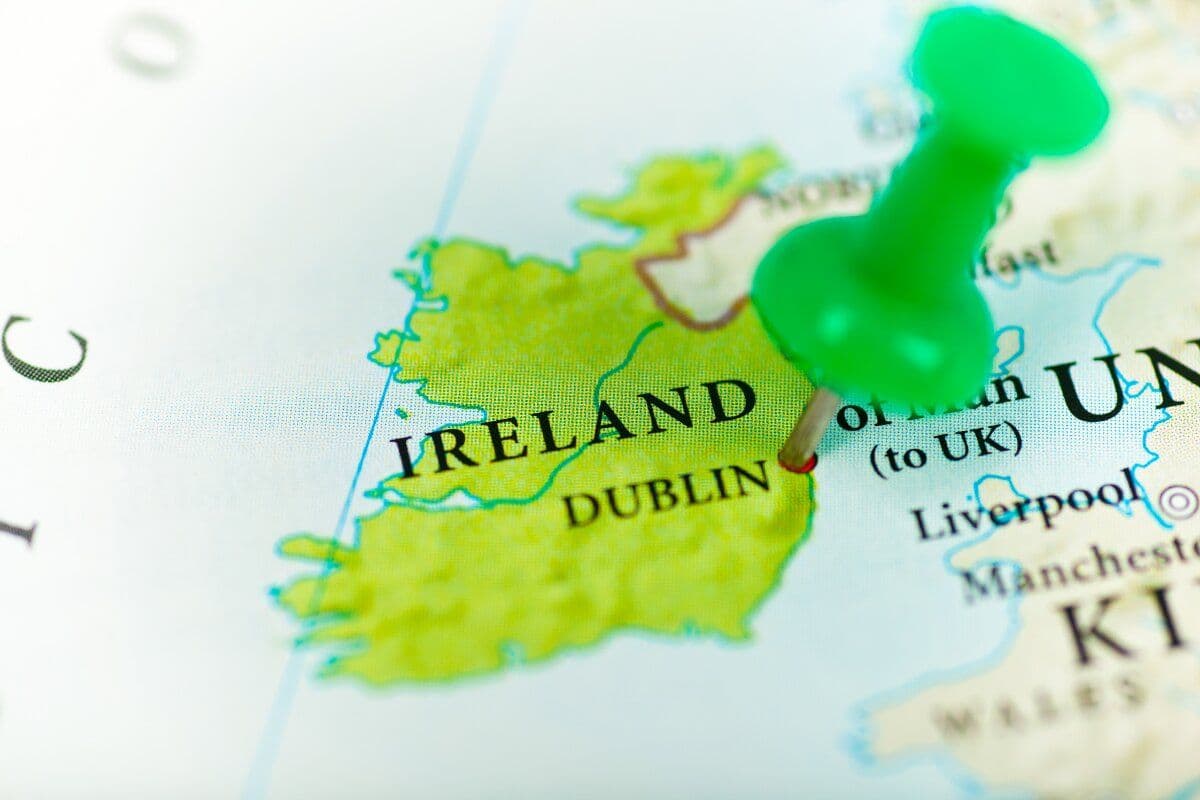
Ireland sits at the centre of one of the most internationally connected economies in Europe. From global tech giants in Sandyford and the Silicon Docks, to pharmaceutical and medical device manufacturers across Cork, Limerick, and Galway, to a thriving SME base in construction, hospitality, retail, and professional services, Irish businesses combine deep operational sophistication with a regulatory regime that takes workplace safety extremely seriously.
If you are looking for health and safety consultants Ireland can rely on, this guide is for you. Whether you run a Dublin tech firm, a Cork pharma plant, a Galway medical device manufacturer, a Limerick logistics operation, or you are a UK or international business expanding into the Republic, you need a consultancy that understands Irish law, Irish regulators, and the international expectations that come with global operations. Below are the twelve essentials every Irish director, operations leader, HR head and safety manager should weigh up before choosing a partner.
1. Understand What Health and Safety Consultants in Ireland Actually Do
A good consultancy is far more than a once-a-year visit and a folder of templates. Modern health and safety consultants act as your external "competent person," helping you identify hazards, design controls, train your people, prepare for inspections, and respond confidently if something goes wrong.
For Irish businesses, that typically means a blend of on-site visits, document development (especially the all-important Safety Statement), training delivery, and ongoing advisory support. The best providers behave like a permanent extension of your team rather than a transactional vendor, challenging unsafe shortcuts, supporting directors at board level, and helping you turn compliance into a commercial advantage.
2. Know the Irish Legal Foundation They Should Be Working To
The bedrock of Irish health and safety law is the Safety, Health and Welfare at Work Act 2005, which sets out the general duties of employers, the self-employed, employees, designers, manufacturers and importers. It is supported by the General Application Regulations 2007 and a substantial body of topic-specific rules covering construction, chemical agents, manual handling, work at height, biological agents, and many more.
A credible Irish consultant must work fluently within this framework, and be able to walk your team through where your business sits against each duty in plain English. The Health and Safety Authority publishes practical guidance for every sector.
3. The HSA Is the Regulator You Need to Understand
Need Expert H&S Guidance?
Our qualified consultants can help you implement the right health & safety measures for your business.
In the Republic of Ireland, the national regulator is the Health and Safety Authority (HSA), headquartered in Dublin with offices across the country. The HSA inspects workplaces, investigates incidents, prosecutes serious breaches, publishes statutory guidance, and runs sector-specific initiatives covering every major industry.
Any consultant pitching to Irish businesses should understand HSA inspection priorities, current enforcement themes, and how HSA expectations differ from those of the UK Health and Safety Executive across the border. Our international health and safety consultants bring exactly that comparative view to Irish and cross-border clients.
4. The Safety Statement Is the Central Document You Cannot Avoid
In Ireland, every employer must prepare and maintain a Safety Statement under section 20 of the 2005 Act. The Safety Statement is roughly equivalent to a UK organisation's combined health and safety policy and risk assessment register, but it is a single, named statutory document with specific minimum content.
A good Irish consultant will produce, refresh or audit your Safety Statement so that it reflects how your business actually works, not a generic template. For multinationals, the Safety Statement also has to align with global frameworks like ISO 45001 without losing local validity.
5. Choose a Local-to-Global Partner, Not Just an Irish Generalist
Many Irish businesses have customers, suppliers, parent companies or sister sites overseas. If your Irish operation is part of a larger international group, or you are a UK business expanding into the Republic, you need consultants who can bridge Irish compliance with global expectations.
That means familiarity with international health and safety frameworks, including ISO 45001, EU-OSHA guidance, and ILO principles, alongside Irish law. The strongest global health and safety consultants can also support equivalent systems in the UK (HSE), France (DUERP), Germany (Gefährdungsbeurteilung), Italy (DVR), the Netherlands (RI&E), and beyond.
6. Insist on Robust Health and Safety Audits
A proper audit is the single fastest way to understand where your risk really sits. A well-scoped health and safety audit by experienced consultants will examine your Safety Statement, risk assessments, training records, accident data, contractor controls, fire arrangements, and the lived behaviour on site, not just the paperwork.
For Irish businesses operating across multiple sites, including those with UK or wider European operations, workplace health and safety audits also reveal inconsistencies between locations, the kind of drift that quietly accumulates between formal inspections.
7. Get Your Risk Assessments and Method Statements Right
Risk assessments sit at the heart of the Irish regime, feeding directly into the Safety Statement. Method statements (often supplied as part of RAMS in construction and contractor environments) describe how work will be performed safely, step by step.
A health and safety consultant in Ireland should be able to write, review, or update site-specific documents that reflect how work is actually performed, not generic templates. Our practical guides on how to write an effective risk assessment and how to conduct a health and safety risk assessment translate directly to the Irish context.
8. Confirm Their Credibility as Your Competent Person
Irish law, like UK law and ISO 45001, expects safety arrangements to be designed and reviewed by someone with appropriate competence. For most SMEs, and many larger Irish operations, that competence is best sourced through a trusted competent person rather than recruited in.
Check qualifications carefully. Chartered Membership of IOSH, NEBOSH diplomas, IIOSH membership, and sector-specific experience are strong indicators. Test for sector experience too: there is a meaningful difference between a consultant who has worked through a major pharma audit and one whose CV is mainly office-based.
9. Tailor Health and Safety Training to Irish Realities
Generic e-learning will not protect a maintenance technician working on a pharma production line, a contractor accessing a roof during a Cork winter, or a hospitality worker in a busy Dublin kitchen. Look for health and safety training mapped to your actual tasks, sites and people, with options for IOSH-accredited courses, manual handling, fire warden, DSE assessor, and supervisor-level training in safety leadership.
A good Irish consultancy will deliver this on site, in flexible formats, with content adapted for pharma, medical devices, technology, construction, hospitality, retail, healthcare, and office environments.
10. Use Health and Safety Consultants and Software Together
Modern compliance is no longer a paper exercise. The most resilient Irish operators combine experienced health and safety consultants and software so that the Safety Statement, audits, actions, training records, accident reports, risk assessments and RAMS sit in one secure system. Mobile access matters too, particularly for site-based teams and lone workers.
Software alone is not the answer, neither is consultancy alone. The right blend gives you data-driven visibility plus expert interpretation, so leadership knows where the next risk is forming, not just where the last one landed.
11. Align with ISO 45001 to Future-Proof Your Compliance
If you supply large customers, especially internationally, expect ISO 45001 to come up in tender questionnaires. ISO 45001 is the global benchmark for occupational health and safety management systems, and it is increasingly embedded in procurement frameworks across Europe, the Americas, the Middle East and Asia.
Even if formal certification is not on your roadmap yet, designing your management system around ISO 45001 makes everything else easier. Audits become cleaner, health and safety policies become consistent, and your Irish site lines up cleanly with sister sites overseas.
12. Choose Outsourced Support That Scales With You
For most Irish SMEs and many mid-market companies, the smart answer is to outsource. A retained health and safety outsourcing arrangement gives you predictable monthly costs, instant access to expertise across all major risk areas, and a single point of accountability. It also scales: as you open new sites, expand into the UK, Europe, North America or further afield, your consultancy grows with you rather than against you.
Strong evidence built through this approach also supports any health and safety tenders submission, both in Ireland and abroad.
Choosing the Right Health and Safety Consultants in Ireland
The right partner for an Irish business is one that understands your sector, respects your operational reality, and can grow with you internationally. Look for chartered status, deep sector experience, a clear approach to the Safety Statement and the wider 2005 Act framework, modern software, and the ability to act as your competent person across multiple jurisdictions. Avoid anyone who leads with templates and slogans rather than diagnosis and judgement.
At Arinite, we have spent decades helping UK, Irish and international organisations build safety systems that hold up under regulator scrutiny and international audit alike. Whether you are a single-site Dublin SME, a Cork-based pharma manufacturer, or a global group with Ireland as one of many international locations, our consultants combine UK and international depth with practical Irish-relevant expertise.
Book a Free Gap Analysis Call
Find out exactly where your Irish operation stands against current HSA expectations and international standards, and what to fix first. Book a Free Gap Analysis Call with an Arinite specialist today.
Written by
Arinite Health & Safety Consultants
Health & Safety Expert at Arinite