Global Workplace Safety: 8 Data Points Every International Employer Must Know
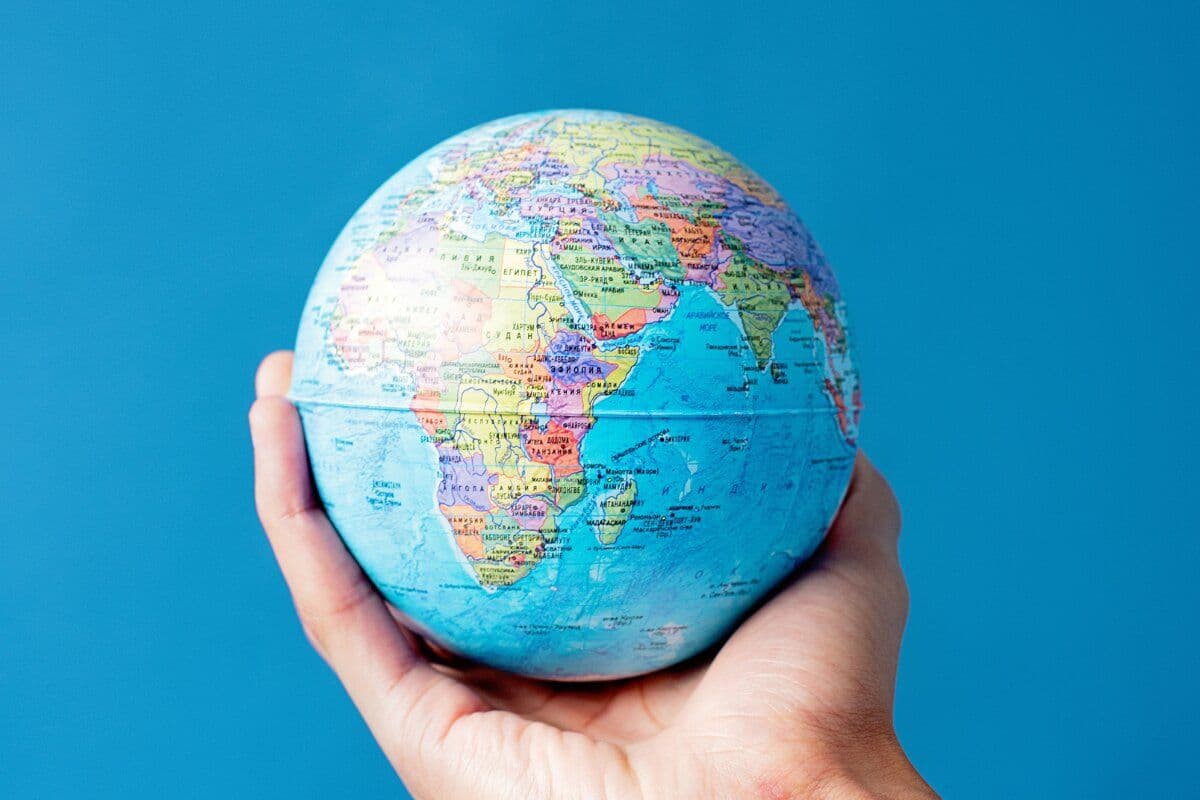
If your business operates in more than one country, the health and safety risks your people face are not described by any single national regulator. They are global, and the global picture is sobering. According to the International Labour Organization, nearly three million workers now die every year from work-related accidents and diseases, a figure that has risen since 2015, and hundreds of millions more are injured or made ill by their work.
For UK-headquartered businesses expanding into Europe, North America, and Asia, and for global groups consolidating operations across dozens of jurisdictions, these numbers are not background noise. They are the reason procurement teams, investors, and insurers increasingly demand a consistent, evidenced safety standard across every site you run. A compliance approach that works in London but not in Lyon, Lisbon, or Lahore is no longer good enough.
Below are 8 data points that define global workplace safety today, what each means for an internationally-operating business, and how to respond. Each links to the support behind it. The figures are drawn from the ILO's global estimates and the WHO/ILO joint analysis.
1. Nearly 3 Million Work-Related Deaths Every Year
The headline ILO estimate is stark: close to three million workers die annually from work-related causes, more than 5% higher than the 2015 estimate. To put that in perspective, work-related mortality outstrips the annual global death toll from many of the causes that dominate headlines. For any business operating across borders, the duty of care is not a national obligation, it is a global one.
What to do: adopt one corporate safety standard that travels across every country you operate in, rather than a patchwork of local minimums. Global Health and Safety Consultants build exactly that.
2. 2.6 Million of Those Deaths Are From Disease, Not Accidents
This is the most misunderstood statistic in workplace safety. Of the nearly three million annual deaths, around 2.6 million stem from work-related diseases, and only about 330,000 from accidents. Circulatory diseases, cancers, and respiratory diseases together cause more than three-quarters of all work-related mortality. The dramatic accident is rare; the slow, invisible harm is the real killer.
What to do: assess long-term health risks (exposure, ergonomics, stress, long hours) with the same rigour as immediate accident risks. Independent Health and Safety Audits should examine occupational health, not just physical safety.
3. 395 Million Workers Suffer Non-Fatal Injuries Annually
Need Expert H&S Guidance?
Our qualified consultants can help you implement the right health & safety measures for your business.
Beyond the fatalities, the ILO estimates that around 395 million workers worldwide sustain non-fatal work injuries each year. Each one represents lost productivity, potential liability, and human cost. For a multinational, the cumulative exposure across a distributed workforce is substantial and easy to underestimate when each country reports separately.
What to do: centralise incident data across all sites so the true, group-wide picture is visible. Health and Safety Consultants and Software give you one consistent reporting system across every country, rather than fragmented local logs.
4. Asia-Pacific Accounts for 63% of Global Work-Related Mortality
Work-related mortality is not evenly distributed. The Asia-Pacific region accounts for roughly 63% of the global total, reflecting both the size of its workforce and uneven safety coverage. For businesses with operations or supply chains in the region, this concentration of risk demands particular attention and local expertise, not a copy-paste of European procedures.
What to do: ensure your safety standard is implemented with genuine local knowledge in higher-risk regions. International Health and Safety Consultants combine a consistent global framework with country-level understanding.
5. Safety Coverage Varies Enormously Between Countries
The ILO has long highlighted that occupational safety and health coverage ranges from nearly universal in some Nordic countries to 10% or less of the workforce in many developing economies. Even in developed countries, coverage can extend to only part of the workforce. This means the legal floor in one country may be far below your own corporate expectations in another.
What to do: set your corporate standard at the level your business is willing to defend publicly, then meet or exceed the local legal minimum everywhere. Chartered Health and Safety Consultants help define and document that standard.
6. Long Working Hours Are a Leading Killer
The WHO/ILO joint analysis identified exposure to long working hours as the single largest occupational risk factor, linked to roughly 750,000 deaths a year through stroke and heart disease. This is a direct challenge to the always-on culture of many high-growth, knowledge-based businesses, exactly the office-based sectors that once assumed they were low-risk.
What to do: treat workload and working hours as a measurable health risk. The international standard for managing psychosocial hazards is ISO 45003:2021, which sits alongside ISO 45001 for overall safety management.
7. Climate and Heat Are Emerging Global Risks
Newer analysis shows that more than 70% of the global workforce is now exposed to climate-related hazards, including extreme heat, air pollution, and UV radiation. Air pollution alone is linked to hundreds of thousands of work-related deaths each year, and heat-related occupational injury is rising. These are risks that did not feature meaningfully in safety planning a decade ago.
What to do: make sure your risk assessments are reviewed for emerging hazards, not frozen in time. A consultancy that tracks evolving global risk, supported by the frameworks of EU-OSHA and the ILO, keeps your programme current.
8. Up to 80% of Occupational Deaths Are Preventable
The most important statistic is also the most hopeful. The ILO estimates that around 80% of occupational deaths and accidents could be prevented using best-practice strategies that already exist and are readily available. The knowledge to prevent the vast majority of this harm is not missing. What is missing, in many businesses, is consistent implementation across every site.
What to do: close the gap between knowing and doing. A combination of expert advice, a shared platform, and regular Health and Safety Audits turns best practice into consistent practice across your whole international footprint.
Why a Consistent Global Standard Beats a Patchwork
The clearest lesson in the global data is that fragmentation kills. Businesses that run a different safety approach in each country end up with inconsistent protection, duplicated cost, and a compliance picture no central team can actually see. When an incident happens, or a buyer, investor, or insurer asks for evidence, the patchwork falls apart.
The alternative is a single corporate standard, built around recognised international frameworks (ISO 45001 for safety management, ISO 45003 for psychosocial risk), implemented with local appendices for each country's specific law: France's DUERP, Spain's Ley de Prevención de Riesgos Laborales, Germany's Arbeitsschutzgesetz and DGUV, Italy's D.Lgs. 81/2008, the Netherlands' RI&E, and their equivalents worldwide. That model gives you:
- One health and safety policy with country appendices, not 30 unconnected documents
- One platform through Health and Safety Consultants and Software, so group-wide compliance is visible at a glance
- One set of Health and Safety Audits applying a consistent methodology everywhere
- One accountable team of International Health and Safety Consultants, rather than a different provider in every market
For deeper reference on individual topics and country regimes, see Arinite's factsheets library.
Frequently Asked Questions
Why should an internationally-operating business care about global safety data?
Because the duty of care follows the employer across borders, and because investors, buyers, and insurers increasingly assess compliance group-wide, not country by country. A gap in one jurisdiction is a liability for the whole group.
What does the data say is the biggest workplace risk?
Globally, work-related disease (circulatory, cancer, respiratory) causes far more deaths than accidents, and long working hours are the single largest individual risk factor. The dramatic accident is not the main killer; chronic, work-related ill health is.
How can one consultancy cover multiple countries?
By maintaining a single corporate standard aligned with international frameworks, then adapting it with local appendices for each country's specific legal requirements. This is the core of what Global Health and Safety Consultants do.
What is the difference between Health and Safety Consultants and Health and Safety Consultants and Software?
The first is expert advice. The second is that advice plus a system of record that makes group-wide compliance visible and exportable. For multinationals, Health and Safety Consultants and Software is the only practical way to see the whole picture at once.
Are these risks relevant to office-based businesses?
Yes. Long working hours, stress, display screen use, and sedentary work are all in the data, and all are highly relevant to knowledge work in tech, finance, legal, and professional services across every country.
What is the best first step?
A group-wide gap assessment. Independent Health and Safety Audits using a consistent methodology show you where each site stands against your corporate standard and local law, in priority order.
Turn Global Risk into a Global Standard
The global data delivers one clear message: workplace harm is vast, largely preventable, and unevenly managed across borders. The businesses that protect their people best are the ones that refuse to let safety fragment by country, and instead apply one consistent, evidenced standard everywhere they operate.
Arinite combines chartered Health and Safety Consultants, purpose-built Health and Safety Consultants and Software, independent Health and Safety Audits, and proven International Health and Safety Consultants capability across 50+ countries and 1,500+ businesses, with 15+ years of experience, 95% client retention, and 100,000+ employees protected.
If you want to know how your international operations measure up against a single, defensible standard, speak to our team. We will show you exactly where each site stands, and where to focus first.
Written by
Arinite Health & Safety Consultants
Health & Safety Expert at Arinite