Managing Hazardous Substances in the Workplace
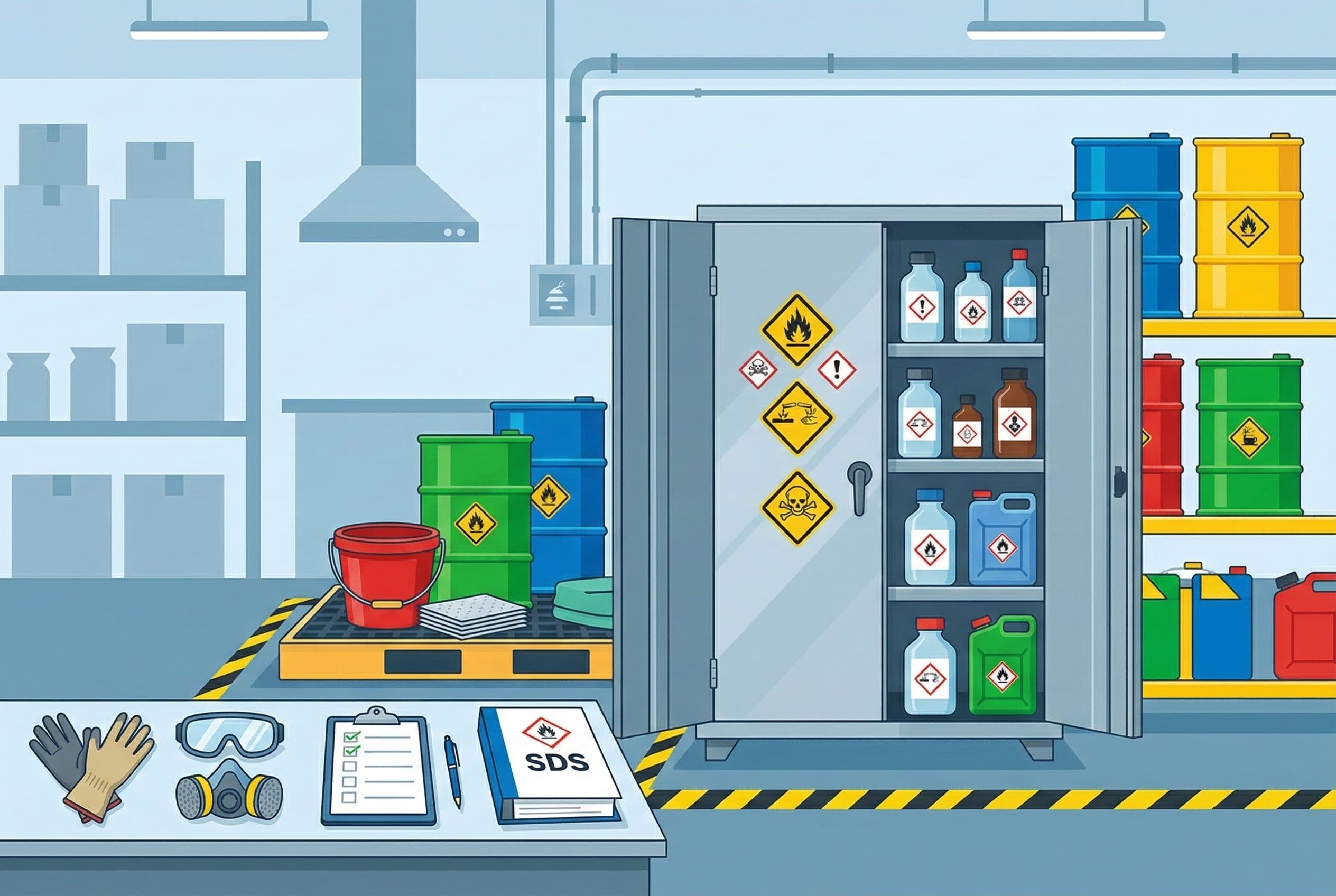
"Where workers are exposed to substances labelled with hazard warning symbols or fumes/dusts/gases are given off by processes, you are likely to need a competent person to help with assessments. Products produced for domestic cleaning or hygiene products which are used infrequently, will normally only need a simple risk assessment."
It’s just over thirty six years since the Control of Hazardous Substances Regulations came into force in the UK. The CoSHH regulations, as they are commonly known, were first introduced in 1988 becoming law in 1989 because thousands of workers in the UK were, and still are, being diagnosed with illnesses such as asthma, dermatitis, and cancer, caused by exposure to hazardous substances.
Low Risk Workplaces
I have come across many low risk workplaces such as offices where employers will say that they don’t have any hazardous substances to manage, but when taking a bit of a deeper dive and looking around the workplace, I will often find cleaning or maintenance substances that are frequently used.
Understanding Hazardous Substances
Managing hazardous substances in the workplace is crucial for ensuring the safety and health of employees and others, as well as maintaining compliance with CoSHH Regulations. Substances can include chemicals, dusts, fumes and biological agents.
Material Safety Data Sheets
Need Expert H&S Guidance?
Our qualified consultants can help you implement the right health & safety measures for your business.
Every hazardous substance used at work should have an accompanying Material Safety Data Sheet (MSDS). These provide essential information about the substance, including:
- Identification of the substance,
- Hazards associated with it,
- Safe handling and storage procedures,
- Emergency measures in case of exposure or spills.
Employers should ensure that MSDS are readily accessible in the workplace as they contain essential information about the products and how to manage them, but the main requirement is to undertake a suitable and sufficient assessment of the risks to health.
Risk Assessment
Undertaking a risk assessment is a vital step and involves identifying potential hazards, evaluating the risks associated with them, and determining the necessary control measures.
Steps in conducting a hazardous substances risk assessment include:
- Identifying Hazardous Substances: Create a comprehensive inventory of all hazardous substances present in the workplace.
- Evaluating Exposure Risks: Determine how employees may be exposed to these substances, considering factors like frequency, duration, and method of exposure.
- Implementing Control Measures: Based on the assessment, put in place appropriate control measures to minimise risk.
Risk Assessments for exposure to hazardous substances are often referred to as a COSHH assessment. They involve systematically evaluating how substances can affect health and safety. The assessment should document findings and outline necessary actions to minimise risks. Employers are also required to regularly review and update CoSHH assessments, especially when there are changes in work practices, new substances introduced, or after an incident.
Control Measures
Implementing effective control measures is essential in managing hazardous substances to minimise exposure and reduce health risks. Control measures can be categorised into several levels, following the hierarchy of controls.
- Elimination involves removing the hazardous substance from the workplace entirely. If elimination isn’t feasible,
- Substitution involves replacing the hazardous substance with a safer alternative. If a hazardous substance must be used,
- Engineering controls such as ventilation systems can help reduce airborne concentrations,
- Administrative controls include creating safe work procedures, limiting exposure time, and scheduling regular maintenance.
If you cannot adequately control exposure using the aforementioned methods, provide personal protective clothing and equipment, in combination with other control measures. Do not automatically opt for personal protective equipment (PPE) as a control measure as it is not as reliable or effective as other measures
- Personal Protective Equipment (PPE), such as gloves, masks, and goggles, adds an extra layer of protection for employees.
Training and Information
Training employees on the safe handling of hazardous substances is essential. Regular training sessions should cover:
- The risks associated with hazardous substances.
- Proper handling and storage procedures.
- Use of personal protective equipment (PPE).
- Emergency response procedures.
Ongoing training refreshes knowledge and keeps safety at the forefront.
To assist with information for workers or managers Arinite Factsheet 0200 – Hazardous Substances & COSHH may be useful.
Summary
Effectively managing hazardous substances in the workplace requires a comprehensive approach that includes risk assessment, staff training, emergency preparedness and Personal Protective Equipment.
Written by
Derek Mcstea
Health & Safety Expert at Arinite