Fire Risk Assessments: A Complete Guide to Getting Them Right
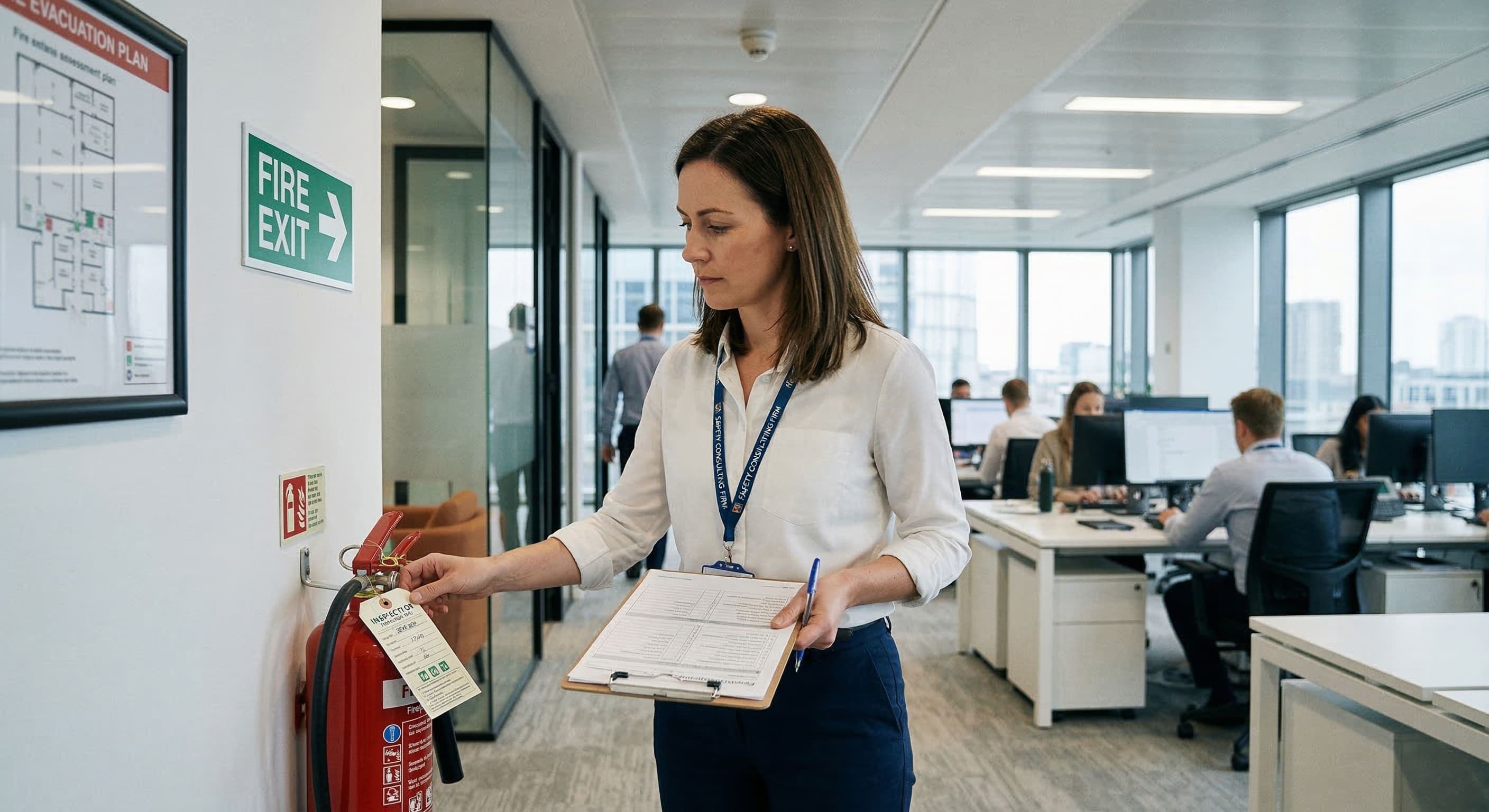
Understanding why fire risk assessments matter, how to conduct them effectively, and what the requirements are across the UK and internationally
Fire risk assessments matter because they are essential for protecting people, property, and business continuity. A fire in the workplace can cause death and serious injury, destroy premises and equipment, disrupt operations for months or years, and result in significant legal liability for those responsible.
In the UK, fire risk assessment is a legal requirement under the Regulatory Reform (Fire Safety) Order 2005. Similar requirements exist across Europe and internationally. Yet many organisations treat fire risk assessment as a paperwork exercise rather than a genuine tool for preventing harm. Assessments are conducted once and then filed away, never reviewed despite changes to the premises, processes, or people.
This guide explains what a fire risk assessment is, why it matters, how to conduct one effectively, and what the requirements are across different jurisdictions. For health and safety consultants supporting clients with fire safety, and for organisations seeking to understand their obligations, this provides a comprehensive overview of getting fire risk assessments right.
What Is a Fire Risk Assessment?
A fire risk assessment is a systematic process for understanding how likely a fire is to occur in a workplace and what measures are needed to keep people safe. It examines potential ignition sources, the materials or activities that could fuel a fire, and the people who may be at risk, including vulnerable groups such as those with disabilities or those unfamiliar with the building.
The assessment also evaluates how effectively a fire could be detected, contained, and controlled, as well as how safely people could evacuate. It identifies what fire safety measures are already in place, whether they are adequate, and what additional measures may be needed.
For health and safety professionals, fire risk assessment is both a legal requirement and a practical tool for preventing harm. It forms the foundation of effective fire safety management, supporting safer building layouts, better evacuation planning, appropriate fire detection and warning systems, and adequate training for staff.
Why Fire Risk Assessments Matter
Fire risk assessments serve multiple important purposes:
Protecting lives: The primary purpose is to ensure that workplaces are safe and that people can escape in the event of a fire. This means identifying hazards, implementing controls, and ensuring effective evacuation arrangements.
Legal compliance: Fire risk assessment is a legal requirement in most jurisdictions. In the UK, failure to comply can result in enforcement notices, prohibition notices preventing use of premises, and prosecution with unlimited fines or imprisonment.
Protecting property: Fire can destroy buildings, equipment, stock, and records. A good fire risk assessment helps protect these assets by identifying and controlling fire hazards before they cause damage.
Business continuity: Many businesses never recover from a serious fire. Even those that do face months of disruption while premises are repaired or rebuilt. Prevention through effective fire risk assessment protects business operations.
Insurance requirements: Insurers expect fire risk assessments to be in place. Failure to maintain adequate fire safety arrangements can invalidate insurance coverage or affect claims.
UK Legal Requirements
Need Expert H&S Guidance?
Our qualified consultants can help you implement the right health & safety measures for your business.
In England and Wales, fire risk assessment requirements are set out in the Regulatory Reform (Fire Safety) Order 2005 (as amended by the Fire Safety Act 2021). In Scotland, similar requirements apply under the Fire (Scotland) Act 2005. In Northern Ireland, the Fire and Rescue Services (Northern Ireland) Order 2006 applies.
Who Must Conduct a Fire Risk Assessment?
The Responsible Person (typically the employer, building owner, or occupier) must ensure that a fire risk assessment is conducted for all non-domestic premises. This includes workplaces, shops, offices, factories, warehouses, care homes, schools, hospitals, and the common parts of multi-occupied residential buildings.
Who Can Conduct a Fire Risk Assessment?
The assessment must be carried out by someone with the necessary training, experience, and understanding of fire safety principles. This may be an internal health and safety professional or an external specialist, depending on the complexity of the premises. For simple, low-risk premises, a competent member of staff may be able to conduct the assessment. For complex, high-risk, or large premises, a qualified fire risk assessor is advisable. Ultimately, the Responsible Person must ensure the assessment is suitable, sufficient, and kept up to date.
How Often Must Fire Risk Assessments Be Reviewed?
There is no fixed legal timeframe for review, but the requirement is that fire risk assessments are kept up to date. Best practice guidance suggests review:
- At least annually for most workplaces to ensure controls remain effective
- After any significant change such as building alterations, new equipment, staffing changes, or changes to how the space is used
- After a fire or near-miss to identify what went wrong and prevent recurrence
- When new information emerges, including updated legislation or industry standards
International Fire Risk Assessment Requirements
Fire risk assessment requirements exist in most developed countries, though terminology, specific requirements, and enforcement mechanisms vary.
European Union
The EU Framework Directive 89/391/EEC requires employers to assess all risks including fire risks. Individual member states implement this through national legislation. France includes fire safety requirements within the Code du Travail and specific regulations for establishments receiving the public (ERP). Germany regulates fire safety through federal and Länder legislation, with fire risk assessment forming part of the broader Gefährdungsbeurteilung. Italy addresses fire safety under Legislative Decree 81/08 with specific fire prevention regulations (DPR 151/2011).
United States
In the US, fire safety is regulated through a combination of federal OSHA standards, state and local fire codes, and standards developed by organisations such as NFPA. OSHA requires emergency action plans and fire prevention plans. Local fire departments conduct inspections and enforce fire codes. The NFPA Fire Code (NFPA 1) and Life Safety Code (NFPA 101) are widely adopted and provide detailed requirements including for fire risk assessment.
Australia
Australian states and territories regulate fire safety through building codes and work health and safety legislation. The National Construction Code sets building requirements including for fire safety. Work health and safety legislation requires risk assessment covering fire hazards. Australian Standard AS 3745 covers planning for emergencies in facilities including fire evacuation.
International Standards
ISO 45001 requires organisations to identify emergency situations including fire and plan responses. While not fire-specific, it provides a framework for integrating fire safety into overall safety management. For global health and safety consultants supporting organisations across multiple jurisdictions, understanding both local requirements and international frameworks is essential.
How to Conduct a Fire Risk Assessment: A Step-by-Step Guide
Fire risk assessment follows a systematic process. While complex premises require specialist expertise, understanding the basic steps helps everyone involved in fire safety.
Step 1: Identify Fire Hazards
Walk through the premises and identify anything that could start a fire or make it worse:
Sources of ignition: heaters, cooking appliances, electrical equipment, faulty wiring, open flames, hot processes, smoking materials, arson risks.
Fuel sources: paper, cardboard, rubbish, soft furnishings, flammable liquids, plastics, textiles, packaging materials, building materials.
Oxygen sources: ventilation systems, air conditioning, oxygen cylinders (in medical settings), oxidising chemicals.
Step 2: Identify People at Risk
Consider who is in or near the building and who might be especially vulnerable:
- Employees working in different areas
- Visitors, customers, and members of the public
- Contractors and delivery personnel
- People with disabilities who may need assistance evacuating
- Young workers or those new to the building
- Lone workers
- People in sleeping accommodation
Step 3: Evaluate the Risks and Existing Controls
Assess how likely it is that a fire could start and spread, and evaluate the adequacy of existing fire safety measures:
- Fire detection and warning systems: are they appropriate for the premises?
- Means of escape: are routes adequate, clearly signed, and kept clear?
- Emergency lighting: is it sufficient for safe evacuation if power fails?
- Firefighting equipment: are appropriate extinguishers provided and maintained?
- Emergency procedures: are they documented, communicated, and practised?
- Staff training: do people know what to do in the event of fire?
Step 4: Record Findings and Plan Actions
If you have five or more employees, you are legally required to record the significant findings of your fire risk assessment. Even with fewer employees, recording findings is good practice. Document the hazards identified, who is at risk, what controls are in place, and what additional actions are needed. Create an action plan with specific measures, responsible persons, and deadlines.
Step 5: Review and Update Regularly
Fire risk assessment is not a one-off exercise. Review the assessment at least annually and whenever significant changes occur. Monitor that action plans are implemented. Verify that fire safety measures remain effective through regular testing and inspection. Use health and safety audits to verify that fire safety arrangements are working as intended.
Health and Safety Consultants and Software: Supporting Fire Risk Assessment
Managing fire risk assessments across multiple sites or countries creates significant administrative complexity. Health and safety consultants and software platforms work together to provide integrated systems that ensure consistent fire safety management.
Digital platforms support fire risk assessment through:
- Standardised fire risk assessment templates adaptable to different premises types
- Centralised storage of fire risk assessments across all locations
- Automated reminders for review dates and action deadlines
- Action tracking to ensure findings are addressed
- Fire drill recording and analysis
- Training records for fire wardens and staff fire safety training
- Equipment testing and maintenance scheduling
- Reporting tools for health and safety audits and compliance verification
For international health and safety consultants supporting organisations across multiple countries, integrated software enables consistent fire safety management while accommodating the specific requirements of different jurisdictions.
How Arinite Can Help
At Arinite, we are experienced global health and safety consultants who help organisations conduct fire risk assessments and manage fire safety across the UK and internationally. Our team of Chartered (CMIOSH) consultants provides comprehensive fire safety support, from risk assessment through to training and ongoing compliance management.
Our fire safety services include:
- Fire risk assessments meeting UK, European, and international requirements
- Review and update of existing fire risk assessments
- Support for Responsible Persons in meeting their legal duties
- Health and safety audits including fire safety compliance review
- Development of fire safety plans and emergency procedures
- Fire safety training for employees and fire wardens
- Fire drill planning and evaluation
- Multi-site and international fire safety coordination
With experience supporting over 1,500 UK businesses and operations in more than 50 countries, we understand the challenges of managing fire safety across different regulatory frameworks. Whether you need fire risk assessments for UK premises, guidance on meeting European requirements, or coordinated fire safety management across your global portfolio, our approach is practical, proportionate, and focused on protecting people. We call it "Keeping It Simple."
|
Need Fire Risk Assessment Support? Whether you need fire risk assessments, review of existing assessments, health and safety audits covering fire safety, or coordinated fire safety management across international operations, our Chartered consultants can help. Book a free 30-minute Gap Analysis Call to discuss your needs. |
Written by
Arinite Health & Safety Consultants
Health & Safety Expert at Arinite